Why did Maxim invent the silencer?
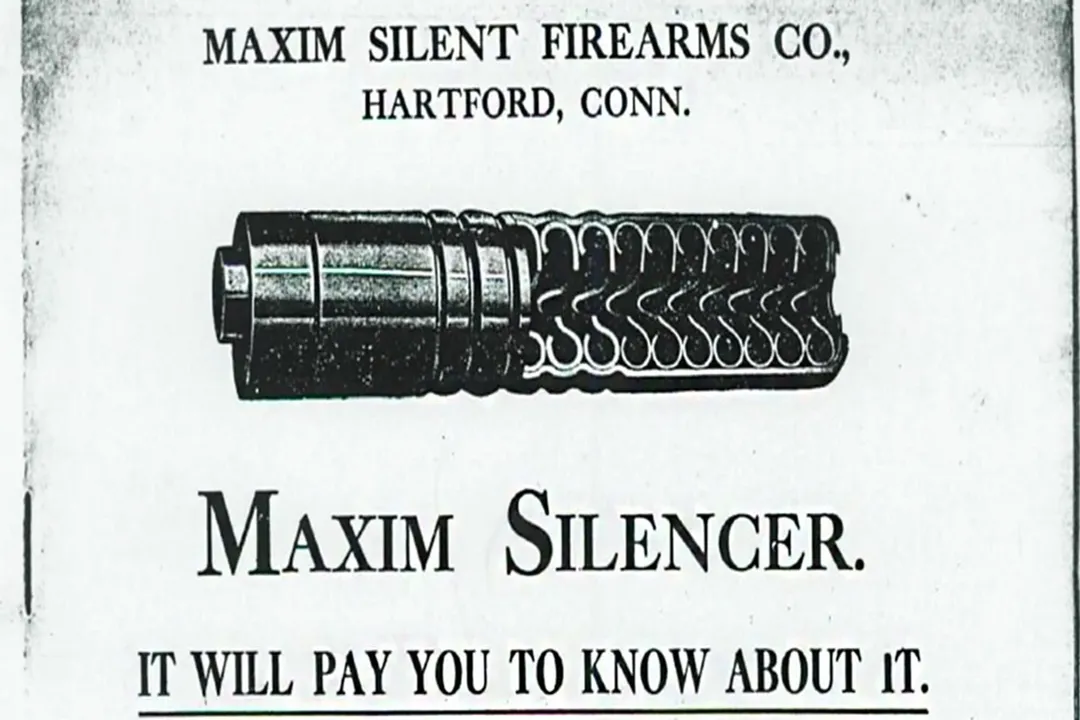
The story behind the invention of the silencer is less about a single, straightforward military problem and more about a remarkable family dynamic and an inventor grappling with the unintended consequences of his own genius. The noise of innovation, particularly in the realm of rapid-fire weaponry, created a need that his own descendant eventually solved.
# Deafness Legacy
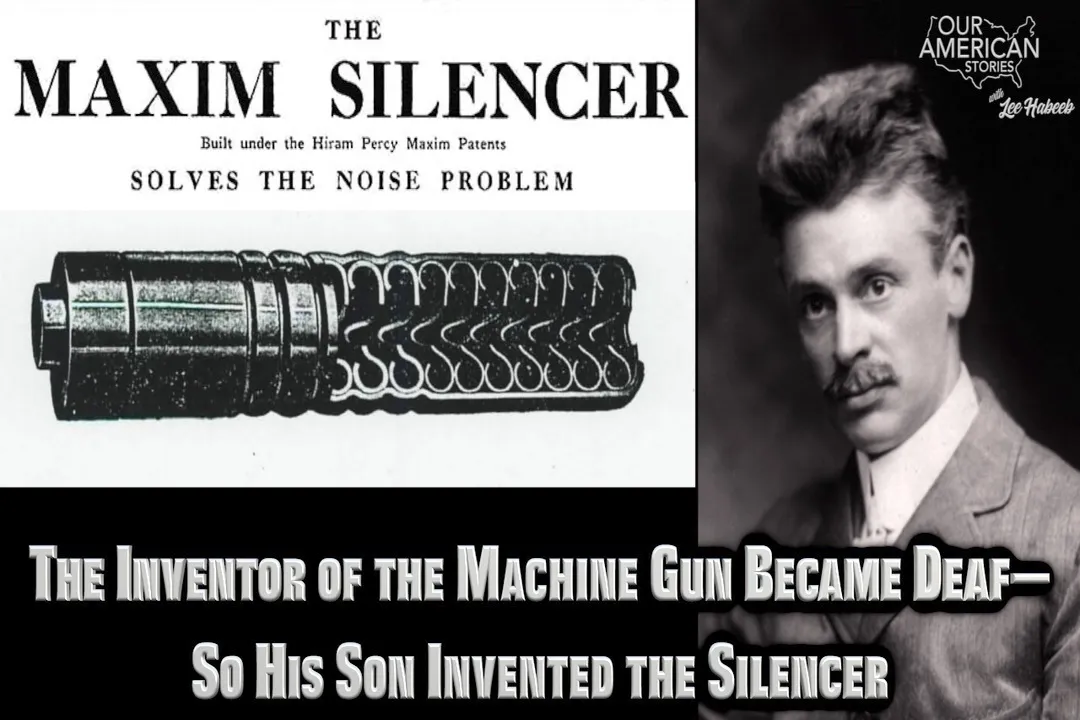
Hiram Maxim, the famous inventor responsible for the self-powered, fully automatic machine gun, faced a profound personal consequence from his work: significant hearing loss. The sheer volume produced by his revolutionary weapon had a lasting physical toll on the man often credited with defining modern automatic warfare. This physical impairment provides a compelling, if perhaps apocryphal, origin story for the silencer—an invention intended to mitigate the very noise pollution his earlier creation caused.
It is important to draw a clear distinction between the two prominent Maxim figures here. Hiram Maxim invented the machine gun and suffered the resultant hearing damage. However, the actual invention of the firearm silencer, or sound suppressor, is credited to his son, Hiram Percy Maxim. This lineage of invention—father creating a device that necessitates a solution invented by the son—presents a fascinating case study in engineering evolution driven by personal experience.
# Percy's Solution
Hiram Percy Maxim secured the patent for his suppressor design in 1909. While the narrative often highlights his father's deafness as the reason for the invention, Percy Maxim’s technical motivations likely spanned beyond a simple desire for quiet hunting or preserving hearing. As an engineer, he would have recognized that sound reduction was an inherently valuable engineering challenge, regardless of the initial impetus.
The development of the silencer was not an overnight affair; it represented refined experimentation. Early iterations, like those seen in some historical models, employed a design utilizing stacked, concentric tubes. This fundamental structure was designed to capture and slow down the rapidly expanding gases exiting the muzzle, which is the primary source of the sonic report from a firearm.
The irony of the situation, where the father of the machine gun inspired the son to develop a noise-reducing device, often overshadows the immediate market realities Percy faced upon introduction. The very technology that horrified or damaged the first generation of users suddenly offered a means of practical, lower-noise operation for the next.
# Quiet Beginnings
When the Maxim Silencer Company was established, the initial commercial focus was surprisingly diverse, suggesting that the potential market for noise suppression was immediately apparent across several sectors, not just military or police applications. One of the most curious early uses involved small arms utilized in or near water. Reports indicate that Maxim silencers were sometimes fitted to firearms used while rowing or fishing. The logic here was clear: reducing the muzzle report meant less chance of scaring away the very fish the user intended to catch. This application suggests an immediate grasp of noise impact on sensitive environments, even recreational ones.
Another significant early market involved pest control and ranching operations. In agricultural settings, controlling varmints quietly was advantageous, as a loud report could spook livestock over a wider area or alert other pests to the danger. This highlights a recurring theme in suppression technology: noise reduction often equals operational discretion, which can translate directly into economic or practical advantages in the field.
Comparing these early applications to the military potential of the machine gun reveals a fascinating split in the product's trajectory. While the father's legacy involved loud, area-denial weaponry, the son’s invention first found traction in subtle, localized tasks—fishing and ranching. This initial civilian adoption validates the product on a smaller, more personal scale before large-scale military integration became a focus.
# Beyond Firearms
It is a common oversight to assume the silencer was only ever intended for firearms. Hiram Percy Maxim, ever the engineer seeking broader applications for his sound-deadening principles, applied his knowledge elsewhere. Evidence suggests that the Maxim Silencer Company also marketed products intended as mufflers for automotive engines.
This diversification is telling. It indicates that Percy Maxim understood that the physics of sound wave expansion and mitigation were universal, whether dealing with the rapid, high-pressure blast of gunpowder combustion or the sustained resonance of an internal combustion engine. While the firearm suppressor ultimately became the defining product of the Maxim name in this domain, the early consideration of engine muffling shows an engineer aiming for a wider impact on noise pollution across different technologies.
For anyone interested in early 20th-century engineering patents, the contrast between the father's world-changing—and ear-damaging—weaponry and the son's focus on quieter utility is striking. It suggests that sometimes, the greatest innovations arise not from aiming for the next big military leap, but from solving the immediate, irritating problems created by the previous generation’s breakthroughs. The concept of sound abatement, pioneered by Percy Maxim, eventually moved from niche accessory to a key component in modern acoustics, whether applied to a rifle or perhaps, in some derivative way, to automotive exhaust systems.
# Design Context
The early commercial success and continued development of the Maxim design rested on its ability to manage kinetic energy and gas expansion efficiently. Unlike modern suppressors which sometimes favor lightweight materials and specialized baffles, the early Maxim designs relied heavily on simple, stacked components.
To visualize this early technology, one can compare it to building blocks:
| Component Feature | Function in Early Maxim Design | Primary Goal |
|---|---|---|
| Concentric Tubes | Layered containment to slow gas expansion | Initial Noise Reduction |
| Stacked Baffles | Created internal chambers for gas dissipation | Reducing Muzzle Blast Pressure |
| Caliber Specificity | Required precise sizing for optimal function | Maintaining Bore Alignment |
This mechanical approach, relying on volume and baffling rather than exotic materials, established the foundational principles that subsequent designers would refine. It was an accessible, if somewhat bulky, solution to the problem created by his father’s formidable legacy. The long shadow cast by the machine gun led directly to a small, quiet invention that changed how people interact with firearms, proving that sometimes the most significant technological leaps are about subtraction—removing sound—rather than addition—adding power.
Related Questions
#Citations
Hiram Percy Maxim | The Father of Silencers - SilencerCo
Hiram Percy Maxim - Wikipedia
TIL that Hiram Maxim, the inventor of the automatic machine gun ...
History of Silencers
ARRL co-founder Hiram Percy Maxim and his surprising inventions
Maxim Silencer - Forgotten Weapons
The Inventor of the Machine Gun Became Deaf—So His Son ...
Silencer History - YouTube
Maxim Silencer - for rowboats! - General Discussion - AACA Forums
Suppressors: The History - NRA Blog