Who invented wireless speakers?
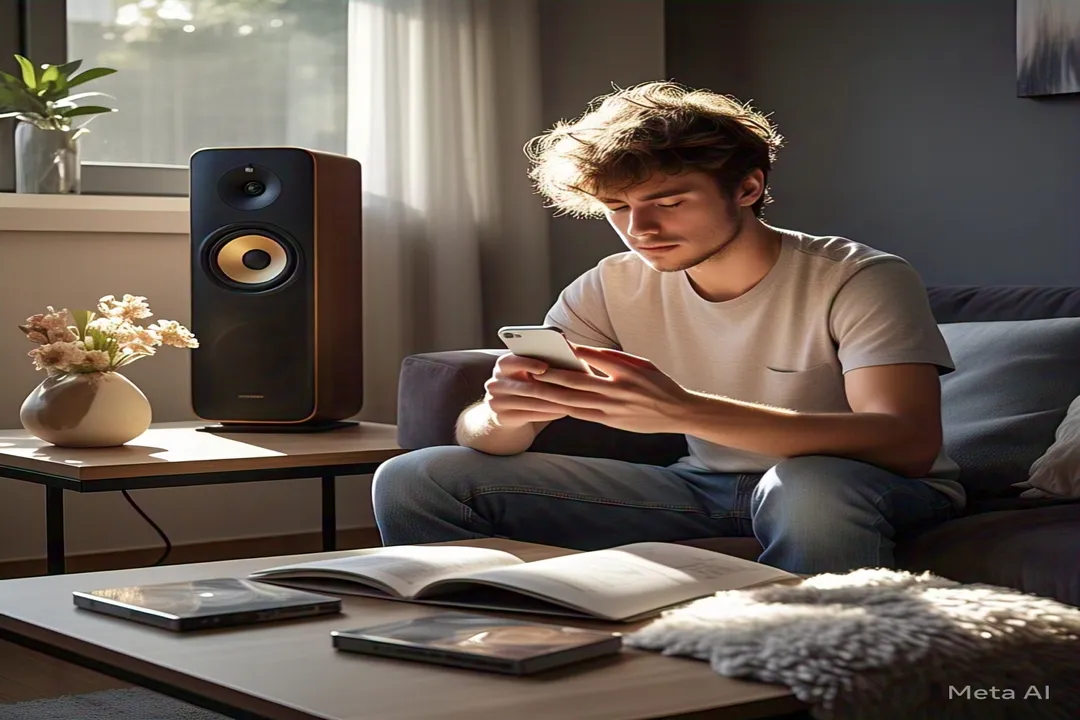
The landscape of personal audio has fundamentally shifted over the last few decades, moving from cumbersome wired setups to devices that offer sound freedom. Understanding the origin of wireless speakers involves tracing a line back through several key technological leaps, rather than pointing to a single "Eureka!" moment in speaker design itself. The true innovation lies in the communication method that liberates the audio signal from the cable.[3]
# Radio Foundations
Long before Bluetooth chips were being designed, the conceptual groundwork for robust, interference-resistant wireless communication was being laid. This early work focused heavily on ensuring signals could transmit reliably without being jammed or intercepted, a concept that would prove vital for short-range, crowded environments like a modern living room. A particularly significant contribution came from Hedy Lamarr, an actress and inventor, who, along with composer George Antheil, developed a frequency-hopping spread-spectrum technology during World War II. [8] While their initial goal was to guide Allied torpedoes securely, this concept of rapidly changing carrier frequencies to avoid detection and interference is a bedrock principle for many modern wireless standards, including those powering contemporary audio transmission. [8][9] This historical context shows that the idea of resilient, invisible connection predates the consumer product by decades. [8]
# Bluetooth Architect

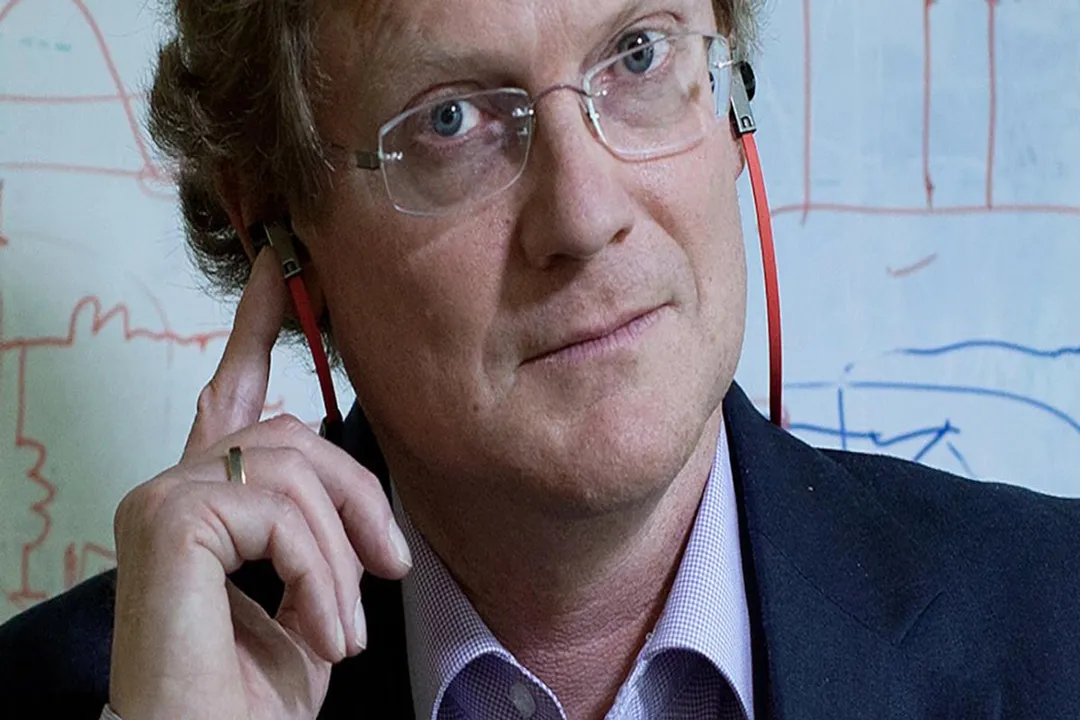
When discussing the modern wireless speaker—the kind that pairs instantly with a smartphone—the conversation invariably centers on the enabling technology: Bluetooth. The person widely credited with inventing this core technology, which standardized short-range digital communication, is Jaap C. Haartsen. [1][6] Haartsen, an electrical engineer, was instrumental in the development of the Bluetooth radio specification while working at Ericsson. [1][5] His work established the protocols that allow devices to connect locally without needing a fixed infrastructure, like a Wi-Fi router, making true consumer-friendly wireless audio possible. [4]
Haartsen's contributions were recognized formally when he was inducted into the National Inventors Hall of Fame, confirming his status as a key innovator in this field. [1] It is important to note that while Haartsen developed the wireless connection standard, he did not necessarily invent the speaker component—the physical enclosure, the magnet, or the cone—that produces the sound. [5] His invention was the digital handshake that allowed the audio file on a phone to jump through the air to a receiving speaker unit. [4]
# Defining Wireless
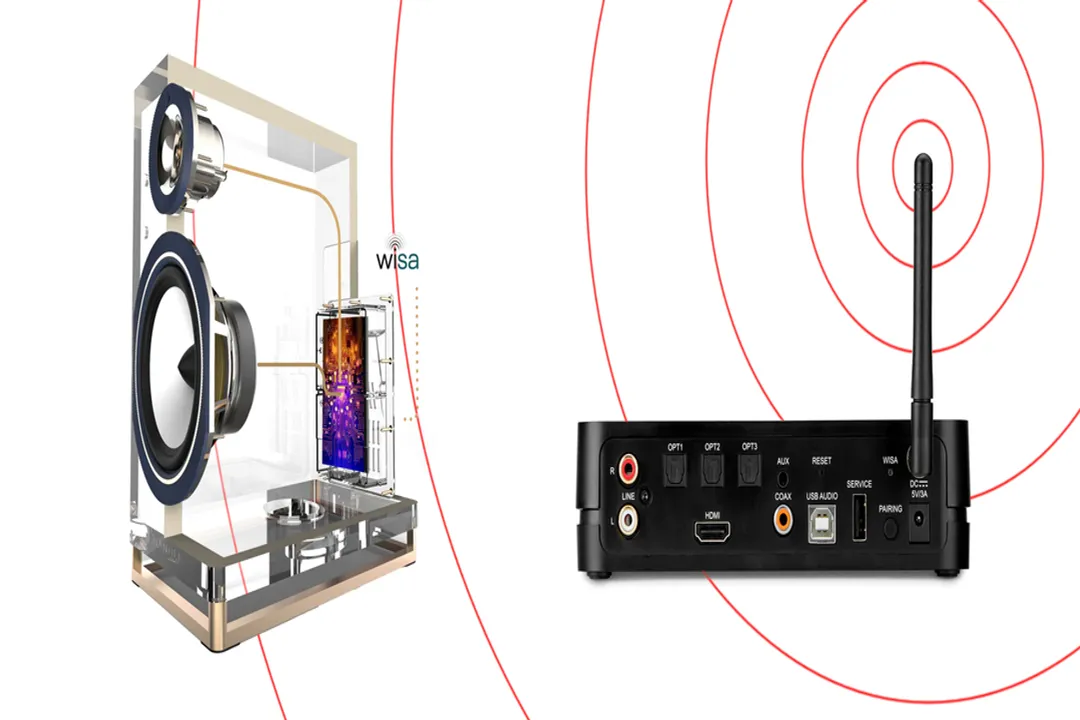
The simple phrase "wireless speaker" itself requires a degree of scrutiny, as different sources highlight different elements of the invention process. Some views suggest that true wireless capability extends beyond just the audio signal transmission; it also implies portability and self-sufficiency, meaning the speaker unit itself must be battery-powered rather than tethered to a wall outlet just for power. [7]
If we focus strictly on the signal transmission, then the development of standards like Bluetooth—and the engineers like Haartsen who built them—are the answer. [2] However, if we define "wireless" more broadly as unplugged audio playback, then inventors working on battery technology and miniaturized amplifiers also deserve recognition, although the sources provided focus primarily on the communication aspect. [7]
Here is a quick comparison of the required technological shifts for the modern product:
| Component | Key Innovation Area | Primary Contributor Concept |
|---|---|---|
| Signal Transmission | Short-Range Digital Link | Bluetooth Protocol (Haartsen) [1] |
| Signal Security | Anti-Jamming Techniques | Frequency Hopping (Lamarr/Antheil) [8] |
| Power Source | Portability | Miniaturized Battery Tech (Not detailed in sources) [7] |
| User Experience | Standardization and Adoption | Industry Consortiums (Implied by Bluetooth's success) [2] |
A deeper look reveals that the success of Bluetooth speakers hinges not just on the core invention, but on the ecosystem built around it. While Haartsen provided the technical specification, the widespread adoption depended on countless other engineers ensuring that this protocol worked consistently across different manufacturers and products globally. [4] It is a shared intellectual achievement built upon an essential foundational invention. [9]
# Market Realization
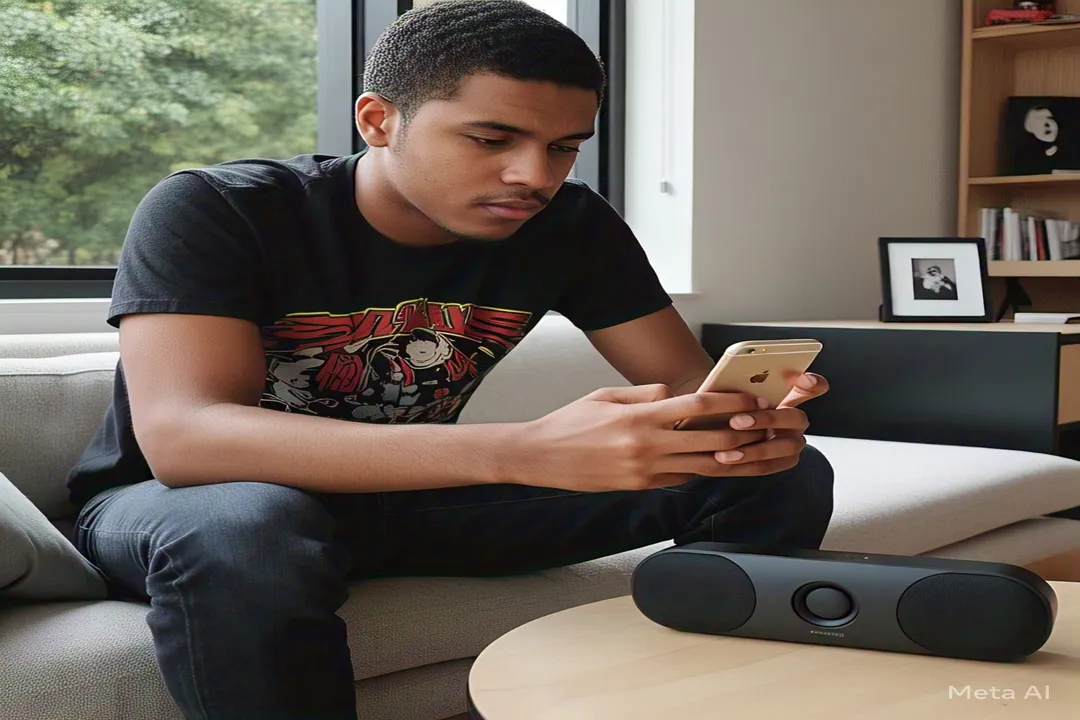
The history of wireless speakers shows a transition from vintage attempts—perhaps using early, short-range radio frequency (RF) transmissions for remote controls or primitive audio—to the high-fidelity, low-latency digital streaming we expect today. [2] Early attempts might have involved large, proprietary transmitter/receiver pairs, lacking the universal pairing convenience we now take for granted. [3]
The arrival of stable, low-power Bluetooth technology—built upon the foundational concepts of spread spectrum communication—was the catalyst that pushed wireless audio into the mainstream consumer market. [4][9] This standardization meant a user in one country could buy a speaker made by Company A and reliably connect it to a phone made by Company B, something that was nearly impossible with earlier, proprietary wireless audio solutions. [2] The standardization around frequency management, first conceptually outlined by figures like Lamarr, ensured that these new Bluetooth devices could coexist with other radio technologies in homes without causing excessive static or dropouts, a practical necessity for general readership enjoyment. [8]
When considering the sheer volume of wireless products today, it becomes clear that the true "inventor" might be less a single person and more the international collective that bought into and implemented the Bluetooth standard, turning a clever piece of engineering into a globally accessible consumer category. [1][4] This widespread adoption, facilitated by open standards, is what truly differentiates the modern wireless speaker from earlier, niche radio audio devices. [2]
Related Questions
#Citations
Jaap Haartsen | National Inventors Hall of Fame
From Vintage to Modern: The History of Bluetooth Speakers
What is the history of wireless speakers? - Quora
Wireless Speakers: Past, Present, and Beyond - Part 1
Popularization of Bluetooth and Bluetooth speaker knowledge
Target - Who invented the wireless bluetooth speaker ... - Facebook
The Truth About Wireless Speakers: Can It Be Totally Wireless?
Hedy Lamarr - National Women's History Museum
The History of Bluetooth - Auris, Inc