Who invented voice cloning?
Pinpointing a single person who first "invented" voice cloning is far more complex than naming the creator of a single device. The technology behind synthesizing a human voice has evolved over decades, building upon foundational work in speech processing, signal analysis, and, more recently, advanced machine learning. [6] It exists not as a singular eureka moment but as a gradual progression from crude electronic speech to the near-perfect digital mimicry we hear today. [7] To understand its genesis, we must trace the roots through several distinct technological eras.
# Synthesis Precursors
Long before artificial intelligence could convincingly replicate someone’s unique vocal timbre, researchers were already striving to make machines speak. Early efforts were mechanical and then electronic, focusing on creating synthetic speech rather than cloning a specific person’s voice. [4] These initial systems relied heavily on concatenation—piecing together recorded snippets of phonemes (the basic sound units of speech). [6] While groundbreaking at the time, the results often sounded robotic and lacked the natural flow and emotional nuance of human speech.
A significant step away from simple splicing involved parametric speech synthesis. This approach used mathematical models to describe the characteristics of speech, such as pitch, tone, and duration, allowing computers to generate speech based on these parameters. [6] This method offered more flexibility than concatenation but still struggled to capture the subtle, idiosyncratic textures that make one voice distinctly recognizable from another. The goal here was functional speech output, not identity replication.
The concept of creating a voice replica based on a known person, while perhaps rooted in science fiction, began merging with reality as computing power increased. Even as these precursor technologies developed through the late 20th century, the challenge remained the fidelity of the clone—making it sound truly human and truly that person. [7]
# The AI Leap
The true revolution that ushered in modern voice cloning—the ability to create a high-quality, indistinguishable replica from a short audio sample—is directly tied to the integration of deep learning and neural networks. [4][7] While the specific algorithm or model that first achieved "perfect" cloning remains difficult to attribute to one individual, the shift began in earnest when researchers started applying deep neural networks to the problem of speech synthesis. [6]
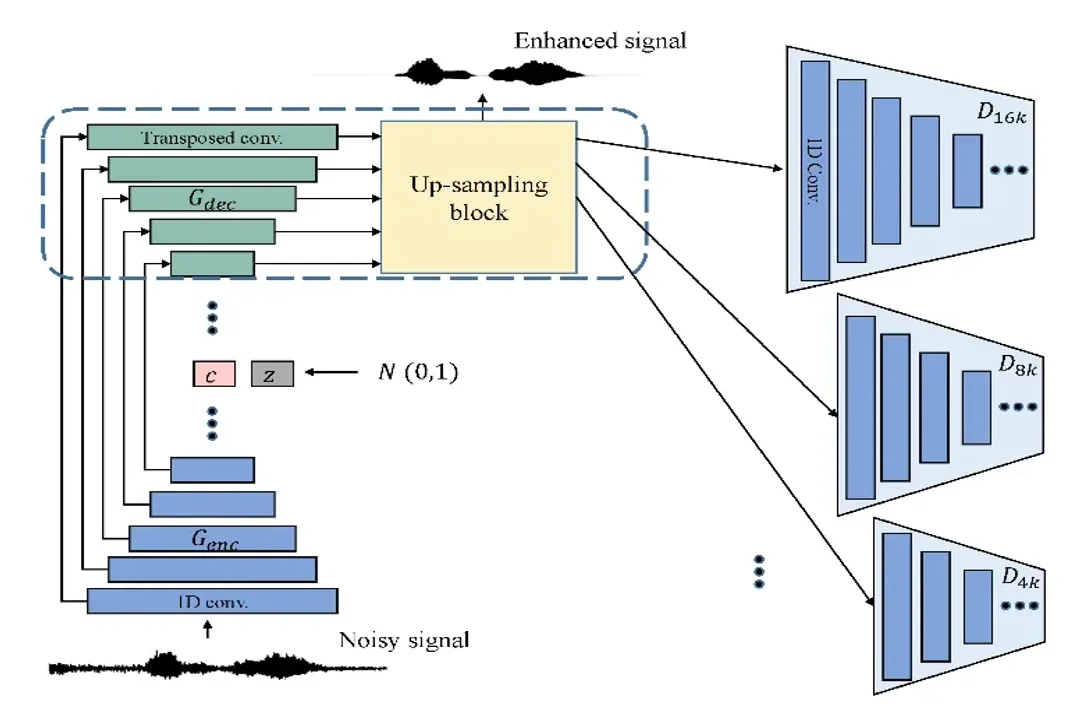
These deep learning models, often based on architectures like Generative Adversarial Networks (GANs) or various forms of autoencoders, learn the underlying statistical patterns of a target voice. [2][6] Instead of manually programming the rules of speech generation, the AI ingests hours of audio data from the target speaker and builds an intricate internal representation of how that person speaks—their vocal tract characteristics, accent patterns, and even habitual inflections. [4]
It is important to note that this technological development was not a sudden invention but rather a rapid convergence of improved processing power, larger datasets, and more sophisticated deep learning architectures developed across various academic and industrial labs globally. [6] What changed was the output quality. While early systems required extensive, clean recordings, modern AI allows for impressive results with surprisingly little source material, sometimes requiring only a few seconds of audio to train a convincing model. [9]
To better visualize the speed of this transition, one can look at the refinement stages:
| Era | Primary Technique | Fidelity Level | Data Requirement |
|---|---|---|---|
| Pre-2000s | Concatenative Synthesis | Low (Robotic) | Large databases of recorded sounds |
| Early 2000s | Parametric Synthesis | Medium (Synthesized but clear) | Mathematical models of speech |
| Post-2015 | Neural TTS / Deep Learning | High (Near-human, expressive) | Small to moderate target audio samples |
| [6] |
This dramatic reduction in the data required for high-quality synthesis is arguably the most crucial practical invention in the field, transforming voice cloning from a laboratory curiosity into a widely accessible technology. [9]
# Public Accessibility
If the invention question is hard to answer for the underlying algorithms, it is much clearer when we look at widespread public deployment. Voice cloning technology transitioned from an academic pursuit to a public utility with the development of accessible software platforms. These platforms democratized the creation process. [9]
The term "audio deepfake" became increasingly relevant as these tools proliferated. [2] Deepfakes, which rely on AI to create synthetic media, heavily include audio manipulation, where voice cloning plays a central role. [2] This transition to ease-of-use meant that individuals, not just specialized engineers, could generate convincing audio spoofs. This ease of access rapidly introduced significant ethical concerns, moving the conversation away from who invented the math and toward how society manages the resulting tool. [9]
The commercialization of text-to-speech (TTS) tools that incorporate voice cloning features made the technology readily available for creative uses, such as podcasting, audiobooks, or dubbing content into different languages with the original speaker's voice. [3][5] The capability to generate novel speech using an existing voice profile is now a common feature in many AI audio production suites. [8]
Where one might once have needed a sophisticated lab setup and a PhD in signal processing, now a person can potentially generate a convincing clone using a standard computer or even a mobile application, sometimes needing only a short clip for training. [9] This accessibility marks a major inflection point in the history of the technology. While the theoretical basis was laid by decades of speech research, the moment it became a consumer-facing product is when the technology truly entered the public consciousness.
# Ethical Dualism

The development pathway of voice cloning naturally splits into two distinct uses: creative application and malicious misuse. [1][4] On the positive side, it offers immense potential for accessibility, content localization, and creative endeavors where a specific voice needs to be preserved or adapted across various projects. [3][5]
However, the flip side is the surge in scams and fraud enabled by these easy-to-use tools. [9] Because the technology is now simple enough that many people can use it, the potential for impersonation increases exponentially. [9] Malicious actors use cloned voices to mimic family members, colleagues, or bank officials to trick people into transferring money or divulging sensitive information. [1][9]
It is a fascinating dichotomy: the technical complexity of the underlying neural networks is hidden behind an interface that allows anyone to produce material that is virtually indistinguishable from reality. [4] This reality means that the "invention" of voice cloning isn't just about the initial breakthrough in sound fidelity; it’s about the ongoing societal challenge created by the democratization of that breakthrough. The difficulty in tracing a single inventor means that accountability is also dispersed—it rests with the researchers developing the foundational AI, the companies building the accessible platforms, and the end-users deploying the resulting audio. [1]
The rapid evolution and accessibility of voice cloning mean that the conversation has necessarily shifted from the history of invention to the present-day concerns of detection and regulation. Establishing trust in digital audio communication is becoming a significant hurdle when a five-second sample can yield a convincing vocal imitation. [4] The true legacy of voice cloning’s development may end up being defined less by its creators and more by the security measures society develops to counter its potential for deception.
Related Questions
#Citations
Voice Cloning AI : A Brief History (of Controversies) | by DataByte
Audio deepfake - Wikipedia
All about voice cloning - Artlist
Everything you need to know about voice cloning - Deepgram
Artificial intelligence is being used to digitally replicate human voices
[PDF] The Cultural Origins of Voice Cloning - xCoAx 2020
What is Voice Cloning and How to Do It - Podcastle
AI has Made Voice Cloning Dead Easy, Ushering in a New Wave of ...
What Is Voice Cloning? A Guide to the Tech & Ethics - RWS