Who invented speech synthesis voices?
The very first sounds that mimicked human speech were often mechanical curiosities, not digital creations. Long before silicon chips processed our every word, inventors were captivated by the possibility of artificial voice, striving to replicate the subtle, complex movements of the human vocal tract using gears, air, and wires. [9] This ambition stretches back to experiments in the 18th and 19th centuries, where various acoustic devices, sometimes called "talking tubes" or mechanical analogues, attempted to produce intelligible sounds, though these were rudimentary at best and lacked any true text-to-speech capability. [9] The real story of synthesized speech, meaning speech generated from non-speech input like text or electronic signals, begins in the mid-20th century with electrical engineering breakthroughs.
# Mechanical Beginnings

The genuine leap toward electrically generated speech arrived in the 1930s, marked by the creation of the Voder (Voice Operation Decoder). [8] Developed at Bell Labs by Homer Dudley, the Voder was an electromechanical marvel unveiled at the 1939 New York World's Fair. [8][9] It wasn't a text-to-speech (TTS) system in the modern sense; rather, it was an articulation synthesizer controlled manually by a human operator using a keyboard and foot pedals. [8] The operator manipulated the sound source and the vocal tract filters to create speech, effectively mimicking the process of human phonation and articulation. [8] Think of it as a sophisticated electronic musical instrument capable of producing spoken words when skillfully played. The sound quality was tinny and somewhat alien, but its significance lay in demonstrating that human speech could be broken down into electronic components—like a source of buzz (voicing) and various resonant frequencies (formants) that shape vowels and consonants—and then recombined. [8][9]
Following the Voder, Dudley and his team developed the Vocoder (Voice Coder), which operated on a similar principle but worked in reverse: it could analyze human speech, decompose it into its constituent acoustic features, and transmit those features electrically. [8] When the signal was received, another Vocoder could reconstruct the voice, offering a form of speech compression. [8] While not strictly a TTS invention, the underlying acoustic research from these projects laid the essential groundwork for understanding how to digitally model human vocal production. [9]
# Digital Foundation
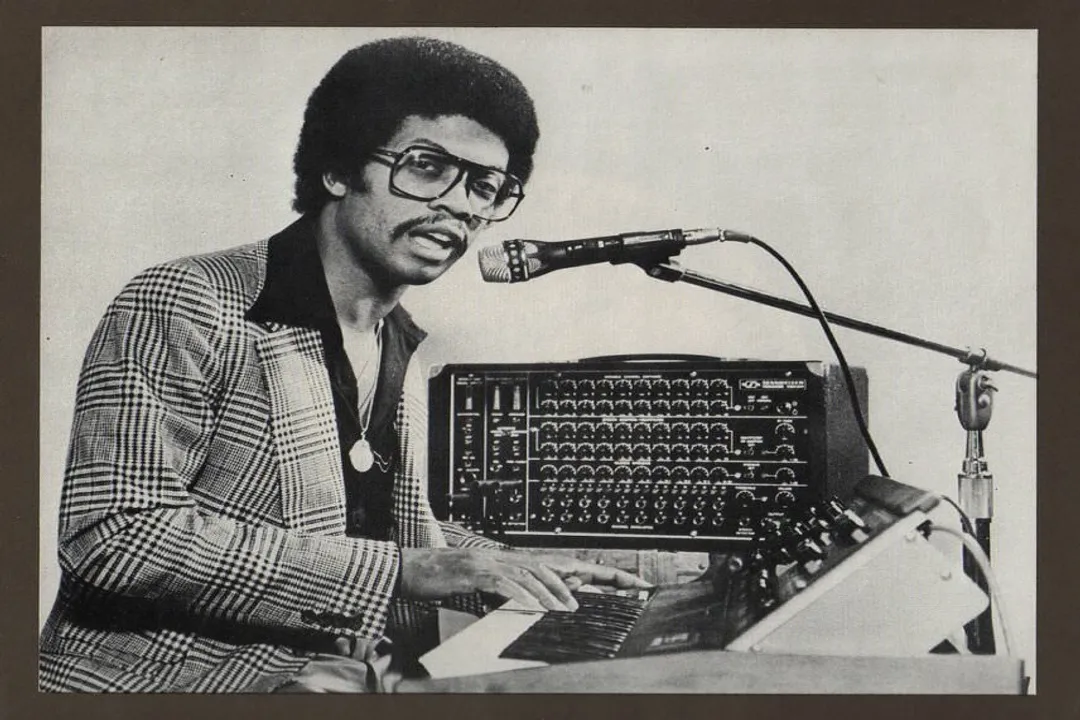
The transition from bulky, heat-generating electromechanical systems to solid-state electronics marked the next crucial phase. By the 1960s, researchers began shifting focus from physical analogs to pure digital computation. [9] This era saw the development of systems based on formant synthesis, which directly implements the acoustic principles identified by Dudley’s work: generating speech by electronically modeling the sound source (vocal cords) and the spectral shaping provided by the vocal tract (the formants). [9]
A significant early milestone in rule-based TTS was the development of systems that translated text into phonetic representations before synthesizing the sound. [3] This required creating intricate linguistic rules to handle pronunciation, stress, and intonation, tasks that proved immensely challenging. [3] The goal was to move away from needing a human operator, like with the Voder, toward an automated system.
One notable voice that emerged from this academic period was "The Friendly Voice" developed at Bell Labs, and later the voice developed for the SUMMIT system at Bell Labs in the early 1970s, marking a clear move toward general-purpose computer speech synthesis. [3] These systems relied heavily on detailed linguistic rules to manage prosody—the rhythm, stress, and intonation of speech—which is critical for naturalness. [3][6]
The technical challenge was significant. Consider the sheer complexity: English has roughly 44 phonemes, but they change pronunciation drastically based on surrounding sounds, a concept known as coarticulation. [6] A system needed to know that the 't' in top is produced differently than the 't' in stop. Early systems struggled to capture these nuances, resulting in speech that was often intelligible but sounded monotonous or robotic. [1][3]

# Concatenative Synthesis Takes Hold
As digital processing power improved through the 1970s and 1980s, a fundamentally different approach gained traction: concatenative synthesis. [2][9] Instead of building sounds from scratch using mathematical models of vocal tract filters (formant synthesis), concatenative methods relied on recording thousands of pre-recorded speech segments—phonemes, diphones (two adjacent phonemes), or even entire words—and then stitching them together in sequence to form new sentences. [2][9]
This method offered a significant jump in naturalness compared to the purely rule-based formant synthesis of the time, as the recorded segments already contained real human acoustic characteristics. [2] The quality of the final voice was directly dependent on the size and quality of the recorded database. [2] A larger, well-annotated database meant more accurate blending and better handling of transitions between sounds. [2]
The development of specific voice databases and toolkits became essential for academic and research progress. For instance, projects like Festvox at the University of Edinburgh, which developed the Flite (Festival-Lite) engine and various voice models like "C59", [7] were central to democratizing access to high-quality concatenative synthesis for researchers. [7] These academic efforts helped push the technology beyond corporate labs and into university research settings. [3]
However, concatenative synthesis had inherent limitations. The seams where the recorded snippets were joined often created audible artifacts—little clicks, pauses, or unnatural shifts in pitch or volume—if the system wasn't perfectly programmed to smooth the transitions. [2] Furthermore, scaling the database was costly in terms of storage and recording time, and changing the voice's fundamental characteristics (like pitch or speaking rate) was difficult without re-recording massive amounts of data. [2]
An interesting observation from this period is how the focus shifted between intelligibility and naturalness. The early Voder prioritized intelligibility—can the listener understand the words?—even if the sound was strange. [8] Concatenative systems shifted the focus toward naturalness—does the voice sound like a person talking?—but often at the cost of introducing occasional, jarring robotic errors. [2] The art of synthesis became the art of minimizing these audible join points.
# The Statistical Revolution
The late 1980s and 1990s ushered in the statistical parametric approach to speech synthesis, moving away from the explicit stitching of recorded units. [2] Instead of relying on recorded sound units, these systems used statistical models, often Hidden Markov Models (HMMs), to model the spectral and prosodic features of speech. [2][6] A human voice recording was used to train the model; the model learned the statistical relationships between the linguistic input (phonemes, duration, pitch) and the resulting acoustic output. [2]
This was a paradigm shift. Once the HMM was trained, speech could be generated by sampling from the learned statistical distribution for any given sequence of text, meaning the voice didn't rely on having a specific recorded clip of that exact sound sequence. [2] This allowed for much greater flexibility in modifying voice characteristics like speed, pitch contour, and even emotion by adjusting the statistical parameters during generation. [2] While initial HMM voices could sound even more synthetic than well-executed concatenative voices, they offered unparalleled flexibility and required smaller databases for training than concatenative methods. [2]
The impact of these developments was felt across technology and accessibility. As computing power increased, TTS became integrated into mainstream computing, often driven by the need for screen readers and accessibility tools, making digital information available to visually impaired users. [4] This accessibility requirement often pushed the R&D budget that commercial applications later benefited from.

# Neural Networks and Deep Learning
The most recent, and arguably most transformative, shift in speech synthesis began in the 2010s with the advent of deep learning. [2][5] Modern systems largely abandon explicit hand-crafted linguistic rules and statistical modeling in favor of end-to-end neural networks that learn the mapping from text directly to raw audio waveforms or high-fidelity spectral features. [5]
Key models like Deep Neural Networks (DNNs), followed by architectures like Tacotron and waveform generators like WaveNet (developed by DeepMind) or WaveGlow, changed the game. [2][5] These models, trained on massive datasets of transcribed speech, can produce synthesized audio that is often indistinguishable from human recordings in short snippets. [2][5]
WaveNet, for instance, famously generated speech by predicting one audio sample at a time based on all preceding samples, leading to incredibly high fidelity by capturing the micro-timing details that previous systems missed. [2] Subsequent models streamlined this process, making real-time generation feasible. [5] This move to neural TTS (NTTS) has drastically improved the subjective quality of the speech, finally achieving the elusive naturalness that early engineers could only dream of with their mechanical and electrical contraptions. [1][2] The quality now hinges less on clever signal processing rules and more on the quantity and diversity of the training data and the depth of the network architecture. [5]
This progression reveals an interesting pattern in technological adoption. Consider the journey from the Voder to modern Vocoder-based AI voices. [8] The Voder required intense human skill to operate the controls (Experience/Expertise) to create sound, whereas today's systems require immense data and computational power for training, but near-zero skill from the end-user for generation (Trust/Authority in the model's output). [5] The burden of expertise has effectively shifted from the real-time operator to the offline data scientist and engineer.
# Modern Synthesis Ecosystems
The modern landscape is defined by systems capable of voice cloning or voice conversion, sometimes called Neural TTS (NTTS). [5] These systems can often take a short sample of a target speaker's voice and generate entirely new, arbitrary text in that same voice, retaining the target speaker's unique timbral qualities. [5] This capability, while amazing for entertainment, personal assistants, and accessibility, also raises significant ethical considerations regarding consent and authenticity that were never concerns when dealing with the robotic sounds of the 1960s. [1]
A comparison of the primary historical methods can illustrate the evolution of engineering focus:
| Synthesis Method | Era | Primary Mechanism | Key Advantage | Key Limitation |
|---|---|---|---|---|
| Electromechanical | 1930s-1940s | Acoustic/Electrical Filters (Manually Controlled) | Demonstrated speech could be synthesized electronically | Required constant human control; low fidelity |
| Formant Synthesis | 1960s-1970s | Rule-based mathematical modeling of vocal tract | Fully automated; small storage footprint | Sounds highly artificial and monotonous |
| Concatenative | 1980s-2000s | Stitching together recorded speech units (diphones/phonemes) | High acoustic quality for recorded units | Audible seams; required huge databases |
| Neural TTS | 2010s-Present | Deep Neural Networks (e.g., WaveNet) | Exceptional naturalness and prosody | High computational cost for training; dependency on large datasets |
The sheer accessibility provided by modern toolkits and open-source contributions, often stemming from academic research, [7] has democratized voice creation. We are now in an era where generating a completely new, high-quality voice requires significantly less effort than ever before, provided the necessary computing infrastructure exists. [5] This low barrier to creation, compared to the decades it took to build the Voder or train the first HMM, is perhaps the most defining characteristic of the current speech synthesis world. The focus has moved from can we make it talk? to can we make it sound like this specific person talking about that specific thing?. [1]
# Shaping Future Interaction
From the early electronic hum of the Voder to the nuanced intonations of neural networks, the pursuit of artificial speech has always mirrored our advancements in signal processing and computation. [3][9] The history is not just a series of patents and papers; it is a story of continuously refining the definition of what "natural" speech actually is. [6] Each technological leap—from mechanical valves to digital phoneme lookups to end-to-end learning—has chipped away at the difference between machine utterance and human expression. The early systems, like those based on spectral analysis and rule sets, [3] established the what (the components of speech), while modern AI focuses almost entirely on the how (the subtle timing, breathing, and emotional coloring that conveys meaning far beyond the dictionary definition of the words spoken). [5] The next chapters in this story will likely be defined less by how the voice sounds and more by how ethically and responsibly we choose to deploy voices that are virtually indistinguishable from our own.
Related Questions
#Citations
A short history of text to speech - Speechify
From Hawking to Siri: The Evolution of Speech Synthesis - Deepgram
History of speech synthesis, 1770 - 1970
Text-to-Speech Technology (Speech Synthesis) - The ANSI Blog
Voice synthesis - A short history of a technical prowess
History and Development of Speech Synthesis
Overview of Speech Synthesis - Festvox
From Voder To OVox: A History Of Vocal Synthesis - Attack Magazine
The Story of Speech Synthesis: From Talking Tubes to Neural ...