When was the bin invented?

The journey to the modern trash can is surprisingly specific, tied to a single individual's push for civic order in a sprawling European capital centuries ago. Before dedicated, covered receptacles became commonplace, the act of discarding waste was, by necessity, a chaotic and often unsanitary affair. In many historical settings, refuse was simply tossed into the streets, gutters, or common open pits, leading to significant public health hazards. This lack of containment meant that waste management was largely a reactive measure—dealing with filth after it accumulated—rather than a proactive system of contained storage awaiting collection. The true "invention" of the bin, therefore, isn't marked by a single flash of genius but by a crucial moment where private, contained storage became mandated for public well-being.
# Naming Origin
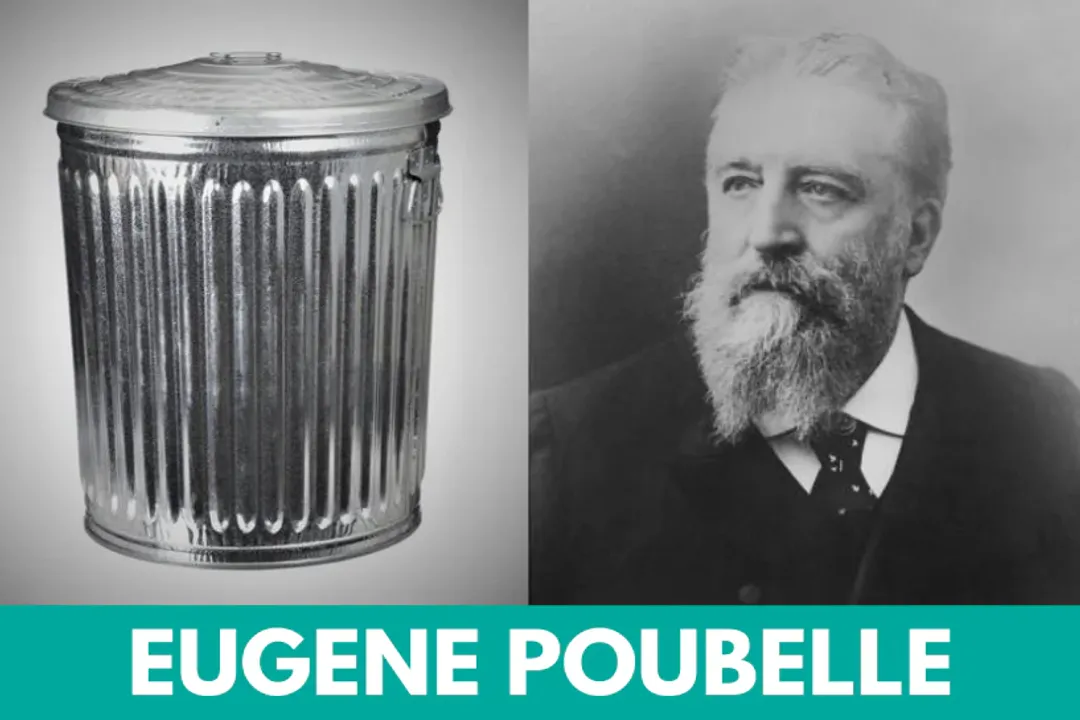
The very word we often use for this household essential often traces back to a single person's name, highlighting how influential his contribution was in establishing the concept in one major city. In Paris, the container for household rubbish became known as the poubelle. This French term is a direct eponym, derived from the name of Eugène Poubelle, a French diplomat serving as the civil administrator of Paris in the late 1880s. While the concept of storing waste existed in various forms—perhaps simple baskets or uncovered containers—Poubelle is credited with popularizing the standardized receptacle for urban use. His initiative marked a significant shift away from the traditional practice where residents might simply deposit their rubbish at the foot of their doorsteps for collection.
# Parisian Reform
The push for better waste management in Paris during the late 19th century was less about inventing a new object and more about mandating a specific type of object for domestic use. Before the regulations brought in by Poubelle, waste collection was inconsistent and often depended on individuals depositing their refuse where they pleased, or it sat awaiting irregular collection. Poubelle instituted rules requiring residents to place their trash into closed containers for later removal. This administrative action effectively standardized the household bin as a necessary piece of household equipment, fundamentally changing the relationship between private domestic waste and public space. It is important to note that while Poubelle enforced the use of a container, the earliest iterations of these containers were likely simple metal or wooden vessels, lacking the sophisticated features we now associate with modern bins. The key innovation here was legislative—forcing sanitation upstream to the point of generation.
# Hygiene Leap
The initial Poubelle container addressed the problem of location—keeping trash off the street—but it did not fully address the problem of sanitation within the home or during the collection process. This gap spurred the next major evolution in the bin’s design, focused heavily on hygiene and user interaction. This development primarily took place in the United States decades after the Parisian reforms. The advent of the foot-operated lid, commonly known today as the pedal bin, offered a substantial improvement in cleanliness.
The idea behind the pedal bin was to eliminate the need to touch the lid with one’s hands, reducing the spread of germs and preventing odors from escaping during storage. While the specific inventor of the very first pedal mechanism is debated, American industrial designer Lilian Moller Gilbreth is frequently associated with the development of the foot-operated lid concept around the 1920s or 1930s. This marked a change in focus: the bin transitioned from being merely a containment vessel to an active piece of sanitary equipment. Considering the early 20th century saw growing scientific understanding of germ theory, the pedal bin was a perfect convergence of new public health knowledge and domestic convenience technology. Where the poubelle was a triumph of civic organization, the pedal bin was a triumph of domestic engineering aimed at personal cleanliness.
We can compare the impact of these two milestones by looking at their primary function:
| Innovation | Approximate Era/Location | Primary Goal Addressed | User Interaction |
|---|---|---|---|
| Poubelle Container | Late 19th C. Paris | Public Street Cleanliness | Manual lifting/opening |
| Pedal Bin Mechanism | Early 20th C. US | Household Hygiene/Odor Control | Foot operation (hands-free) |
This evolution highlights a critical insight: the initial invention phase (Poubelle) solves the city's problem (street refuse), while the subsequent functional improvement (Pedal Bin) solves the individual's problem (smell and germs in the kitchen). Both were necessary for modern waste handling.
# Wheeled Convenience
For nearly a century after the pedal bin gained traction, the primary method of disposal for larger volumes of household waste—especially after garbage collection moved from door-to-door manual collection to curbside pickup—still involved manually lifting heavy containers. The logistics of mass collection favored large, durable containers, but the labor of moving them remained a point of friction for homeowners and sanitation workers alike.
This problem was addressed by the wheelie bin, a container designed specifically to marry storage volume with mobility. The concept often credited to revolutionizing curbside pickup appeared in the mid-20th century. One significant development is attributed to Carl Victor Larson in Sweden, who is sometimes noted for his early work on containers with lids and wheels in the 1940s or 1950s, though the modern standard seen globally often has roots connected to developments in the United States around the 1960s. The defining feature is the integrated wheel system and often a standardized lip or mechanism that allows the container to be mechanically lifted and emptied by a collection truck.
This shift was transformational for municipal services. Suddenly, the physical strain on sanitation workers was drastically reduced, allowing for faster collection routes and the adoption of larger container sizes without overburdening human labor. The wheelie bin represents the victory of logistics over mere containment. It integrated the bin directly into the automated mechanical process of refuse collection, making the entire system more efficient, provided the container was robust enough to withstand repeated mechanical abuse.

# Recycling Focus
While the fundamental design of the general waste bin stabilized around the durable, wheeled plastic container, the late 20th and early 21st centuries introduced a new mandate: source separation for recycling. This wasn't an invention of a new container shape so much as an invention of a new purpose for containers.
Recycling bins are distinct because they require clear differentiation from general waste bins to be effective. Early efforts in recycling often relied on residents using their own bags or unmarked containers, leading to contamination of separated materials. The modern push involved creating bins that were brightly colored, clearly labeled, or specifically shaped to denote their intended contents—paper, glass, plastics, etc.. The success of modern recycling programs hinges on the public's ability to instantly recognize which bin is which, often enforced through color-coding standards that vary by municipality but share a common goal. For instance, it’s common to see blue for paper and green for mixed containers, a visual shorthand that minimizes the cognitive load on the disposer.
The existence of specialized recycling bins requires a subtle, ongoing behavioral commitment from the user that the original poubelle never demanded. The earliest bins only asked, "Is this trash?" The modern system asks, "Is this trash, or is it paper, plastic, or glass?" This added layer of complexity necessitates clear, consistent labeling to maintain collection quality.
# Material Science Shift
It is impossible to discuss the evolution of the bin without acknowledging the material science that underpinned its widespread adoption. While early containers were likely made of wood or galvanized metal, the modern wheelie bin, the standard for municipal collection, is predominantly made from durable plastics like High-Density Polyethylene (HDPE). This material choice was critical for achieving the mobility and durability required for mechanical lifting. HDPE is lightweight enough to be managed by trucks but strong enough to resist cracking in cold weather or impacts from repeated mechanical handling.
If we look back at the timeline, the transition from heavy, perhaps even breakable, wooden or metal bins to standardized, lighter plastic ones directly enabled the rise of the automated collection vehicle. A local sanitation department today saves immense time and potential liability by using standardized plastic bins that can be safely hoisted and dumped without manual intervention, something simply not feasible with the heavier, inconsistent materials used even in the 1930s. This material science update is as much a part of the "bin invention" story as the shape or the lid mechanism.
The sheer diversity of containers available now—from small, open-topped desk bins to large, industrial wheeled carts—demonstrates that the "bin" is less a single invention and more an evolving system for managing waste at every scale. The initial concept, however, firmly belongs to the late 19th-century administrative effort to bring order to urban living.
#Videos
Invention Of The Wheelie Bin 🗑️- When Were Wheeled ... - YouTube
Related Questions
#Citations
Waste container - Wikipedia
The History Of The Trash Can (and All Its Dirty Secrets) - Medium
Eugène Poubelle: The Inventor of the Trash Can
History of Recycling Bins
Who Invented the Trash Can? | History of Trash Cans - PlasticMill
The History of the Wheelie Bin
r/AskHistorians on Reddit: When did the concept of garbage ...
Invention Of The Wheelie Bin 🗑️- When Were Wheeled ... - YouTube