Who invented the modern anchor?
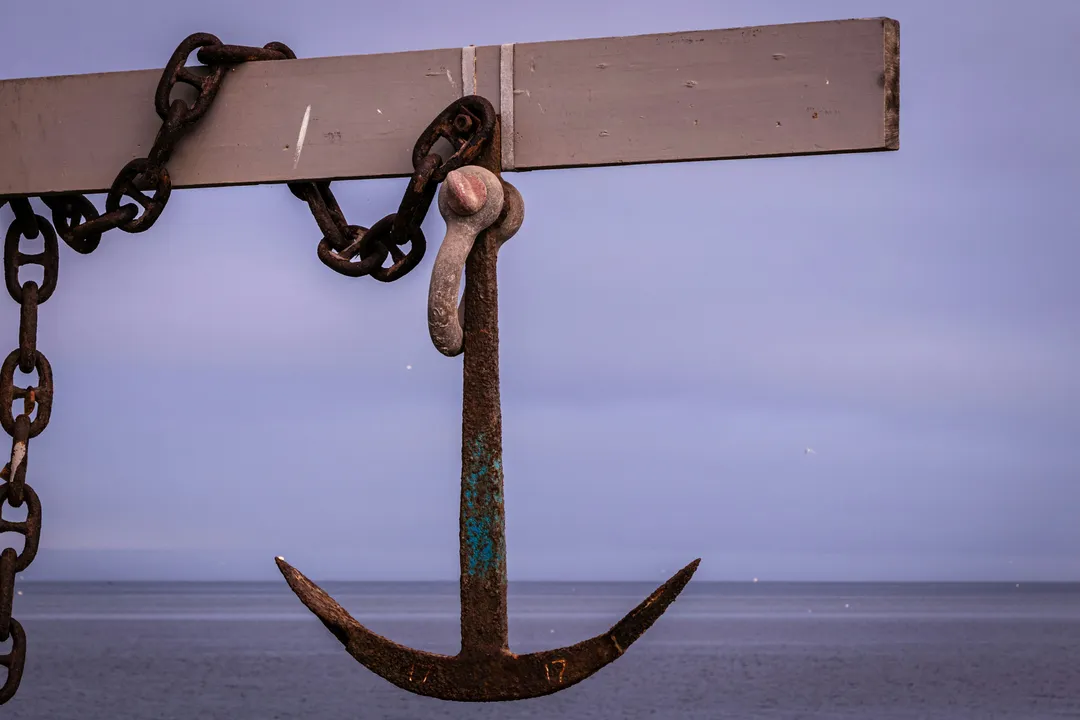
The history of securing a vessel to the seabed is less about a single moment of invention and more about a long, slow refinement driven by maritime necessity and metallurgical capability. The earliest devices used for this critical task were straightforward in concept: heavy objects designed simply to sink and stay put. [4][7] Evidence suggests that the Egyptians, long before the Common Era, employed anchors made from stone, sometimes notched to improve grip. [4][8] These early mariners recognized the fundamental need for something heavier than the water it displaced, yet this reliance on sheer mass presented significant handling challenges. [5][7]
# Early Materials

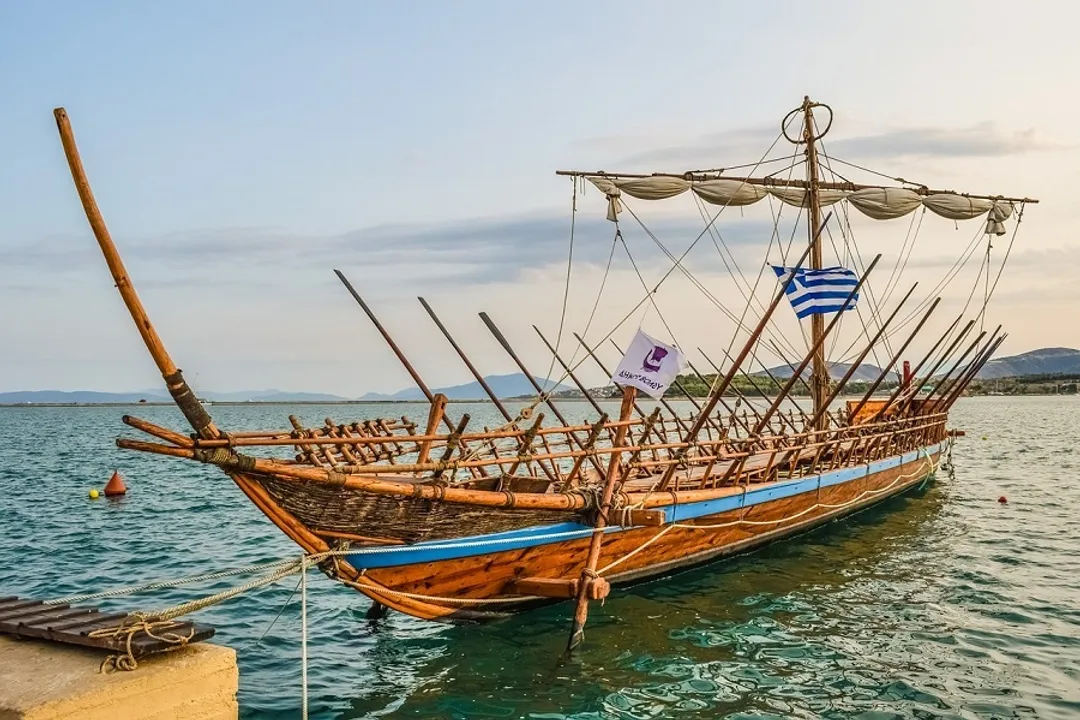
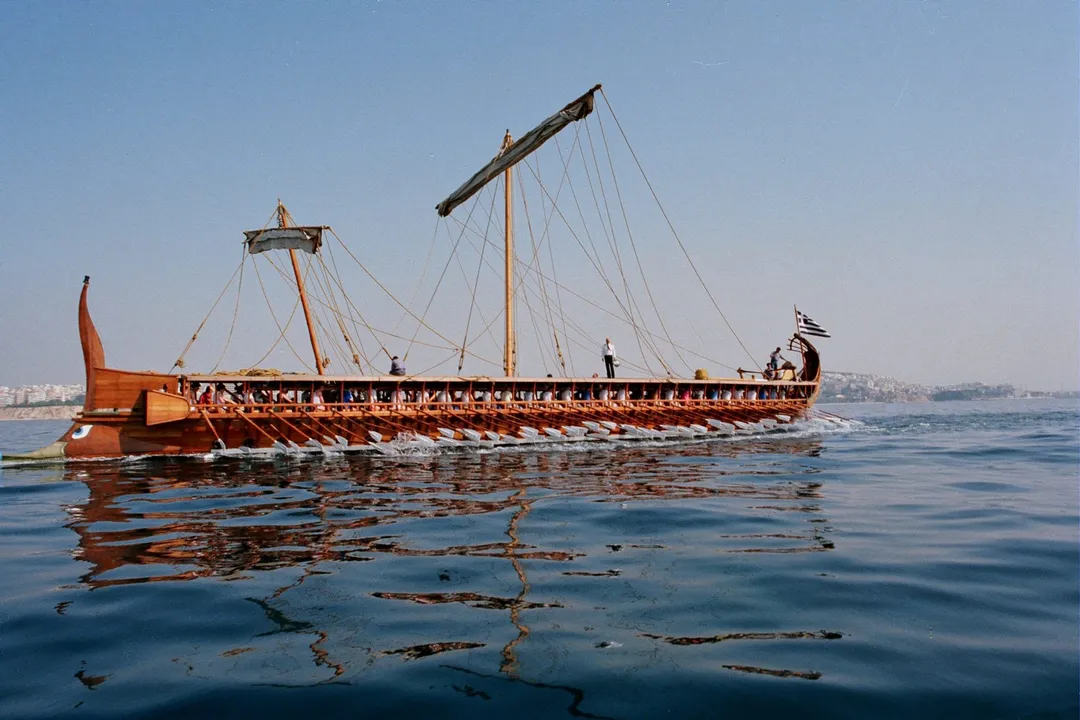
For centuries, natural materials served the purpose of anchoring. Among the Greeks, anchors evolved from simple stones to cumbersome wooden implements, often fashioned from heavy logs or pieces of wood weighted with stone sinkers. [4][7] The Romans, who inherited much of the Hellenistic seafaring tradition, typically used a single-shanked anchor made entirely of wood, often with the stock—the cross-piece—integrated into the design. [1][7] The primary drawback of these designs was their inefficiency; if the fluke (the pointed end) didn't happen to dig in, the anchor was useless, requiring sheer bulk to compensate for poor geometric design. [5] The sheer weight necessary to safely moor a large vessel using stone or wood limited harbor accessibility and required substantial manpower to deploy and retrieve. [8]
# Metal Adoption
The transition from organic to metallic construction marked the first major leap in anchor technology. As metallurgy advanced, the anchor began to take on a more recognizable, if still rudimentary, form. [1] By the first century AD, the Romans were employing iron anchors, often featuring two flukes situated opposite each other on the shank. [4] This introduced the concept of dual penetration, significantly improving the chances of the device catching the bottom, even if it landed awkwardly. [7] This iron design, sometimes featuring a ring or crown at the top of the shank for attaching the cable, established a pattern that would endure for millennia. [1][8]
It is essential to observe that even with iron, the fundamental concept remained tied to weight and shape. The design largely remained what we now term an "old generation" or "stock anchor," where the stock was vital for ensuring that at least one fluke presented itself correctly to the seabed. [1][7]

# Stock Anchor Refinement
The classic design, often referred to as the Admiralty anchor, features a stock placed perpendicular to the shank near the crown, usually about a third of the way up. [1][7] This stock is the key mechanical feature that forces the flukes into the bottom substrate when the pulling force is applied in any direction other than directly over the crown. [5] While an improvement over earlier forms, the Admiralty anchor had distinct liabilities. When being winched aboard, the stock often caused the anchor to foul on the ship's rails or hang awkwardly, a real problem for quick anchoring or recovery, especially in rough seas. [1][5] Furthermore, on soft bottoms, its holding power relative to its weight was still often insufficient for the growing size and speed of later sailing vessels. [5]
If we map the historical evolution against the required holding power versus the weight of the anchor itself, we see a clear line indicating that early anchors might have required a weight ratio of perhaps 10:1 (ten pounds of anchor for every one pound of required holding force in calm conditions). [5] This inefficiency is an unstated driver for innovation. A modern anchor often achieves equivalent or superior holding power at a 3:1 or even 2:1 ratio, simply due to superior geometry that maximizes penetration and resistance against drag. [5] This means the shift away from the heavy, stock-based design was inevitable as ships became faster and harbors more crowded.
# New Concepts Emerge

The true "modern" anchor did not arrive with a single inventor, but through a series of targeted improvements in the mid-19th century aimed at overcoming the stock's liabilities and increasing holding power. [1] These inventors focused on achieving superior grip without requiring a cumbersome stock, leading to the development of the "stockless" anchor. [1][5]
One critical development came from Mr. Hall, who introduced an anchor where the flukes pivoted on a hinge connected to the shank, allowing them to stow flat against the hull when retrieved, a major boon for the navies of the late 1800s. [1][5] Shortly thereafter, Mr. Trotman patented a design that featured hinged flukes but incorporated a short stock on the crown itself rather than on the shank, enabling the flukes to dig in more aggressively than Hall’s design while still allowing for easier stowage. [1][5] These patented designs signaled the acceptance that anchor geometry, not just brute weight, was the key to maritime security. [2] Mr. Trotman's anchor, for instance, sought to improve the initial setting process by using the internal stock to force the flukes into the ground immediately upon contact. [5]

# Modern Principles Developed
While the hinged-fluke designs solved some problems, they introduced others, such as potential fouling points or reduced holding power in very soft bottoms compared to a perfectly set traditional anchor. [1] The next major phase of innovation moved toward designs that were entirely self-righting and self-setting, eliminating the need for any external stock. [5]
The most enduring legacy of the modern era is often attributed to designs that prioritize flukes capable of digging deep and setting fast across varied seabeds. One notable evolution came with the development of anchors like the CQR (Corrected Quartering Rig), which utilizes a curved plow-like design that cuts into the bottom, providing excellent holding power once set. [6] Similarly, the Bruce anchor, which resembles a grappling hook with large, fixed flukes, was recognized for its ability to set quickly. [6]
It’s an interesting point of comparison that while the CQR design is highly effective on mud and sand, its broad profile can sometimes cause it to skip or fail to penetrate hard, rocky bottoms where a sharper, single-point design might succeed. This difference in performance based on seabed composition underscores why "the modern anchor" isn't a single shape, but rather a family of specialized, highly engineered geometric solutions that replaced the simple heavy hook. [5][6]
# Finalizing the Modern Anchor
The single most definitive step toward the anchors routinely used today, especially in recreational boating and many commercial applications, came from the development of the Danforth anchor, patented by Richard Danforth in the 1940s. [2] While earlier inventors focused on hinged mechanisms, Danforth’s breakthrough involved a stock placed at the opposite end of the shank from the crown, paired with broad, flat flukes. [2][5] This design functions almost like an inverted shovel; the stock hits the bottom first, turning the anchor over so the flukes instantly dig deep into sand or mud, achieving tremendous holding power relative to its weight. [2] The Danforth design truly synthesized the need for a setting mechanism (the rear stock) with high-surface-area holding mechanisms (the broad flukes) into one highly efficient, stockless package. [5]
Therefore, while Mr. Hall and Mr. Trotman demonstrated how to make anchors stow better and set somewhat automatically, Richard Danforth, through his patented high-surface-area, stockless design, provided what many consider the blueprint for the high-efficiency anchor widely adopted throughout the latter half of the 20th century and into the present day, finally breaking the reliance on cumbersome, ancient designs. [2][5] The invention of the modern anchor is thus best credited not to a single person, but to the iterative process culminating in the geometry perfected by Danforth and his contemporaries, moving from simple mass to applied hydrodynamics.[1]
Related Questions
#Citations
History of the anchor - Wikipedia
History of the Anchor Patent
Ground Anchors - The History
How the Ancient Greeks Invented the Anchors for Boats
[PDF] vryhof(infographic)(history of anchors)_03.indd - HubSpot
The history behind anchors: types, curiosities and their evolution
Old Generation Anchors: What's really the problem?
Anchors of the Seaport