Who invented the manual calculator?
The quest for faster and more accurate calculation predates written history, though identifying the singular inventor of the manual calculator is more about tracing a lineage of mechanical aids than naming one genius for a single device. Before we talk about gears and dials, the earliest forms of manual calculation were tools like the abacus, which allowed for arithmetic by manipulating physical beads or stones. [1][3] While incredibly effective and still in use globally, the abacus requires constant, active manipulation by the user for every step of an operation; it is a counting frame, not a true automated calculating machine.
# Ancient Precursors
The development of mechanical aids began long before the 17th century, though many earlier concepts remained theoretical or were lost to time. Devices relying on mechanical principles existed, often described as prosthetics for the human mind, designed to reduce the tediousness of manual reckoning. [3] The concept was simple: represent numbers physically, and then use mechanics to move those representations according to mathematical rules.
The true breakthrough moment, recognized broadly in the history of computation, centers on the work done by the French mathematician and philosopher Blaise Pascal. [4][6] His invention was aimed squarely at addressing a practical need rather than pure mathematical theory. [3]
# Pascal's Device
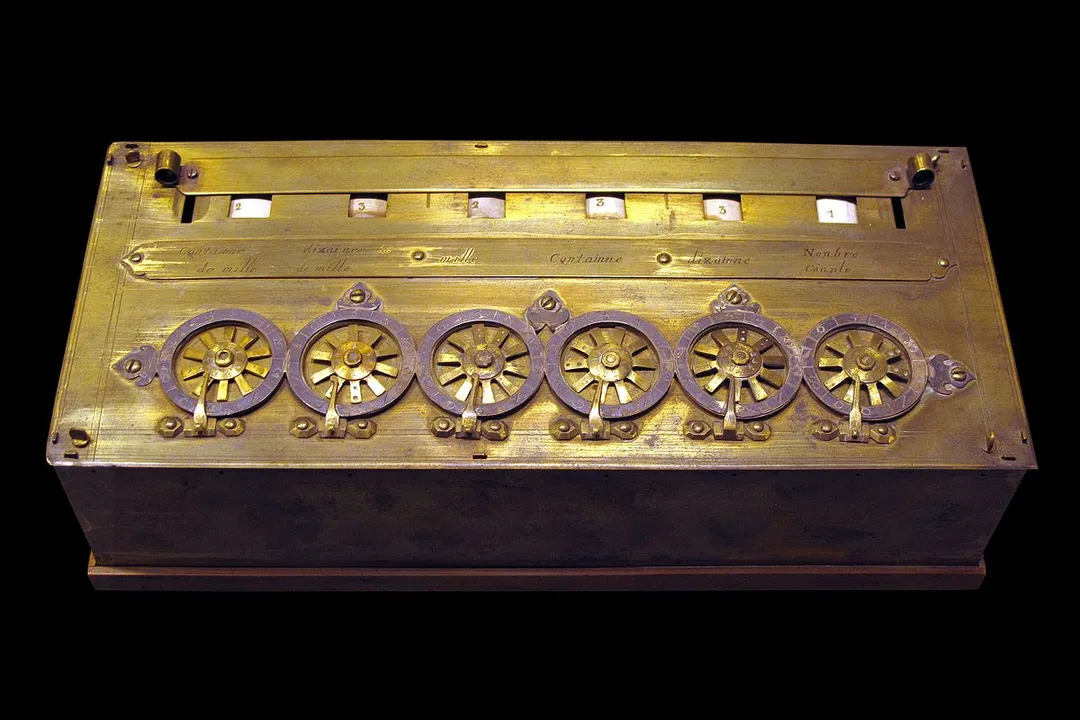
Blaise Pascal developed his machine, the Pascaline, primarily between 1642 and 1644. [4][6] The driving motivation was intensely personal and pragmatic: Pascal, at the young age of nineteen, was trying to ease the burden of the tedious accounting work required of his father, who was a tax commissioner. [3][5] This context—an invention born from domestic necessity for financial administration—is key to understanding its design and purpose. [5]
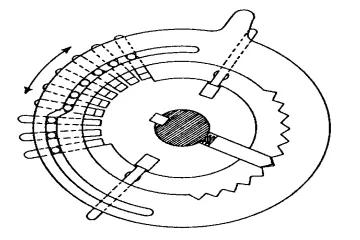
The Pascaline was a sophisticated mechanical calculator for its time. [6] It was not a simple adding stick or sliding rule; it was a geared device designed to perform addition and subtraction directly. [4][7] It operated using a series of interconnected numbered wheels or drums. [4] When one wheel completed a full rotation (moving from 9 to 0), a mechanism would automatically move the adjacent wheel forward by one unit—this was the crucial carry function. [6] This automation of the carry operation was the machine’s most significant contribution to calculation history, as it removed a major source of human error in multi-digit arithmetic. [4]
Mechanically, the Pascaline was complex, involving bronze gears and intricate mechanisms. [4] While it was revolutionary, it was not universally successful in the market. [6] Early models reportedly struggled with reliability and precision, particularly when dealing with the carry function across multiple dials. [4][3] One interesting point to consider about these early, gear-driven instruments is the sheer friction involved; every rotation and carry put stress on the physical components. It speaks volumes that Pascal managed to engineer a working solution using the metallurgical and engineering knowledge available in the mid-1600s. [6]
# Refining Arithmetic
Despite the engineering challenges, the Pascaline established the paradigm for mechanical calculation. [7] It proved that complex arithmetic operations could be offloaded to machinery. Following Pascal, other major figures built upon this foundation.
The German mathematician Gottfried Wilhelm Leibniz is perhaps the most significant successor to Pascal's work. [3] Leibniz refined the concept significantly by developing the Stepped Reckoner in the 1670s. [3] While Pascal’s machine could handle addition and subtraction, Leibniz focused on building a machine that could also perform multiplication and division mechanically. [3] He achieved this by introducing a specialized stepped drum, often called the Leibniz wheel, which allowed for repeated addition (multiplication) through a single turn of a crank. [3]
If we look at the functionality provided, the evolution from Pascal to Leibniz represents a leap from basic ledger work automation to more general-purpose arithmetic solving. The Pascaline was essentially a highly sophisticated odometer for arithmetic, whereas the Stepped Reckoner began to approach what we might recognize as a mechanical processor for the four basic operations. [5]
This era also saw the proliferation of simpler manual aids that did not rely on complex internal gearing. The slide rule, based on logarithms developed by John Napier, became an essential tool for engineers and scientists for decades. [1] A slide rule is undeniably a manual calculator—it requires the user to align scales and read the result directly—but it works on approximation and scaling rather than exact digital manipulation like the Pascaline. [1] The difference highlights a divergence in design philosophy: one aiming for exact, gear-locked results, the other aiming for quick, reasonably precise results through continuous scales.
# Mechanical vs. Human Error
The true value proposition of early mechanical calculators, like the Pascaline, was battling human fallibility in bookkeeping. [5] Imagine calculating a complex tax roll by hand across dozens of columns, needing to manually manage a "carry" every time a column rolled over from 9 to 10. A single misplaced carry could render an entire spreadsheet incorrect. [3] The machine’s purpose was to make that one specific, repetitive error impossible.
It is interesting to observe that while the Pascaline aimed for perfection in the carry function, its own complexity introduced new failure modes. If a gear was slightly misaligned, or if the user failed to fully return a dial before beginning the next operation, the errors generated by the machine could be far more obscure than a simple human addition mistake. [4] This trade-off—exchanging known human error for unknown mechanical error—was the central risk assessment every early adopter of such technology had to make.
# The Era Ends
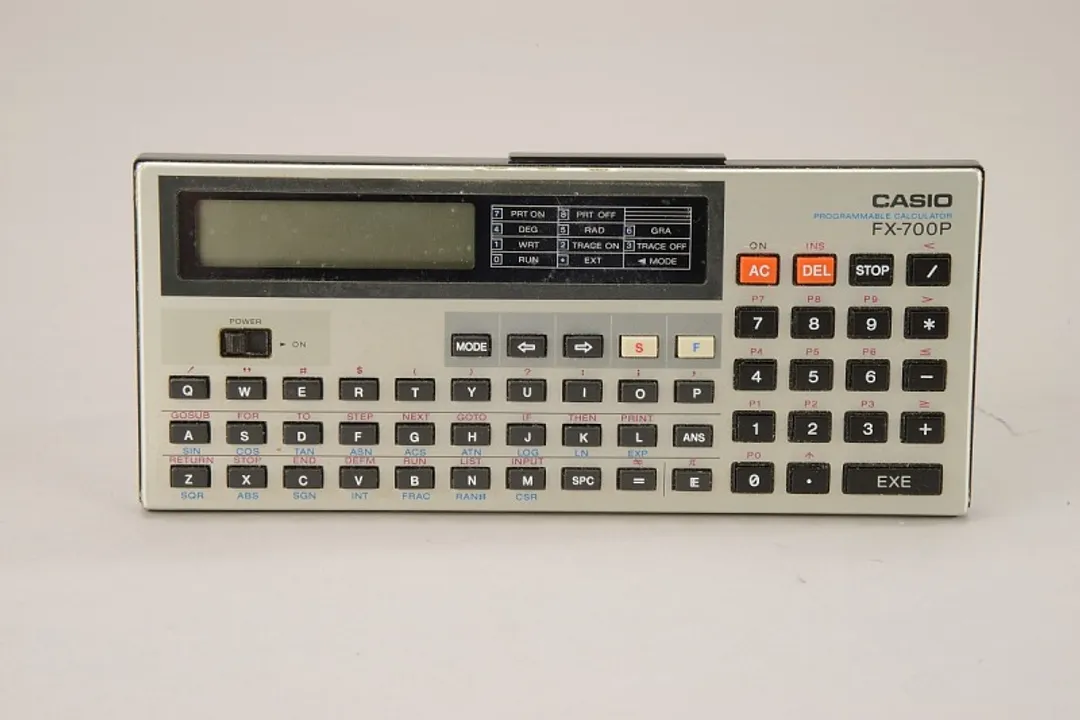
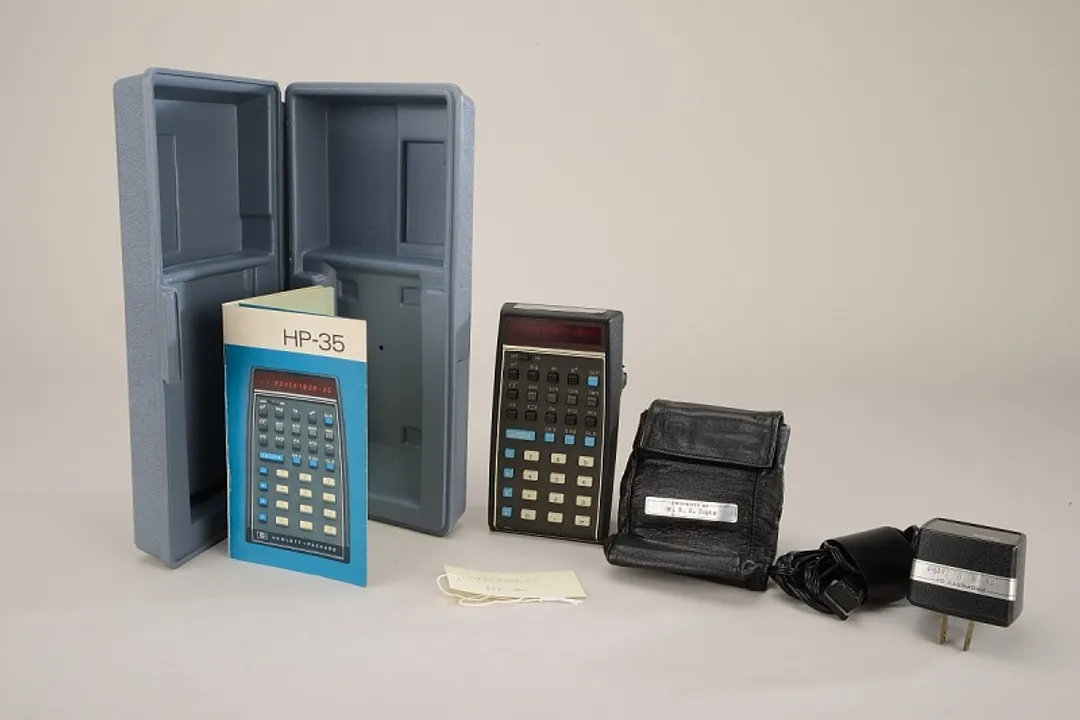
The manual, mechanical calculator reigned supreme, or at least as a high-end specialist tool, until the advent of reliable, compact electronics in the mid-20th century. [9] The introduction of the first handheld electronic calculators in the late 1960s and early 1970s marked the definitive end of the purely mechanical age. [1][9]
For instance, models like the Busicom LE-120A "Handy" in 1971 demonstrated that integrated circuits could perform the same arithmetic functions with greater speed, silence, and far less bulk than their gear-driven ancestors. [1][9] The comparison between a Pascaline—a beautifully crafted but heavy brass and steel box—and a slim, battery-powered electronic device illustrates the rapid technological obsolescence that follows a fundamental shift in core technology. While the gear train required painstaking, custom manufacturing, the new electronic components could be mass-produced uniformly, driving down cost and making precision calculation universally accessible to students and small businesses alike. [2]
Ultimately, the inventor of the manual calculator isn't one person, but rather Blaise Pascal, who engineered the first machine to automate the mechanical carry process, thereby solving the most frustrating source of error in manual arithmetic for his time. [4][6] His work provided the blueprint upon which all subsequent mechanical calculators, right up until the digital revolution, were based. [3]
#Videos
Who Invented The First Mechanical Calculator? - Next LVL ...
Related Questions
#Citations
Calculator
Visual History of Calculators: From Mechanical to Digital
The History of Calculators
Who invented the calculator?
Pascaline | Mechanical Calculator, Addition Device ...
Who Invented The First Mechanical Calculator? - Next LVL ...
Who invented the first calculator
Electronic Calculators—Handheld
One model of the world's first calculator is set for auction