Who invented the Mackintosh coat?
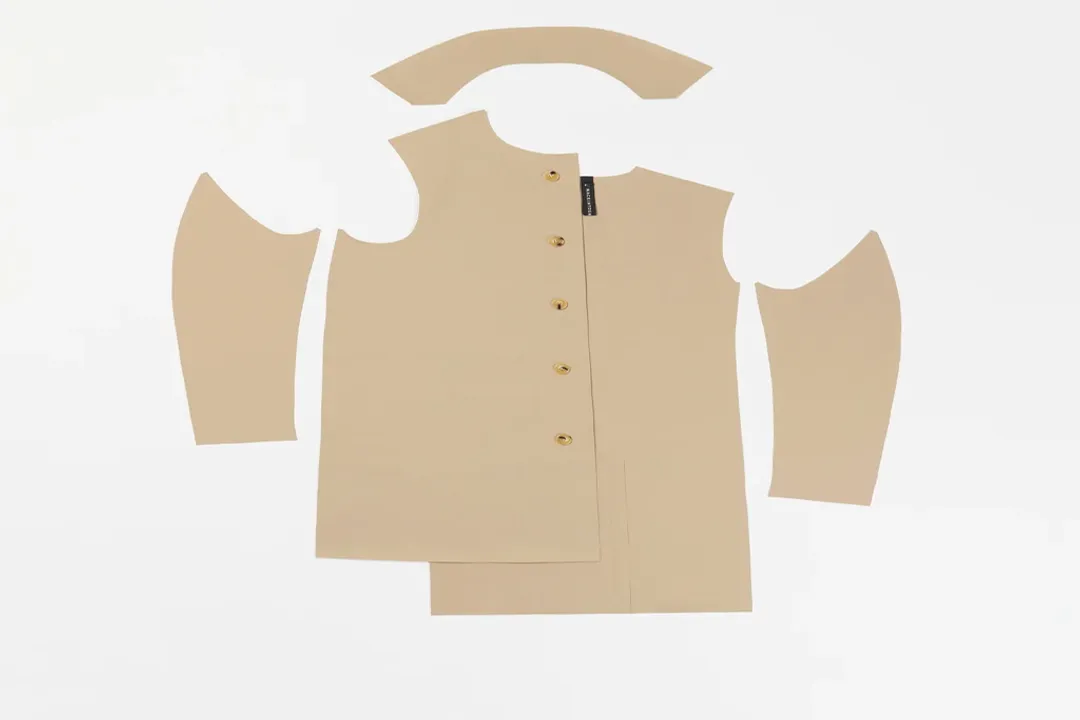
The story of the ubiquitous, weather-defying garment known today globally as the Mackintosh is inextricably linked to a pioneering Scottish chemist whose name, despite variations in spelling, echoes through the history of textile science. The invention wasn't a stroke of sudden sartorial genius but the practical outcome of rigorous chemical experimentation in the early nineteenth century. This waterproof wonder owes its existence to Charles Macintosh, a man whose work fundamentally altered how people faced the damp climate of the British Isles and beyond. [1][6]
# The Chemist

Charles Macintosh was born in Glasgow in 1766. [6] His professional life was rooted in chemistry, a field he pursued with dedication, eventually becoming a successful industrial chemist. [1][6] While his primary endeavors involved chemical manufacturing, the specific quest that led to the famous coat began with his exploration of coal-tar naphtha. [7] Naphtha, a flammable liquid distilled from coal tar, was a byproduct of the gas lighting industry that was rapidly emerging in British cities like Glasgow and Manchester during that era. [7][8]
Macintosh’s initial interest in this solvent was not focused on rainwear but on finding uses for the otherwise waste material from gas production. [7] This habit of seeing potential in industrial byproducts is characteristic of the era’s practical inventors. It is a testament to his technical curiosity that he was investigating substances that others were merely discarding.
# Rubber Solution

The breakthrough centered on rubber, an elastic material already known for its water-repellent qualities but notoriously difficult to work with due to its tendency to stiffen in the cold and soften unattractively in the heat. [1] Macintosh conceived of a way to render the rubber pliable and manageable enough to be applied to fabric.
His method involved using naphtha to dissolve raw rubber into a liquid state. [1][5] Once the rubber was suspended in the solvent, it could be spread onto a piece of cloth. [4] The crucial next step, which differentiated his approach from simply painting cloth with rubber, was sandwiching this treated piece between another piece of untreated cloth. [1][7] This dual-layer construction trapped the rubber solution between two textile surfaces, creating a barrier that was waterproof without exposing the sticky, rubbery material directly to the elements or the wearer’s skin. [7]
This process was patented in 1823, though the application for the patent had been lodged the year prior, in 1822. [7] This date, 1823, officially marks the invention of the Mackintosh coat as we understand it—a waterproof fabric made by sandwiching rubber between two layers of material. [5][7] Before settling on coats, Macintosh reportedly applied this technique to other items, including overshoes and gloves. [7]

# Early Limitations
While the invention was revolutionary, the first commercially produced coats were far from perfect. The technology of the day dictated the final product's inherent flaws. Because the rubber was essentially held together by the residual solvent—the naphtha—the coats suffered from two significant drawbacks: a persistent, strong odor and poor durability in varying temperatures. [7] The smell was often overpowering, making the garment something of a necessary evil for those who truly needed protection from the rain. [7] Furthermore, the material was heavy and stiff, a far cry from the light, flexible rainwear available today. The rubber often softened unduly in warmth, leading to a sometimes sticky exterior, a consequence of not yet having the chemical process of vulcanization widely integrated into rainwear production. [7]
It is insightful to consider that Macintosh’s challenge wasn't just waterproofing; it was sustainable waterproofing. The industry at the time hadn't yet unlocked the secret—later perfected by Charles Goodyear—to chemically cross-link the rubber molecules (vulcanization), which would stabilize the material permanently against heat and cold while allowing for the evaporation of the solvent. [7] Macintosh solved the immediate problem of wetness, but the refinement of the material itself required further chemical advancements that followed his initial patent.
# Naming Conventions
One point of continuous, low-level confusion surrounds the spelling of the garment itself. The inventor's surname was spelled Macintosh. [1][6] However, the resulting coat became colloquially known, and often officially branded, as the Mackintosh. [1][5] This shift in spelling—dropping the 'i' before the 'n'—is fascinating from a linguistic standpoint. It suggests that as the item moved from being a specific patent held by a specific person into the realm of general consumer goods, the name simplified or adapted to common usage, much like 'Hoover' for vacuum cleaners or 'Kleenex' for tissues. [5] This linguistic transition marks the successful assimilation of the invention into the public consciousness; the object became more memorable than the inventor's precise orthography. [5]

# Industrial Spread
The business side of the invention involved partnerships to scale production. Charles Macintosh entered into an agreement with a chemical manufacturer, James Syme, to help realize his vision. [7] While Macintosh's chemical works were established in Glasgow, the commercial viability and manufacturing scale-up often associated with early British industry drew heavily on centers like Manchester. [6][8] The coat became a staple for businessmen, travelers, and anyone regularly exposed to the notoriously unpredictable climate common across the United Kingdom. [7]
# The Lasting Silhouette
Despite the initial material shortcomings, the concept proved irresistible. The Mackintosh was a genuine solution to a pervasive problem. Its longevity meant that when later chemical processes, particularly vulcanization, arrived to perfect the rubber, the foundational design—the laminated, multi-layer textile—remained the template for nearly all high-quality raincoats that followed. [7]
Today, the legacy is carried forward by several entities, perhaps most notably by the contemporary brand that bears the slightly altered spelling, Mackintosh. [3][10] This modern iteration honors the original technique, often producing coats by hand in Scotland using traditional methods, albeit with modern, refined rubberized fabrics that lack the heavy odor of the 1820s originals. [3] These contemporary pieces are often crafted with a meticulous attention to detail, emphasizing the structure and cut that made the original garment a necessity, not just a novelty. [10]
# Comparing Old and New
To truly appreciate the invention, one can compare the initial product with its modern descendant.
| Feature | Original Mackintosh (c. 1830s) | Modern Mackintosh Coat |
|---|---|---|
| Waterproofing | Rubber dissolved in Naphtha, sandwiched between cloth | Advanced rubberized or bonded technical fabric |
| Odor | Strong, lingering smell from retained naphtha | Minimal to none |
| Flexibility | Heavy, stiff, prone to cracking or softening | Light, pliable, designed for movement |
| Manufacturing | Industrializing, often based in Scotland/Northern England centers | Often hand-finished in Scotland [3] |
The original coat was a triumph of applied chemistry over natural elements, but the modern version is a triumph of advanced material science built upon that initial structural insight. When considering purchasing a high-quality coat today, an understanding of this history offers a valuable lens. For example, those looking for the most traditional, artisan experience might seek out brands that explicitly state their adherence to the original Scottish manufacturing process, valuing the heritage over sheer lightweight performance, a choice Charles Macintosh himself might have understood, as he valued efficacy above all else. [3]
Charles Macintosh, the man who patented the process, was granted a patent for another important invention later in life: a method for creating steel plates, though this received less public notice than his famous rainwear. [1] He passed away in 1843, [1] leaving behind an invention that proved so successful it effectively named an entire category of clothing, a longevity that few industrial patents ever achieve.
The term "mackintosh" quickly became the generic descriptor for any waterproof coat made with rubberized fabric, demonstrating the immediate and profound impact of his chemical solution on everyday life during a period when remaining dry while traveling or working outdoors was a significant daily struggle. [5][7] The inventor was Charles Macintosh, but the enduring legacy belongs to the Mackintosh.
#Videos
The story of Charles Mackintosh - he invented rainwear! - YouTube
Related Questions
#Citations
Charles Macintosh - Wikipedia
The Macintosh Coat - Michael Andrews Bespoke
Mackintosh Deconstructed | Handmade In The UK
Charles Macintosh and his Famous Coat - Google Arts & Culture
Charles Macintosh | Raincoat inventor, Rubber Chemistry, Industrial ...
History of the Mackintosh: 200 years of the classic raincoat
the Macintosh (very often spelt “Mackintosh”) which was ... - Facebook
The story of Charles Mackintosh - he invented rainwear! - YouTube
Mackintosh for Men | MR PORTER