Who invented cold storage automation?
The creation of automated cold storage didn't stem from a single inventor's sudden breakthrough but rather from a gradual evolution, where necessity forced the marriage of two distinct, complex fields: temperature-controlled warehousing and mechanical automation. [6] To understand who "invented" it, one must look at the lineage of both logistics control and refrigeration technology. Early cold storage, which began with simple ice houses centuries ago, eventually advanced to mechanical refrigeration, creating controlled environments necessary for preserving food and pharmaceuticals. [1]
# Early Refrigeration
The history of refrigeration itself stretches back quite far. Techniques involving storing ice cut from frozen lakes in insulated pits predate modern methods by generations. [1] By the 19th century, mechanical refrigeration systems began to take hold, moving the industry away from reliance on natural ice. This shift was essential because without reliable, mechanical cooling, the high operational costs and inherent risks of maintaining deep-freeze environments would have made large-scale automation impractical, as human interaction would have been constantly required for safety and maintenance. [1]
# Automation Entry
The true push for automation in warehousing began to gain momentum well before the cold chain was fully digitized. Companies specializing in material handling equipment started developing systems like the Automated Storage and Retrieval System (AS/RS), which uses cranes and shuttles to deposit and retrieve loads in high-density racking structures. [4] Muratec, for instance, has a history rooted in developing automated systems, which laid the groundwork for modern warehouse mechanics. [4] When applying these proven, dry-storage automation concepts to the freezing or chilling environments of cold storage, the industry hit a unique set of obstacles.
# Technical Hurdles
The migration of standard warehouse automation into sub-zero temperatures presented immediate engineering challenges that required specific innovations. A key difficulty lies in material science. While a standard warehouse deals primarily with ambient temperatures, deep-freeze automation must account for the physical changes that occur in machinery components. [8] For example, many plastics and lubricants used in conventional conveyor belts, sensors, and electrical components can become brittle, fail, or seize up when consistently exposed to extreme cold. [8] This necessitated the invention and adoption of specialized components designed to operate reliably at temperatures perhaps as low as -20°C or even lower for frozen goods storage. [8]
It requires more than just robust hardware, too. The control systems—the software brains directing the machinery—also needed adaptation. Standard Warehouse Management Systems (WMS) needed to be upgraded or replaced with specialized Warehouse Control Systems (WCS) capable of handling the unique inventory tracking, temperature monitoring, and energy consumption optimization unique to cold chain logistics. [7]
One interesting point of divergence from standard automation is the cost profile. While automation in ambient storage justifies its investment primarily through labor reduction and throughput gains, automating a cold storage facility carries an added, substantial cost justification: energy efficiency. A poorly managed or inefficient cold chain system can hemorrhage money through power consumption, making energy-saving automation features, like optimized crane travel paths in an AS/RS, not just a benefit but a core necessity for economic viability. [3][9]
# Key Technological Contributors
Since no single person is credited with this fusion, the invention narrative shifts to the companies that successfully engineered and deployed the first reliable, large-scale automated cold storage solutions. This evolution often centers on specific technologies rather than a grand single invention.
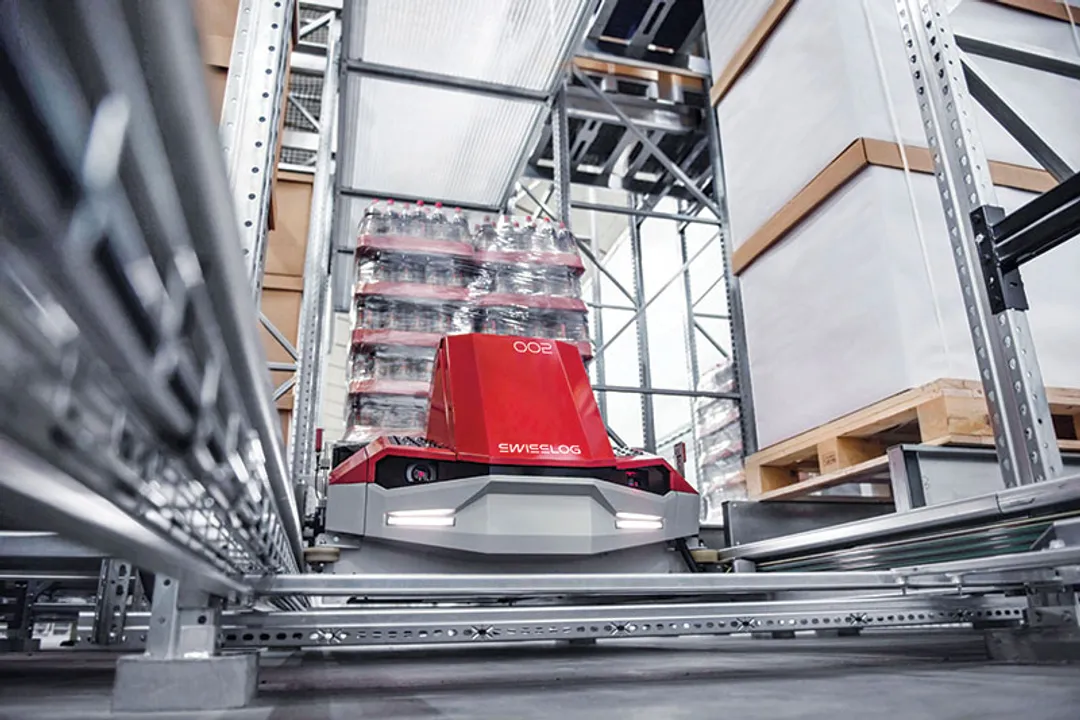
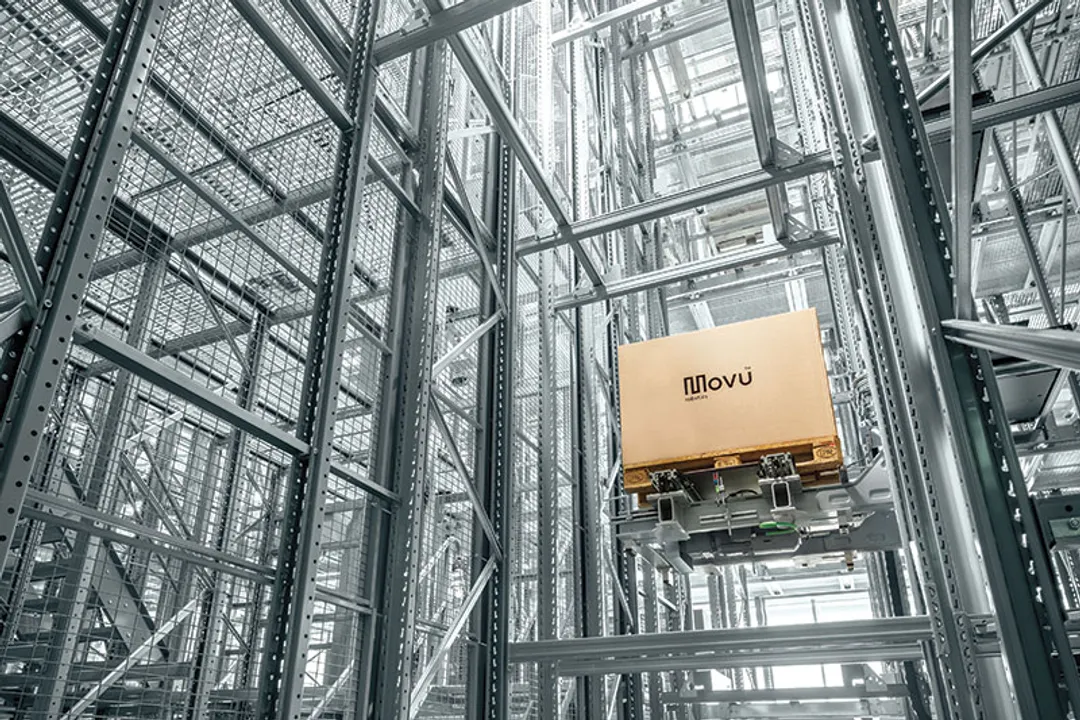
The integration of high-density storage concepts with robotic handling is central. Solutions often involve specialized cranes or shuttle systems designed specifically for low-temperature environments. [8] Companies that focus on temperature-controlled automation today are often seen as the leaders in this space, building upon decades of general automation expertise. [5] For instance, case studies show major food distributors investing heavily in such systems, often citing throughput increases and space savings as primary drivers. [3][7] One case involving a large U.S. food distribution center, for example, highlighted the implementation of high-bay AS/RS technology in their frozen storage area, demonstrating the practical application of these integrated concepts. [3]
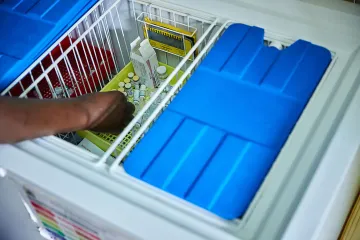
Another area of development has been the evolution of the storage medium itself. Some modern approaches focus on proprietary storage technologies designed for efficiency, such as using phase change materials to maintain temperature stability, which subsequently integrates with the automation hardware. [2] These solutions represent an evolution where the storage medium and the handling system are designed as a unified package, rather than trying to force legacy automation onto existing temperature zones. [2]
# Modern Automation Implementation
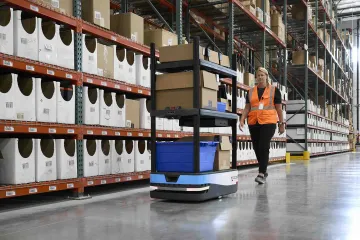
Today's state-of-the-art systems involve sophisticated robotics and software coordinating the movement of goods, often operating in areas where human presence is limited or non-existent. [10] The modern automated cold storage environment relies on three main pillars working in concert:
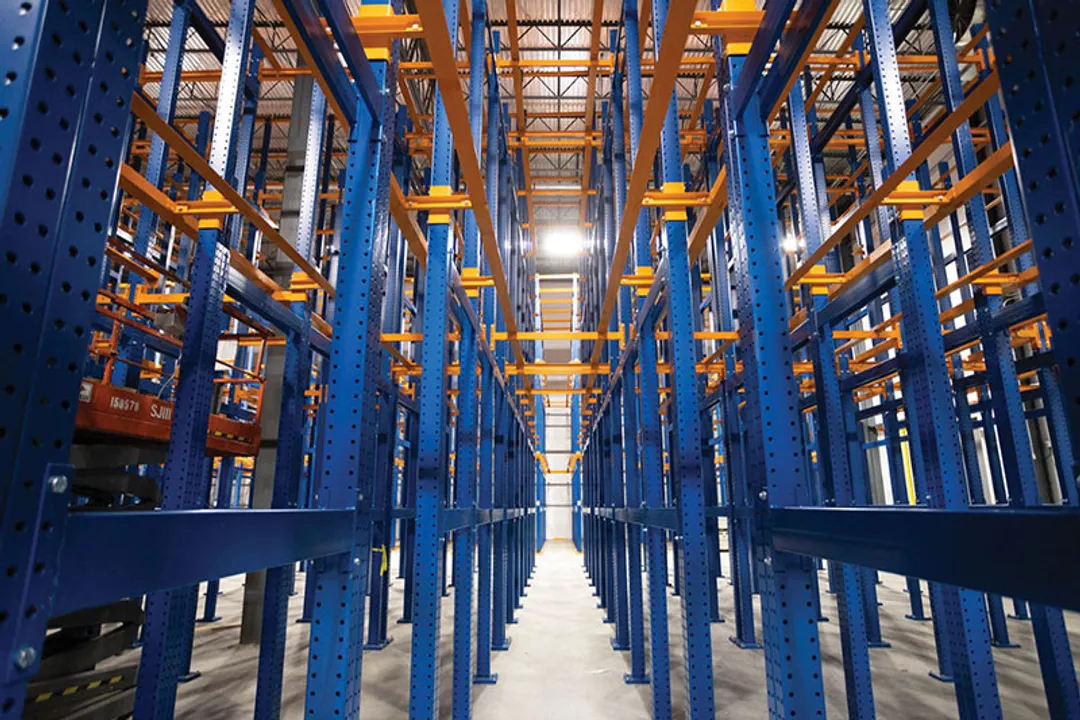
- The Physical Infrastructure: This includes specialized racking, insulated building envelopes, and machinery built to withstand the cold. [8]
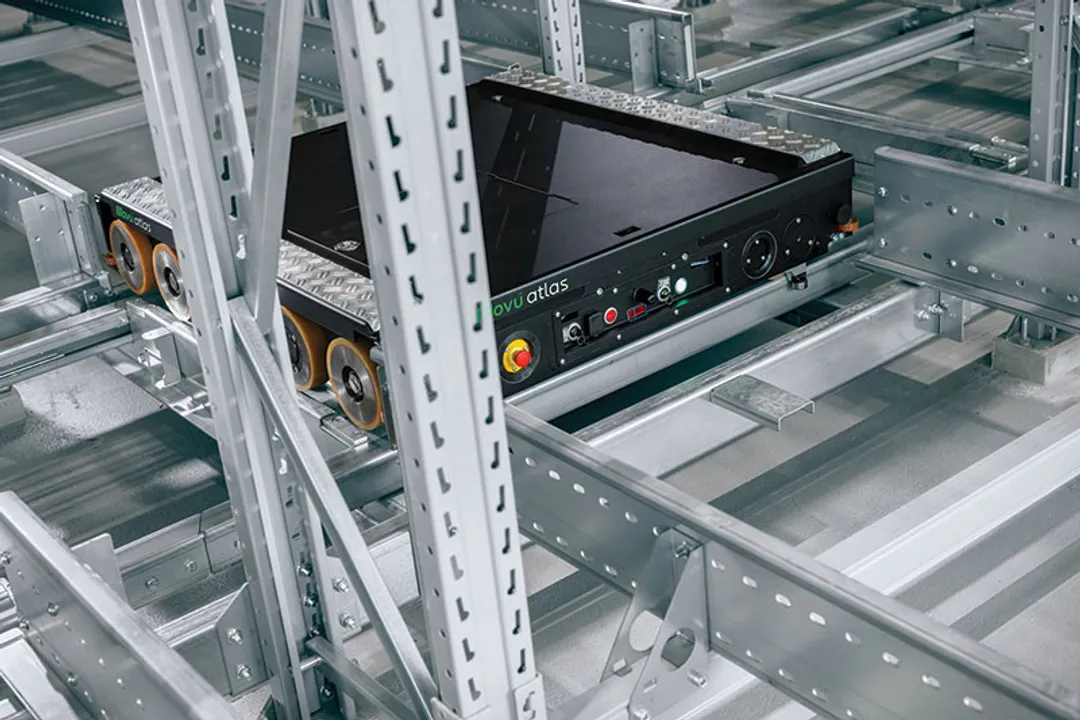
- The Handling System: This is the mechanical aspect—cranes, conveyors, and shuttles that move pallets or cases. [4][8]
- The Control Layer: Advanced WMS/WCS platforms that dictate inventory placement, retrieval sequences, and integrate with enterprise resource planning (ERP) systems. [7]
The drive to keep workers out of the harshest environments is a major ethical and operational consideration. Automation minimizes direct human exposure to extreme cold, which improves worker safety and reduces the need for specialized, high-cost protective gear and mandated rest breaks. [9] In facilities dedicated to frozen goods, the goal is often to keep human interaction to an absolute minimum, sometimes restricted only to the dock areas where goods enter and leave the cold zone. [10]
The implementation itself often follows a pattern. A facility identifies a need for higher density or faster throughput in their freezing or chilling sections. They then select an automation provider who can tailor an AS/RS or shuttle system to meet the required energy efficiency and operational temperature. [6][5] The actual "invention" is thus distributed among those who developed the core AS/RS concept, those who innovated cold-resistant materials for the components, and those who wrote the specialized software to manage the resulting complex environment. [8]
A crucial, often overlooked aspect of the automation integration involves the loading and unloading interface. While the internal storage might be fully automated using AS/RS technology, the point where a standard forklift places a pallet onto the entry conveyor or where a pallet leaves the exit point remains a hybrid zone. [6] Successfully automating that transition—the handoff between the human-driven or conventional external logistics network and the fully automated internal cold system—is arguably as critical an engineering feat as the high-bay storage itself. Failure here stops the entire flow, regardless of how fast the cranes move inside. [7]
# Specialized Focus Areas
The need for temperature control is not uniform across all cold storage. The requirements for a facility storing chilled produce (refrigerated) are distinct from those storing deep-frozen items like ice cream or specific vaccines (freezing). [2]
For example, Viking Cold emphasizes its proprietary storage solutions that utilize phase change materials to maintain temperature stability across wide ranges. [2] When automation is married to this kind of medium, the system gains inherent thermal resilience, meaning if the automation system momentarily halts for maintenance, the product integrity is protected for a longer duration compared to traditional freezers. [2] This resilience offers an operational buffer that non-automated systems cannot easily match.
Furthermore, the application in pharmaceuticals and specialized food items demands extreme traceability, which automation excels at providing. [10] Every pallet movement, every temperature reading associated with a specific location, is logged digitally, offering an auditable record superior to manual logging systems. [9] This electronic paper trail is what allows sensitive products to move reliably through the automated chain. [10]
# Global Scale and Future Direction
Leading global providers of temperature-controlled automation often feature highly specialized systems, indicating that the market drives innovation through specific performance metrics rather than singular inventions. [5] These advancements touch on vertical integration, with some providers offering a more complete solution package that covers everything from the building design to the software layer. [5]
While the exact "who" remains a collective of engineers, material scientists, and software developers across decades, the direction is clear: increased density, improved energy usage, and greater integration with predictive analytics. [9] The move toward fully automated cold storage is simply the logical extension of automating any high-value, high-cost logistics process, specialized by the unique physics of low-temperature handling. [6] The ultimate "inventor" is perhaps the global supply chain itself, demanding greater precision, speed, and resilience than human operators alone could provide in the challenging cold environment.
Considering the investment, a simple rule of thumb for businesses evaluating this technology is to look beyond just the inventory turnover rate. They should calculate the Total Cost of Non-Compliance (TCNC). In a standard warehouse, a lost shipment is a revenue loss; in a cold storage facility handling biologics or high-value perishable foods, a temperature excursion due to a mechanical failure or slow manual retrieval can lead to total product destruction and massive liability. [2][10] Automation, by reducing the time the product spends in transit within the warehouse and maintaining tighter temperature controls, directly attacks the TCNC factor, which often outweighs the initial capital expenditure over the system's lifespan.

Related Questions
#Citations
The History of Cold Storage
About - Viking Cold Solutions™
Automated Ice Cream Warehouse for US Cold Storage - Swisslog
History
Leading the World in Temperature-Controlled Automation - Lineage
Cold storage automation and design - Interlake Mecalux Inc.
How automation is optimizing cold storage
[PDF] Cold Storage Automation: Leveraging Advanced Technologies to ...
Conquering the cold: How automation is transforming cold storage
Why the future of food lies in automated cold storage - Xpert.Digital