Who invented automated storage systems?
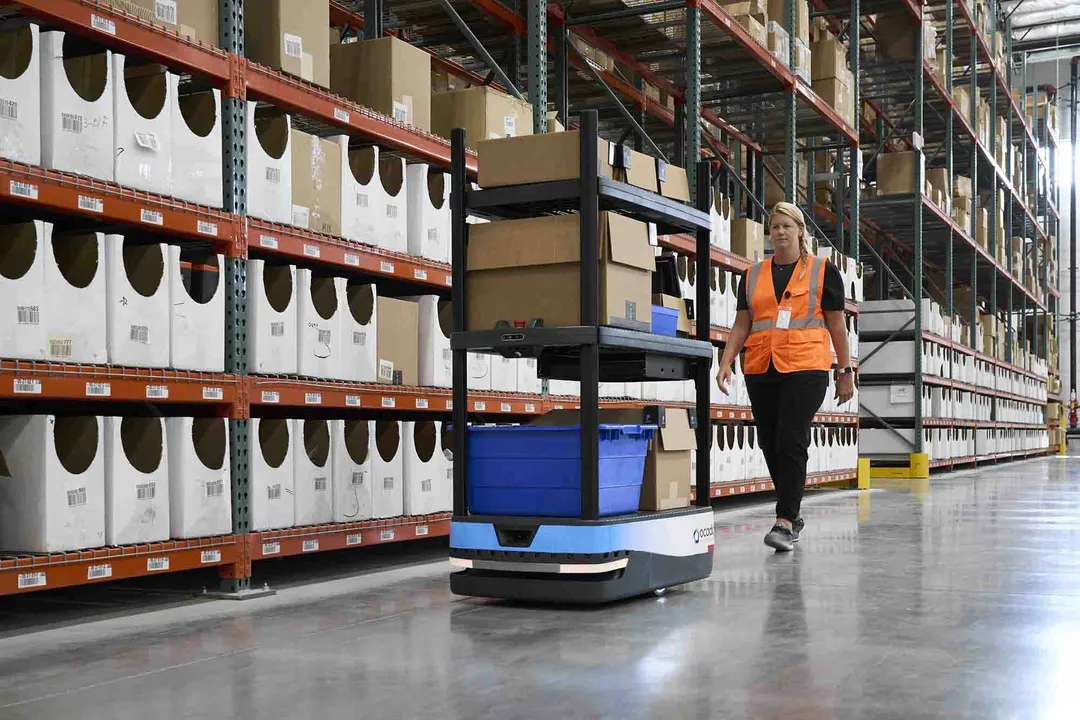
The story of automated storage and retrieval systems, or AS/RS, is not the tale of a single flash of insight in a garage, but rather an evolution driven by the physical constraints of space and the increasing demands of commerce starting in the mid-20th century. The technology we recognize today as a pillar of modern logistics traces its foundation back to the ingenuity of German engineers working within the Demag organization, a precursor to the automation giant Dematic. Before this breakthrough, warehousing operated much closer to the ground, relying heavily on fleets of forklifts and reach trucks. This manual approach resulted in warehouses that were inherently horizontal—spread out across acres of land because the height limitations of the machinery kept the storage racks relatively low. Storage locations were often opportunistic rather than demand-oriented, leading to inefficient material flow.
# German Genesis
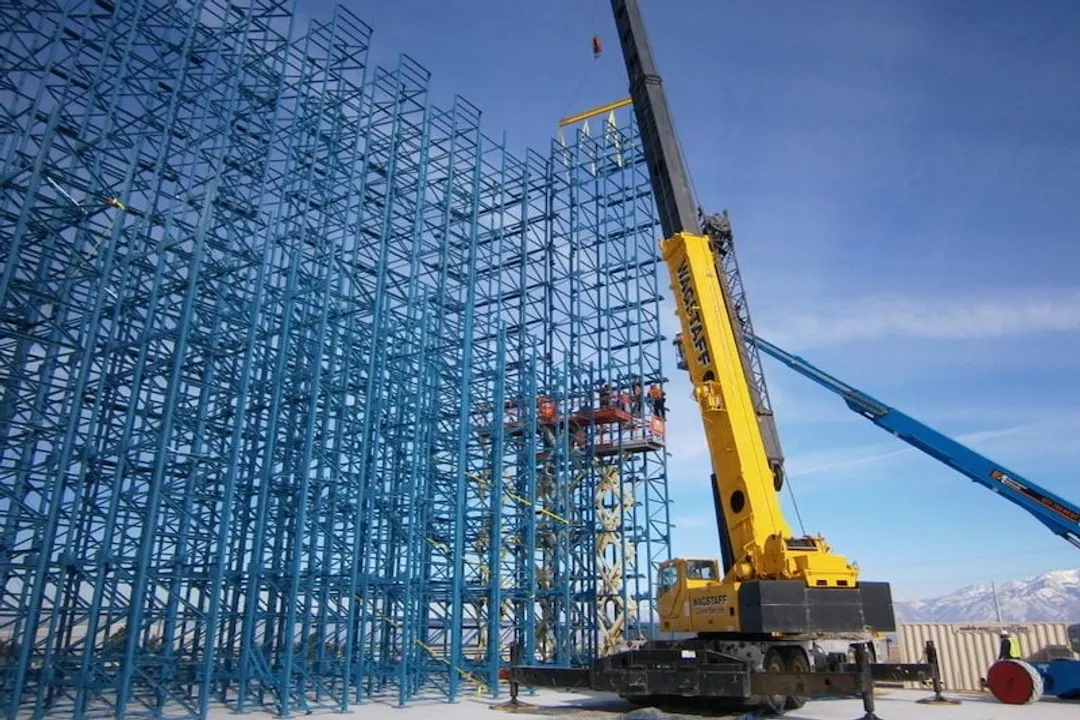
The radical concept that would overturn this conventional thinking centered on flipping the storage structure itself. Engineers Friedhelm Podswyna, Horst-Werner Ruttkamp, and Werner Kühn envisioned a system where the storage rack was affixed to the ceiling, allowing mobile masts equipped with load-lifting devices to travel up and down the aisle, accessing much greater heights than any forklift could manage. This taller, denser storage capability was the first crucial step toward maximizing cubic space.
The very first iteration of this revolutionary idea became operational in 1962. This system was installed at a Bertelsmann book-club warehouse in Gütersloh, Germany. While it represented a massive leap in automation, it was still rudimentary by today’s standards; the storage and retrieval machine (SRM) was controlled manually from a cabin attached to the mast, though it did incorporate control via punch-card technology. The timing was opportune, as Germany navigated the rising consumption and shrinking urban distribution center space of the booming post-1950s economy, where rising labor wages also made automation attractive. These early systems, which saw the racks permanently fixed to the ceiling or rack tops, remained the standard throughout the 1970s.
# Asian Advancement
While German engineers were pioneering the concept using ceiling-mounted racks, similar foundational work was occurring in Asia. In Japan, Daifuku developed its first AS/RS in 1966. Their initial goals mirrored the global drivers: achieving workload reduction, cost savings, effective land use, improved storage efficiency, and personnel savings.
Daifuku delivered the Rackbuil System, a structure supported by the racks themselves, to the Electric Motor Department of Matsushita Electric Industry in 1966. They further advanced this by delivering the first fully automated Rackbuil System utilizing computer control in Japan in 1969 to the Nobeoka Plant of Asahi Chemical Industry Co., Ltd.. The introduction of computer control marked a vital moment, as it allowed inventory management to be conducted simultaneously with material retrieval and storage, leading to significantly improved inventory accuracy. This accuracy improvement spurred rapid adoption, especially in sectors like automotive parts management, which required tracking tens of thousands of unique items.
# Architectural Flip
The next major evolution in AS/RS design involved bringing the fixed structure back down to earth. Advances in engineering and computing power during the 1970s made it possible to rebuild distribution centers with racks anchored to the floor, allowing the masts to rise from the ground with greater speed and stability. This change addressed issues related to swaying loads at extreme heights and allowed multiple aisles to be accessed more rapidly and specifically. The term high-bay warehouse gained currency as lift heights soared, with potential reaching 45 meters, or nearly 150 feet, by the 1980s.
This structural shift coincided with the integration of better peripheral control. The 1980s saw the incorporation of sensors, magnets, and lasers to measure position with fine accuracy, alongside the implementation of stepless drive systems that used less energy. The capability spread globally, appearing in North America and beyond.
It is fascinating to consider that the core principle of these early systems—the unit-load AS/RS for heavy pallets—has seen relatively little fundamental change since the 1960s for its specific application. The fundamental architecture remains a fixed aisle with a tall crane traversing vertically and horizontally to retrieve large palletized loads. This resilience in the unit-load design suggests a near-perfect initial solution for bulk storage problems, even as other areas of material handling demanded more flexibility.
# Digitalization and Expansion

While the physical machinery evolved, the true democratizing force for AS/RS technology in the 1980s was the rise of accessible computer processing power and software. The advent of the personal computer made it possible to develop relatively inexpensive Warehouse Control Systems (WCS) and Warehouse Management Systems (WMS).
Prior to this, costs were high, largely precluding smaller manufacturers from adoption. Once inventory could be managed digitally, the technology began to filter down. By the late 1980s and into the 1990s, smaller manufacturers like Fanuc and Fujitsu began adopting systems, which then expanded into non-traditional logistics areas such as agriculture, retail, banking, and insurance. These new adopters lacked prior logistics automation experience, necessitating that providers create more intuitive and customized solutions.
The software layer orchestrating this hardware became as critical as the machinery itself. Modern systems rely on a Warehouse Execution System (WES) that acts as the "air traffic control," translating high-level orders from the WMS into specific, optimized movements for the cranes and shuttles. The sophistication of this control system directly dictates the throughput and efficiency of the hardware; without intelligent software determining the best storage location and retrieval path based on real-time rules, the physical system is merely expensive, automated racking.

# Diverse Forms Emerge
As the scope of use broadened beyond single-pallet storage, the AS/RS evolved into distinct technological families to handle smaller, more varied items. The original unit-load systems handled heavy pallets, but by the mid-1970s and certainly by the 1990s, demand grew for handling cartons, totes, and individual pieces.
This need spurred the development of several important variations, many of which operate outside the traditional fixed aisle:
- Carousels: Both Horizontal Carousel Modules (HCM) and Vertical Carousel Modules (VCM) operate on the goods-to-person principle. They function like massive, rotating shelving units, bringing the required shelf or bin to a fixed workstation. The VCM maximizes vertical height in a compact footprint, while the HCM uses a horizontal oval track.
- Mini-Load ASRS: These systems are scaled-down versions of the unit-load AS/RS, designed for lighter items like cartons or trays, typically handling loads up to about 75 pounds.
- Shuttle-Based Systems: This technology separates the functions of horizontal and vertical travel. Independent robotic shuttles move along a track on a single level, while a lift mechanism handles the vertical movement to transport the shuttle carrier up or down to the correct storage height. This split axis of movement often allows for higher throughput rates than single-machine stacker cranes.
- Vertical Lift Modules (VLMs): These are self-contained units that operate vertically, using an inserter/extractor to retrieve trays or bins from storage columns on either side, maximizing floor space without needing long aisles.
The market responded to complexity with specialization. In the 1990s, Daifuku introduced high-capacity mini-load AS/RS like the Magic Sorting System, which halved cycle times for case-handling distribution centers. Later innovations, such as Sorting Transfer Vehicles (STVs) developed in the late 1980s, provided faster, lower-noise, and more reliable interfaces between the ASRS and other conveyance equipment.
# Modern Densification and Robotics
The path from the 1962 punch-card crane to today’s systems illustrates a constant trade-off between mechanical complexity, throughput speed, and storage density. Early floor-mounted cranes offered better stability but still required wide access aisles. Carousels and VLMs solved the aisle problem by bringing the item to the operator, but their retrieval method (rotating a whole shelf or the entire VLM structure) can be slower for specific, dispersed items.
The most recent innovations push density to its limit. Cubic ASRS (CASRS), exemplified by systems like the Ocado Storage and Retrieval System (OSRS), organizes inventory in a dense, three-dimensional grid of bins, completely eliminating aisles within the storage structure. Robots travel atop this grid, retrieving bins and delivering them to workstations. This design achieves exceptional space efficiency, often stacking bins up to seven meters high or more, though the unit load size is restricted to the bin dimension. This contrasts sharply with the Unit-Load ASRS, which can reach heights of 161 meters but requires significant floor space dedicated to the retrieval aisles.
Furthermore, the 21st century has seen the integration of flexible robotics into the storage mechanism itself. Beyond simple AGVs used for transport, modern systems incorporate AMRs (Autonomous Mobile Robots), which can navigate storage areas dynamically, or complex robotic arms used for item-level picking and sorting, moving the point of automation deeper into the order fulfillment process.
The invention of the AS/RS—born from Demag’s ceiling-mounted solution in the 1950s—was not an endpoint but a starting gun. It transitioned from being a solution for large-scale, heavy pallet storage to becoming a modular, software-controlled ecosystem capable of handling everything from a single pharmaceutical vial to a unit-load pallet, all dictated by the ever-increasing expectations of speed and accuracy in the modern global supply chain. The history shows that every time a physical limitation was met—whether it was the reach of a forklift or the speed of a single-axis crane—a new machine or a smarter algorithm was invented to overcome it.
# System Components Checklist
To achieve the efficiency promised by any modern AS/RS, several core elements must work in coordination, regardless of whether the system uses shuttles, carousels, or cubes. Understanding these basic parts helps illustrate how the historical invention matured into today's integrated solutions.
| Component Category | Function | Key Evolution/Example |
|---|---|---|
| Storage Structure | The physical racking infrastructure holding the load carriers. | Evolved from simple warehouse racks to custom, high-load-bearing structural racks that may form the building itself (Rackbuil). |
| Automation Equipment | The machines that physically move the loads. | Began as ceiling-mounted SRMs, evolved to floor-mounted SRMs, then diversified into Carousels, VLMs, and independent Shuttles. |
| Conveyance Interface | The means to move retrieved items to the operator or next station. | Initial systems relied on manual transfer or basic conveyors; modern systems use complex conveyor networks, Sorting Transfer Vehicles (STVs), or AGVs/AMRs. |
| Control System | The intelligence governing all movement and inventory tracking. | Started with punch cards, rapidly progressed through PLCs to sophisticated WES/WCS software that optimizes all axes of movement based on business rules. |
The ongoing adoption across diverse industries—from healthcare managing temperature-sensitive goods to e-commerce dealing with high SKU variety—confirms that the core value proposition remains intact: protected, high-density storage coupled with timed retrieval. The initial concept of using mechanical means to access elevated inventory has simply expanded its definition to encompass any computer-controlled method of goods-to-person fulfillment.
Related Questions
#Citations
AS/RS Innovation in Supply Chain - Dematic
Automated Storage and Retrieval Systems (ASRS) Unpacked
The Ultimate Guide to ASRS - Ocado Intelligent Automation
History of Automated Warehouses at Daifuku | Technology | Solutions
A Guide to Automated Storage and Retrieval System [+ FAQs]
Automated Storage and Retrieval Systems (ASRS)
Automated storage and retrieval system - Wikipedia
Warehouse Automation – Past, Present, and Future