Who invented soundproof rooms?
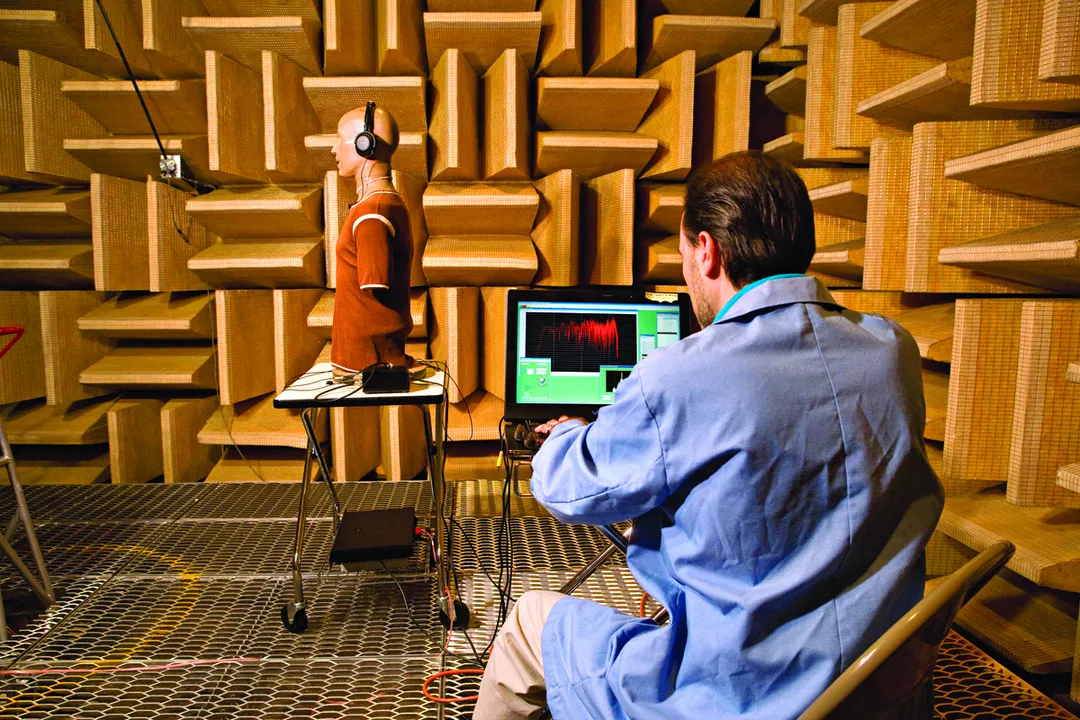
The quest to create an oasis of quiet, a space entirely sealed off from the clamor of the outside world, is not a recent preoccupation of city dwellers or recording engineers. While pinpointing a single inventor of the modern "soundproof room" is like trying to name the first person to whisper in a crowd—it’s an evolution, not a single event—the history of sound control stretches back millennia, driven by architectural necessity and, eventually, scientific rigor. In the beginning, architects weren't trying to soundproof; they were trying to project sound, often by accident discovering principles that underpin isolation today.
# Ancient Control
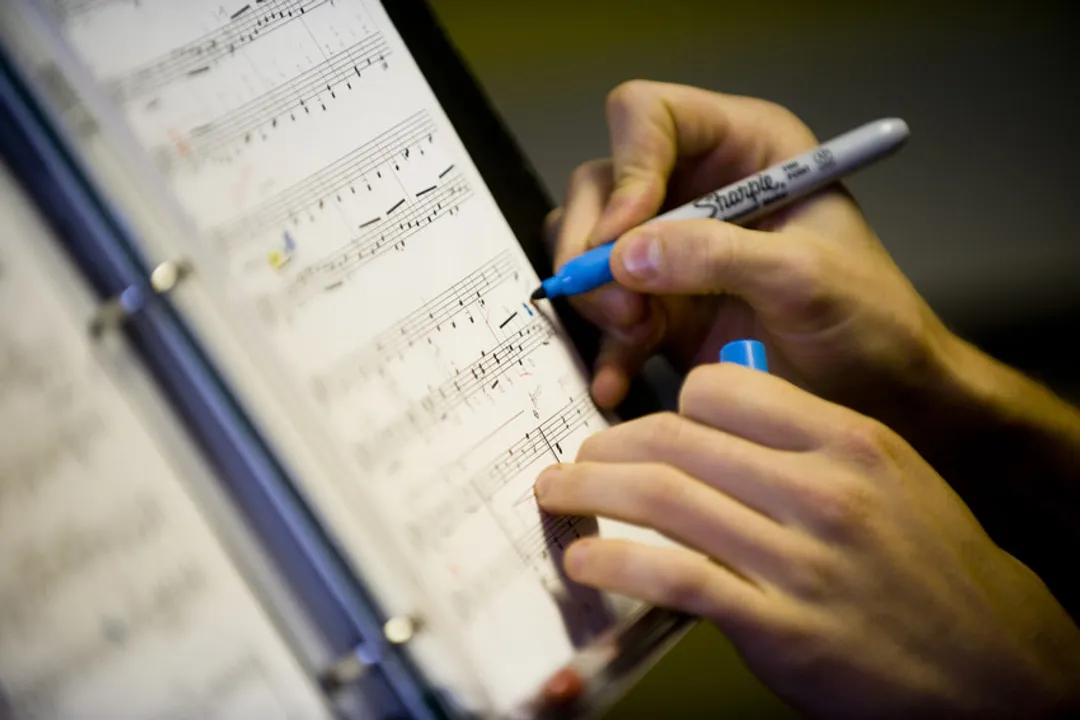
Long before decibel meters and transmission loss ratings, the Greeks and Romans were masters of architectural acoustics, albeit through keen observation rather than formulas. Consider the Theatre of Epidaurus. Its semi-circular seating and tiered rows, precisely angled, were designed to carry a speaker’s voice clearly across vast distances. They weren't aiming for silence; they were aiming for intelligibility. They utilized materials like limestone, which, due to its properties, helped project sound while subtly scattering harsh reflections. Roman amphitheatres, often enclosed, further demonstrated an intuitive understanding of managing reverberation time by strategically employing surfaces like marble and mosaics. Even seemingly decorative elements, such as colonnades, served an acoustic function by disrupting parallel surfaces that would otherwise cause problematic flutter echoes. This early approach was about shaping sound to enhance performance, an intentional design choice based on physical observation.
# Medieval Echoes
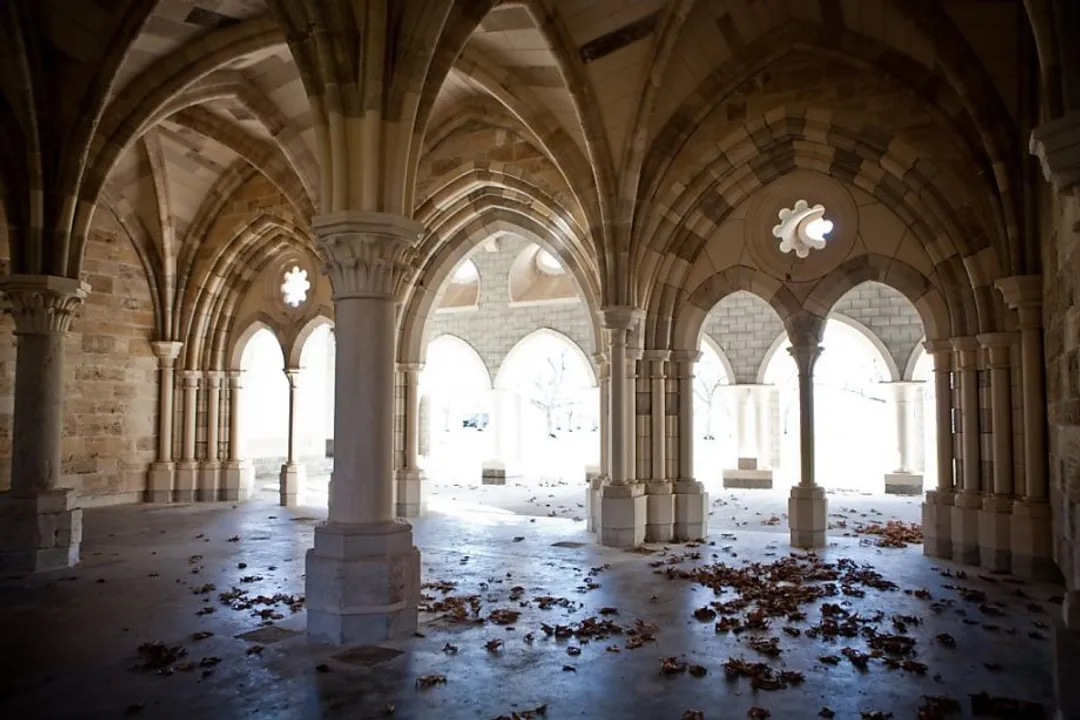
When attention shifted indoors to the towering structures of the Middle Ages, the acoustic challenge changed dramatically. Gothic cathedrals, with their soaring stone ceilings and ribbed vaults, became immense echo chambers. The reverberation time (RT60) in these spaces could stretch for seconds, sometimes exceeding six, which beautifully enriched the sound of slow, ethereal Gregorian chants. This long decay created an otherworldly atmosphere perfect for liturgical music. However, this environment was disastrous for speech clarity; trying to preach a sermon in such a space meant relying on long pauses between phrases so the previous words could fade. Medieval builders instinctively tried to mitigate this, employing tapestries hung on walls or strategically placed wooden paneling. These were early, passive attempts to introduce sound absorption and diffusion, proving that the urge to control sonic energy predates formal physics by centuries.

# Science Emerges
The Renaissance marked the critical transition from acoustical intuition to measurable science. Thinkers began applying mathematical curiosity to the invisible world of sound. Leonardo da Vinci, for instance, recorded observations in his notebooks about how sound radiates spherically and weakens with distance, comparing it to ripples on water. While his observations were empirical, they laid a conceptual foundation for later, more quantitative work.
The true establishment of acoustics as a field, however, is often traced to the early 17th century with Marin Mersenne. This French polymath developed Mersenne’s Laws, which established the mathematical relationship between a string’s length, tension, and mass, directly linking physical properties to audible frequency (pitch). The advent of the printing press further fueled this, allowing structured knowledge to spread, moving architects away from inherited traditions toward mathematically informed design choices, such as calculating room proportions to enhance musical harmonics.
# Sabine's Equation
If we must identify a figure who directly invented the science that allows us to engineer a soundproof or acoustically controlled room, that credit largely belongs to Wallace Clement Sabine. In 1895, when Harvard University completed the Fogg Art Museum, one of its lecture halls was so reverberant that it was rendered functionally useless for classes. Sabine, then a young physics lecturer, was tasked with fixing this problem.
Working in near silence to maintain experimental integrity, Sabine took thousands of measurements, eventually discovering a predictive mathematical relationship between a room’s size, its surface materials (the absorption coefficients), and its reverberation time. This discovery birthed the Sabine Equation—the first reliable tool architects could use to design sound quality rather than leaving it to chance. This allowed architects to move from the uncertainty of trial-and-error to the precision of engineering.

# The Tiled Solution
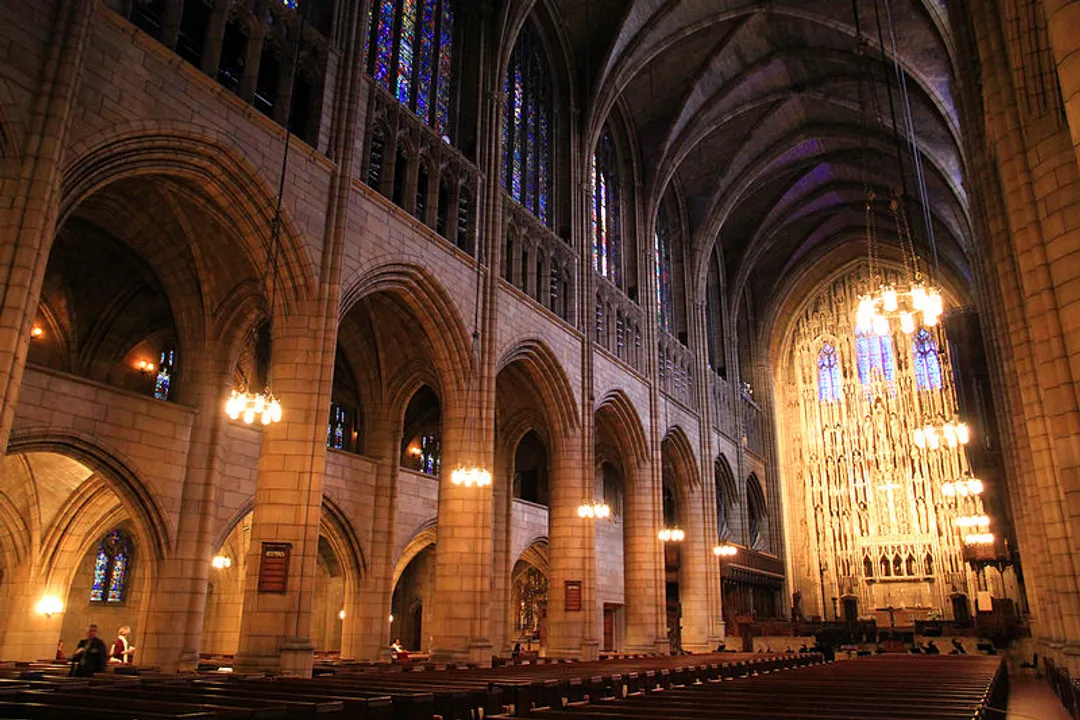
Sabine’s work immediately found a landmark application in the construction of St. Thomas Church in New York City, completed in 1913. The architects desired the visual grandeur of a Neo-Gothic stone cathedral but needed the acoustic clarity of a modern, sermon-focused space—they needed to divorce the sound from the architecture. Sabine collaborated with a tile manufacturer to create Rumford tiles. These were ceramic tiles with porous surfaces specifically engineered to absorb echo effectively. The result was a building that looked centuries old but sounded acoustically controlled and clear, representing one of the first structures wholly engineered for environmental sound management. This concept—using targeted materials to achieve a specific internal sonic environment—is the philosophical ancestor of modern soundproof rooms.
It’s interesting to note that the goal of acoustic control has oscillated over the last century. Where Sabine’s work was aimed at reducing reverb for clarity, by the 1970s, an interest in richer, more resonant spaces (like those found in older cathedrals) caused designers to paint over those Rumford tiles to seal their pores and bring the reverberation back. This historical push and pull between clarity and resonance informs modern design, where spaces often require dynamic systems to offer both.
# Industrial Noise
As the 20th century progressed, the focus of sound control shifted from intentional aesthetics to necessary protection. The rise of industrial centers meant increased noise pollution from machinery, factories, and transportation, leading to health concerns. Early, simple solutions involved padding rooms with materials to deaden sound within the space, but people quickly realized that this internal dampening often made intrusive external noise seem louder by contrast.
This realization was the genesis of true sound isolation. People experimented with materials like shag carpeting on walls or even egg cartons—methods that provided limited absorption but virtually no mass to block sound transmission. In search of a true barrier, materials like sheet lead were adopted because their density effectively blocked sound (and radiation). However, the sheer quantity of lead needed made this an prohibitively expensive solution for general use.

# Key Principles
Modern soundproofing, as defined today, relies on a collection of techniques designed to handle both airborne noise (voices, music) and structure-borne noise (vibrations). The concept of a completely sealed room—a room within a room (RWAR)—became a benchmark for high-level isolation because it directly addresses the most efficient sound pathway: mechanical transmission through solid structures.
The fundamental methods for achieving this isolation involve:
- Mass: Simply adding dense material stops sound waves from easily passing through a barrier. Materials like concrete, thick drywall, or Mass Loaded Vinyl (MLV) are employed for this purpose.
- Decoupling: This is the critical step of breaking the physical connection between a sound source (like a vibrating floor joist or wall stud) and the structure on the other side. Isolation clips, neoprene pads, and resilient channels prevent vibrations from efficiently "jumping" across structural elements, severely limiting structure-borne noise transfer.
- Damping: This involves using viscoelastic materials (like certain compounds or pads) placed between layers of mass. These materials convert the vibrational energy of the sound wave into negligible heat, weakening the wave before it can pass through the next layer.
This move toward mass, damping, and decoupling is where the science of soundproofing diverges sharply from earlier acoustic treatment (which focuses on absorption/diffusion inside the room). While acoustic panels control echoes inside a studio, a true soundproof room first needs robust construction assemblies that prioritize blocking transmission between spaces.
# Modern Precision
The evolution continued in the latter half of the 20th century with the introduction of highly engineered, scalable materials like fiberglass and mineral wool, which offered both thermal and acoustic benefits. However, the most significant recent advancement, making high-quality "soundproof rooms" achievable for diverse budgets, is the digital revolution.
Acoustic consultants today do not guess; they model. Software utilizing techniques like Ray Tracing Algorithms, the Finite Element Method (FEM), and Boundary Element Method (BEM) allows engineers to simulate sound behavior in a virtual space with extreme accuracy. This enables the precise placement of modern, aesthetically pleasing materials—like fabric-wrapped fiberglass or perforated wood panels—to manage reverberation (acoustic treatment) while the underlying structure handles isolation (soundproofing). Even Active Noise Control (ANC), which uses anti-phase sound waves to cancel unwanted low frequencies, moves sound control into the realm of dynamic electronics.
If we consider the goal of a "soundproof room" to be achieving a predictable, quiet environment for a specific task—be it testing a jet engine, recording a voiceover, or sleeping soundly—then no single person invented it. Instead, Wallace Sabine invented the method of reliably predicting and controlling the acoustic environment, and the engineers following him invented the materials (like MLV and isolation clips) necessary to achieve complete physical isolation.
A useful way to visualize this progression is to compare the desired end-state: Ancient architects sought high reflectivity to maximize sound energy and travel distance. Modern room builders, whether for studios or quiet offices, often pay premium prices for materials to eliminate that same reflected energy. This shift in primary objective—from building a powerful sound-thrower to building a sound-trap—is the defining arc of acoustic history.
Furthermore, the historical failure of DIY methods highlights a crucial, often overlooked step in achieving true sound isolation. When people in the 1970s used foam or carpet to quiet a room, they were focusing only on absorption within the space. As sources from that era noted, this only revealed the noise coming through the walls. Modern science emphasizes that sound leaks via the path of least resistance, known as flanking. This means that even if you install the thickest soundproof drywall, the entire assembly is compromised by gaps around electrical boxes, unsealed utility penetrations, or poor door seals. The realization that eliminating flanking paths—sealing every tiny crack with acoustical caulk or wrapping electrical boxes—is just as important as adding mass represents an advanced, holistic understanding that separates professional isolation from simple decoration. This emphasis on a complete, sealed system is perhaps the "invention" that makes a room truly soundproof today.
#Videos
Did Murdoch invent soundproofing?? - YouTube
Related Questions
#Citations
A Brief History of Soundproofing | SoundAway Blog
5 Interesting Facts About Soundproofing
Soundproofing - Wikipedia
The Evolution of Acoustic Treatment Throughout the Ages
Acoustics Then and Now | Article - Acoustics First
Did Murdoch invent soundproofing?? - YouTube
Reverb: The Evolution of Architectural Acoustics - 99% Invisible
A Brief History of Sound Absorption: Acoustic Baffles and Panels
Room Acoustics History: How Music Changed with Spaces