Who invented soundbars?
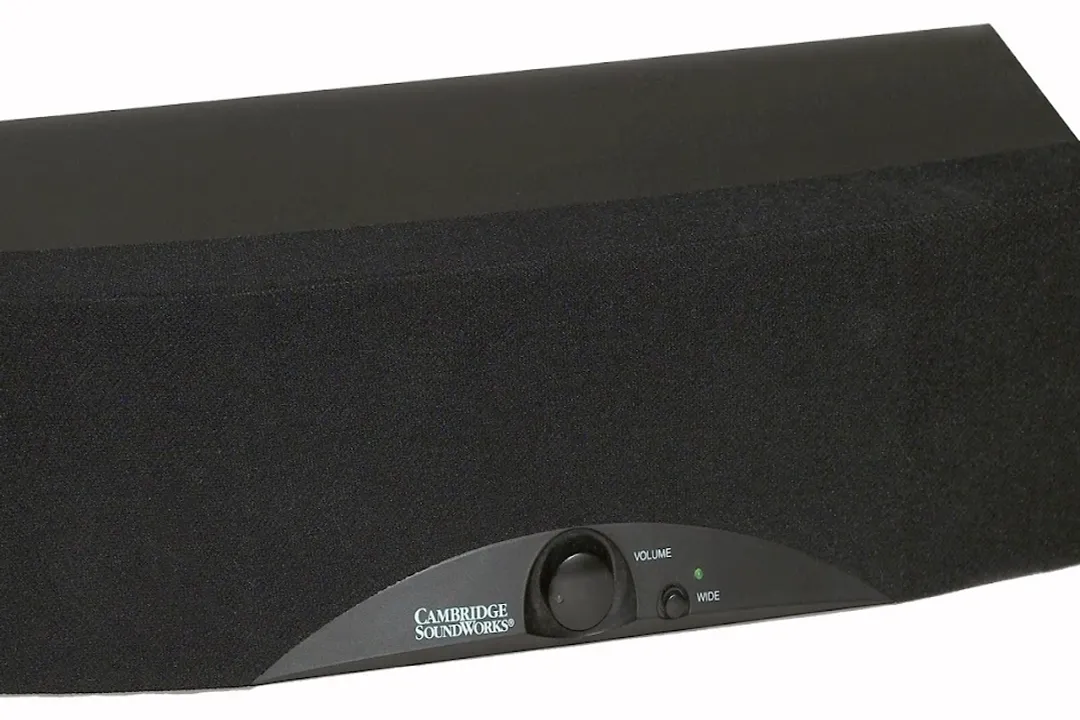
The journey to truly immersive home audio has always been marked by compromises, especially as television screens grew thinner and sleeker. That long, narrow speaker system we commonly call a soundbar today is, in many ways, a direct answer to the acoustic challenges posed by flat-panel displays, whose slim profiles leave little room for quality drivers. Pinpointing a single inventor, however, is far less straightforward than identifying the modern product itself, as the history is less a straight line and more a collision of distinct claims regarding market introduction and definition. [1][2]
# Early Audio Needs
Before the soundbar gained traction, home theater audio often relied on bulky shelf speakers or complicated Home Theater in a Box (HTiB) systems, which required numerous speakers placed all around a room to achieve surround sound. [4] As flat-screen TVs became the standard, their built-in speakers—often thin, downward-firing, or tucked away—produced tinny, weak sound that simply couldn't match the visual quality. [4] This created a clear market gap: consumers wanted better sound without the clutter or complexity of a full surround setup. [4]
It is worth considering the user experience that drove this invention. The true innovation wasn't just creating a speaker that sounded better; it was creating a speaker that looked right with the new TV aesthetic and required minimal wiring and placement headaches. The invention, therefore, needs to be assessed not just by the hardware, but by how well it solved the installation complexity for the average consumer looking for an audio upgrade that didn't involve drilling holes or running wires under carpets. [1][4]
# ZVOX Debut
The company most vocally claiming the title of inventor is ZVOX Audio, which asserts it introduced the first mass-market product specifically branded and sold as a soundbar in the year 2000. [4][5] ZVOX credits its founding based on developing advanced sound-only processing solutions, which led directly to this product launch. [5] Their inaugural model was the ZVOX 325. [2][4]
ZVOX maintains that prior to their 2000 release, no other company had brought a product to market that fit the description of a soundbar intended for home theater enhancement. [4] The company defined the category, marketing their 325 as the first true soundbar system. [4] While earlier attempts at integrated audio solutions might have existed—the ZVOX history references a JBL SoundFrame from the 1990s, for instance—ZVOX argues these earlier designs differed significantly from what would become the recognized soundbar format. [4]
It’s interesting to contrast the technological environment of 2000 with today. In the early 2000s, flat-panel displays were still relatively premium items, and the consumer appetite for dedicated audio add-ons was perhaps less universal than it is now. [1] ZVOX pioneered the concept when the mainstream consumer was just beginning to grapple with the poor audio accompanying their new visual technology. [4]
# Bose Entry
Another major contender in this historical discussion is Bose, a company known for its deep roots in acoustic innovation and the leadership of Dr. Amar Bose. [7][9] Bose introduced its own significant product, the SoundDock, in 2005. [1][2]
While ZVOX claims the 2000 debut as the true invention of the category, Bose’s 2005 arrival often receives credit in popular narratives, possibly due to the company's high market visibility and the growing saturation of flat-screen TVs by that time. [1] The SoundDock was an important product, but its primary initial focus was often centered on iPod docking, although it certainly delivered enhanced sound in a compact enclosure. [2]
The perception of invention often hinges on which product achieved the most significant market penetration or set the standard for what the device should be. [1] The timelines show a clear gap: ZVOX released its mass-market offering five years before Bose released the SoundDock. [1][4]
# Defining the Device
A fundamental part of the invention debate rests on defining the product. Generally, a soundbar is understood as a long, slender speaker enclosure designed to sit neatly beneath a television screen. [2] This physical characteristic is key, distinguishing it from smaller desktop speakers or traditional bookshelf speakers. [2]
The early ZVOX 325, released in 2000, fit this emerging profile. [4] It was designed to sit below the display, offering stereo imaging and often incorporating psychoacoustic processing to simulate surround sound from a single enclosure—a hallmark feature ZVOX championed. [4]
Consider a simple feature comparison between the theoretical "first" and the later market entrants:
| Feature | ZVOX 325 (c. 2000 Claim) | Bose SoundDock (2005) | Modern Soundbar (General) |
|---|---|---|---|
| Form Factor | Long, thin enclosure | Compact, often dock-focused | Long, thin enclosure |
| Primary Goal | Better TV audio, simulated surround | Enhanced portable music playback/iPod integration | Immersive, multi-channel TV audio |
| Market Position | Pioneer of the category [4] | Major consumer electronics success | Standard TV accessory |
| Focus | Single-enclosure home theater audio [4] | Docking and clear audio | Connectivity and immersion |
This comparison highlights that the earliest attempts solved one problem (poor TV sound) while later, more popular versions adapted to emerging consumer habits (like portable music players) while still addressing the original need. [2] The invention, in this context, seems to be less about a single patent and more about recognizing the convergence of display technology and consumer desire for simplicity. [1][4]

# Market Reception and Acceptance
Regardless of who officially gets the credit for being first, the technology took time to be universally accepted by the wider audio community. [8] Even today, some dedicated audiophiles view soundbars with skepticism, often preferring traditional multi-speaker setups for their ability to deliver true, discrete surround sound separation. [8]
However, the practicality and aesthetic integration of the soundbar are undeniable advantages that drove its slow but steady adoption. [2] For the vast majority of consumers whose primary goal is a noticeable, straightforward improvement over built-in TV speakers without reconfiguring their entire living room, the soundbar format proved ideal. [4] The initial hesitation faded as manufacturers, including the major players who entered the market after 2000, refined the technology to offer increasingly convincing virtual surround effects and better bass response, often incorporating wireless subwoofers later on. [2]
When evaluating the title of "inventor," one must decide whether to credit the first company to engineer the specific form factor and market it as a distinct solution (ZVOX in 2000) or the company whose later, widely successful product cemented the device’s place in the mainstream consciousness (Bose in 2005). [1][4] The very existence of the soundbar category, as understood today—a slim unit designed specifically for TV placement—owes its genesis to the early 2000s pioneers who first addressed the aesthetic and acoustic mismatch of flat screens. [2][5]
# Key Players and Contributions
The narrative around the invention is intrinsically tied to the histories of ZVOX and Bose. ZVOX’s mission was explicitly to solve the sound problem for flat-panel televisions. [5] Their work in developing sound processing technology meant that their early soundbars were engineered with proprietary methods to create a wider soundstage from a narrow cabinet. [4]
Bose, founded by Amar Bose, has a long history rooted in acoustic research and pushing the boundaries of speaker design, often focusing on making powerful sound fit into smaller packages, as seen in their background. [7][9] The SoundDock was a powerful statement in compact audio, even if its initial introduction slightly post-dated the ZVOX 325’s debut as a dedicated TV accessory. [1][2]
Another layer to consider is the role of independent analysis versus corporate marketing. When looking at market introductions, ZVOX provided the initial blueprint in 2000. [4] However, the mainstream media and consumer awareness often lag behind niche market introductions. When a brand as recognized as Bose enters a space five years later, their product often becomes the de facto standard in the public mind, effectively rewriting the origin story in popular memory. [1]
To better contextualize the industry, it is helpful to remember that the innovation wasn't just in the speaker drivers, but in the digital signal processing that allowed a single cabinet to convincingly mimic the effect of separate speakers. This specific engineering focus—how to get width and depth from a single bar—is the technical core that the early players were striving to perfect. [4]
Ultimately, while the term "soundbar" and the first mass-market attempt to sell an affordable, single-enclosure TV speaker system point directly to ZVOX in 2000, [2][4] the wider market acceptance and popularization of the slim, modern speaker bar format owe a debt to all early innovators who recognized the limitations of TV audio and acted to correct it. [1] The invention is thus a story of a pioneering category creation followed by a mainstream market validation. [2]
#Videos
The Birth of the Soundbar (1998 - 2019) - YouTube
History of sound bar: Home Theater Geeks 169 - YouTube
Related Questions
#Citations
Who 'invented' the sound bar speaker? - CNET
Soundbar - Wikipedia
The Birth of the Soundbar (1998 - 2019) - YouTube
Who Invented The Sound Bar? - ZVOX Audio
The Company That Changed TV Sound - ZVOX Audio
Our History | A Timeline of Innovation - Bose
Why do most view sound bars as something so evil? : r/audiophile