Who invented solar distillation?
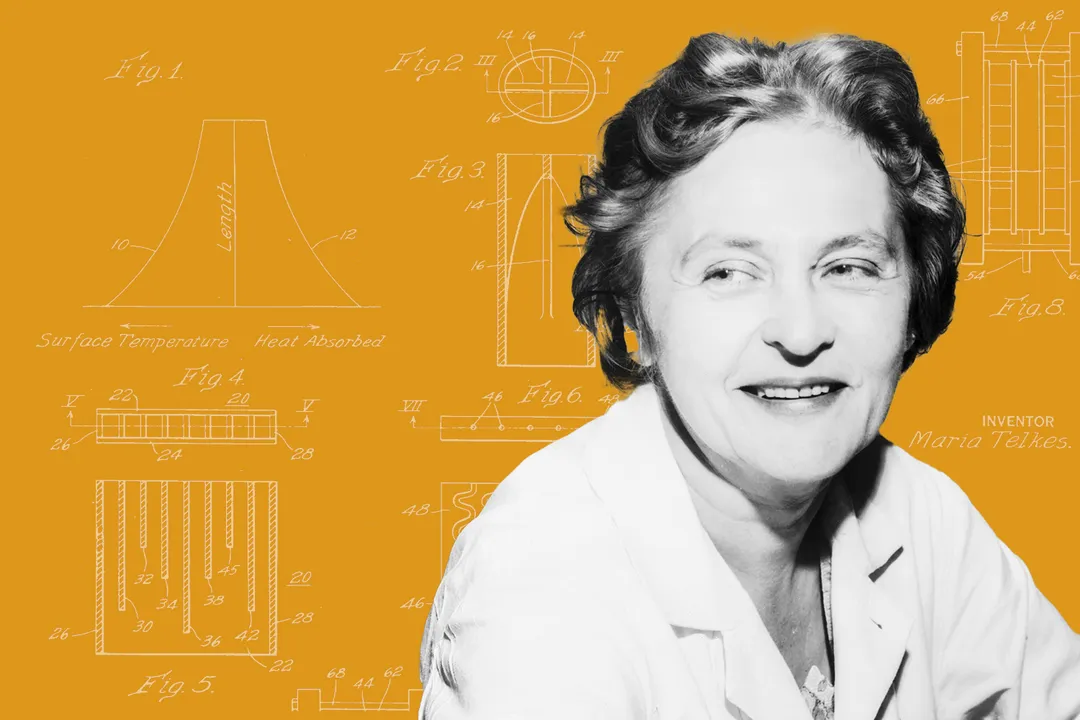
The story of inventing solar distillation is less about a single "Eureka!" moment and more about the continuous refinement of harnessing the sun's energy for practical needs, a field where the work of Mária Telkes stands as a monumental chapter. [7][9] Often revered as the "Sun Queen" for her relentless dedication to solar energy research, Telkes, a biophysicist, was instrumental in advancing the technology that makes solar distillation—the process of purifying water using the sun's heat—a tangible reality for many applications. [2][5][6] Her career spanned decades, driven by an unwavering belief in the potential of renewable resources long before it became a global imperative. [3]
# Early Life

Mária Telkes was born in Budapest, Hungary, in 1900. [2][4] Her early education laid the groundwork for a scientific career that would eventually focus on biophysics and energy science. [1][3] She pursued her advanced studies at Eötvös Loránd University in Budapest, earning both her Bachelor of Science degree in 1920 and her Ph.D. in physical chemistry in 1924. [2][4] This strong foundation in chemistry and physics prepared her for the complex material science challenges inherent in developing efficient solar energy systems. [7]
After receiving her doctorate, Telkes spent time at the Cleveland Clinic Foundation in Ohio, where she worked as a research fellow from 1925 to 1937. [2][4] It was during this period that her focus began to shift toward applied science, particularly in areas related to energy and its conversion. [3] Her relocation to the United States marked the beginning of her most impactful contributions to solar technology. [1]
# Solar Focus
Telkes’s transition into dedicated solar energy research was pragmatic, driven by pressing needs during the mid-20th century. [4] A significant part of her expertise lay in creating materials that could efficiently absorb, store, and release heat—a core requirement for any successful solar thermal device, including a distillation unit. [7] She understood that collecting solar energy was only half the battle; retaining that energy was the true engineering hurdle. [2]
The concept of using the sun to generate usable heat or even produce fresh water from saltwater or contaminated sources is ancient, but Telkes’s work brought scientific rigor and modern engineering to the practice. [9] Her innovations weren't about the theoretical possibility of solar stills, but about making them practical, reliable, and cost-effective enough for real-world use. [7]
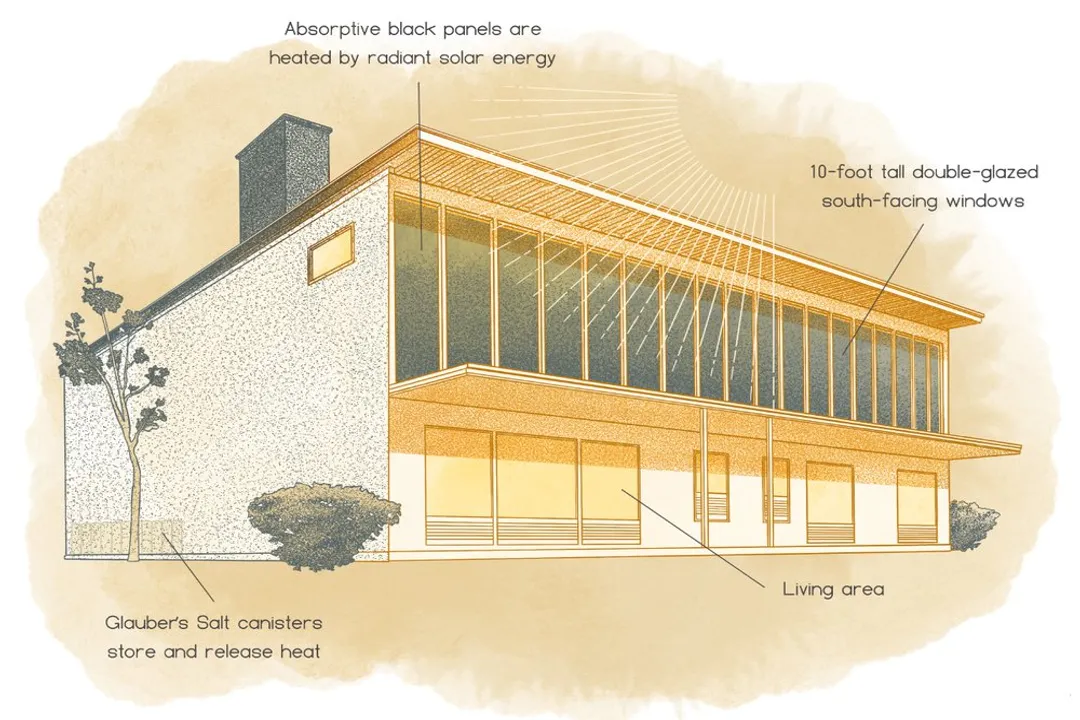
One of her most recognized achievements, demonstrating her mastery of solar thermal storage, was her collaboration with architect Eleanor Bliss. [1] Together, they designed and built the Dover House in Dover, Massachusetts, in 1948. [1][2] This residence was one of the first completely solar-heated homes in the United States, relying on a system that captured solar energy during the day and stored it in a large bin of Glauber's salt (sodium sulfate decahydrate) for release overnight and on cloudy days. [1][4][7] While this was focused on heating space, the underlying principles of thermal management were directly transferable to creating the necessary conditions for water distillation. [2]

# Stills and Water
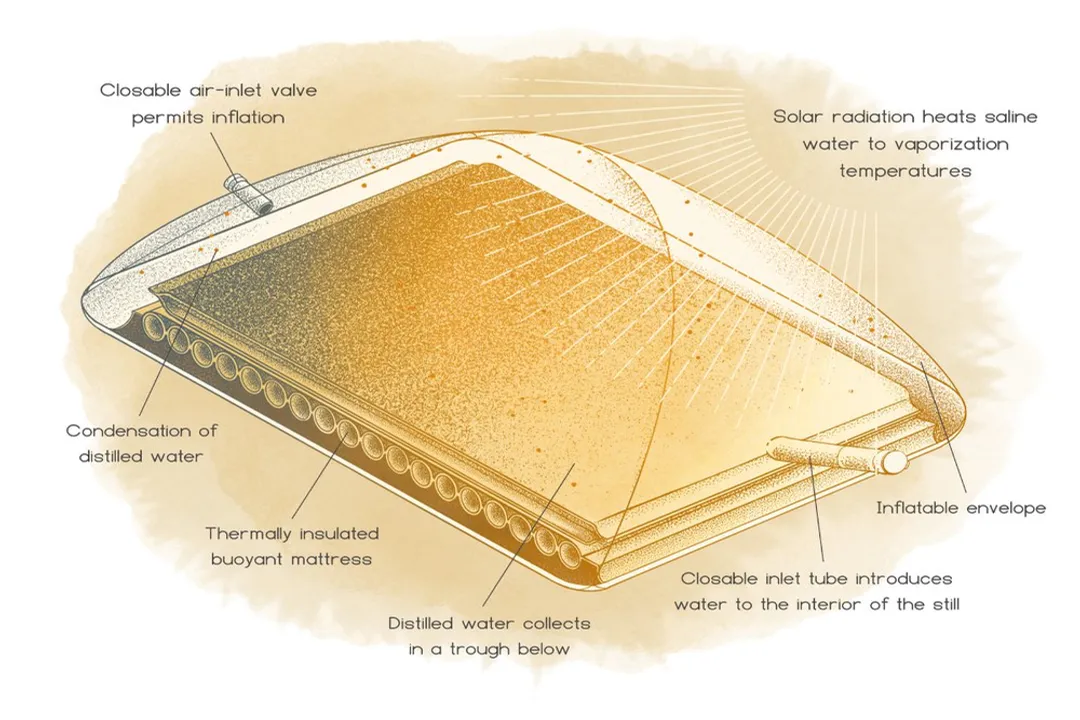
The application of solar energy directly to water purification—solar distillation—became a critical area for Telkes, particularly in providing potable water for remote or disaster-stricken areas. [7] Developing an effective solar still involves creating an apparatus that traps solar radiation, converts it to heat, evaporates impure water, and then condenses the resulting pure steam back into liquid form. [4][9]
Telkes devoted significant effort to designing solar stills that were both efficient and inexpensive to manufacture. [7] Historical methods of solar desalination often suffered from poor efficiency, making them impractical for large-scale use. Telkes tackled this by focusing on materials science—finding the right combination of transparent covers, absorbent surfaces, and insulation to maximize the temperature differential inside the unit. [3]
A key aspect of her innovation in this area centered on creating low-cost units suitable for personal or small community use. [7] The success of these stills was less about achieving extremely high temperatures (like in a solar power plant) and more about ensuring a consistent, low-energy process that yielded drinkable water reliably. [4] One significant benefit of her work was the demonstration that solar stills could operate effectively even when the ambient temperature was quite cool, provided the materials were chosen correctly to create the necessary enclosed greenhouse effect. [7]
A practical consideration in early solar still design, which Telkes had to navigate, involved balancing the thermal mass required for heat storage with the unit's portability. A heavier unit might store heat better overnight, but if the intended use was for emergency relief or temporary settlements, a lighter, easier-to-transport design using simpler, locally available materials became a higher priority than absolute maximum output. This pragmatic approach separated her designs from purely laboratory-focused experiments. [4][7]
# Recognition and Influence
Mária Telkes’s dedication to solar thermal science earned her widespread recognition throughout her long career. [3][5] Her work received accolades from organizations recognizing ingenuity and practical application of science. [4] She earned numerous patents throughout her career, cementing her role as an active inventor. [3] For example, in 1953, she was part of a team that received a patent for a solar hot water heater. [9]
Her influence extended into academia as well; she taught at the Massachusetts Institute of Technology (MIT) and later served as a professor at the University of Delaware in the Institute of Energy Conversion. [2][4] This teaching role ensured that her expertise in areas like solar thermal energy and biophysics was passed on to new generations of engineers and scientists. [3] The dedication she showed to practical, accessible energy solutions earned her the moniker "Sun Queen" later in life, acknowledging her pioneering status in solar energy research. [6]
The overall scope of her work, from home heating and thermal storage to water purification, underscores a central theme in invention: solving immediate, critical human needs using sustainable means. [1][7] While the very first instance of using the sun to boil water for purification may trace back centuries, Telkes provided the modern, scientifically optimized, and scalable technology that brought the solar still out of historical curiosity and into the realm of practical engineering. [9]
For someone looking to understand the engineering steps involved in adapting her principles today, consider the material selection: an original insight into the early challenges she faced relates to material degradation. The constant cycle of heating and cooling, combined with exposure to corrosive saltwater vapor, places immense stress on seals and absorber plates. Even the best plastics or coatings available at the time would degrade faster than expected, meaning that for a still to last more than a few months in continuous use, the materials had to be far more resilient than standard laboratory equipment, demanding expertise in both chemistry and mechanical engineering. [3][7]

# Lasting Innovations
Telkes’s legacy is cemented by her breadth of work, not just in distillation, but across the entire spectrum of solar thermal applications. [2] She was instrumental in proving that the sun could be a primary energy source, not just a supplemental one. [4]
| Area of Contribution | Key Focus | Practical Outcome Demonstrated |
|---|---|---|
| Solar Heating | Thermal Storage (Glauber's Salt) | Residential heating independent of direct sunlight [1][2] |
| Solar Stills | Low-cost, efficient water desalination | Potable water production in resource-limited settings [7] |
| Materials Science | Heat absorption and retention | Improved efficiency in thermal conversion devices [3] |
The history of solar distillation invention is complex because many individuals likely developed small-scale concepts independently across different cultures and eras. However, Mária Telkes’s contributions are vital because she engineered the system—the efficient, material-conscious apparatus—that made the solar still a subject of serious, long-term engineering study in the modern era. [4][9] Her work laid authority and expertise within the field of solar thermal conversion, serving as a foundational reference for subsequent generations aiming to perfect the technology for global water and energy security. [2][3]
Her life's work demonstrated a commitment to applying rigorous scientific method to solve energy access problems, a commitment that continues to inspire contemporary renewable energy development. [5][6]
#Videos
Maria Telkes - Hungarian American Biophysicist who invented Solar ...
Related Questions
#Citations
Mária Telkes - Wikipedia
The Marvelously Inventive Life of Mária Telkes | American Experience
Maria Telkes - Lemelson-MIT Program
How Mária Telkes Became 'The Sun Queen'
Maria Telkes | The Engines of Our Ingenuity - University of Houston
She's known as The Sun Queen. Mária Telkes, PhD, is a pioneer in ...
This Biophysicist 'Sun Queen' Harnessed Solar Power
Maria Telkes - Hungarian American Biophysicist who invented Solar ...
A solar life - USPTO