Who invented noise-canceling headphones?
The genesis of noise-canceling headphones is not a tale of a single "aha!" moment in a consumer electronics lab, but rather a story rooted deeply in the demands of high-noise environments, particularly aviation. While the technology we casually enjoy today filters out office chatter or subway rumbles, its roots lie in keeping pilots safe and able to communicate clearly over deafening engine sounds. [3][4] The central figure credited with turning this concept into reality is the brilliant engineer, Dr. Amar Gopal Bose. [1][6]
# Aviation Inspiration
The inspiration struck Dr. Bose during a flight in the early 1970s. [7] While flying, he found the roar of the aircraft engines so intense that he struggled to hear the music playing through his standard aviation headset. [5][7] This personal, frustrating experience highlighted a profound problem: existing headsets were either poor at blocking external noise or required dangerously high internal volumes to compensate, risking hearing damage over long periods. [5][7] Dr. Bose immediately recognized that the solution lay not just in better passive materials—which only block so much sound—but in actively counteracting the noise. [4][5]
# The Engineering Challenge
Dr. Bose, the founder of Bose Corporation and an Indian-American engineer, began work on the concept shortly after that flight. [6][7] The goal was revolutionary: to create a device that could cancel sound waves rather than just muffle them. [3] This process is known today as Active Noise Control (ANC). [1]
The engineering required was immense. The system needed to employ internal microphones to detect incoming ambient noise, then instantaneously generate an inverted sound wave—an "anti-noise"—that would meet the incoming sound wave and effectively cause both to cancel each other out. [1][3] This requires extremely fast processing and precise phase alignment. Developing the necessary electronics and algorithms to execute this reliably, especially given the variable and unpredictable nature of cockpit noise, consumed years of dedicated research. [2][7]
# Decades of Development
The development period for noise-canceling technology was surprisingly long and expensive for a consumer-facing product. Dr. Bose filed a patent for the concept in 1978. [7] However, moving from the theoretical concept and initial prototypes to a reliable, commercially viable product took considerable time and financial commitment from the company. [2]
It is estimated that Bose Corporation spent over 15 years and invested approximately $50 million before successfully launching the first iteration of the technology to the public. [2] This illustrates a significant hurdle in the history of many major inventions: the gap between scientific breakthrough and mass-market availability is often paved with substantial capital and persistence. [2] The initial application of this nascent technology was not for music lovers, but for the very environment that inspired it: the cockpit. [3][4][7]
# First Product Focus
Before there were the sleek, black consumer headphones known globally today, there were robust headsets designed specifically for aviation use. [3][7] These early headsets were developed to reduce pilot fatigue and increase safety by clarifying critical communications over engine drone. [5] The initial market recognized the immediate, mission-critical value of this innovation.
It is interesting to note the difference in design priorities between these first aviation sets and what followed decades later. The early headsets were primarily focused on functionality and durability in extreme noise conditions, where clear speech intelligibility was paramount, often using a technology called "Quiet Comfort". [7]
While the consumer experience today often focuses on achieving near-silence for music or podcasts, the initial engineering objective was arguably more critical: ensuring crucial audio signals—like air traffic control instructions—could be heard clearly against a continuous, loud, low-frequency background hum. [5] This contrast between the initial need (safety/communication) and the later application (leisure/focus) explains why the initial R&D investment was so focused on reliability in severe conditions.
# Consumer Release Milestone
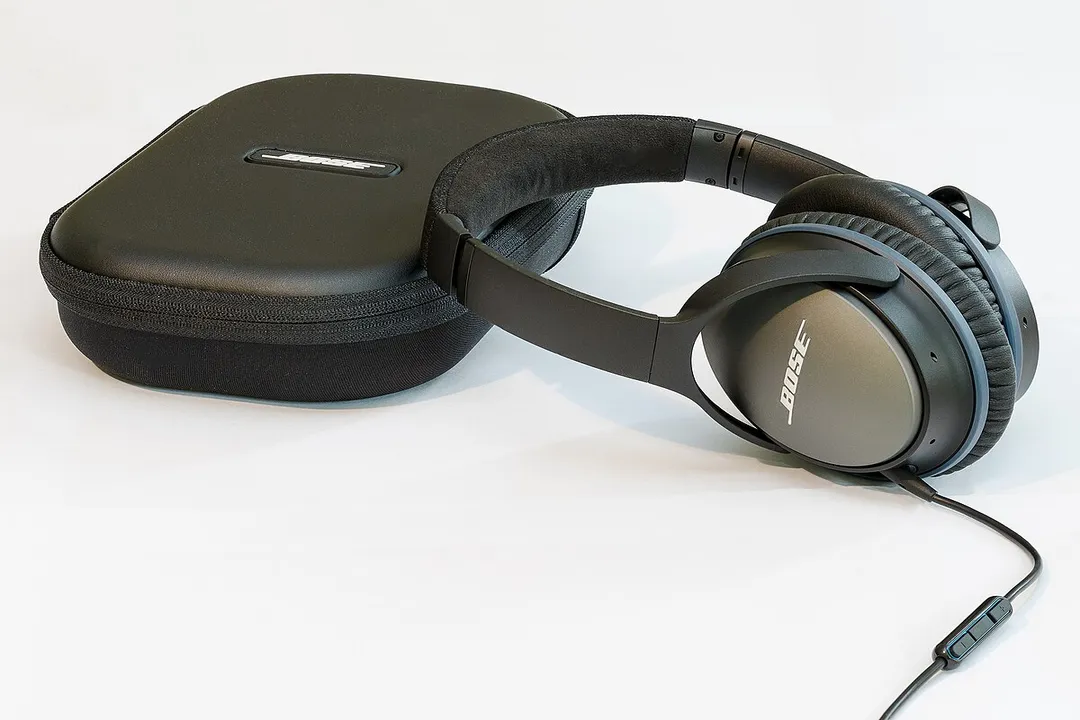
After proving the efficacy of the technology in the demanding aerospace sector, the focus shifted toward miniaturization and adaptation for the general public. [7] The breakthrough moment for consumers arrived in the year 2000 with the release of the first commercially available noise-canceling headphones from Bose. [7] This product line, famously named QuietComfort, marked the entry of active noise cancellation into the mainstream audio market. [7]
The introduction of ANC headphones changed user expectations forever. Prior to this, noise reduction relied entirely on passive isolation—the physical seal created by earpads and the bulk of the material. ANC headphones introduced a new dimension where electronics actively worked to eliminate the external world. [1]
# Understanding the Mechanism
To appreciate the invention, one must understand the two primary methods of quieting the world that these headphones employ. Passive Noise Reduction (PNR) involves the physical materials blocking sound waves from reaching the ear canal, similar to earplugs. [1] Active Noise Cancellation (ANC), the core invention, handles persistent, low-frequency background noise—like the hum of an airplane engine or an HVAC unit—by using the principle of destructive interference. [1]
The system uses tiny external microphones to "hear" the noise entering the ear cup. It then reverses the phase of that signal and plays it back through the speaker. [1] If the original sound wave is a peak, the anti-noise signal is a trough; when they meet, they cancel each other out, resulting in silence where the noise once was. [1] This active process is what allowed Dr. Bose to tackle noise levels that passive materials alone could not manage. [5]

# The Legacy of Quietude
The invention didn't just create a new product category; it fundamentally altered how people interact with noisy environments, both in transit and at work. The engineering feat achieved by Dr. Bose and his team in effectively managing complex acoustic physics laid the groundwork for all subsequent ANC technology offered by competitors across the audio industry. [2]
For anyone considering investing in noise-canceling gear today, understanding the invention's origin offers a useful perspective. High-quality ANC circuits are most effective against steady, low-frequency sounds because these are predictable enough for the electronics to reverse accurately. [1] Sudden, sharp noises, like a clap or a shout, often fall outside the ideal processing window for most ANC systems, meaning they are still primarily blocked by the physical padding (PNR) rather than being actively canceled. [1]
The journey from a frustrated pilot on a noisy flight to the ubiquitous quiet space of modern commuting is a testament to focused engineering solving a tangible human problem. It took a singular vision, decades of patient research funded by a dedicated company, and the specific expertise of an engineer like Dr. Bose to bridge the gap between hearing the world and choosing to silence it. [2][7] His contribution remains the foundation upon which the entire modern quiet audio market rests. [3]
# Patent Focus
While Dr. Bose is the central figure, acknowledging the specific patent application helps situate the invention legally and historically. The patent filed in 1978 protected the method of using an electrical signal to create an inverted sound wave to cancel unwanted ambient noise. [7] This filing formalized what was being developed in the labs, solidifying the intellectual property claim around active cancellation in a personal audio device, distinct from earlier industrial noise reduction techniques. [7]
# Early Competition
Although Bose commercialized the first consumer ANC headphones in 2000, it is worth noting that the underlying noise-canceling headset technology had applications in other fields earlier, particularly military and aviation communications, where similar noise reduction principles were being explored or applied. [3][4] However, the widespread adoption and popularization of the user-friendly, high-fidelity ANC headphone experience are overwhelmingly tied to the efforts and investments made by the Bose organization following Dr. Bose’s initial insight. [2][7]
Related Questions
#Citations
Noise-cancelling headphones - Wikipedia
TIL that it took Bose over 15 years and 50 million dollars to ... - Reddit
How a “Genius” Engineer Designed the First Noise Cancelling ...
Long Story of Noise Cancelling Headphones - Krisp
Noise Cancelling Headphones: The Beginning - Sound Planning
The History Of World's First Noise-Cancelling Headphones
History – Bose Aviation Headsets
Who made the first noise canceling headphone? - YourStory.com
The Untold History of Noise-Canceling Headphones. From 1930s ...
Invention of Noise Cancellation Headphones. - The SMCC Beacon