Who invented knitting and why?
The history of knitting is shrouded in time, making a single inventor impossible to name. The earliest confirmed physical evidence points toward the Near East, specifically Egypt, where remnants of knitted socks dated between 1000 and 1200 AD have been discovered. [1][2][3] This discovery anchors the beginning of verifiable knitting to the early medieval period, though the technique itself likely has deeper, more scattered roots across textile history. [8]
# Ancient Roots
The development of knitting was not a sudden invention but rather an evolution from existing textile crafts. [2][7] Scholars often look to techniques like Nålebinding (a single-needle method) or various forms of netting and crochet as potential ancestors that laid the groundwork for the looped structure we recognize today. [2][8] Some ancient Coptic textile fragments, which researchers suggest might date as far back as the fifth century, display textures that bear a strong resemblance to later knitting stitches, making the exact point of origin ambiguous. [4][8]
The true technical breakthrough that allowed knitting to separate itself from its predecessors was its inherent elasticity. [2] Woven fabrics offer very little natural give or stretch, making them difficult to shape precisely around the contours of the body. [9] Knitting, built upon interlocking loops, provided the necessary stretch and drape required for tightly fitted garments, a factor that was central to its initial widespread adoption. [2][9]
Thinking about the transition from weaving to knitting for hose reveals a fascinating point about textile physics. The shift wasn't merely about aesthetics; it was a practical engineering solution. Imagine the daily necessity of maintaining a form-fitting garment that needed to stay up without constricting blood flow—a woven tube simply couldn't adapt to the dynamic movement of walking and sitting as well as a knitted surface could. [9] This performance advantage, almost like the difference between a rigid pipe and a flexible hose, drove adoption among those who could afford the skilled labor required.
# Male Craft
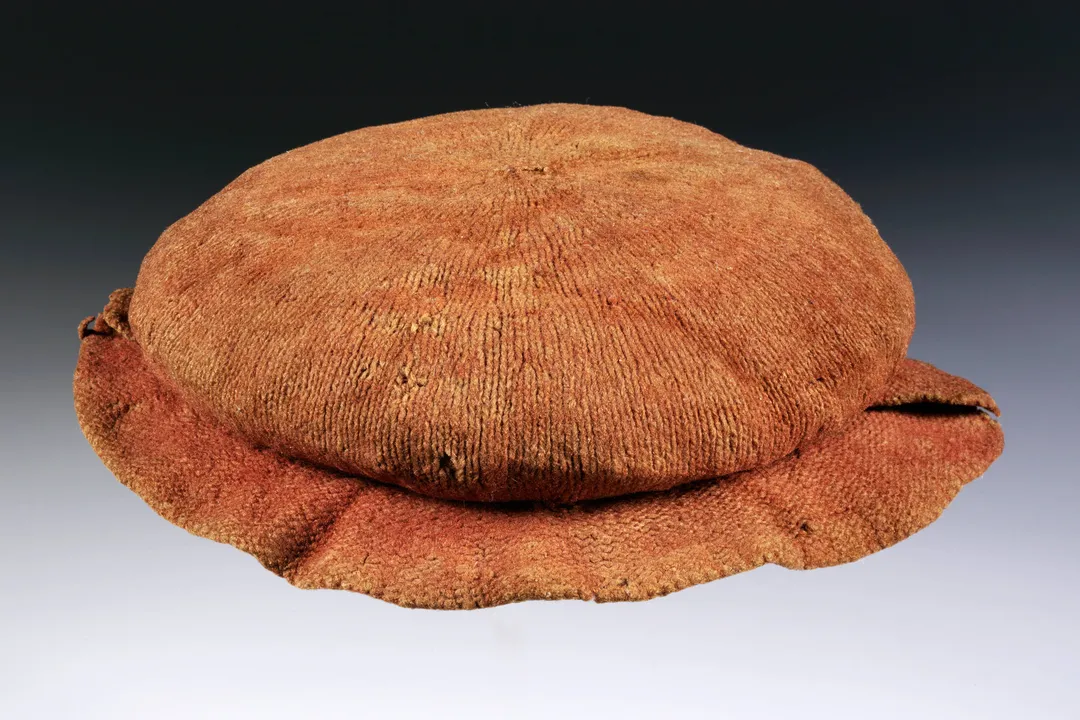
A particularly interesting feature of knitting’s establishment in Europe is that it was, for a significant period, primarily a male pursuit. [3][6] Before it became commonly seen as a domestic craft associated with women’s leisure, knitting was often a skilled trade governed by strict guilds. [3][6] These professional organizations regulated quality, training standards, and the commerce surrounding the finished product, ensuring that the creation of high-demand items like stockings remained centralized and profitable. [6][7]
The early knitters, particularly those working with fine wool and later silk, were generally professional artisans rather than amateurs. [6] Early knitting needles themselves, when first appearing in Europe, were often made of metal, reflecting their status as tools of a serious trade rather than simple domestic implements. [1]
The early dominance by men suggests that the social context dictated who held the skill. If knitting had started purely as a way to mend nets or produce simple caps using cheap yarn, it might have remained domestic sooner. Instead, its early association with complex, high-status items like fine silk hose meant it was treated like goldsmithing or tailoring—a trade requiring formal apprenticeship and guild standing. [3][6] A skill that could generate significant income and was protected by trade laws naturally fell under the purview of established male professional structures of the time.

# Shifting Roles
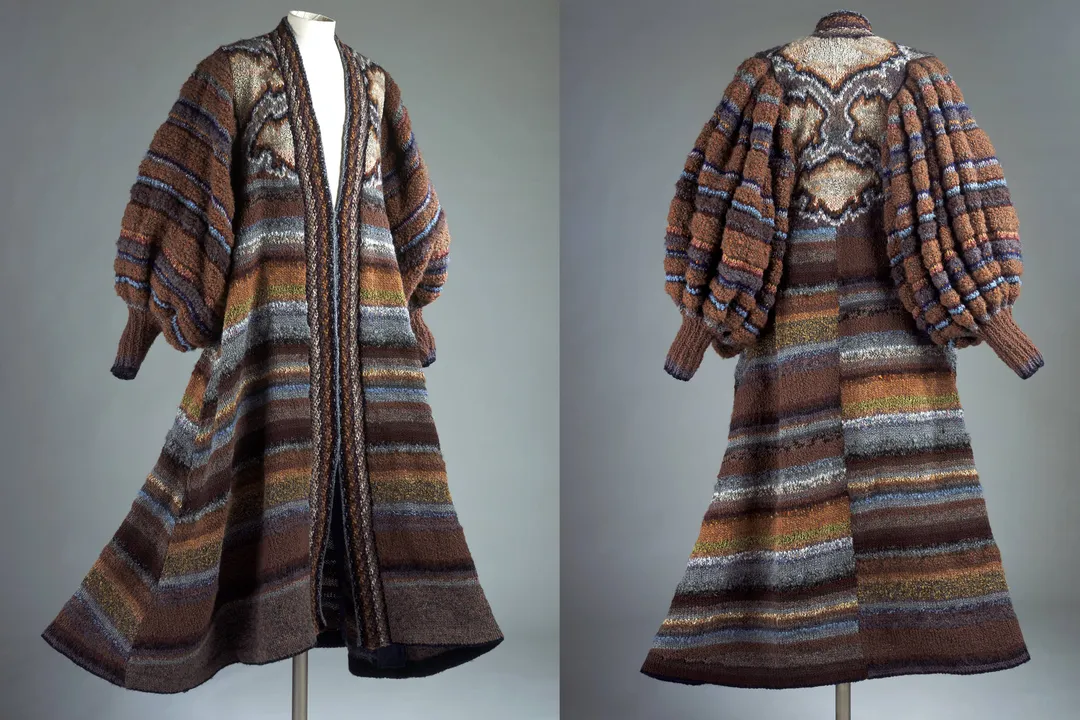
Why did this status-laden male craft eventually become so closely associated with women? The transition from a specialized, guild-controlled pursuit to a common activity occurred gradually. [5] As the technique became more widespread and perhaps less exclusively tied to the very highest-end luxury items, the barriers to entry naturally lowered. [5][7]
The invention of the knitting machine played a major part in this social shift. Around 1589, William Lee invented the stocking frame, a mechanical device designed to meet the soaring demand for knitted legwear much faster than human hands ever could. [1] This technological advancement began to mechanize production, moving the making of mass-market hose out of the individual artisan’s hands and into centralized workshops. [7]
As machines took over the commercial bulk of production, hand-knitting often retreated into the domestic sphere. [5] It remained as a means of economizing on clothing expenses, mending worn goods, or providing personalized items for family members. This retreat cemented its later association with women’s home craft and leisure activities, a perception that persists in some circles even today. [5]
# The Functional Why
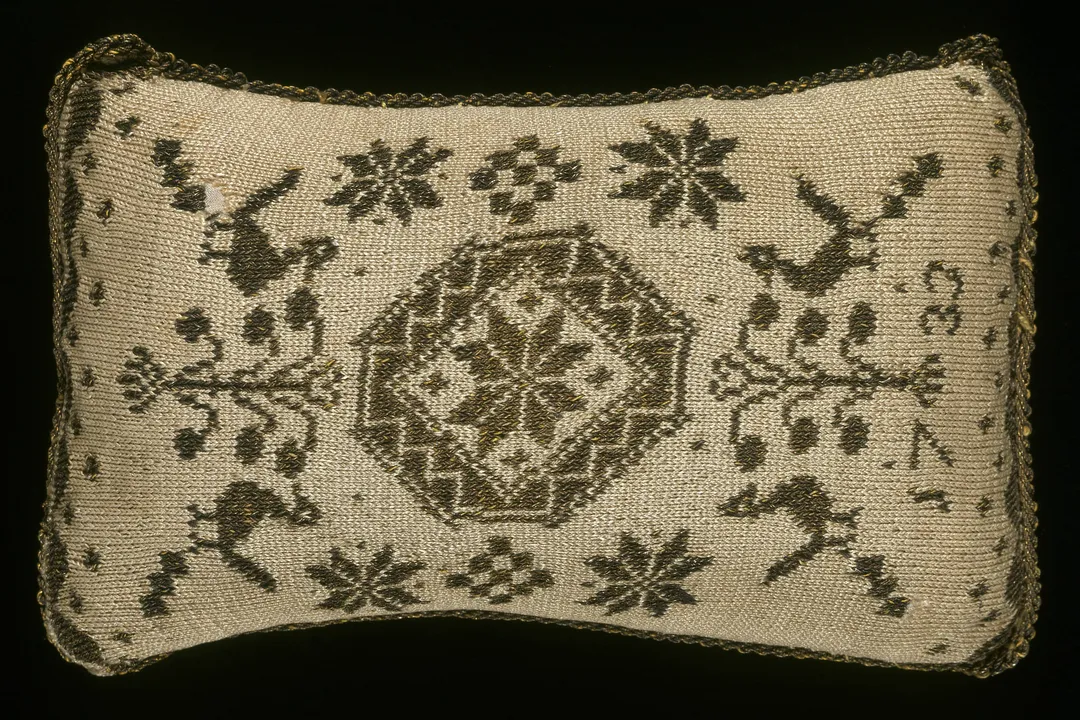
To understand who invented knitting, one must also consider why the technique was developed in the first place. The answer lies in the superior fit of knitted textiles over traditional woven cloth, particularly for body coverings. [9] Before knitting offered a viable alternative, stockings were typically cut and sewn from woven fabric, a process that resulted in garments requiring lacing or complex tying to secure them to the leg. [5]
Knitting solved this engineering problem elegantly by creating a fabric that conformed naturally. While early Egyptian examples are utilitarian socks, [1][3] the European adoption focused heavily on creating perfectly tailored hose for the upper classes. [6] This ability to create a garment that molded to the body without restricting movement or requiring constant adjustment was the fundamental technical reason knitting succeeded over older methods for this specific type of clothing. [9]
The survival of hand-knitting, even after the factory system took hold, is a testament to the enduring appeal of the handmade object. While machines produced quantity, the quality and unique stitch definition achieved by a skilled hand—working with needles that evolved from early metal rods to the wooden or bone implements preferred by domestic knitters—continued to hold value for those who appreciated craft over sheer speed. [1] The original need for stretch and fit, first solved by those unknown Egyptian artisans a millennium ago, is still what draws millions to the craft today.
Related Questions
#Citations
History of knitting
The A Brief History of Knitting
The history of hand-knitting
History of Knitting a Resource Guide
How knitting became cool
The surprisingly manly history of knitting
The Rich Tapestry of Knitting: A Historical Overview
The History of Knitting Pt 1: Mysterious Origins
The Development of Hosiery Knitting - Textiles History