Who invented humanitarian drones?
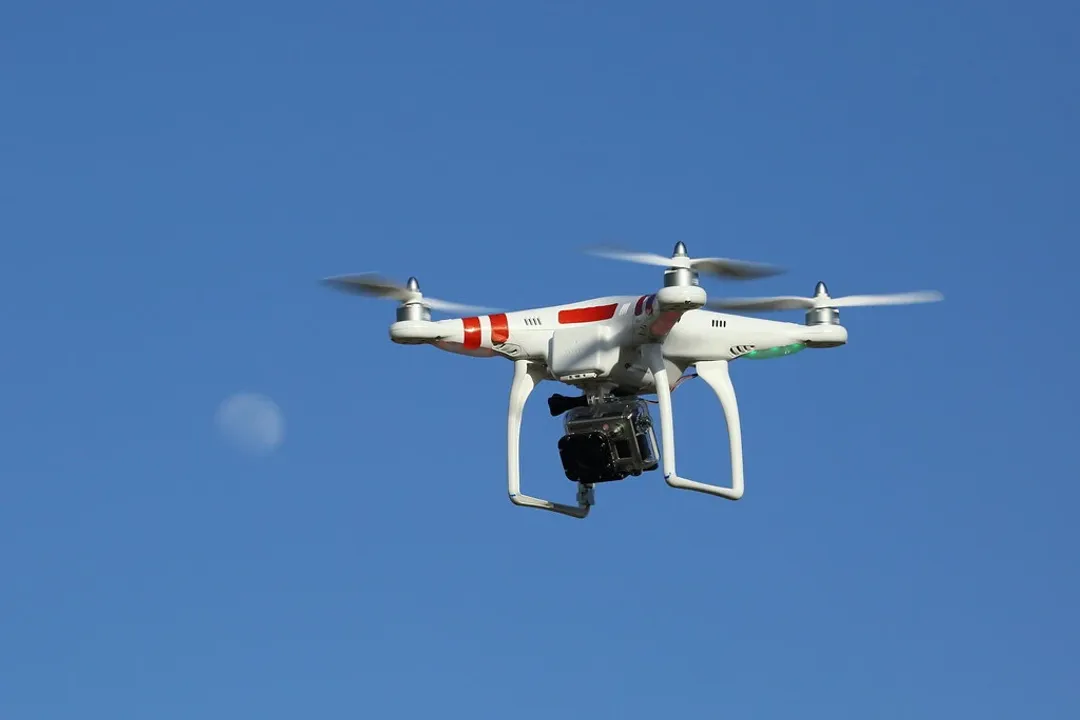
The question of who invented the humanitarian drone does not have a single, clean answer, as it hinges less on a specific piece of hardware and more on the invention of a concept—the purposeful application of existing unmanned aerial vehicle (UAV) technology for the betterment of human life during crises. While the foundations of drones were laid over centuries, often in the context of war, the pivot toward saving lives required a distinct philosophical shift championed by particular innovators who adapted the tools for aid.
# Military Genesis
The lineage of unmanned flight stretches back far before the modern era. The very idea of a pilotless aircraft took hold in the late 19th century, spurred by advancements in radio transmission. [1] Nikola Tesla famously demonstrated a radio-controlled boat in 1898, showcasing remote operation that many believed would eventually make war obsolete. [1][5] In the early 20th century, this concept merged with aviation, driven by the need to practice against aerial threats. [1]
World War I accelerated this development. Britain tested the Aerial Target in 1917, designed by Archibald Low, which is sometimes cited as the first drone to fly under control. [1][5] Simultaneously, America developed the Kettering Aerial Torpedo, nicknamed the “Bug,” which was essentially an explosive-laden, radio-controlled flying bomb. [1][5] These early attempts were often unreliable and lacked consistent control signals, frequently ending in spectacular crashes. [1]
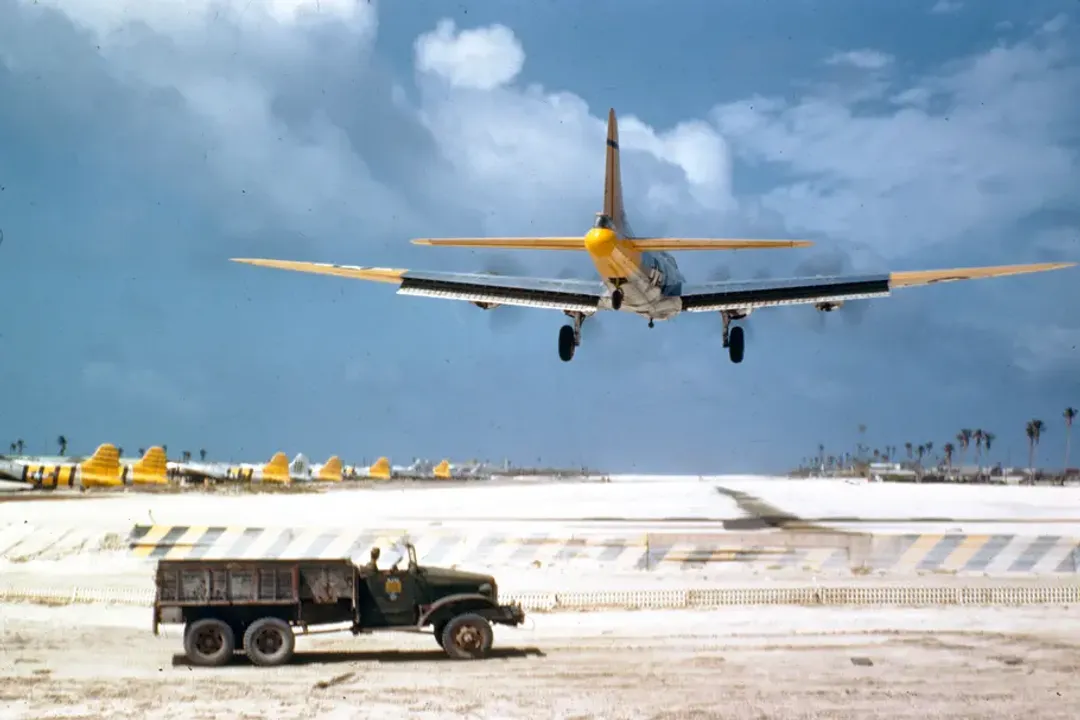
The term drone itself is thought to have originated in the 1930s, inspired by the British de Havilland DH.82B Queen Bee, a radio-controlled aircraft used primarily for anti-aircraft gunnery practice. [2][5][8] This era cemented the reputation of UAVs as workhorses for missions that were too dull, dirty, and dangerous for piloted aircraft. [1][5] This military requirement for target practice and later for surveillance—such as the large-scale deployment of Ryan Firebees during the Vietnam War—drove most of the technological leaps forward. [5][8]
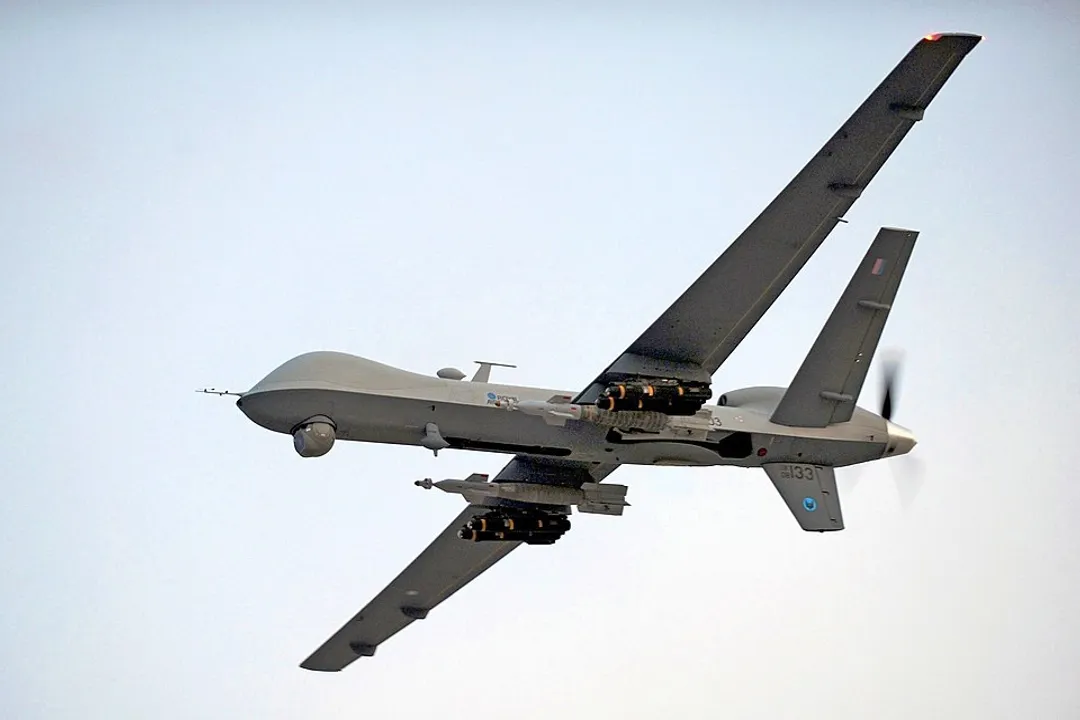
The modern military drone, the template from which humanitarian models often evolve, is closely tied to engineer Abraham Karem. [3][4] Karem, regarded by some as the founding father of UAV technology, developed prototypes like the Albatross in the 1970s and 80s. [3][4][8] His work, often funded by DARPA, culminated in the General Atomics Predator drone, which entered service in the mid-1990s and fundamentally transformed military reconnaissance and combat operations. [3][4][8] Karem's focus, like that of his military sponsors, was on creating long-endurance aircraft for strategic and tactical advantage. [4]
# Aid Pivot
The leap from a military reconnaissance tool to a humanitarian asset required more than just software updates; it necessitated a change in intent and community structure. By the 2000s, as commercial applications blossomed with affordable consumer models like the DJI Phantom, [8] the technology began to trickle into the humanitarian and development sectors. [7] The core technology—small, relatively inexpensive aerial vehicles capable of carrying sensors—was appealing for rapid situational awareness in areas inaccessible to ground teams or too risky for manned helicopters. [5]
The turning point for defining the humanitarian drone concept appears to center around the work of Dr. Patrick Meier. [6] Meier is credited by some sources with inventing the concept of using crisis mapping in humanitarian emergencies. [6] This innovation grew directly out of the urgent needs recognized following the devastating 2010 Haiti earthquake. [6]
# Crisis Mapping Founders
Meier's initial work focused on mobilizing volunteer technical communities—grassroots networks of engineers and mappers—to process data rapidly after disasters. [6] This collective action, focusing on mapping and data analysis, formed the bedrock for later aerial deployment. The knowledge accumulated and the standard operating procedures developed by these volunteer networks provided the necessary intellectual groundwork for introducing UAVs into aid work. [6]
While military drone development was often top-down, driven by defense contracts and national security needs, the humanitarian application was born from decentralized, bottom-up innovation and the ethical imperative to help. [6] Meier has stressed the primacy of human values over tools; technologies change, but the collective commitment to action remains the constant driver. [6]
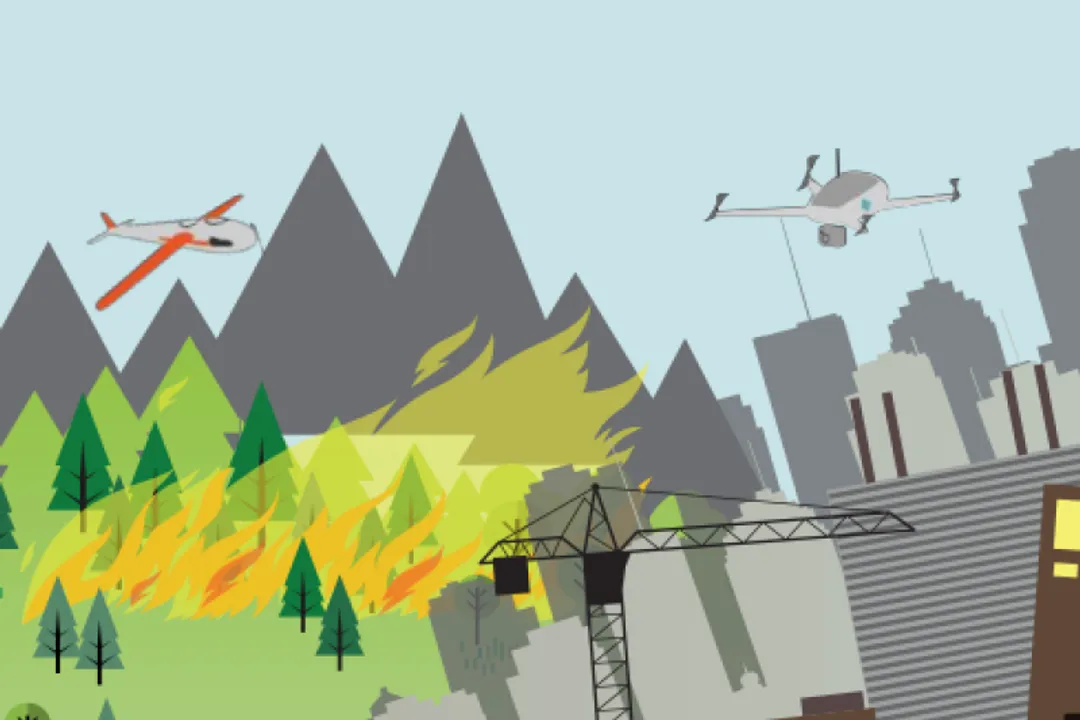
The application of drones in this context went beyond simple photography. A significant 2016 report, co-authored by Patrick Meier, reviewed the state of Drones in Humanitarian Action and identified the most promising uses, which included:
- Mapping: Creating up-to-date imagery for situation assessments. [7]
- Delivering lightweight essential items to locations cut off by disaster. [7]
- Supporting damage assessments following events like earthquakes or floods. [7]
- Increasing situational awareness for first responders. [7]
The primary function cited in post-disaster work at that time was mapping, though delivery and search & rescue were noted as rapidly expanding fields. [7]
# Operator Roles
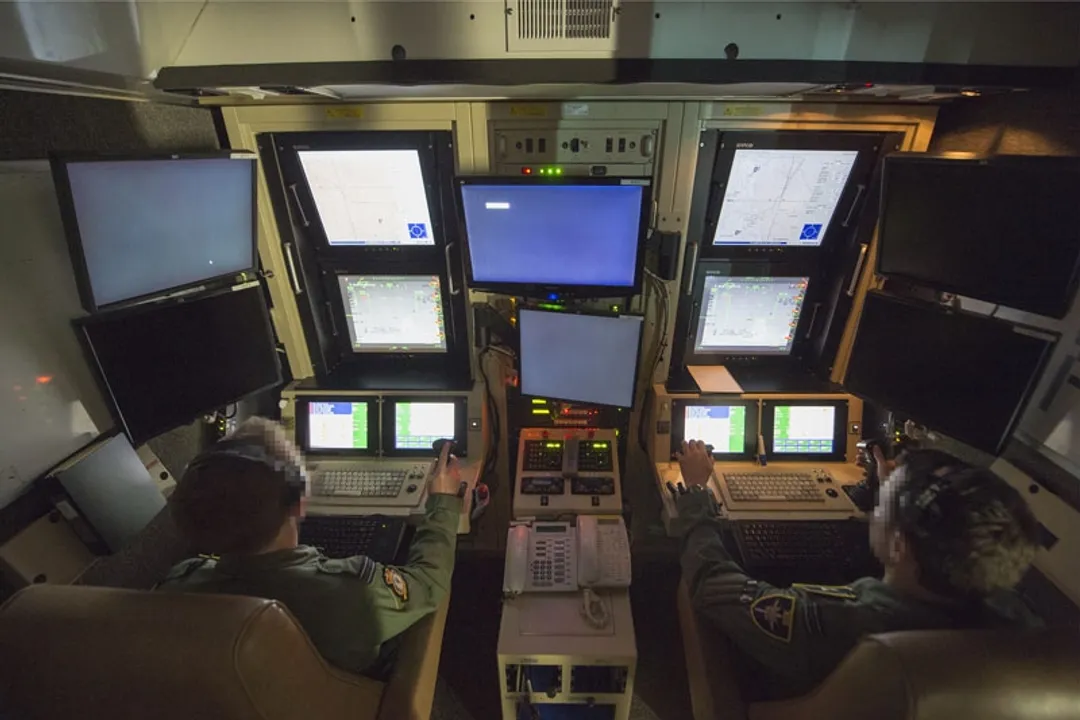
The who in "who invented humanitarian drones" is therefore best answered by recognizing the pioneers who repurposed the technology away from conflict, such as Meier and the networks he helped build. It is important to note a significant divergence in the operational reality between military and humanitarian drone use. Military Unmanned Combat Aerial Vehicles (UCAVs) are designed for intelligence gathering, surveillance, and targeted attacks, allowing pilots to maintain an "unblinking eye" on targets from distant control stations. [2][9] This capability has led to complex ethical debates regarding civilian casualties and psychological stress on operators who witness the consequences intimately. [9]
Conversely, humanitarian operators face a different set of high-stakes challenges. If we consider the operational environment, a humanitarian drone operator must navigate complex airspace regulations and gain access permissions from often fragile local governments, a bureaucratic hurdle military operations frequently bypass. [7] The risk profile shifts from avoiding enemy fire to ensuring non-interference with local authority and avoiding creating new risks for the affected population.
For instance, a humanitarian flight for mapping might require coordination with multiple local agencies, whereas a military surveillance drone operates under a vastly different, classified set of rules of engagement. [5][9] This difference in operational freedom and accountability highlights how the invention of humanitarian use required developing protocols where none existed, often relying on community trust rather than military authorization. [6]

# Ethics and Localization
The ongoing evolution of the technology in the aid sector is marked by a continuous conversation about ethics and responsibility. [6] While military drones have faced scrutiny over collateral damage and the psychological toll on personnel viewing remote deaths, [9] humanitarian actors must focus on minimizing harm through responsible data handling and capacity building. [7] Challenges in this sector include the sheer volume of data collected, the need for local capacity to process and store that data, and inadequate pre-existing regulations for civilian drone use. [7]
This points to a vital, non-hardware aspect of the humanitarian drone "invention": the emphasis on localization. Patrick Meier advocates strongly for learning from the technological expertise found within the Global South, rather than assuming Western knowledge holds all the answers for deployment in crisis zones. [6] This is a crucial distinction from the historical narrative where key military innovations—like the Predator built upon Karem’s work—were dictated by the US defense apparatus. [4] In the humanitarian sphere, the perceived 'inventors' must decentralize control and expertise to the local communities they intend to serve. The successful integration of drones into aid relies not on the drone's sophistication, but on ensuring the technology is locally owned, managed, and aligned with shared human values. [6]
If we were to assess the return on investment for these applications, mapping using drones, which provides immediate, high-resolution data, generally offers a better return than some traditional, slower data collection methods in the immediate aftermath of a disaster. [7] A drone might map a collapsed area in hours, data that previously required days of dangerous ground assessment or expensive satellite time. [7] This speed and low footprint are significant advantages when traditional logistics chains are broken.
# Technological Trajectory
The technology itself continues to evolve from its military roots, but the application remains the defining characteristic. Modern commercial and humanitarian drones benefit from advancements in smaller electronics, improved battery technology, and integrated GPS systems, which allow for greater endurance and autonomy—qualities originally sought by military developers like Karem. [1][8]
The broader robotics field, which Meier now engages with beyond UAVs, also informs humanitarian drone work, covering areas like medical applications and autonomous boats. [6] However, the philosophical commitment must remain that these tools serve social good rather than profit-driven motives. [6]
In summary, while inventors like Nikola Tesla provided the remote control principle and figures like Abraham Karem developed the long-endurance, high-capability airframe, the true "invention" of the humanitarian drone belongs to the movement, spearheaded by thinkers like Patrick Meier, that reoriented this powerful technology toward ethical aid delivery, mapping, and situational awareness, prioritizing local context and human ethics above all else. The success of humanitarian drones is measured by who benefits from the data and delivery, not just who engineered the airframe.
Related Questions
#Citations
Abraham Karem - Wikipedia
Who Invented the Drone: UAV History Lesson
A Brief History of Drones - Imperial War Museums
Who Invented the Drone? Know When the First Drone Used
Drones in Humanitarian Action Report | WeRobotics
History of drone warfare | TBIJ
Two decades of humanitarian innovation - ICT4Peace Foundation
The Secret History of Drones | National Air and Space Museum