Who invented food donation platforms?
The journey to digitally connecting surplus food with those in need is not marked by a single "aha" moment from one inventor, but rather an evolution driven by necessity and technological capability. Before sophisticated software governed the process, food recovery relied on personal contacts, phone calls, and simple logistics networks, often established by dedicated organizations striving to curb waste while addressing hunger. [8] The real invention, therefore, lies in systematizing this connection, moving it from an ad-hoc rescue operation to a reliable supply chain component.
# Precedent Setting
The foundational work in food recovery long predates modern apps and web portals. Organizations developed operational expertise to manage perishable donations, understanding the critical need for speed and proper handling. [8] Early efforts focused heavily on coordinating donations, often involving manual data collection regarding what food was available, where it was located, and which local agencies could accept it safely. [8] This groundwork established the necessary trust and infrastructure—the human connections—that any subsequent digital platform would need to overlay or replace.
# Digital Genesis
One significant early entrant in formalizing this digital connection space is the Food Donation Connection (FDC). FDC developed systems aimed at streamlining the communication process between food donors and recipient agencies. [1] While the exact first digital connection model invented by a specific individual is hard to pinpoint across the entire spectrum of food recovery efforts globally, FDC represents a critical moment where technology became central to matching supply and demand efficiently. [1] Their model centered on creating a centralized mechanism to move food from donors to organizations prepared to distribute it. [1]
# Network Scaling
As the scale of hunger relief organizations grew, so did the need for platform solutions that could handle massive volume across wide geographic areas. Feeding America, recognizing this need, developed or adopted its own powerful platform known as MealConnect. [2] This system is designed to bridge the gap between donors and the nationwide network of food banks and pantries. [2] MealConnect showcases the maturation of the concept, moving beyond simple classified listings to a coordinated technological infrastructure capable of tracking billions of pounds of food rescued. [2] The scale achieved, reaching 5 billion pounds rescued through MealConnect as of a specific milestone, demonstrates the effectiveness of a purpose-built, large-scale platform solution. [2]
This evolution highlights a key divergence in platform invention: there are proprietary systems built by large networks for their members, and there are independent services that aim to serve any donor or agency. [1][2]
When comparing these large network solutions versus independent aggregators, a key difference emerges in implementation. A national network's platform like MealConnect has inherent adoption because its member food banks are already integrated into the organization's structure. Conversely, an independent platform like FDC must continuously win trust and secure participation from diverse, independently governed food banks and retailers, requiring different sales and onboarding strategies. [1][2]
# Specialized Platforms
The concept of a "food donation platform" is not monolithic; different innovators focused on solving specific pain points within the recovery ecosystem. Some platforms zeroed in on the high-risk, high-reward category of prepared food donations. For instance, case studies examining the recovery of prepared foods—like those from cafeterias or catering operations—often rely on tailored software solutions that prioritize strict time limits and temperature control logging, which standard donation tracking might overlook. [6]
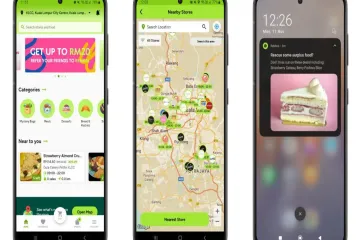
Other innovations focused on making the act of donating easier for the small business or individual donor. While the exact origins of every localized app are numerous, the general trend saw the rise of simpler interfaces, sometimes appearing on trend-tracking sites, that aimed to mimic the ease of consumer apps for B2B or B2C food transfer. [5] The objective shifts from simply managing logistics for a food bank to acting as a real-time marketplace connector. [5]
# Data and Logistics Integration
The invention of the platform is inseparable from the invention of standardized data practices. For any technology to effectively manage millions of pounds of food, it must move beyond anecdotal tracking. The adoption of centralized data systems, such as the Atlas system used by the food banking community, proves that the platform's value is deeply tied to its ability to quantify and verify donations. [3][4]
Atlas, for example, represents an organizational commitment to data infrastructure, which supports the efficiency of platforms like MealConnect by providing a common language for reporting and performance measurement. [4] This move toward rigorous data collection transforms food donation from a series of goodwill acts into a measurable, manageable logistics function, a crucial analytical shift enabled by the underlying technology platforms. [3]
If we consider the total output of a hypothetical regional food hub using these systems, we can begin to appreciate the platform's impact. Imagine a region where, before digital matching, 20% of viable prepared food donations were lost due to delayed contact. If a platform like FDC or MealConnect reduces the average time from donation offer to scheduled pickup from 8 hours to 2 hours, the system has effectively invented several extra days of shelf life for perishable items across the network per month. This operational efficiency, born from platform development, is perhaps the greatest "invention" of all.
# Technology's Role
The technological backbone underpinning these platforms is what allows them to scale beyond the capacity of manual labor. Technology ramps up the fundraising potential and logistical capacity of food recovery operations. [3] It digitizes the inventory that used to exist only in someone's head or on a whiteboard. [3] This digital presence helps organizations, including those focusing on disaster relief like World Central Kitchen, to potentially coordinate larger-scale efforts, though WCK often emphasizes immediate, on-the-ground mobilization rather than being defined by a single donor-matching platform. [7]
The various platforms that have emerged, whether developed internally by major nonprofits or offered as specialized services, all share the goal of reducing food waste by optimizing the logistics of food transfer. The inventor of the food donation platform, therefore, is less a singular person and more a collection of early technologists, logistics experts, and nonprofit leaders—from organizations like FDC and Feeding America—who first committed to translating the physical act of giving food into efficient, scalable software architecture. [1][2][4] They created the digital bridge that now defines modern food recovery.
Related Questions
#Citations
Food Donation Connection - Wikipedia
5 Billion Pounds Rescued - Feeding America
Opinion: How Technology is Ramping Up Our Fundraising
World Central Kitchen | WCK
Automated Food Donation Platforms : Connects Donors - Trend Hunter
Easily Donate Food
[PDF] Case Study: Prepared Food Donation
About Us - The Global Food Donation Policy Atlas
Our Story - FoodRecovery.org