Who invented fall detection systems?

The genesis of automatic fall detection systems is not a single date or a lone inventor, but rather a layered evolution built upon the foundational need to summon help when mobility fails. To truly answer who invented it, one must trace the lineage from the simple panic button to the complex sensor array that now monitors gait and posture. The earliest concept for what is now known as a Personal Emergency Response System (PERS) arose from deep concern over the vulnerability of older adults living alone. [4][8]
# Early Concepts
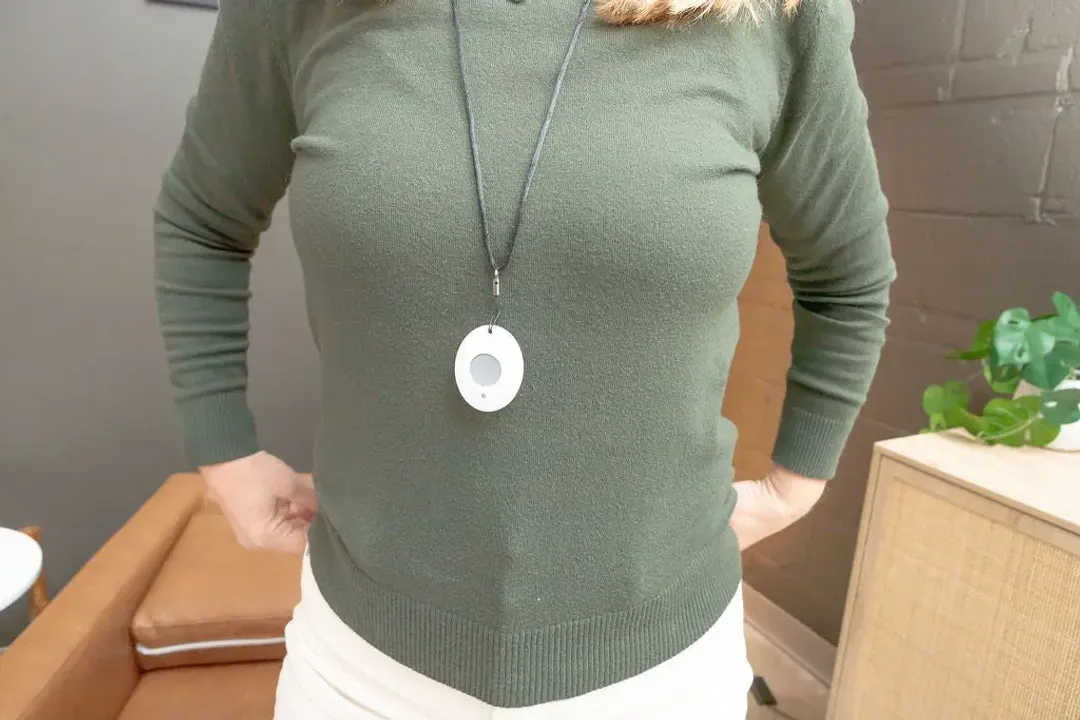
The philosophical groundwork for these life-saving tools predates modern electronics. Simple hand bells, known since the 17th century in England, served the rudimentary purpose of alerting nearby caregivers. [4] However, the true technological journey began in the early 1970s. In Germany, Wilhelm Hormann was conceptualizing a framework for ambulatory and non-ambulatory care, developing what he termed Hausnotruf, or "home alert". [4][8] Interestingly, Hormann's initial aim was not a consumer product but a method to record and share data with biomedical field scientists, though the potential for personal safety quickly became apparent. [1][4]
Meanwhile, across the Atlantic, the North American implementation was taking shape. Gerontologist Andrew Dibner, Ph.D., began pondering this very question in 1972: "What would an elderly person do if he or she were alone and needed help?". [5] This contemplation led him to the core idea of a remote distress signal. [5] The practical realization followed swiftly; by 1974, Dibner, along with his sociologist wife, Susan, established Lifeline Systems, Inc.. [5][8] This company is widely recognized as the pioneer of the personal alert service in North America. [5]
The initial spark for the industry came from a deeply personal realization: the agony of prolonged immobility after an accident. For Dibner, this was tragically underscored by the plight of a family friend who, after a stroke, was not found for three days, severely impacting her health. [4] This experience cemented the mission: to assure people they were not alone. [4]
# First Alerts
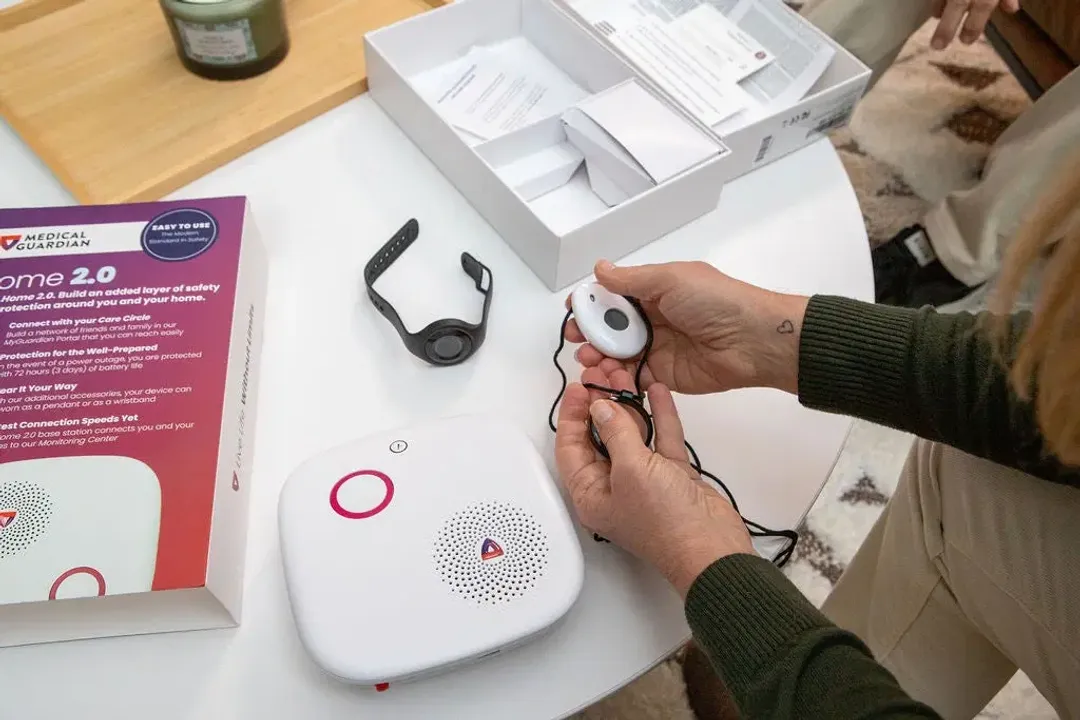
The technology rapidly moved from concept to market. In 1975, the American International Telephone Company introduced an emergency home phone system, featuring a wearable medallion that, when pressed, broadcast a pre-programmed message to several predetermined phone numbers. [4][8] This was the first true medical alert necklace tied to a landline. [4] The drawback was its lack of specificity; the message was simple, and if the programmed contact wasn't near their phone, the alert could fail to yield immediate help. [4]
Lifeline Systems, Inc. also began selling its system around the same time. [5][8] As the industry matured through the late 1970s and into the 1980s, these systems evolved to include the option of directly contacting emergency services or, more commonly, connecting the user to a live operator via a speaker system connected to the base station. [4] A crucial early limitation was that the user had to be within range of that base station to converse with the operator. [4]
The industry gained massive, if somewhat humorous, public awareness in 1989 with the ubiquitous commercial catchphrase, “I’ve fallen and I cannot get up!”. [1][4][8] While this phrase became a source of comedy, it successfully put the concept of Personal Emergency Response Systems (PERS) into the national consciousness, driving serious consideration for the devices. [4] At this stage, the devices were often viewed as bulky and tethered to the home via landlines. [1]

# Automation Emerges

The invention of fall detection itself is distinct from the invention of the manual alert button. Automatic fall detection is a passive system, relying on internal sensors rather than the user's ability to press a button—a critical difference for individuals who are unconscious or immobilized after impact. [8]
The transition to automation was gradual, mirroring broader technological advancements like the shift from vinyl to digital music. [1] While the basic PERS devices were constantly refined for comfort and waterproof capabilities, the introduction of automatic fall detection, which relies on sophisticated algorithms interpreting sensor data, came much later. Lifeline is cited as being among the first to bring this capability to market, introducing automatic fall detection technology in 2010. [5] If a user fell and did not respond verbally, the system automatically summoned EMS. [5]
Around the same time, the industry was also breaking free from the landline. Mobile systems utilizing GPS technology and cellular networks began to emerge, offering protection outside the home. [1][2] In this space, MobileHelp later claimed a significant milestone, stating they were the first medical alert system to offer automatic fall buttons accessible to users without traditional landline service, beginning in 2013. [1]
# Sensor Science
The core of modern fall detection, which separates it from the initial manual alert devices, lies in the sensors and the software used to interpret their output. These systems belong to the broader field of personal safety and health monitoring. [2]
The typical wearable device utilizes a combination of sensors to create a data signature of an event: [3]
- Accelerometers: Measure changes in speed and detect sudden downward motion. [2][3]
- Barometers: Detect changes in atmospheric pressure, which can correlate with large vertical movements. [2][3]
- Algorithms: These software components process the raw data from the sensors, using techniques like machine learning or artificial intelligence (AI) to differentiate a genuine fall from other vigorous activities, such as sitting down quickly or waving an arm. [2][3][7]
The challenge of accuracy has always been central to improving this technology. Early attempts focused on simpler thresholding algorithms, often using data from a smartphone’s integrated accelerometer. [7] However, devices worn on the wrist—a popular alternative to pendants—presented a specific difficulty because arm movements are inherently freer and more varied than movements of the torso, leading to frequent false alarms in early models. [2] Today, research continues, with advanced systems even monitoring gait and posture to potentially predict a fall before it happens. [2] Academic research, for instance, has explored classifying sensor data from body area networks using classifiers like Support Vector Machine (SVM) and K-Nearest Neighbor (KNN) to achieve high accuracy rates, sometimes approaching 96% in controlled settings. [7]
# Layered Reliability
The evolution of fall detection highlights an interesting stratification in safety solutions, moving from single-point reliability to environmental awareness. Early PERS relied entirely on the user remembering to press the button and being able to press it. [8] The introduction of automatic detection addressed the second half of that equation—the inability to press the button—but it introduced the new challenge of false alarms. [2][3]
It is important to note that no current fall detection system is 100% accurate. [3] One analysis indicated that early commercial systems tested in real-world scenarios could generate high rates of false alarms, though this data is difficult to collect broadly. [3] Conversely, the technology prevents the long lie—the period after a fall where a person remains immobile, leading to pressure injuries, dehydration, and psychological distress. [3] By closing this dangerous gap between accident and assistance, the automated system fundamentally changes the outcome statistics for the elderly, frail, or solo workers. [2]
A subtle but significant divergence in development occurred between device placement. Devices worn on the trunk or chest have shown high accuracy rates, sometimes reported near 98%, compared to wrist-worn devices, which are prone to mimicking errors. [3] This suggests that the most reliable invention of the detection mechanism was intrinsically linked to optimizing sensor placement, pushing designers toward the body's center of gravity rather than the highly mobile wrist or the less stable ankle. [3]
# Modern Applications
While the initial drive came from gerontology, the underlying technology has expanded its reach considerably. Fall detection is now a key component in workplace safety protocols for solo workers—utility linemen, delivery drivers, or remote employees in isolated areas—where an unassisted fall is dangerous. [2] Furthermore, individuals with balance issues related to conditions like epilepsy or diabetic neuropathy find the automated alert valuable, even if the event isn't technically a "fall" in the traditional sense. [2]
The industry is moving toward greater integration. Modern systems can incorporate GPS for location tracking, offer multi-day battery life, and even include caregiver apps that provide peace of mind to family members. [3] While Lifeline pioneered the concept in the 1970s, and introduced automatic detection in 2010, competitors like MobileHelp rapidly innovated by pairing it with fully cellular, non-landline service post-2013. [1] This shows that no single company "invented" the modern system; it is the result of iterative competition pushing for better battery life, greater range, and more dependable connectivity. [3]
Ultimately, the history of fall detection systems shows a progression from the idea of a signal, conceived by figures like Hormann and Dibner in the early 1970s, to the manual device of the 1980s, and finally to the intelligent, passive monitoring system of the 2010s. The invention isn't solely attributable to the first person to design a panic button, but rather to the engineers and researchers who cracked the code of distinguishing a sudden impact from everyday motion using sophisticated sensor fusion and machine learning, transforming what was once a simple call for help into a silent, automated guardian. [2][7]
Related Questions
#Citations
The Interesting History of Medical Alert Devices
Past & Present Read Our History - Lifeline | Medical Alert Systems
The Best Medical Alert Systems with Fall Detection (2025)
Medical alarm - Wikipedia
Fall Detection System for the Elderly Based on the Classification of ...
What Kind of Technology Is Automatic Fall Detection?
Medical Alert Systems - Understanding How They Work | MobileHelp®