Who invented drug tracking systems?
The quest to identify the singular inventor of "drug tracking systems" is less about finding one person and more about charting the intersection of public safety demands, technological evolution, and regulatory necessity over decades. Modern drug tracking is not a single invention but a composite structure built from state-level prescription monitoring programs (PDMPs), complex global serialization requirements for pharmaceutical supply chains, and early data privacy pioneers. Tracing this lineage reveals layers of innovation responding to crises, from early concerns about drug security to the opioid epidemic that fueled massive technological adoption.
# Regulatory Drivers
The foundation for formalized drug tracking was laid by regulatory bodies responding to safety failures. In the United States, the Food and Drug Administration (FDA) has a long history in drug oversight, particularly through its Center for Drug Evaluation and Research (CDER). While CDER’s primary historical focus was on ensuring drug safety and effectiveness through approval processes—a process that matured significantly after tragedies like the thalidomide crisis—the subsequent need to track products after they reached the market became increasingly apparent.
The impetus for tracking often stems from two distinct problems: the potential for diversion and counterfeiting within the legitimate supply chain, and the misuse of legitimately prescribed medications. Early regulatory efforts often focused on preventing the introduction of harmful or unapproved products. The sheer volume and complexity of the pharmaceutical landscape, spanning from development to patient administration, meant that a simple, centralized invention was improbable; instead, localized solutions emerged as crises demanded them.
# State-Level Monitoring
One of the most direct ancestors of modern prescription monitoring is the development of Prescription Drug Monitoring Programs (PDMPs) at the state level. These systems were explicitly designed to identify the diversion and misuse of prescription drugs, primarily opioids, by tracking dispensing data. The history of these programs shows a gradual, often reactive, implementation across the country.
A significant figure in the early development of large-scale data tracking for controlled substances is Hank Asher. Asher is closely associated with pioneering online tracking systems, specifically in Florida, where he developed systems to help the Drug Enforcement Administration (DEA) monitor prescription drug activity. His work, which began in the early 1990s, focused on creating accessible databases for law enforcement and regulatory agencies, directly addressing the challenge of tracking the flow of controlled substances across state lines. This concept of online, centralized data aggregation for monitoring diversion was a critical leap forward, moving beyond paper records and manual checks.
The evolution of PDMPs shows a clear progression:
- Early Systems (Pre-2000s): Often manual or utilizing rudimentary batch processing, sometimes focusing only on specific high-risk schedules of drugs.
- Online Adoption (Early 2000s): The move to real-time or near real-time electronic reporting, exemplified by the development Asher championed.
- Interoperability (2010s-Present): Efforts to link state-level PDMPs together to track patients who might cross borders to "doctor shop".
Considering the layered nature of this development, it is important to recognize that while Asher's work in Florida provided a blueprint for effective, large-scale data infrastructure for prescription monitoring, the concept of states independently tracking prescriptions had earlier, albeit less sophisticated, roots. One early effort noted in the historical record involved systems being established by the mid-1990s, such as a system developed in connection with the University at Buffalo, demonstrating early university or research involvement in managing controlled substance data before widespread commercialization.

# Supply Chain Security Systems
A separate, yet equally vital, stream in the invention of drug tracking systems involves securing the physical product as it moves through the manufacturing and distribution network to prevent counterfeiting and tampering—the track and trace aspect. This is often differentiated from PDMPs, which focus on prescribing data.
The general history of drug track and trace systems points toward a sustained effort to improve security against counterfeiting, especially as international trade expanded. Early attempts in this domain might have relied on basic serialization or shipping manifests, but the true systemization required advanced technology. The necessity for this was highlighted by the growing global threat of counterfeit medicines infiltrating legitimate channels.
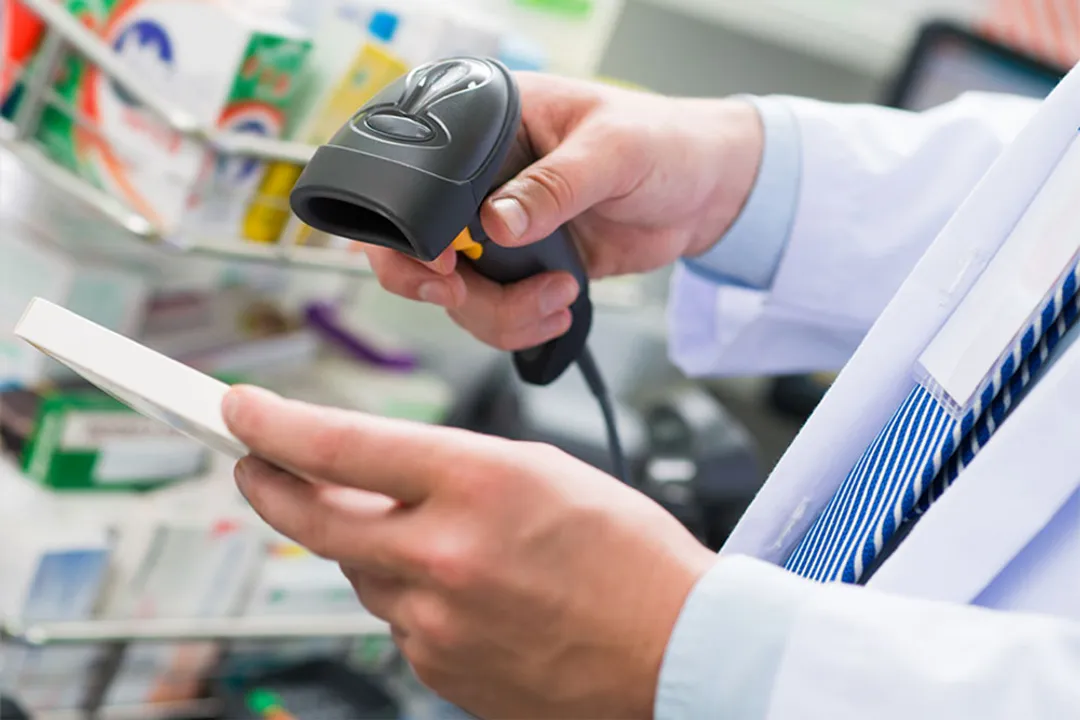
One significant development in this area is the move toward unit-level serialization, where every saleable package receives a unique identifier. Systems like DrugXafe, mentioned in some contexts, represent a commercialized approach to pharmaceutical track and trace, focusing on ensuring the integrity of the supply chain by verifying authenticity at various handover points. The implementation of such technologies is driven not just by voluntary industry action but increasingly by legislation mandating them, such as the Drug Supply Chain Security Act (DSCSA) in the US, which aims for full interoperable, electronic tracing of prescription drugs by a specific deadline.
If we were to analyze the progression of these supply chain systems, we see a direct parallel to the early days of electronic data interchange (EDI) in other industries, adapted for the stringent requirements of temperature control and anti-counterfeiting unique to pharmaceuticals. The invention here is less about a single piece of hardware and more about the protocol—the data standard that allows a wholesaler, manufacturer, and dispenser to exchange verifiable identity information for a drug package.
# Insights into Dual Evolution
It becomes clear that the "inventor" question splits into two distinct innovation tracks:
- The Prescriber/Patient Track (PDMPs): Driven by public health crises like diversion and misuse, pioneered by figures like Hank Asher in creating centralized databases for monitoring prescriptions.
- The Manufacturer/Distributor Track (Serialization): Driven by anti-counterfeiting and product integrity concerns, developed through industry standardization of unique identifiers across the logistics pipeline.
An interesting point arises when contrasting these two paths. PDMPs are fundamentally about behavioral monitoring (who gets what, when), relying on the data captured at the point of dispensing. Supply chain tracking, conversely, is about product provenance (where the physical item came from), relying on data captured at the point of manufacturing and transfer. A successful national strategy requires both to talk to each other—a scenario that has required substantial political and technical coordination well after the initial concepts were established.
Furthermore, while we focus on tracking systems, the broader medical technology field has seen inventors like Robert S. Langer, Jr., whose work on controlled drug delivery systems and biomaterials profoundly influenced how drugs work within the body, though not necessarily where they are tracked in the supply chain. This illustrates the vast difference between inventing the therapeutic agent or its controlled release mechanism, and inventing the logistical system to secure it.
# System Interoperability Challenges
A major hurdle, and therefore an area of continuous innovation, has been ensuring these distinct systems communicate effectively. For instance, a state PDMP might track that a patient received a prescription, but it doesn't necessarily know if the physical bottle they received was counterfeit upon arrival at the pharmacy shelf. The push for unified standards, like those being implemented for unit-level serialization, represents an attempt to retrofit the supply chain with a digital layer that can eventually interface with dispensing data systems.
Consider the challenge from a purely logistical standpoint. If a pharmacy dispenses a unit, it needs to confirm two things before dispensing: 1) The prescription is valid (PDMP check), and 2) The physical product has not been tampered with or diverted (Supply Chain verification). The invention of a truly unified system is the invention of the middleware and the agreed-upon data standards that allow these two independent histories—the patient history and the product history—to merge at the final point of dispensation.
For instance, imagine a scenario where a state PDMP flags a patient for over-utilization, but the pharmacy also scans the bottle’s unique identifier, only to find that the identifier belongs to a batch recalled months ago, or worse, one that was never officially recorded as leaving the manufacturer. The effectiveness of the modern system hinges on the integration of these separate tracking lineages.
To illustrate the differing data capture methods, one can compare the input sources:
| System Type | Primary Data Input Source | Key Goal | Inventor Focus |
|---|---|---|---|
| PDMP | Prescription written/dispensed by pharmacist | Prevent patient misuse/diversion | Database structure, secure access protocols |
| Serialization | Product manufactured/shipped by manufacturer/wholesaler | Prevent product counterfeiting/tampering | Unique identifier standards, electronic exchange protocols |
This table demonstrates that the key innovations were in data management for the former and data transmission/standardization for the latter.
# Early Technological Steps
While the large-scale, mandatory systems are relatively recent (late 20th and early 21st century), the desire for tracking has older precedents. The concept of tracking valuable or sensitive items electronically has parallels in early inventory management and government record-keeping. As early as the 1990s, research was exploring how to manage complex data sets related to medicine, suggesting a need for better information management long before the opioid crisis intensified the focus.
Furthermore, the development of the technology underpinning these systems often involves academic or independent innovation. While not directly inventing the drug tracking system as a policy tool, pioneers in materials science and chemical engineering, like those whose work eventually earned recognition from organizations like the National Academy of Inventors, provided the material science breakthroughs necessary for advanced drug formulation and delivery, which in turn shapes regulatory expectations for tracking sensitive products.
The sheer volume of data involved in tracking billions of individual drug packages worldwide necessitates advancements in database technology that go far beyond simple record-keeping. The systems needed to handle DSCSA compliance, for example, require massive, interconnected databases capable of querying product history in milliseconds across the globe. The "invention" here lies in the scale and speed of data processing made commercially viable.
# Conclusion on Invention
The identity of the inventor of drug tracking systems is inherently pluralistic. It belongs to the legislators who mandated reporting, the programmers like Hank Asher who built the first secure, online monitoring platforms for controlled substances, and the industry consortia that developed the unique identifier standards for supply chain verification. The closest one can come to naming an "inventor" of a system would be identifying the first governmental or academic entity to successfully deploy a state-wide, electronic PDMP, but even that title is contested across different states at different times. The true breakthrough was recognizing that medicine security requires two distinct, yet eventually integrated, digital surveillance mechanisms: one watching the doctor-patient relationship, and one watching the product-supply relationship. The ongoing work remains in perfecting the integration between these two worlds, ensuring a safe path from lab bench to bedside.
Related Questions
#Citations
Story of Pharmaceutical Track & Trace System
NIHF Inductee Robert Langer Invented Controlled Drug Delivery ...
A History of Prescription Drug Monitoring Programs in the United ...
A Brief History of the Center for Drug Evaluation and Research - FDA
The story of the drug-running DEA informant behind the databases ...
[PDF] History of Prescription Drug Monitoring Programs
DrugXafe – Pharmaceutical Track & Trace System
Tracking the Drug Trail - Pharmaceutical Technology
University At Buffalo to Invest In "Smart Pill" Co-Developed By UB ...