Who invented track-and-trace systems?

The concept of tracking goods from their origin to the end-user isn't tied to a single Eureka moment or a specific inventor who filed a patent for the entire discipline. Instead, what we now call "track-and-trace" systems is an evolution—a response to crises, driven by legislative pressure, and continually enhanced by technological advancements across various industries. [3] The true genesis of this movement lies not in software design, but in the fundamental need to ensure product integrity and public safety, particularly within the pharmaceutical supply chain. [1][4]
# Early Triggers

The necessity for formalized tracking systems became painfully apparent when the risks associated with unverified, mislabeled, or counterfeit products outweighed the cost of implementing tracking infrastructure. [1] While logistics and shipping have always required some form of manifest or record-keeping—from early container movements to modern warehousing—the push for intense, unit-level traceability is largely a modern phenomenon driven by high-stakes goods. [3] For pharmaceuticals, the danger is immediate and life-threatening, making regulatory action almost inevitable once serious issues surfaced. [2]
The history shows a pattern: a safety crisis prompts regulatory intervention, which then mandates the technological adoption required for compliance. [8] This cycle ensures that while an individual didn't invent the idea of "knowing where something is," regulators defined how well we needed to know it, and engineers built the tools to achieve that standard. [2]
# Legislative Sparks
In the United States, early regulatory groundwork was laid long before modern electronic tracking became feasible. The Food, Drug, and Cosmetic Act of 1938 established foundational safety requirements, but it was much later that the industry saw direct anti-counterfeiting mandates emerge. [2]
A significant early milestone focused on drug diversion was the Prescription Drug Marketing Act (PDMA) of 1987. [2] While not a full serialization mandate, PDMA required wholesalers to maintain records verifying the legitimate source of drugs, pushing accountability further down the distribution channel than before. [2] This started shifting the burden of proof onto supply chain partners. [8]
The real acceleration, however, occurred in the 21st century, particularly with global harmonization efforts. For pharmaceuticals, the passage of the Drug Supply Chain Security Act (DSCSA) in the U.S. in 2013 established a clear path toward interoperable, electronic tracing of prescription drugs at the package level. [1][2] Simultaneously, international bodies like the European Union were enforcing similar mandates, such as the Falsified Medicines Directive (FMD), which drove the implementation of unique product identifiers across Europe. [4] These legislative acts created the demand for the systems we recognize today. [4]
# Code Basics
The technology enabling these laws evolved separately but converged rapidly with regulatory needs. At its simplest, track-and-trace relies on creating a persistent, verifiable link between a physical item and its digital record. [3]
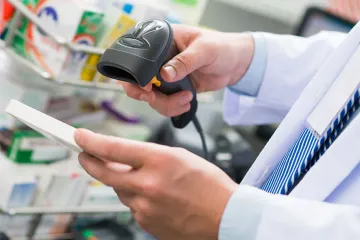
Early tracking often involved simple sequential numbering or basic linear barcodes—the UPC system being a prime example in retail—but these systems generally tracked batches or cases, not individual saleable units. [5] The shift to modern track-and-trace is defined by the adoption of serialization. [5] Serialization involves assigning a unique identifier to every single salable unit, often utilizing 2D data matrix codes (like QR codes) capable of holding more data than older linear barcodes. [4][5]
The maturity of a T&T system can often be measured by the level of granularity it enforces. For instance, when considering the logistics of shipping containers decades ago, tracking involved scanning a container ID at key checkpoints—a massive, heavy unit tracked infrequently. [3] Compare that to tracking a single bottle of ibuprofen, where the expectation is to verify its authenticity and movement history at the pharmacy counter. [1] This difference in data density and check frequency is a crucial analytical point: older logistics systems were optimized for throughput, whereas modern T&T systems, especially in regulated sectors, are optimized for verification fidelity. [4]
# Sector Specificity
While pharmaceuticals often set the legislative and technological pace, the principles of T&T have been adopted across numerous sectors where provenance matters. [5]
# Cannabis Tracking
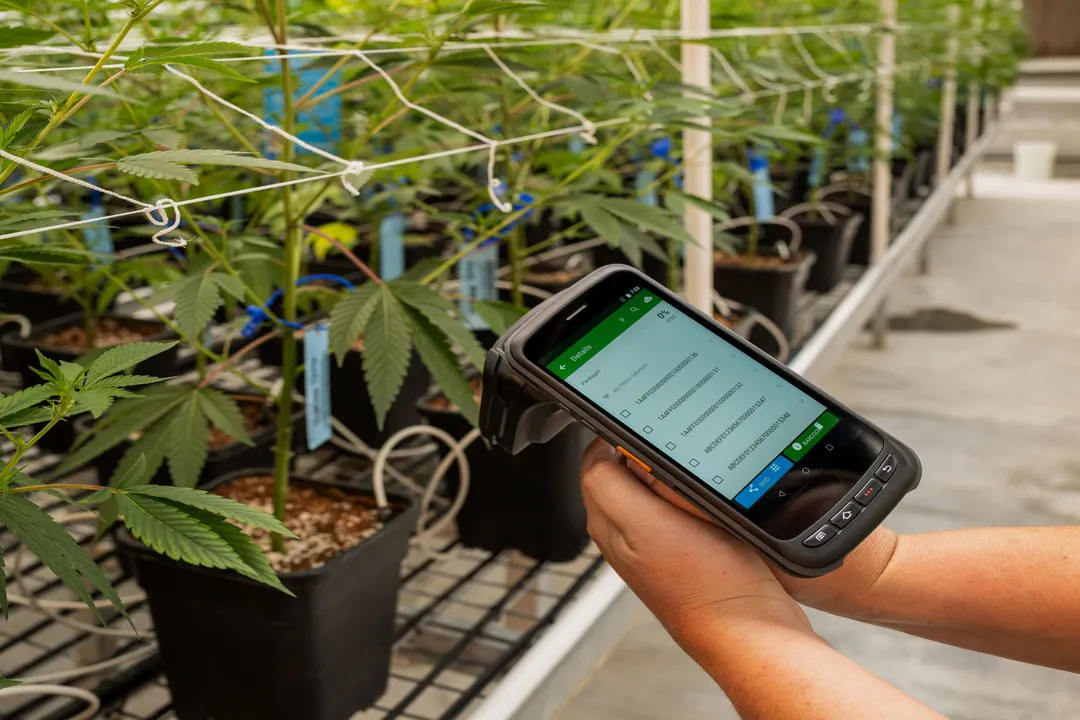
One of the clearest examples of T&T adoption outside traditional medicine is in regulated cannabis markets. States and nations establishing legal frameworks for cannabis cultivation and sale required a robust system from day one to prevent diversion into illicit channels and monitor public health compliance. [5][6]
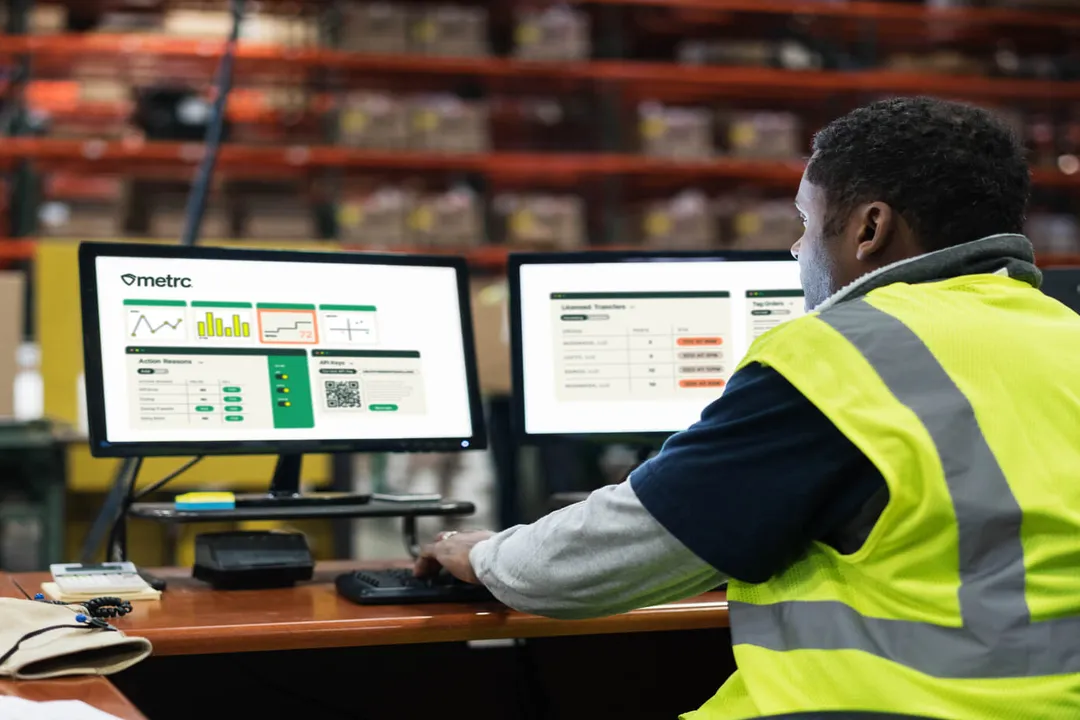
In many U.S. jurisdictions, this requirement materialized through specific statewide systems. For example, in states that adopted it, METRC became the designated seed-to-sale tracking platform. [6][10] METRC provides detailed tracking, requiring licensees to report activities like plant growth stages, inventory changes, and final sales, often down to the gram or individual package. [10] The California Cannabis Track and Trace (CCTT) system, which utilized METRC, is a case study in state-mandated implementation, showing how regulations can force technology adoption across a diverse group of small and large operators. [6] Systems like these often incorporate features like RFID tags or specific state-mandated barcodes for unique identification. [6]
# Agricultural Systems
The concept extends into agriculture, where traceability helps manage food safety recalls or verifies compliance for specialized crops. [5] Case studies involving integrated systems, like the IGPS system mentioned in some control contexts, show how technology links the grower, processor, and distributor, focusing on inventory management and compliance reporting within a specific agricultural ecosystem. [7]

# Global Architectures
The "invention" also varies based on how the national infrastructure is built. Not every country adopts a single, centralized, government-run system like some initial visions for cannabis tracking. Some nations opt for architectures built around existing infrastructure providers or decentralized models. [9] For example, discussions around developing a national Track and Trace Architecture in countries like Ethiopia highlight the foundational work needed—establishing standards, ensuring network availability, and integrating the system with existing customs and tax collection points. [9] This shows that implementing T&T is as much an infrastructure problem as it is a coding problem.
# Proactive vs. Reactive Tracking
The most significant development in the philosophy of track-and-trace, which effectively modernized the concept, is the pivot from reactive response to proactive prevention. Before mandated serialization, supply chain verification was largely reactive; if a problem arose (e.g., a contaminated batch identified through testing or a consumer complaint), companies would use existing batch records, shipping manifests, and invoices to trace the product back to its source for a recall. [8] This process was often slow, manual, and prone to error, especially if records were lost or incomplete. [2]
Modern, serialized T&T systems, driven by laws like DSCSA, aim to be proactive. [1] By assigning a unique digital fingerprint to every package that moves through the supply chain, any entity in the chain—manufacturer, dispenser, or regulator—can instantly interrogate that identifier to verify its legitimacy before it reaches the patient or consumer. [4] This shift from tracing past events to verifying present status is arguably the true conceptual breakthrough of contemporary track-and-trace, regardless of who manufactured the first barcode scanner. It places verification capability directly at the point of dispensing, effectively stopping counterfeit products before they cause harm. [1][4]
# Key Players in Development
While no single inventor stands out, the evolution was driven by three primary groups:
- Regulators: Organizations like the FDA, EMA, and national agricultural bodies who set the binding rules and deadlines that create market necessity. [2][4]
- Technology Providers: Companies that develop the software platforms (like METRC) and hardware (scanners, RFID readers) capable of meeting the new data standards. [10]
- Industry Adopters: Large manufacturers and logistics partners who funded the initial transition, developed internal standards, and piloted new technologies before they became mandatory. [8]
Ultimately, track-and-trace systems were invented collectively by necessity, codified by law, and built by technology specialists responding to the demand for absolute product visibility and patient safety. [1][3]
Related Questions
#Citations
History of track and trace & future of serialisation
Story of Pharmaceutical Track & Trace System
Track and trace - Wikipedia
What Makes a National Pharmaceutical Track and Trace System ...
Introduction to Serialization, Track and Trace – June 12, 2025
[PDF] About the California Cannabis Track-and-Trace System
iGPS - Track and Trace Case Study - Quantum Solutions Inc.
Evaluation of turkish pharmaceutical track and trace system (ITS)
[PDF] Ethiopia National Track and Trace Systems Architecture
Metrc's Track and Trace Technology | Ensuring Compliance