Who invented component libraries?

The history of the component library isn't marked by a single flash of inspiration from one person; rather, it's an evolutionary path tracing the increasing complexity and maturity of web development itself. What started as simple shared functions eventually solidified into the structured sets of visual building blocks we rely on today for creating user interfaces. A component library, fundamentally, is a catalog of pre-built, reusable elements—buttons, forms, navigation bars—that share a common design language and underlying code. [9] These collections exist to inject consistency and speed development across multiple applications, ensuring that every button across an organization looks and behaves exactly the same way, whether it’s on the marketing site or the internal dashboard. [3][5]
# Code Building Blocks
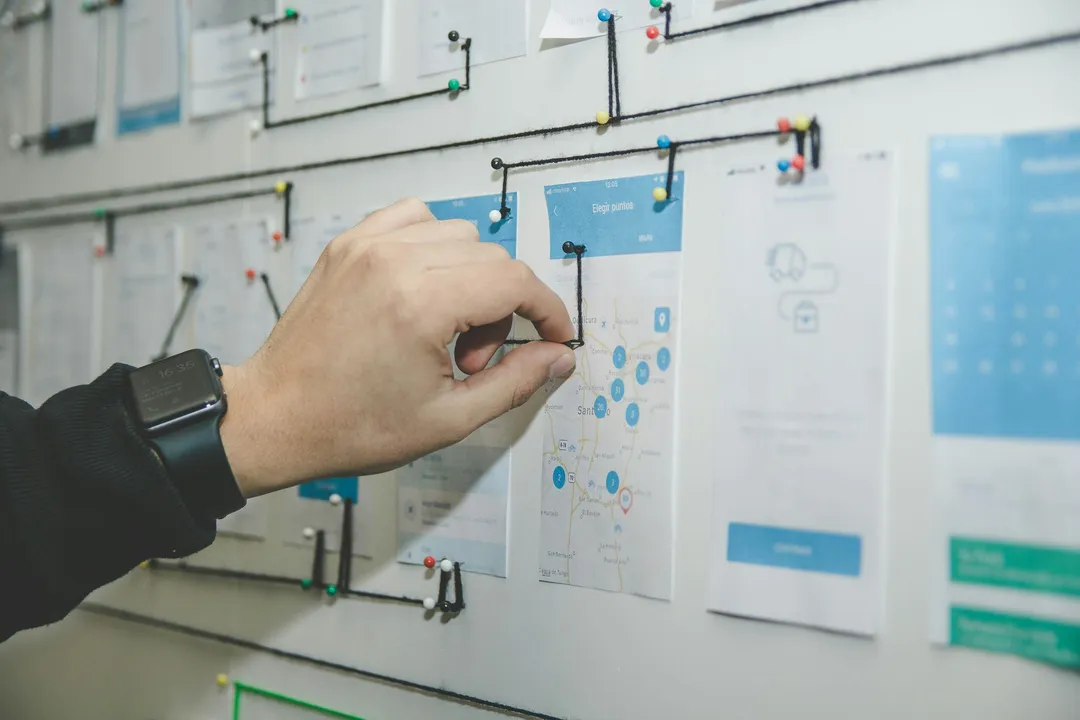
To understand where component libraries came from, we must first look at what a library is in the broader context of computing. In programming, a library is simply a collection of pre-written code, often packaged as functions, classes, or routines, intended to be used by other programs to perform specific tasks. [2] This principle of not rewriting the same code repeatedly is ancient in software engineering. Long before the web browser became the dominant platform, developers relied on libraries to handle low-level operations, like input/output or mathematical calculations. [2]
When web development began its ascent, early JavaScript environments were relatively sparse. Initial efforts at creating reusable front-end assets often involved simple copy-pasting of HTML snippets or relying on large, monolithic JavaScript libraries, such as early versions of jQuery, to manipulate the Document Object Model (DOM). [4] This early approach often led to tangled codebases where styles and logic were deeply coupled, making reuse brittle and maintenance difficult. The "invention" wasn't the concept of code reuse, but the formalization of visual, user-facing elements into easily consumable, independent modules.
# Web Complexity Growth

The true catalyst for formalized component libraries arrived alongside the shift from static pages to dynamic single-page applications (SPAs). [4] As frontend frameworks like Angular, Ember, and most notably React gained traction, developers needed a better way to manage the growing state and visual complexity of applications. [4] These new architectures encouraged breaking the UI down into distinct, manageable pieces—components.
This architectural shift created an immediate need: if the application is built from components, where do those standard components come from? If every team builds its own Button or Modal, design drift is inevitable, and development time balloons because developers spend weeks recreating standard interactions. [5] The realization that these core UI elements were infrastructure, not unique application features, drove the first formal collections. They evolved from internal collections of shared code patterns into distinct, installable packages designed to enforce standards across an engineering department. [10]
We can see this evolution clearly when comparing the early 2010s focus on generalized UI kits (like Bootstrap, which offered a design system but often required heavy overriding for customization) to the later component libraries that focused purely on React or Vue components, deeply integrated with the component model itself. [4] The adoption hinged on answering the core question: Why rebuild common UI logic when you can import it?. [5]
A subtle but important distinction emerges here: the earliest formal libraries often aimed to replace the developer’s direct HTML/CSS knowledge with their own proprietary styling engine. This forced adoption but sometimes limited design flexibility. A modern developer must weigh the speed of an established library against the long-term overhead of untangling their application from that library’s specific syntax or rendering methods.
# Early UI Groupings
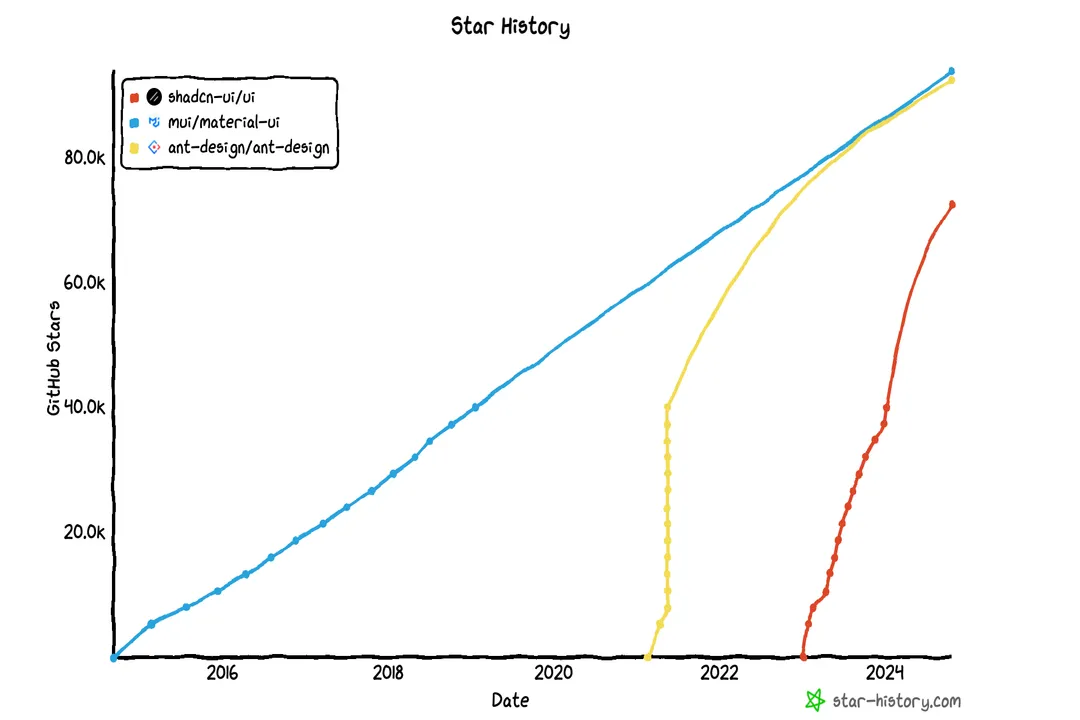
The first wave of dedicated UI component libraries often focused on providing a massive, opinionated set of ready-to-use elements. Think of the classic Material Design libraries or Ant Design. [1] These were often installed as large dependencies, bringing with them a full design philosophy and associated CSS bundle. They solve the consistency problem instantly but introduce a dependency that can be hard to shake off later. [1][6]
For organizations with highly specific branding or performance requirements, these all-in-one solutions sometimes felt too heavy or too generic. This led to the parallel development of Design Systems—not just code libraries, but the entire specification of visual and interaction rules. [9] The code library then becomes the implementation of that design system. For many companies, the "invention" of their component library happened when an internal team was tasked with translating their design system documentation into a usable, versioned npm package for other internal teams. [10] This internal creation process is a direct response to the limitations encountered when using off-the-shelf solutions that didn't perfectly align with unique brand guidelines. [3]
# Shifting Library Models
The most recent phase in the component library story shows a reaction against the monolithic dependency model. This shift seeks to capture the reusability benefit without incurring the dependency burden. [1]
A prime example of this evolution is the pattern exemplified by tools like shadcn/ui. This approach isn't about installing a package that renders a component; it's about providing the raw, source code for the component that the developer then copies directly into their own project. [1][8]
| Feature | Traditional Library (e.g., MUI, Ant Design) | Source Code Model (e.g., shadcn/ui) |
|---|---|---|
| Installation | Install via npm install component-library |
Copy/paste component files into project source |
| Customization | Relies on themes, props, or complex overrides | Direct editing of the copied source code |
| Dependency | Creates a runtime dependency | Zero runtime dependency on the source project |
| Design Philosophy | Generally opinionated/prescriptive | Unopinionated building blocks (often paired with Tailwind CSS) |
| Maintenance | Updates via package manager upgrades | Manual merging of upstream changes |
This copy-paste philosophy fundamentally changes the developer experience. Instead of being constrained by the library maintainer’s update schedule or styling limitations, the developer takes full ownership of the code immediately. [1] While this requires more active maintenance—you must manually pull in new versions or fixes from the original source—it grants unparalleled control over the final output, a critical factor for teams pushing the boundaries of web interaction or performance. [1]

# Internal Development Needs
While public libraries serve the wider ecosystem, the strongest argument for inventing a new library often comes from within a large organization. When several different products or departments are being built concurrently, ensuring a consistent user experience becomes an engineering mandate. [6][10]
Developers choose to build custom libraries for a few key reasons:
- Design Fidelity: The organization's brand or design language simply cannot be accurately represented by existing public libraries. [3]
- Performance Tuning: Specific components need micro-optimizations that general-purpose libraries cannot provide because they must account for every possible use case. [6]
- Technology Alignment: The internal stack might use an older framework version or a specific state management pattern that external libraries do not support well, making integration costly. [5]
The process often begins informally—a developer creating a helpful utility for a colleague. As that utility proves its worth across multiple projects, it gets formalized, versioned, and documented, effectively creating the organization's own component library. This internal library then becomes a crucial piece of shared frontend infrastructure, governed by the same principles of abstraction and reuse that underpin all software libraries. [10]
Ultimately, no single person invented the component library. It is the inevitable result of software engineering maturing: first, we learned to share functions, then we learned to share classes, and finally, as the web interface became the primary product, we formalized the sharing of interface elements themselves into cohesive, standardized collections. The invention continues today, shifting from large, monolithic dependencies to modular, source-code-based building blocks that offer speed without sacrificing surgical precision in design implementation.. [1][4]
Related Questions
#Citations
Evolution of Component Libraries | Vercel Academy
What is a component library and should you build your own? - Medium
Library (computing) - Wikipedia
History of front-end frameworks - LogRocket Blog
Why do developers choose UI libraries, then proceed to create their ...
Case Study: Building a Component Library - DEV Community
What is a Component Library, and Why Should You Use One for UI ...
How Shadcn Cut Through the Noise and Became React's Default ...
What Is A Component Library? Why Use Them & Examples - Magic UI
The Story of Widen's Frontend Component Library