Who invented bioremediation?
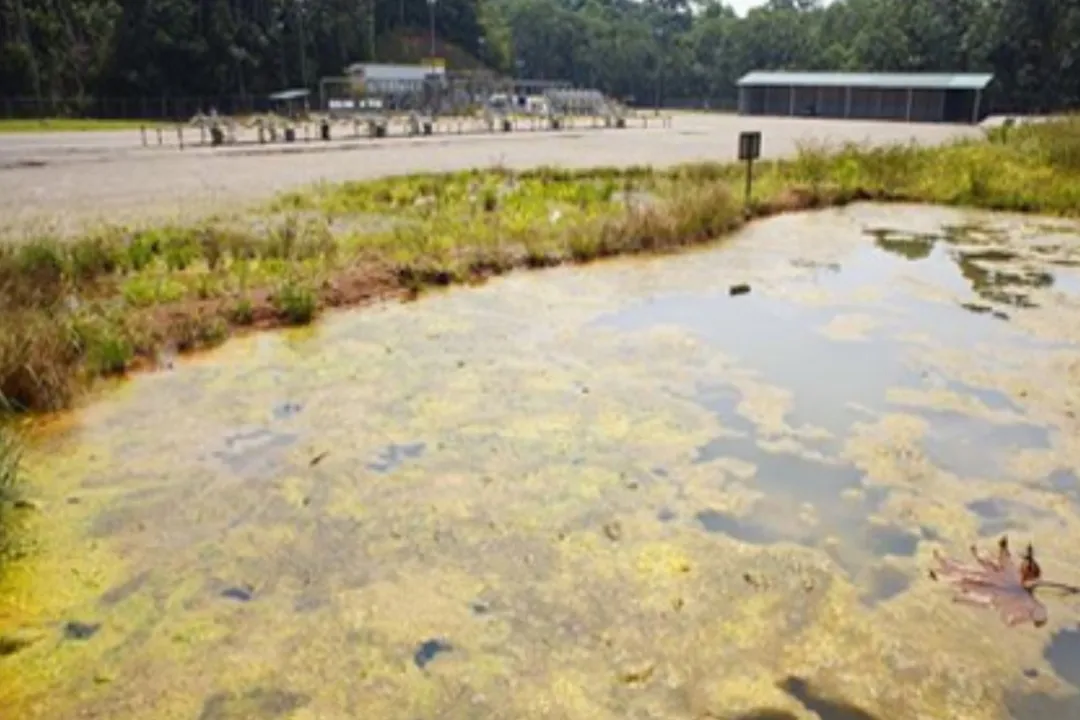
The concept of using nature to clean up human messes stretches back further than most people realize, predating modern laboratory science by millennia. While we often associate sophisticated environmental solutions with the 20th or 21st centuries, observations about natural waste breakdown have been recorded for centuries. For instance, historical accounts suggest the Romans were employing an early form of what we now call bioremediation in their network of sewers and canals around 600 BC to treat and modify water conditions. This early practice relied on basic biological treatment, long before the underlying microbiology was understood. However, pinpointing the singular "inventor" of the technology as we know it today—a targeted, science-backed method for pollutant degradation—requires us to look much closer to the modern era, specifically to the mid-20th century.
# Pinpointing the Inventor
The formal invention of modern bioremediation technology is largely credited to George M. Robinson. Robinson was a petroleum engineer, and importantly, served as the assistant county engineer for Santa Maria, California. It was during the 1960s that Robinson began a methodical investigation into the capabilities of microorganisms to deal with waste. His approach was wonderfully hands-on: he conducted experiments using rudimentary equipment, working with polluted jars where he introduced various microbes and observed their effectiveness at breaking down the contaminants.
Robinson’s foundational work demonstrated that specific types of bacteria possessed the ability to consume pollutants, effectively using the contamination as a food source. This crucial observation led to the development of custom mixtures of dried bacteria cultures, sometimes referred to as his "bug-brew" recipes, which he pioneered for commercial application throughout the 1960s. These early findings were shared with the scientific community, creating consensus that this microbial process could tackle various fuel and oil spills. The practical application of this research soon followed: Robinson organized the first large-scale microbial cleanup of an oil spill in 1968.
# Field Trials
The transition from laboratory experiments with dirty jars to real-world environmental rescue was a significant step. The microbes Robinson cultivated were put to a major test in 1972. The goal was to see if these specialized microbes could successfully clean fuel tanks aboard the RMS Queen Mary. This experiment proved successful and marked the beginning of actively implementing bioremediation techniques at contamination sites.
A few years later, in 1979, another pivotal event occurred, though it focused less on engineered application and more on natural observation. Scientists studying a crude oil pipeline burst in Bemidji, Minnesota, discovered that toxic chemicals leaching from the oil plume were being rapidly degraded by the naturally occurring microbial populations already present in the aquifer. This became a key, well-documented example of intrinsic bioremediation, where nature cleans up without direct human intervention, essentially showing the process in action without Robinson having to add anything. This discovery helped solidify the idea that bioremediation was not just about adding microbes, but about understanding and optimizing existing biological activity.
It is worth noting the development of genetically engineered organisms, too, as it represents a fascinating branching point in the field's history. Around 1979, Ananda M. Chakrabarty and his team at the University of Illinois engineered a Pseudomonas putida strain, sometimes nicknamed a 'superbug,' capable of more efficiently metabolizing crude oil components. This work, involving directed evolution via plasmids, was groundbreaking enough to become the subject of a famous Supreme Court case, Diamond vs. Chakrabarty. While the focus on bioengineering slowed down by the 1990s in favor of enhancing natural organisms, Chakrabarty's work demonstrated the potential for designing biocatalysts.
Observing this progression—from Roman passive management to Robinson’s empirical "bug-brew" mixtures, and then to Chakrabarty’s precise genetic engineering—reveals a fundamental tension in environmental science. Early success relied on observation and trial-and-error to find what nature was already doing. Modern science then sought to design a better organism, only to find later that optimizing the environment for the native, pre-existing microbial communities often yields more reliable and scalable results in the field. The core principle remains microbial metabolism, but the how has swung back toward nurturing existing ecological balances.
# Bioremediation Defined
To appreciate the significance of Robinson’s invention, one must understand what he was formalizing. Bioremediation is fundamentally the use of living organisms—most commonly microorganisms like bacteria or fungi—to break down, degrade, or detoxify pollutants in soil, water, or air. The entire process hinges on microbial enzymes that catalyze metabolic reactions, turning hazardous compounds into relatively harmless substances like water, carbon dioxide, and cell biomass.
The application of this principle is broadly categorized by where the treatment occurs:
- In Situ: Treating the contamination directly in its original location. This is generally the preferred method due to lower labor, time, and resource demands, though it requires rigorous, long-term monitoring.
- Ex Situ: Excavating the contaminated material (soil or water) and treating it elsewhere. This is chosen when in situ conditions (like low temperatures or poor soil permeability) are unfavorable for microbial activity, though it significantly increases costs associated with transport and disposal.
Within these two locations, engineers employ several strategies to speed up or initiate the cleanup:
| Strategy | Mechanism | Focus |
|---|---|---|
| Biostimulation | Adding essential nutrients (like nitrogen and phosphorus) and/or electron acceptors to the site. | Activating and increasing the capacity of indigenous (naturally occurring) microorganisms. |
| Bioaugmentation | Introducing non-native or specifically cultivated, pollutant-degrading microorganisms to the site. | Increasing the number and capability of the degrading population. |
| Natural Attenuation (Intrinsic) | Relying solely on existing processes—biodegradation, sorption, dilution, or volatilization—without human enhancement. | Monitoring natural cleanup rates, suitable only if degradation outpaces migration. |
# Enhancing the Natural Process
Robinson’s initial work likely involved creating effective microbial cocktails, which aligns closely with the modern concept of Bioaugmentation. However, many modern operations rely more heavily on Biostimulation. For example, in hydrocarbon spills, the contamination often provides ample carbon but is severely limited by low nitrogen and phosphorus levels, which are essential for bacterial growth. By adding fertilizers to achieve an ideal C:N:P ratio, often around 120:10:1, engineers can dramatically boost the metabolic rate of the native bacteria already present.
This leads to an interesting distinction in effort versus outcome when comparing the two primary engineered approaches. Bioaugmentation, introducing external organisms, is technically the most powerful in theory because you are adding the exact organism you need. However, introducing foreign microbes into a site with unknown chemistry, pH levels, or competition from native species often leads to survival issues and unpredictable results in the field. Conversely, biostimulation focuses on giving the locals the resources—the "fuel" for their own cleanup engines—which tends to be a more reliable strategy for site-specific remediation. When planning a cleanup, a site manager must weigh the speed potentially offered by bioaugmentation against the inherent stability of boosting the resident microbial population through biostimulation.
This historical development also touches on specialized techniques. Paul Stamets coined the term Mycoremediation, which is a specific form of bioremediation utilizing fungi to break down pollutants, capitalizing on their natural ability to decompose tough plant fibers like lignin and cellulose, which are structurally similar to many organic pollutants. This demonstrates that the field is constantly evolving beyond just bacteria to encompass the broader microbial world.

# Practical Context and Future Outlook
The reasons bioremediation became so popular after Robinson’s early successes relate directly to its advantages over older, mechanical methods. Excavation, transport, and burial of contaminated soil are costly, time-consuming, and introduce risks during material handling. Bioremediation is frequently less expensive, requires less labor, and is often performed in situ, minimizing disruption to the surrounding area and preventing secondary pollution during transport. Furthermore, it aims for complete elimination of the pollutant, transforming it into harmless end products, rather than simply moving the hazard elsewhere.
The timeline shows that while the concept was established in the 60s and 70s, major public awareness grew following large-scale disasters. The Exxon Valdez oil spill in 1989 saw microbes utilized alongside clean-up volunteers, reinforcing the technique's viability in marine environments. This later spurred legislative action, like the Oil Pollution Act of 1990, which strengthened preventative measures and response planning.
The ongoing scientific work seeks to overcome limitations, particularly those related to in situ treatment, such as ensuring sufficient oxygen or nutrient distribution in dense or heterogeneous soils. Researchers are exploring novel combinations, such as linking microbial degradation with phytoremediation (using plants) in processes known as co-metabolism. Ultimately, understanding the specific factors—temperature, pH, oxygen, and nutrient ratios—that influence microbial activity is essential for maximizing the success of any given bioremediation effort, whether it is intrinsic or heavily engineered.
The story of who invented bioremediation is less about one single lightbulb moment and more about recognizing a natural phenomenon—the decomposition power of microbes—and then, through individuals like George M. Robinson, formalizing that observation into a repeatable, scalable, and commercially viable engineering solution. It’s a testament to how environmental science often cycles back to nature, using detailed scientific understanding to nudge existing ecological processes toward remediation goals.
Related Questions
#Citations
The History & Development of Bioremediation Explained - Spilltech
Clean It Up! - Lesson - TeachEngineering
Background - Bioremediation
History - bioremediation - Weebly
Timeline | bioremediation - Wix.com
Bioremediation: A boon to hydrocarbon degradation - ResearchGate
[PDF] Bioremediation and Its Types - Impact Factor: 8.118