Who actually invented AC current?
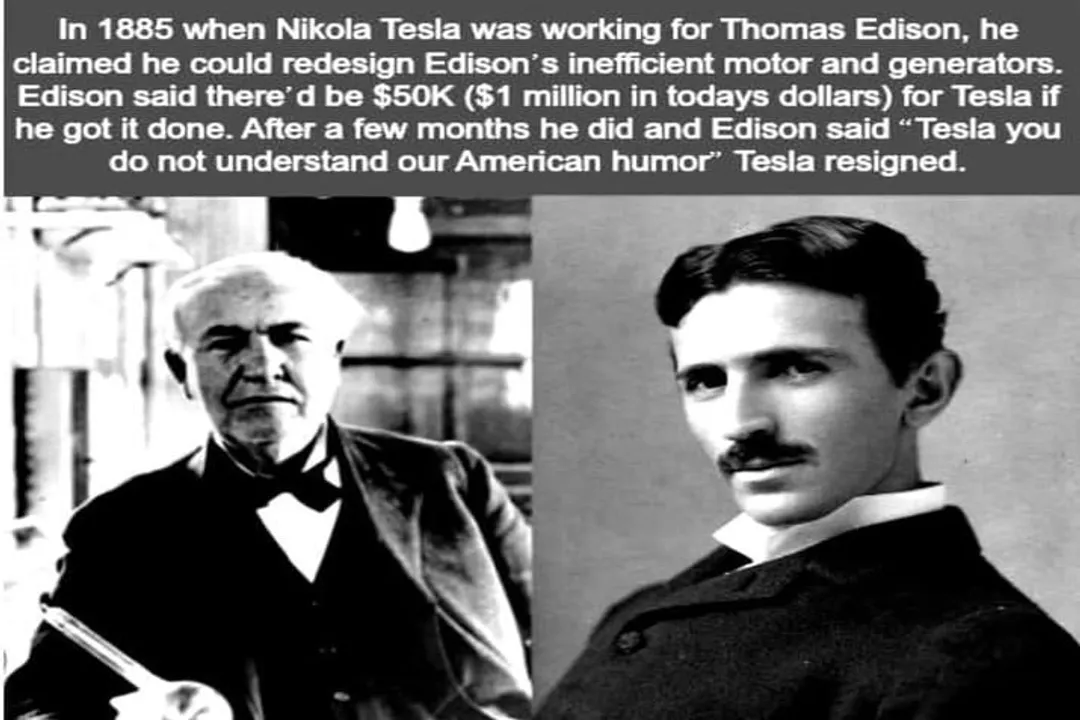
The question of who deserves credit for inventing alternating current (AC) is far more complex than pinning it down to a single name and date; it’s a story of foundational science meeting crucial engineering breakthroughs. While Nikola Tesla is undeniably the figure most synonymous with the technology that powers the modern world, the groundwork for AC was laid over many years by various scientists who explored the very nature of electrical flow. [4][9] To truly answer this, one must differentiate between observing that a current can reverse direction and developing a functional, scalable system for electrical power distribution. [2]
# Early Flow Concepts
The very notion of a current that could periodically switch direction has surprisingly old roots. Long before the electric light bulb even became a reality, scientists were experimenting with the basics of electricity. One early observation dates back to the late 1700s when Alessandro Volta, the mind behind the voltaic pile (the first true battery), demonstrated that an electric current could indeed be reversed. [4] This established the fundamental possibility of an alternating flow, but it was a laboratory observation, far removed from practical application in transmitting power across miles.
These early explorations, while scientifically significant, were limited by the technology of the time. The late 19th century became the proving ground where electricity moved from static experiments to dynamic utility, setting the stage for the monumental "War of the Currents". [5]
# Induction Motor Beginnings
A critical piece of the AC puzzle is the induction motor, a device that efficiently converts electrical energy into mechanical work using an alternating current—a feat DC systems struggled with, especially for high-power industrial applications. [3][8] While Tesla’s name is inextricably linked to the perfected version, others were concurrently developing similar technology. [1]
Italian physicist Galileo Ferraris is noted for demonstrating an AC induction motor as early as 1885. [1] Shortly after, in 1886, William Stanley Jr., an American engineer, patented an AC induction motor. [1] These developments show that the idea of using alternating current to drive motors was crystallizing across different minds around the same time. The challenge wasn't just having the motor concept, but having the entire generation, transmission, and usage infrastructure to support it economically. [2][5] A motor sitting in a lab is merely an interesting experiment; a motor that can be reliably powered from a distant central station is a revolution.
# Tesla's System
The transformative moment arrived with Nikola Tesla's work, not just on a single component, but on an integrated system for producing, transmitting, and utilizing alternating current. [2][10] Tesla's genius was in seeing the whole picture of electrical distribution. His most significant contribution, arguably, was his development of the polyphase alternating current system. [10] This system, which uses two or more independent alternating currents that are out of phase with each other, allowed for much more efficient power transfer over long distances compared to the single-phase systems that were the initial focus of many inventors. [3]
The key to making this system commercially viable was his invention of the AC induction motor, which was elegantly simple, relied on no brushes or commutators that wore out quickly, and worked perfectly with his polyphase power delivery. [8][10] Tesla filed his essential patents for the polyphase system in 1888. [1] This patent filing was a decisive moment; it established the intellectual property foundation for the system that would eventually win out in the marketplace. [9]
It is important to recognize that Tesla did not invent alternating current electricity itself, as the principle was known, but he invented the means by which it could become the dominant form of electrical power distribution globally. [2][4] This distinction between principle and practical system explains why he is credited as the "father" of AC power infrastructure, even if Volta showed current reversal centuries earlier. [4]
The sheer effectiveness of the polyphase system cannot be overstated. Direct Current (DC), championed by Thomas Edison, suffered from significant voltage drop over distance, requiring power stations to be built every mile or two in a city. [3][5] AC, conversely, could be stepped up to extremely high voltages for efficient transmission and then easily stepped down for safe use in homes and factories using transformers—a concept integral to the AC system. [3][5]
# The Current Wars
The intense competition between AC and DC systems, famously dubbed the War of the Currents, cemented the technical superiority of Tesla’s design, even though it was initially met with fierce resistance. [5] George Westinghouse licensed Tesla’s patents and championed the AC system, setting up a confrontation with Thomas Edison's established DC network. [5][6]
Edison, fearing the obsolescence of his DC investments, engaged in public relations efforts to paint AC as dangerous, even going so far as to publicly electrocute animals with high-voltage AC to demonstrate its supposed lethality. [5] This period highlights that technical invention alone is insufficient for mass adoption; market forces, public perception, and fierce business rivalry play an equally decisive role in which technology prevails. [2]
Despite these scare tactics, the inherent advantages of AC—long-distance transmission and efficient voltage control—proved undeniable in large-scale projects, such as powering the 1893 World’s Columbian Exposition in Chicago and subsequently the hydroelectric generators at Niagara Falls. [6] The reliability and economic efficiency of the AC infrastructure, built upon Tesla's innovations, ultimately led to its global adoption. [3][10]

# Synthesizing Inventorship
To summarize the contributions, one can view the development of AC power like constructing a building:
| Contributor | Contribution | Significance |
|---|---|---|
| Alessandro Volta | Demonstrated current reversal | Foundational scientific principle (Pre-1800s) [4] |
| Galileo Ferraris / W. Stanley Jr. | Demonstrated early AC induction motors | Proof of concept for AC motor use (1885-1886) [1] |
| Nikola Tesla | Polyphase AC system, patented AC induction motor | Complete, efficient, scalable system for power generation and distribution (1888) [1][10] |
While historical accounts often simplify the narrative, the key takeaway is that several individuals contributed essential components or initial observations. [4] However, the very reason the modern world runs on AC power today is because of the comprehensive, patent-protected system developed by Tesla. [9] His work married the efficient transmission made possible by transformers with the rugged, self-starting motor required for industry, creating the first viable, large-scale electrical utility. [8][10]
The reality is that major technological shifts rarely have a single originator; they rely on a chain of discovery. [2] Yet, in the case of AC power, the chain ends decisively with the person who built the final, working bridge between the laboratory and the power grid. The sheer scope and completeness of Tesla’s patented system—covering generation, transmission, and utilization—is what distinguishes his achievement from the earlier, isolated discoveries of alternating flow or single-phase motors. The speed at which Westinghouse adopted and deployed his patents in the early 1890s serves as testament to the fact that this was the necessary missing piece for the electrical age to truly begin. [5][6]
# Lasting Impact
The successful implementation of the AC system changed the physical landscape of human settlement. Before AC, factories and towns needed to be located immediately next to a power source, such as a waterfall or a steam engine, limiting industrial expansion. [6] With the high-voltage transmission capabilities provided by AC, power could be generated centrally—often far away at hydroelectric sites like Niagara—and distributed across vast regions. [3] This decentralization of power generation unlocked entirely new possibilities for industry and residential electrification that DC simply could not support efficiently or economically. [5] The legacy of the inventor of AC, therefore, is not just an electrical circuit, but the structure of the modern industrialized world itself. [9]
#Videos
Biography of Nikola Tesla, Who Inventor of (AC) Electricity - YouTube
Related Questions
#Citations
Nikola Tesla - Wikipedia
Nikola Tesla is usually depicted in modern media as the ... - Reddit
The War of the Currents: AC vs. DC Power - Department of Energy
Who was the first person or scientist to create alternating current as I ...
How Edison, Tesla and Westinghouse Battled to Electrify America
Tesla (1856) - Energy Kids - EIA
Nikola Tesla and the Development of Alternating Current Electricity
Nikola Tesla Inventions - Tesla Science Center at Wardenclyffe
Biography of Nikola Tesla, Who Inventor of (AC) Electricity - YouTube