Which company marketed the first typewriter?
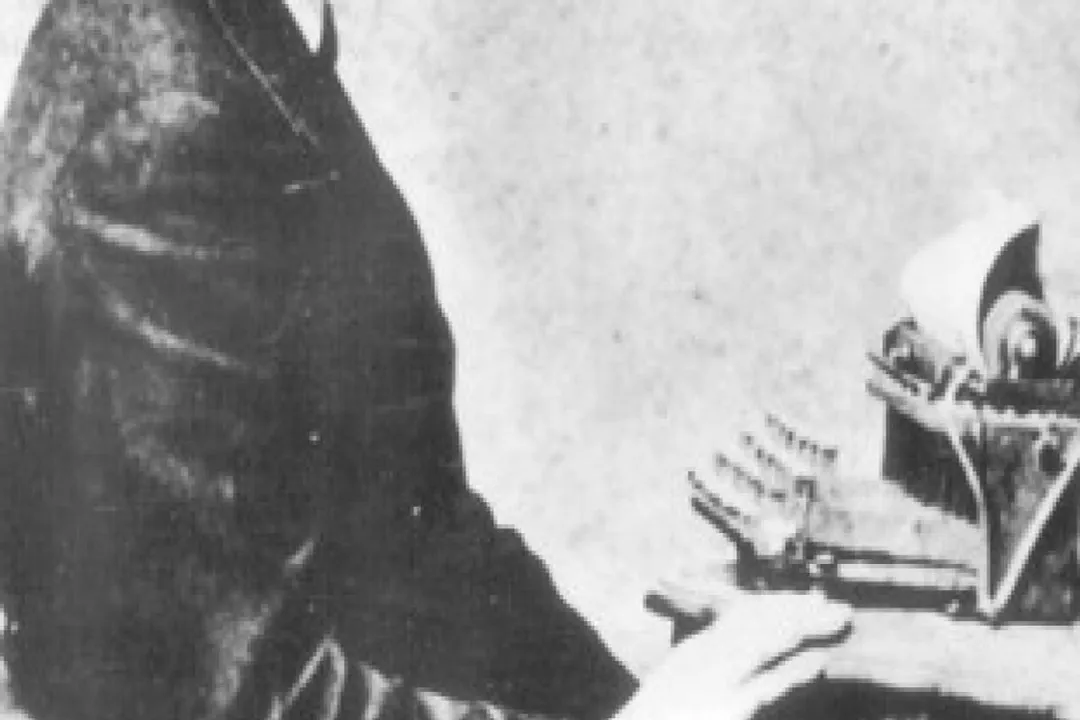
The machine that ultimately defined the modern office, establishing the very idea of mechanical text production, did not spring fully formed from a single workshop. Its path to market was a drawn-out affair, involving inventors, financiers, and, critically, an established manufacturing giant willing to take a calculated risk on a complex new mechanism. The company credited with marketing the first commercially successful typewriter was E. Remington and Sons.
This landmark machine, which hit the market in 1874, was officially known as the Sholes and Glidden Type Writer. While inventors Christopher Latham Sholes, Carlos Glidden, and Samuel W. Soulé conceived of the device in Milwaukee, Wisconsin, it was Remington, known at the time primarily for firearms and sewing machines, that provided the necessary production capacity and distribution network to turn an interesting prototype into a recognizable business tool.
# The Inventors
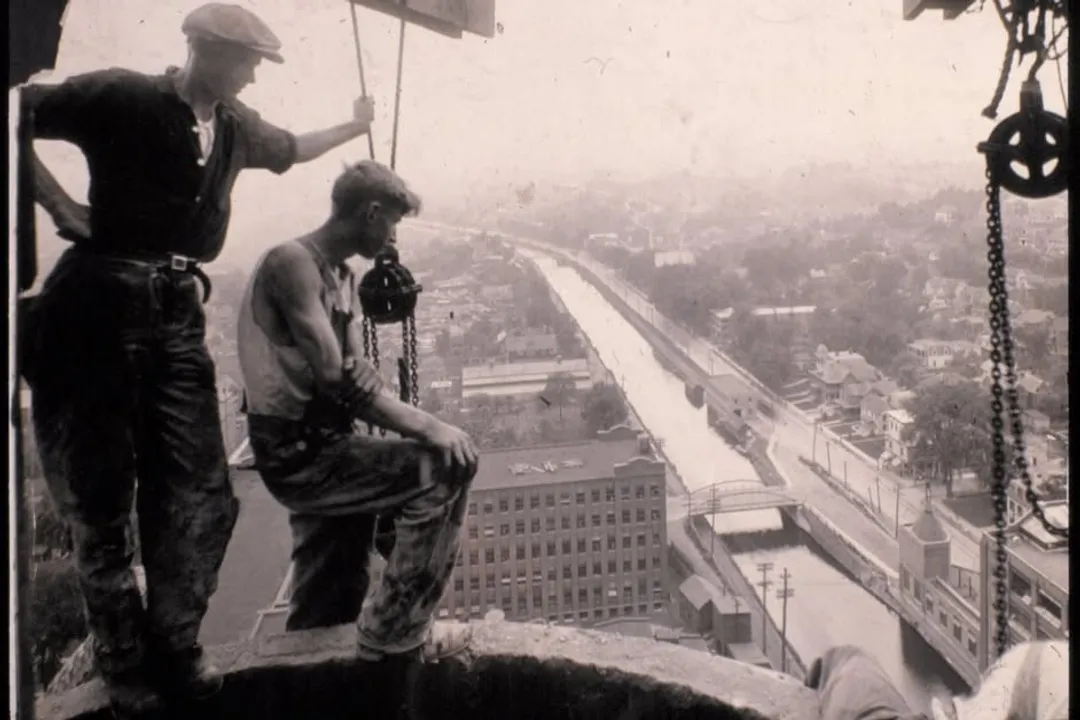
The foundational work for this revolution began with Christopher Latham Sholes. Sholes is widely recognized as the inventor of the first practical typewriter. His initial efforts, alongside partners like Glidden and Soulé, led to a patent being granted for their writing machine in 1868.
It is important to distinguish between the initial invention and its subsequent marketability. The period between the initial patent and the actual shipment of machines to customers was not brief. The early prototypes, developed through relentless tinkering, laid the groundwork for what would become the QWERTY keyboard layout, though that layout evolved as the design was refined. The leap from a working model in a local workshop to something that could be sold across the country required industrial expertise.
This is where the gap between invention and commercial success becomes apparent. Many novel devices languish without the capital or manufacturing know-how needed for scale. Sholes and his associates possessed the ingenuity, but lacked the factory floor required to produce thousands of intricate mechanical devices reliably. This reality often dictates the trajectory of technological history: the best inventor doesn't always become the most successful marketer; they need a powerful partner.
# Manufacturing Shift
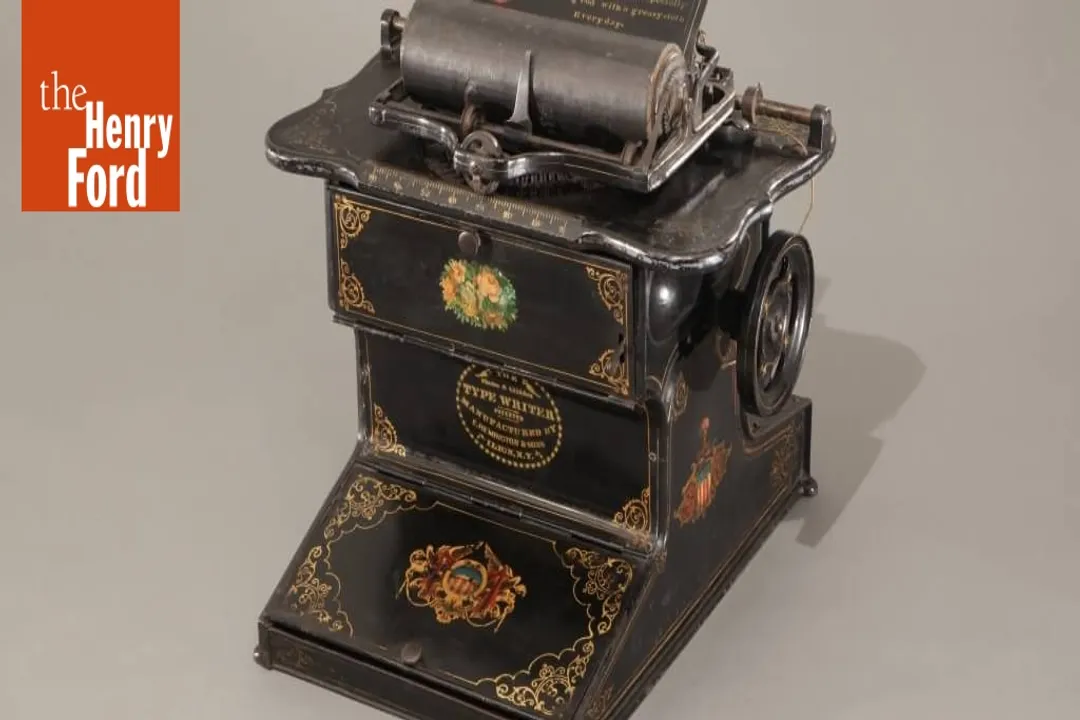
The transition from inventor-led development to corporate marketing involved selling the rights to the machine. Sholes eventually sold the patent rights to Densmore and Yost. These individuals then secured the crucial manufacturing contract with E. Remington and Sons.
Remington, based in Ilion, New York, was an established manufacturer used to precision metalworking, a skill set that proved unexpectedly applicable to complex typewriters. The fact that Remington took on the project suggests they saw value beyond a mere curiosity. They were likely looking to diversify their existing product lines—a common strategy for industrial companies when one sector faces market slowdowns or when a new technology promises expansion.
The arrangement essentially transformed the typewriter from a Wisconsin-based invention into a national product marketed under the banner of a trusted, large-scale producer. This association with Remington lent immediate credibility and implied a level of standardization that earlier, smaller operations could not guarantee.

# Machine Details
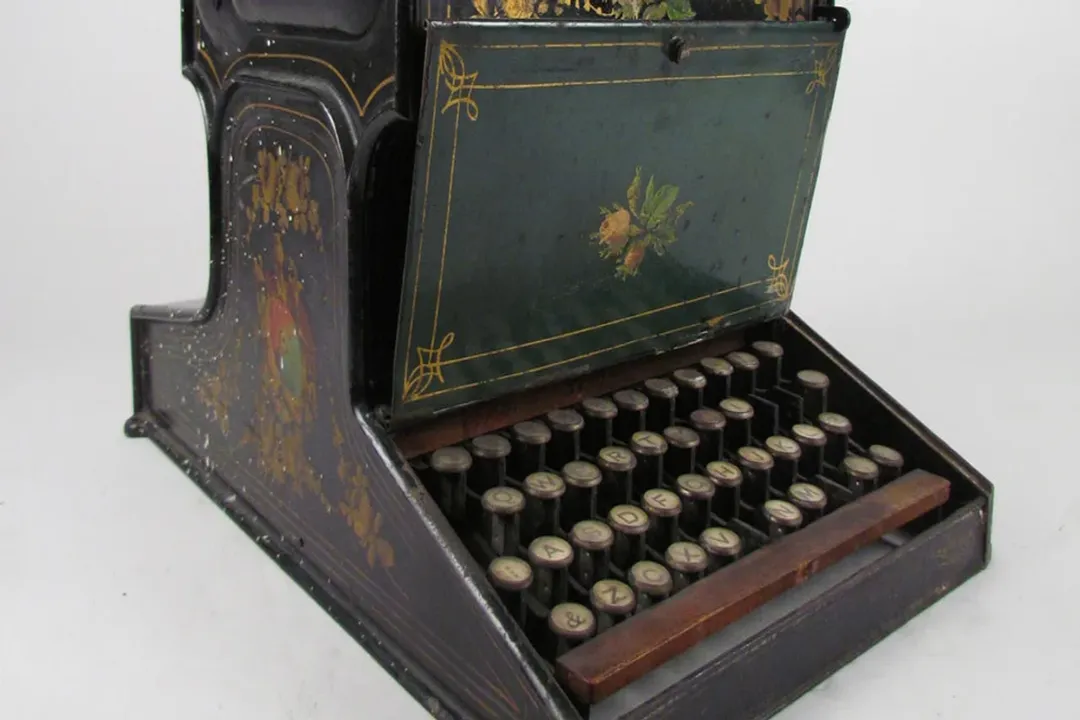
The device that Remington brought to market was known as the Model 1. While it established the basic operational principle—typebars striking an inked ribbon against paper—it possessed certain characteristics that immediately dated it by modern standards.
One immediate limitation was that the Sholes and Glidden Type Writer could only produce capital letters. This meant that in the early days of typewritten communication, there was no case distinction. Imagine trying to read legal documents or personal correspondence where every single letter was capitalized; it would place an enormous visual strain on the reader. This single design choice reveals a great deal about the initial perceived use case—perhaps emphasizing speed and uniformity over nuanced readability, or simply reflecting the mechanical constraints Remington faced in producing lowercase mechanisms cost-effectively in 1874.
The machine was also characterized by its visible typing action; users could not see the text as they typed it, a design feature common to early models before "visible writers" became the standard. The appearance itself was distinctive, often resembling a sewing machine, reflecting Remington's manufacturing origins.
| Feature | Sholes & Glidden (Remington Model 1) | Modern Equivalent |
|---|---|---|
| Case | Uppercase only | Upper and Lowercase |
| Visibility | Non-visible typing | Full visibility |
| Manufacturer | E. Remington and Sons | Various (IBM, Canon, etc.) |
| Market Year | 1874 | N/A |
| Keyboard | Early QWERTY evolution | Standardized QWERTY/Dvorak |
# Market Launch
The official market launch date tied to Remington’s marketing efforts is 1874. This was the moment the machine began its transition from an engineering curiosity to a tool of commerce.
The marketing strategy centered on positioning the typewriter as an agent of efficiency for businesses, particularly for correspondence and record-keeping. The adoption, however, was not instantaneous. For years, the typewriter competed against skilled, fast penmanship. Offices had established workflows based on handwriting, and introducing a large, expensive mechanical device required proof of superior value.
The successful marketing campaign had to convince businesses that the initial capital outlay and the need to train operators—often women, who became the first professional typists—was worth the increase in speed and clarity the machine offered over longhand. The fact that it was commercially successful shows that Remington managed to overcome this inertia, setting the stage for the typewriter's dominance in the following decades.
In essence, while the idea of the typewriter belonged to Sholes and his collaborators, the marketing and successful establishment of the product as a necessity belonged squarely to E. Remington and Sons. They took the complicated mechanics born in Milwaukee and gave it the necessary industrial muscle and brand recognition to conquer the American office.
#Videos
History of Typewriters | The Henry Ford's Innovation Nation - YouTube
Related Questions
#Citations
Sholes and Glidden typewriter - Wikipedia
Sholes & Glidden Desk Typewriter, 1874-1876 - The Henry Ford
NIHF Inductee and Typewriter Inventor Christopher Sholes
Almanac: The first commercially-successful typewriter - CBS News
Invention of the First Commercially Successful Typewriter in Ilion, NY
History of Typewriters | The Henry Ford's Innovation Nation - YouTube
Early Typewriter History - MIT
First Practical Typewriter | Wisconsin Historical Society
The Typewriter! - National Council of Teachers of English - NCTE