When were ship containers invented?
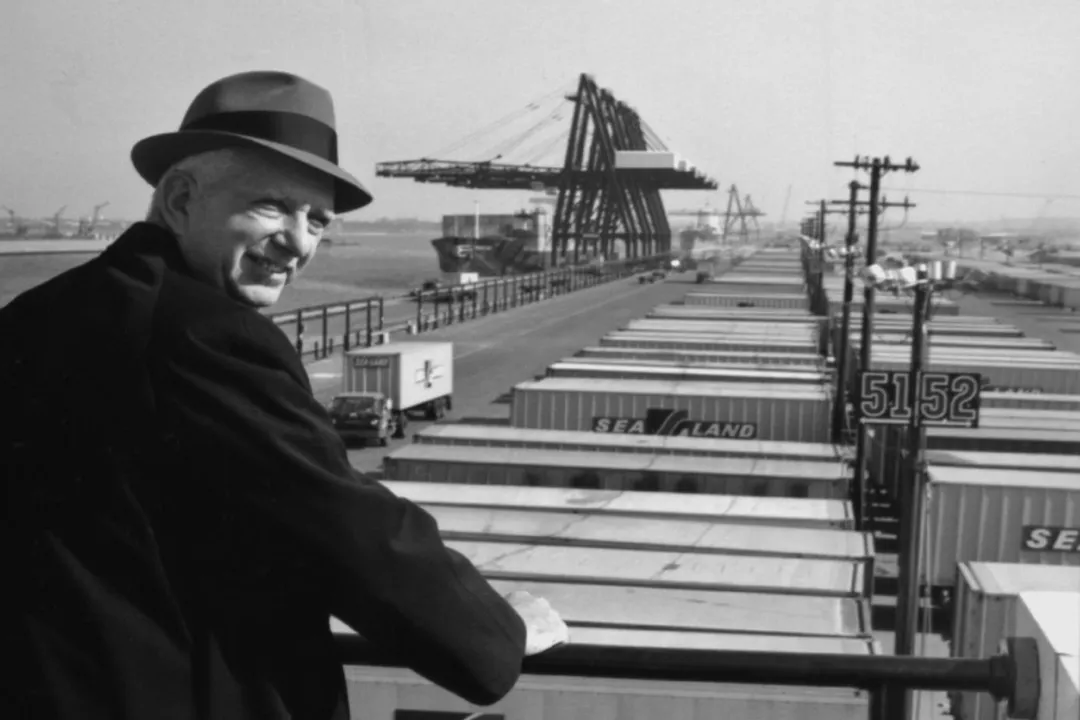
The genesis of the standardized shipping container, the metal box that fundamentally reshaped global commerce, is not a single date but rather a culmination of necessity, entrepreneurial vision, and standardization efforts spanning decades. While the widely celebrated moment involves a specific ship sailing in the mid-1950s, the groundwork for this revolution was laid much earlier by innovators looking to escape the crippling inefficiency of break-bulk cargo handling. Before this standardization, loading and unloading a vessel meant dockworkers manually handling every single piece of cargo—sacks, barrels, crates—a process that was slow, highly susceptible to theft and damage, and incredibly expensive.
# Early Concepts
The desire to unitize cargo predates the well-known modern system by decades. As early as the 1920s and 1930s, railroads in the United States were already experimenting with forms of containerization. These early efforts involved using standardized, demountable freight bodies that could be lifted onto flatcar rail chassis. One notable, though ultimately unsuccessful, early attempt came from W. C. Woods, who patented a system for standardized containers in 1929.
A major precursor that approached the modern idea was Seatrain Lines, which began operations in the 1930s. Seatrain achieved a degree of intermodal efficiency by loading entire railroad boxcars onto specialized vessels. While this was a significant step toward linking different modes of transport, it still relied on existing, variable-sized rail infrastructure, meaning the cargo unit itself was not yet truly standardized for universal application across land and sea without complication. This distinction is important: Seatrain moved cargo on railcars; the true innovation would be moving cargo in standardized boxes that could easily transfer between rail, truck, and ship.
# McLeans Vision
The figure most responsible for bridging these disparate needs into a unified, world-changing system is Malcom McLean. McLean was not originally a shipping magnate; he owned a trucking company in New Jersey. He keenly felt the bottleneck created when his trucks arrived at the docks, where unloading their freight piece by piece took exorbitant amounts of time and money. He recognized that if the truck trailer body could be detached and lifted directly onto a ship, the entire handling process—from road to sea—could be streamlined dramatically.
McLean bought the container division of an existing company and began working to perfect the concept of the intermodal container—a container designed to be interchangeable between ship, rail, and truck. Crucially, this required a container size that was large enough to make sea transport economical but small enough to fit standard highway regulations of the time. This focus on interchangeability, rather than just transportability, separates the modern container from its predecessors.
# First Voyage
The official birth of modern containerization is marked by the maiden voyage of McLean’s converted T-2 tanker, the Ideal X. On April 26, 1956, the Ideal X departed from Newark, New Jersey, bound for Houston, Texas. This small fleet of 58 aluminum truck trailers, lifted onto the ship's deck, represented a radical departure from tradition.
The results were astonishing. Where handling a typical break-bulk cargo ship might take a week or more, the Ideal X required mere hours to load and unload its standardized cargo. The economic implications were immediately apparent. The cost to move a ton of goods by traditional methods could be cut by as much as 90% once the system was fully established. To put this into perspective, if one were to map out the cost savings of a single 40-foot container move in 1955 versus 1965, the reduction in man-hours alone would likely represent a difference equivalent to several months of a worker’s annual salary, all applied to the handling phase of the shipping process. This efficiency gain quickly propelled the system from a niche experiment to an industry requirement.
# Global Standards
While McLean proved the concept was viable in 1956, the system’s true global domination required universal agreement on dimensions. For containers to be moved efficiently through ports worldwide—meaning a box loaded in Japan had to fit perfectly onto a specialized gantry crane in Rotterdam—a common language was needed.
The International Organization for Standardization (ISO) took up this challenge. By 1968, the first major international standard dimensions for freight containers were established. This standardization focused on ensuring the corner fittings, stacking strength, and basic dimensions (like the 8-foot width and 8-foot height) were consistent across the globe. This agreement allowed for the creation of specialized container ships and the massive, towering gantry cranes seen in ports today, as everyone could rely on the physical integrity of the box regardless of its origin.
The initial standard sizes were crucial, establishing the template for what we now commonly refer to as the TEU (Twenty-foot Equivalent Unit). Although 40-foot containers became the standard for many years, the foundation for all modern shipping—from perishable goods transported in refrigerated containers to vast volumes of manufactured goods—was set by those early ISO agreements stemming from McLean's initial insight.

# Economic Shift
The invention of the container was far more than a clever piece of logistics; it was a deflationary force that fundamentally changed geography and international relations. Before containerization, transporting goods across oceans was expensive enough that it often made sense to manufacture goods near the point of consumption. The drastic reduction in freight cost and time—from weeks or months of handling down to a matter of hours—made long-distance supply chains viable for nearly every industry.
One might consider the container itself as the most brilliant innovation of the 20th century, not the ship that carries it. The ship, a container ship, is simply a specialized vehicle optimized to carry the standard asset. The true genius lies in the standardized box. This box acts as a universally recognized, sealed unit of value, enabling automation, simplifying customs, and allowing different modes of transport—road, rail, and sea—to communicate perfectly without having to manually sort the contents inside. This simple metal box became the foundational building block of modern globalization, allowing companies to reliably source materials from one continent and sell finished products on another with predictable transit times and costs. The world effectively got smaller because the standardized handling unit became smaller than the oceans themselves.
#Videos
History of the Shipping Container - YouTube
Related Questions
#Citations
Containerization - Wikipedia
The History of Shipping Containers - PLS Logistic Services
The History of the Shipping Container created in 1956 | IncoDocs
A Brief History of the Shipping Container - The Maritime Executive
The History of the Shipping Container: How a Metal Box ...
NIHF Inductee Malcom McLean Made Shipping Container History
The Most Brilliant Invention Of The 20th Century Was The Shipping ...
Container History | The History of Shipping Containers Explained
History of the Shipping Container - YouTube