When was biodegradable plastic invented?
The question of when biodegradable plastic was invented is less like pinpointing a single date on a calendar and more like tracing the slow, overlapping emergence of several scientific concepts across more than a century. Unlike the dramatic "eureka" moment often associated with purely synthetic materials, the history of materials designed to return to nature involves rediscovery, refinement, and a constant redefinition of what "biodegradable" truly means. To find the beginning, we must first acknowledge the context: the age of plastic itself.
# Plastic Precursor
The foundation for modern polymers was laid well before the concept of environmental responsibility became central to materials science. The very first man-made plastic, Parkesine, invented by Alexander Parkes in the 1850s and first publicly shown in 1862, was an early attempt at creating moldable materials from natural substances like cellulose nitrate. While Parkesine was revolutionary, it was not designed to disappear; it was an early precursor that established the possibility of manipulating organic matter into durable new forms. This set the stage for later researchers who would attempt to manipulate those forms so they would not be durable forever.
# Early Natural Polymers
The earliest materials that fit the broad definition of being derived from natural sources and capable of breaking down are those rooted in natural chemistry, often predating synthetic polymers entirely. Starch-based plastics represent one of the longest-running endeavors in this space. In the early 20th century, materials based on modified cellulose—the primary component of plant cell walls—were already being explored and commercialized, often used for films or coatings. These materials, though chemically altered, relied on natural structures that microbes could eventually consume.
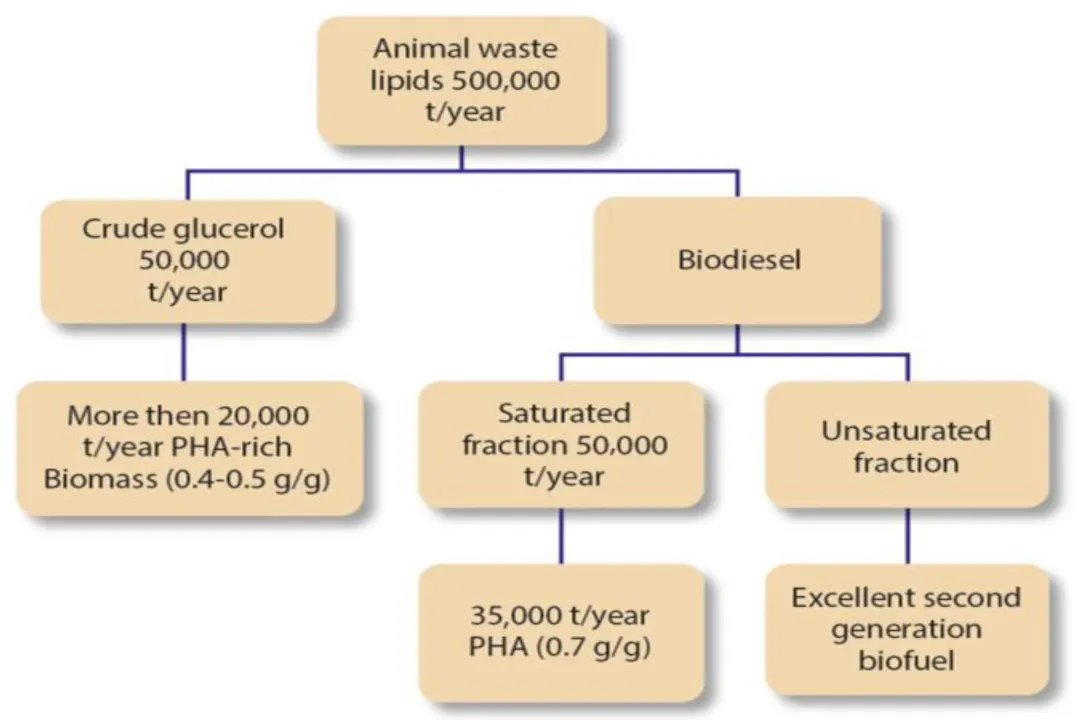
One of the most significant early discoveries in true biodegradability came from observing microorganisms. Scientists documented that certain bacteria naturally produce polymers as energy storage reserves within their cells. These naturally occurring materials, known chemically as poly-hydroxyalkanoates (PHAs), are perhaps the earliest true biodegradable plastics, created by living organisms themselves. Research into these bacterial polyesters dates back to early observations, though their large-scale commercial viability remained a distant prospect for decades.

# Cellulose Films Emerge
Moving into the early-to-mid 1900s, semi-synthetic materials began to appear that possessed measurable biodegradability. Cellophane, invented around 1908 by Jacques E. Brandenberger, is a classic example. While it is a regenerated cellulose product, it offered a transparent alternative to glass or waxed paper and, crucially, would degrade under the right environmental conditions, unlike its petroleum-based successors that were soon to follow.
It is important to distinguish between "natural origin" and "biodegradable." Many early materials were derived from nature but underwent heavy chemical processing, sometimes hindering their natural breakdown process. The key invention milestone, therefore, shifts depending on what type of plastic is being discussed:
- If we mean the first natural polymer used commercially that degrades, the timeline extends to the early 1900s with cellulose products.
- If we mean the first synthetic polymer engineered for biodegradability, the path leads toward polyesters and the study of PLA.
# The Polylactic Acid Timeline
Perhaps the most significant material in the modern biodegradable discussion is Polylactic Acid (PLA), a polymer derived from renewable resources like corn starch or sugarcane. The chemistry underpinning PLA is surprisingly old. The basic process of making lactic acid and then polymerizing it can be traced back to late 19th-century research, though the resulting polymers were often brittle and not suitable for mass production.
The true revival and successful synthesis of high-molecular-weight PLA suitable for commercial applications—the material that truly launched the modern bioplastics industry—occurred much later, primarily in the 1980s and 1990s. Companies like NatureWorks (a joint venture originally between Cargill and Dow) were instrumental in developing the process for producing commercial-grade PLA in the late 1990s and early 2000s, making it widely available for injection molding and film applications. This commercial availability marks the point where the term "biodegradable plastic" started entering the public consciousness as a viable alternative to conventional plastics.
For instance, if we consider the invention of the process allowing for practical use, we look to the 1980s and 1990s, whereas the chemical possibility was established over a hundred years prior.

# Deconstructing Modern Definitions
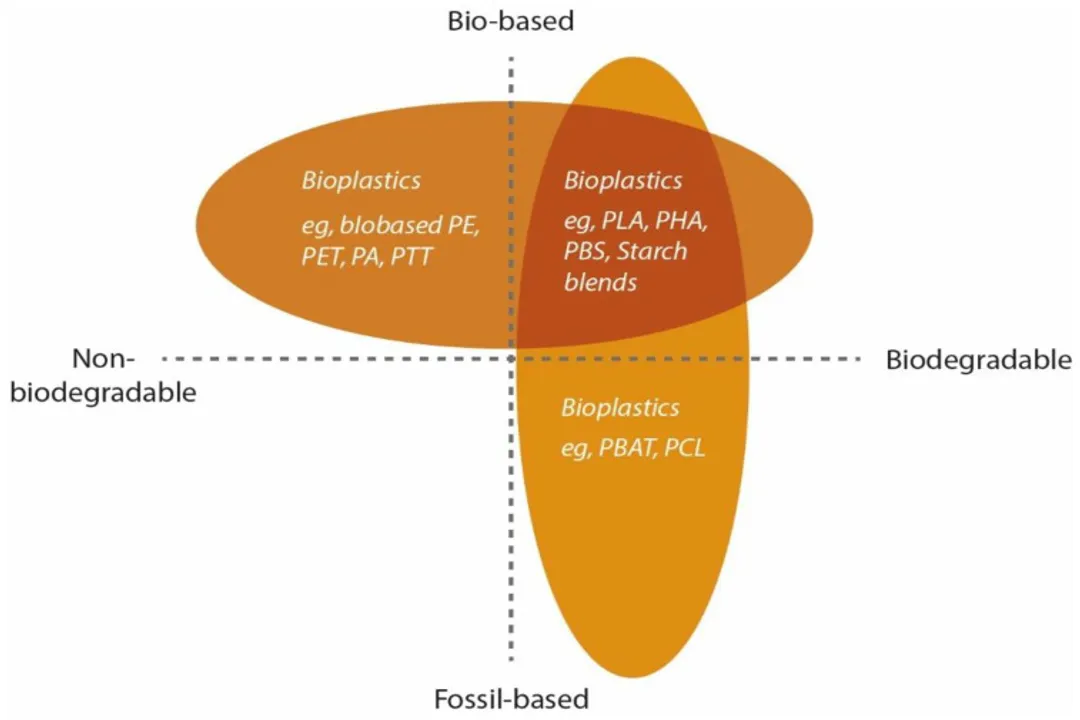
A major source of confusion, which naturally clouds the "invention date," stems from the imprecise language surrounding these materials. Many people use "biodegradable" and "bio-based" interchangeably, but they describe different attributes.
| Property | Definition | Origin Example | Implication |
|---|---|---|---|
| Bio-based | Made wholly or partly from biomass (plants, microbes, waste). | PLA from corn starch. | Reduces reliance on fossil fuels but doesn't guarantee degradation. |
| Biodegradable | Capable of being decomposed by bacteria or other living organisms. | PHA produced by bacteria. | Must break down into natural elements (water, CO2, biomass) under specific conditions. |
A plastic can be bio-based but not biodegradable (like bio-polyethylene, which acts just like fossil-fuel polyethylene) or it can be petroleum-based but engineered to be biodegradable (like PBAT). The original invention of the concept of a petroleum-based material that could break down might be linked to early synthetic polyester research aiming for medical uses, but the term’s current widespread usage is tied to the commercialization of starch and PLA blends starting in the late 20th century.
The key insight here is that the invention of material chemistry for degradation occurred early (bacterial PHAs, early PLA studies), but the invention of the economic product labeled "biodegradable plastic" that people buy today is a relatively modern event, primarily catalyzed by the scalability of PLA post-1990. The market need—the pressure to solve plastic pollution—was the true accelerator for making these historical discoveries relevant and commercially "invented" for the public eye.
# The Reality of Environmental Performance
Tracing the history also requires acknowledging that many early materials marketed as biodegradable failed to live up to the name in real-world settings, leading to modern regulatory scrutiny. This failure often relates to the conditions required for degradation.
For a material to be classified as truly biodegradable, it usually needs specific factors like the correct temperature, moisture level, and presence of appropriate microbial activity. Many early materials, and even some modern ones, require industrial composting facilities to break down effectively—conditions that a standard landfill or the open environment rarely provide.
This leads to a subtle but critical distinction in the historical narrative. When early researchers synthesized degradable polyesters, they proved the concept in a lab setting, often with accelerated enzyme action. However, proving that a material would break down in a cold, oxygen-starved landfill environment was a much later challenge. The material invented in the lab was not the same as the one successfully deployed in the waste stream.
# Actionable Context for Today’s Consumer
Understanding this history—the long scientific gestation followed by rapid commercialization driven by environmental concern—helps explain why confusion persists today. When looking at products today, remember that "biodegradable" is not a universal guarantee of decomposition.
If you see a product labeled as such, your best actionable step is to investigate its specific certification, as this reflects the culmination of decades of material science:
- Check for "Compostable" Certification: Look specifically for standards like ASTM D6400 (for industrial composting) or EN 13432 (the European standard). These standards dictate the speed and completeness of breakdown under managed conditions, making them far more reliable than the general "biodegradable" claim.
- Verify Local Collection: Determine if your municipality accepts the item in its green bin or requires it to be taken to a special drop-off. A product certified for industrial composting is effectively not biodegradable in your backyard compost pile or in standard trash collection.
The story of biodegradable plastic is thus a story of scientific possibility outpacing implementation. The earliest ideas for polymers that nature could reclaim emerged alongside the first plastics in the mid-19th century, but the reliable, scalable, and commercially defined products we debate today are firmly products of the late 20th and early 21st centuries. The invention wasn't a single object, but a series of chemical proofs validated by evolving environmental necessity.
Related Questions
#Citations
Biodegradable plastic - Wikipedia
Biodegradable Plastic: Its Promises and Consequences
Bio-based plastics: a brief history - Polytechnique Insights
A Brief History of Biodegradable Plastics - with an itemized timeline
The History of Bioplastics
Bioplastics: Innovation for Green Transition - PMC - NIH
A short history of bioplastics - BioPoly Lab
When Biodegradable Plastic does not Biodegrade
The Age of Plastic: From Parkesine to pollution | Science Museum
[PDF] The myth of historical bio- based plastics - Evolved By Nature