What is the significance of Rudolf Diesel?
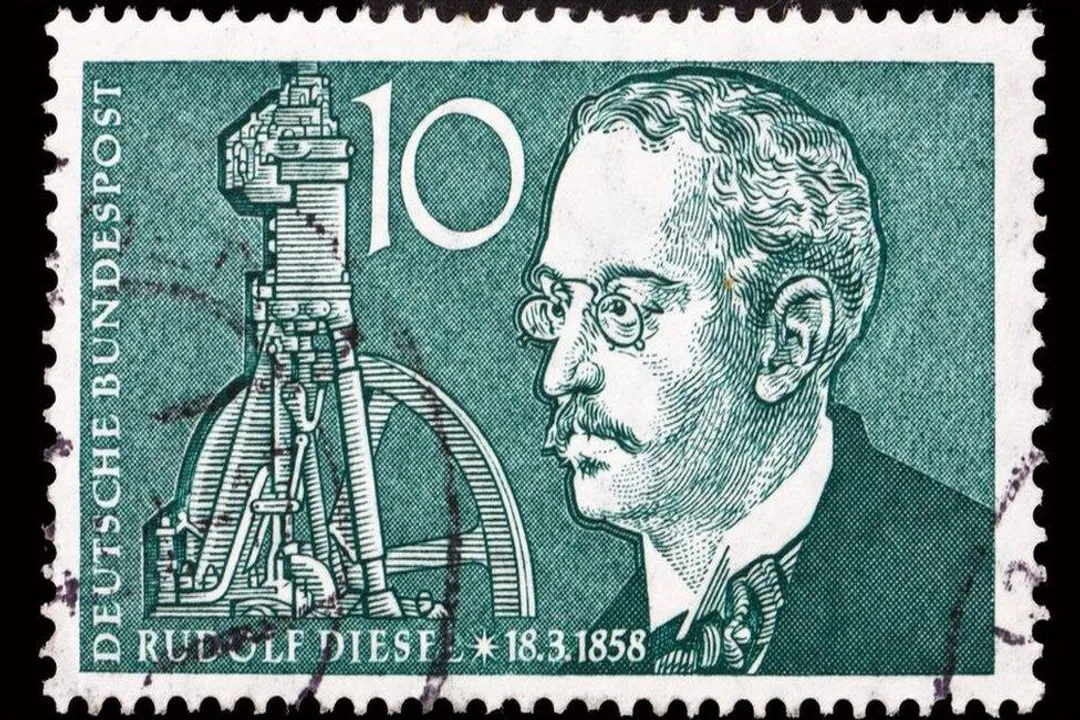
Rudolf Diesel’s name is synonymous with a revolutionary prime mover, an invention that fundamentally reshaped global industry, transportation, and military logistics in the span of just a few decades. Born in Paris in 1858 to German parents, Diesel’s early life, including his education at the Polytechnische Schule in Munich, set the stage for an engineering career focused intently on thermodynamics and efficiency. He was driven by a clear, almost philosophical ambition: to create an engine that could convert heat energy into mechanical work much more effectively than the existing steam engines or the internal combustion engines that used the Otto cycle.
# Life Beginnings

Diesel’s formative years were marked by significant travel and a strong academic foundation. His parents moved to London after the Franco-Prussian War, but Diesel returned to Germany to pursue technical studies. His time in Munich was crucial, where he was heavily influenced by Professor Carl von Linde, a pioneer in refrigeration technology. This background instilled in Diesel a deep appreciation for the theoretical limits of energy conversion, pushing him toward practical applications that could bridge the gap between theory and usable power. He wasn't just looking for an incremental improvement; he sought a new path to power generation.
# Compression Ignition

The central significance of Rudolf Diesel lies in conceiving the compression-ignition engine, now universally known by his name. The core concept, which he patented in 1892, involved compressing air so intensely that the resultant high temperature alone would ignite the fuel injected into the cylinder, removing the need for an external spark plug used in gasoline engines. This physical mechanism is what provides the engine’s defining characteristic: superior thermal efficiency.
When we look at the established technology of the late 19th century, the steam engine reigned supreme, but it was bulky and required constant external heating. Gasoline engines were lighter but notoriously inefficient, wasting a significant amount of the fuel’s potential energy as heat. Diesel’s approach targeted this inefficiency directly. By compressing the air to pressures far exceeding those in an Otto cycle engine, the combustion process became hotter and more complete, meaning more of the fuel's chemical energy was successfully converted into kinetic energy to turn the crankshaft.

# First Engine
The journey from patent drawing to a functional machine was fraught with difficulty and required immense perseverance. Diesel struggled for years to perfect his design, facing numerous setbacks and financial hurdles. The breakthrough came with the demonstration of his first working engine in 1893. This early prototype, though primitive by modern standards, proved the viability of the compression-ignition principle.
A critical early milestone involved adapting the engine to run on liquid fuels. While his initial concept explored using coal dust, it quickly became apparent that handling powdered fuel presented significant mechanical challenges. It was through experimentation that Diesel recognized the engine’s remarkable adaptability. He famously demonstrated that his engine could run effectively on various substances, including peanut oil. This adaptability was not just a footnote; for Diesel, it was a central tenet of his invention—an engine for the masses, powered by readily available, non-petroleum-based sources.
If one were to compare the power-to-weight ratio of the early Diesel engine to a contemporary steam setup, the difference would be stark. While the initial Diesel units were heavy for their output, their operational efficiency meant that they could run longer on less energy input, a major economic advantage for continuous industrial work. The engine’s success rapidly gained the attention of industrial giants, leading to early manufacturing agreements, notably with Adolphus Busch and Charles Yarrow, allowing the technology to spread globally.
# Efficiency Gains
The true significance of Rudolf Diesel’s engine lies not just in its existence, but in the sheer efficiency advantage it offered over its contemporaries. At the time of its invention, the best existing engines achieved thermal efficiencies around 15 percent. Diesel's engine, particularly as refined through ongoing development, could push thermal efficiency past 30 percent, with later iterations approaching 40 percent.
This jump in efficiency has a profound, cascading effect on any industry that relies on mechanical power. For a steamship or a factory running heavy machinery, higher efficiency translates directly into lower fuel consumption per unit of work performed. This means reduced operating costs, longer ranges without refueling, and less wasted energy escaping as heat. For instance, when looking at marine applications—a primary early adopter—the ability to cross oceans with less coal or oil meant dramatically altered trade routes and naval capabilities.
The sustained power delivery inherent in the compression cycle also made it perfectly suited for tasks requiring consistent, heavy torque, such as pumping water, grinding grain, and eventually, powering heavy-duty vehicles and locomotives. It is worth noting that while spark-ignition engines often achieve higher peak power for their size (making them popular in early automobiles), the Diesel engine's superior ability to generate sustained, efficient turning force at lower speeds made it the undisputed champion for the backbone of global heavy logistics—the ships, trains, and stationary power plants that keep modern economies functioning.
# Fuel Flexibility
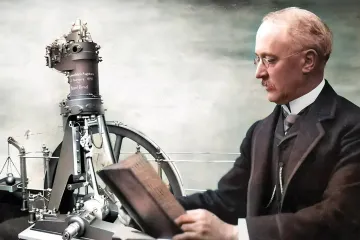
Diesel always intended his engine to be more than just a new type of oil burner; he envisioned it as an engine that could democratize power by running on anything combustible. This forward-thinking approach is especially relevant today when discussing sustainable energy. Diesel’s early successful operation of his engine using vegetable oils, such as peanut oil, demonstrates a direct historical lineage to modern biodiesel technology.
The principle is simple: because the ignition is achieved through extreme heat and pressure, the specific chemical makeup of the fuel is less critical than in a spark-ignition engine, provided the fuel has the right viscosity and heating characteristics to vaporize correctly under compression. While the industrial world quickly standardized on cheaper, energy-dense petroleum diesel, the underlying capability for alternative fuels remained a core feature of the engine architecture. This inherent flexibility is an often-overlooked asset that continues to give the Diesel engine relevance in an era pivoting toward renewable energy sources.
# Wider Applications
The adoption of the Diesel engine was rapid and broad, changing the mechanical landscape of the 20th century. Its reliability and power made it indispensable in several key sectors:
- Marine Propulsion: Replacing large, inefficient steam engines on freighters and warships.
- Rail Transportation: Providing the power behind the modern diesel locomotive, which offered greater range and quicker turnaround times than steam.
- Industrial Power: Serving as reliable stationary power sources for factories, mines, and agricultural operations.
This broad uptake solidified Diesel’s position as one of history’s great inventors, placing him alongside figures like James Watt and Nikolaus Otto. His engine fundamentally changed how goods moved and how power was generated away from centralized electrical grids.
Consider the logistical impact on a developing nation in the early 1900s. Setting up a coal-fired steam plant required massive infrastructure for fuel transport and ash removal. A standalone, medium-sized Diesel generator, however, could provide reliable power for a small town or factory with fewer logistical dependencies, especially if it could be adapted to burn locally sourced fuels like oil or vegetable matter. This localized power generation capability was an unsung contributor to industrial expansion across regions without established coal supplies.
# Mysterious End
Tragically, the inventor did not live to see the full extent of his creation’s impact. In September 1913, Rudolf Diesel boarded the SS Dresden while traveling from Antwerp to London for a business engagement. He was reported missing shortly thereafter, his body found floating in the sea days later. The circumstances surrounding his disappearance remain clouded in mystery and speculation. Some theories lean toward accident, while others suggest foul play related to the industrial or political climate of the time, given the strategic importance of his invention just before the outbreak of World War I. Despite the unsettling nature of his final moments, the technical legacy he left behind was already firmly established.
# Lasting Impact
Rudolf Diesel passed away before his engine fully realized its potential, yet the technology he pioneered remains incredibly significant today. While gasoline engines dominate the light passenger vehicle market, the Diesel engine, in its modern, highly refined form, continues to power the heavy-duty segments of the global economy. Modern iterations are vastly cleaner and more powerful than the 1893 model, featuring advanced electronic controls, turbocharging, and sophisticated emission reduction systems.
The enduring significance is evident in the sheer scale of modern logistics: nearly every large truck on the highway, the majority of ocean-going vessels, and much of the world's heavy construction equipment relies on the principles Diesel established. The continuous development in this field is also driving innovation in sustainable fuels. Modern biodiesel, often derived from recycled fats or vegetable oils, directly fulfills the versatility Diesel championed over a century ago. The work of Rudolf Diesel is not relegated to the history books; it is the powerful, efficient heartbeat of modern, heavy commerce.
#Videos
The Diesel Engine Story - YouTube
Related Questions
#Citations
Rudolf Diesel - Wikipedia
Rudolf Diesel | Inventor of Internal Combustion Engine ... - Britannica
Acknowledging Rudolf Diesel's pioneering achievements
The Curious Case of Rudolf Diesel - Capital Reman Exchange
Rudolf Diesel | Research Starters - EBSCO
History of diesel engines | Cummins Inc.
How Rudolf Diesel's engine changed the world - BBC News
The Diesel Engine Story - YouTube
Rudolf Diesel | Automotive Hall of Fame