What was invented by Scottish people?

The history of innovation is often viewed through a few towering figures, yet tucked away in the intellectual landscape of Scotland lies a disproportionate collection of world-changing inventions. From the very foundations of global communication to the medical practices that save millions of lives daily, the ingenuity nurtured in this small nation has profoundly reshaped the modern era. It is a legacy built not just on myth and legend, but on tangible, documented breakthroughs delivered by Scottish thinkers and engineers across centuries.
# Communication Systems

Perhaps no single invention has shrunk the world quite like the telephone, attributed directly to the Scottish-born Alexander Graham Bell. Though the exact circumstances and claims surrounding its invention remain subjects of historical debate, Bell’s pivotal role in developing the apparatus for transmitting voice electrically is undisputed, fundamentally altering personal and commercial interaction across continents. The initial success of the telephone laid the groundwork for nearly all subsequent telecommunications technologies.
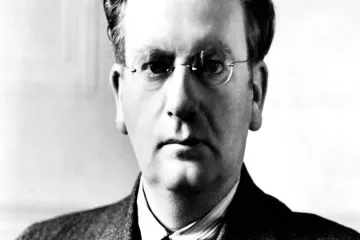
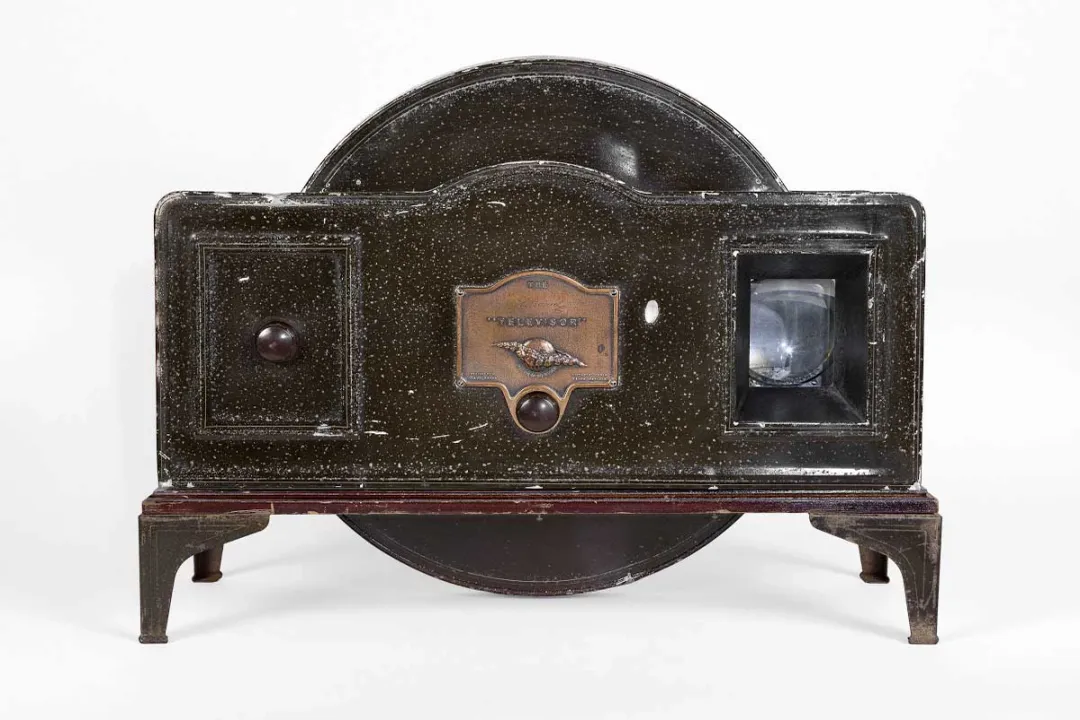
Moving into the 20th century, the Scottish contribution to visual communication was cemented by John Logie Baird. Baird, a true pioneer, achieved the first public demonstration of a working television system in London in 1926. While the technology has evolved dramatically from his mechanical scanning discs, Baird’s initial success proved that transmitting moving images across distances was achievable, setting the stage for the broadcast media that defined the next several decades.
If we consider the broader architecture of digital information transfer, it’s worthwhile to look at how Scottish minds tackled abstract systems. While the World Wide Web is often associated with others, the conceptual groundwork for complex, interconnected systems has Scottish roots, particularly in the area of early computing theory and logic. This talent for abstract, systematic thinking seems to be a recurring theme, moving from Bell’s complex electrical circuits to Baird’s visual transmission mechanisms.
# Engineering Foundations

The very infrastructure that allowed the Industrial Revolution to truly take hold across the globe owes a significant debt to Scottish engineering prowess, particularly in optimizing existing power sources and creating durable surfaces for transport.
# Steam Power Refinement
The steam engine, while conceived earlier, was transformed into a practical, efficient powerhouse by James Watt. Watt, a Scottish instrument maker, didn't just tinker; his invention of the separate condenser addressed the massive inefficiency of Thomas Newcomen's earlier design. This improvement—the separation of the condensing process—dramatically reduced fuel consumption, making steam power economically viable for factories, mills, and transportation, effectively powering the age of mechanization.
# Transportation Surfaces
Similarly, the way we build roads was fundamentally revolutionized by John Loudon McAdam. His method, known as "macadamization," involved creating durable, all-weather road surfaces using carefully graded, compacted layers of stone. Before McAdam, roads were often muddy tracks or poorly surfaced stone paths that quickly deteriorated. His simple yet brilliant insight—that stones would naturally bind together under traffic load if properly layered—created surfaces that were smooth, drained well, and, crucially, cheaper to maintain. Thinking about modern infrastructure, it is fascinating to note that this same principle of layered, compacted aggregate is still a core component in sub-base construction for everything from modern motorways to simple driveways today.
# Medical Breakthroughs
The impact of Scottish intellect on human health is perhaps the most ethically significant area of its inventive output. The discoveries made allowed doctors to treat pain and infection with unprecedented efficacy.
# Conquering Pain
One of the earliest and most dramatic advances came with the introduction of anaesthesia. James Young Simpson, a professor at the University of Edinburgh, is credited with introducing chloroform as a surgical anaesthetic in 1847, following earlier work with ether. Before this, surgery was a horrific ordeal, often characterized by speed rather than precision due to the necessity of subduing the patient by force or sheer speed. Simpson’s advocacy for chemical unconsciousness made complex, life-saving procedures feasible, shifting surgery from a desperate last resort to a controlled medical intervention.
# Fighting Infection
The discovery of Penicillin is a globally celebrated event. While Alexander Fleming is widely acknowledged, and he was indeed born in Scotland, the story of antimicrobial discovery continued with Scottish researchers building upon these foundations. The development of practical, large-scale production and application of antibiotics was a key step in turning a laboratory curiosity into a medical staple that has saved countless lives from bacterial infections. The cumulative work in this field demonstrates a sustained commitment to solving biological challenges.
# Everyday Life Innovations

Beyond the grand societal shifts of communication and engineering, Scottish inventors also shaped the small, daily objects we often take for granted.
# Visual Media and Optics
The world of optics and imaging received a major Scottish boost from James Clerk Maxwell, who is renowned for his work in electromagnetism, but also developed the first durable color photograph in 1861. This achievement, demonstrated using a ribbon, proved that color images could be captured and reproduced using the principles of additive color mixing—red, green, and blue—the very basis upon which all modern digital displays operate today.
# The Modern Bicycle
The pneumatic tyre, a seemingly minor component, made cycling comfortable and practical for the masses, and it was invented by John Boyd Dunlop. Originally seeking to give his son a smoother ride on his tricycle, Dunlop’s design, patented in 1888, replaced solid rubber with air-filled tubes. This invention didn't just improve the tricycle; it was essential for making the safety bicycle popular, which in turn influenced early automotive tire technology.
# Other Key Inventions
The list extends further into various domains:
- Asphalt: While Macadam dealt with aggregate, the precursor to modern road surfacing, tar macadam, was developed by Scottish chemist Thomas Telford.
- The Refrigerator: The development of practical refrigeration techniques owes much to William Cullen, who demonstrated artificial cooling using an apparatus operating on the evaporation of ether in 1755. While not a domestic fridge, this was a vital conceptual step.
- The Logic Gate: Conceptual work on the fundamental building blocks of digital computing also has Scottish representation.
If we organize some of these high-impact inventions, the diversity is striking:
| Invention Category | Specific Invention | Inventor(s) | Approximate Timeframe |
|---|---|---|---|
| Communication | Telephone | Alexander Graham Bell | Late 19th Century |
| Medicine | Chloroform Anaesthesia | James Young Simpson | Mid-19th Century |
| Engineering | Separate Condenser (Steam) | James Watt | Late 18th Century |
| Media | True Color Photography | James Clerk Maxwell | Mid-19th Century |
| Transport | Pneumatic Tyre | John Boyd Dunlop | Late 19th Century |
| Infrastructure | Macadam Road Surface | John Loudon McAdam | Early 19th Century |
| Broadcast | Mechanical Television | John Logie Baird | Early 20th Century |
| [1][2][4][7] |

# Patterns of Scottish Ingenuity
Examining this collection of breakthroughs reveals an interesting pattern. Many of the most famous Scottish contributions were not pure creation ex nihilo but rather masterful optimization and practical application. Watt didn't invent the steam engine; he made it work efficiently enough for widespread economic adoption. McAdam didn't invent roads; he invented a durable, scalable method for building them that the world actually adopted. Dunlop didn't invent the wheel; he perfected the interface between the wheel and the ground. This suggests a national characteristic leaning toward applied science and solving immediate, large-scale physical problems, moving concepts from the theoretical realm into working, everyday reality.
Another observation involves the temporal spread of these achievements. There is a distinct cluster of engineering and infrastructure breakthroughs—Watt, McAdam, Cullen—coinciding almost perfectly with the height of the British Industrial Revolution in the late 18th and early 19th centuries. This period saw a practical, problem-solving focus driven by industrial need. Then, later in the 19th and early 20th centuries, the focus shifts slightly toward more abstract physics, optics, and biology with Maxwell, Bell, Simpson, and Baird. It suggests that Scottish education and intellectual environment successfully adapted to shifting technological frontiers, pivoting from mechanical mastery to electrical and biological understanding.
# Media and Everyday Life
While the impact of the telephone and steam engine is immense, the proliferation of innovations into everyday life shows an equally strong Scottish presence. Consider the simple act of eating; oatmeal, while ancient, is frequently cited as a deeply ingrained Scottish contribution, representing early food science focused on high-energy, durable sustenance suitable for harsh climates. This foundational food source contrasts sharply with the highly technical nature of inventions like Baird’s television, showing a breadth of contribution from basic sustenance to advanced electronics.
Furthermore, improvements in basic safety were championed. For instance, safety glass, which prevents shattering into dangerous shards, is another invention sometimes attributed to Scottish ingenuity, highlighting a thread of concern for personal well-being woven through these technological advancements. These smaller, less celebrated inventions, when tallied, demonstrate that Scottish innovators were deeply engaged in improving the quality and safety of daily existence, not just the mechanics of industry. The sheer variety, spanning from pure mathematics to material science, underscores the depth of intellectual contribution emanating from the country across several centuries.
#Videos
Ten amazing Scottish inventions that shaped history
Related Questions
#Citations
Scotland's Inventions
List of Scottish inventions and discoveries
10 Revolutionary Scottish Inventions and Inventors
Scottish Inventions That Changed the World
A list of things invented in Scotland
Ten amazing Scottish inventions that shaped history
7 Scottish Inventors & Their Inventions
Incredible Scottish Inventions: A Comprehensive List
10 Scottish Inventions That Shaped The Modern World