What powered the first locomotive?
The power source that drove the very first successful self-propelled railway vehicle was high-pressure steam generated by burning fuel, most commonly coal. This foundational machine, which marked the dawn of railway locomotion, was conceived and built by Richard Trevithick. [9] While the concept of steam power had been explored for pumping water or operating stationary engines, applying it successfully to haul a load along a track was the true barrier, and it was overcome by utilizing this pressurized vapor as the motive force. [1]
The event that truly put this technology on the map occurred on February 21, 1804, when Trevithick’s engine successfully hauled ten tons of iron and seventy men over nine and a quarter miles of track at the Penydarren Ironworks in Wales. [5][8] This was not merely a demonstration of an engine; it was the first recorded instance of a steam locomotive moving on rails under its own power. [5] The locomotive itself was a significant piece of machinery for its time, essentially a boiler sitting atop a frame with cylinders driving the wheels. [1]
# Trevithick Steam
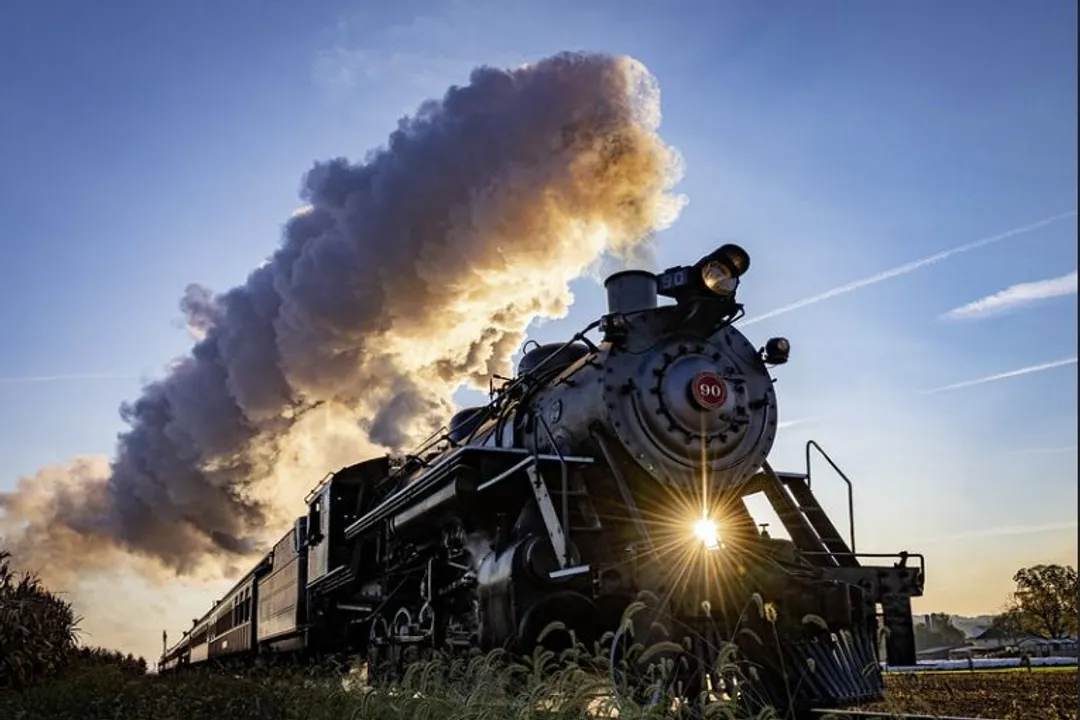
Richard Trevithick, an engineer from Cornwall, is credited with designing and building this pioneering locomotive. [9] His critical innovation, which distinguished his engine from earlier, less practical steam-powered road vehicles, was the use of high-pressure steam. [1] Earlier experiments often relied on lower-pressure steam, which required much larger cylinders and condensors, making the engines cumbersome and inefficient for practical traction. [1] Trevithick's high-pressure system allowed for a smaller, lighter engine capable of generating enough force to move the required weight. [1]
The engine was directly coupled to the wheels. This meant the pistons pushed directly on the driving wheels via a crank mechanism. [1] This direct drive system, while powerful in concept, introduced immediate mechanical challenges when faced with the friction and resistance of the rails. [1] The entire apparatus was relatively heavy, placing immense stress on the cast-iron plates that formed the track bed at Penydarren. [5]
# Coal Fuel
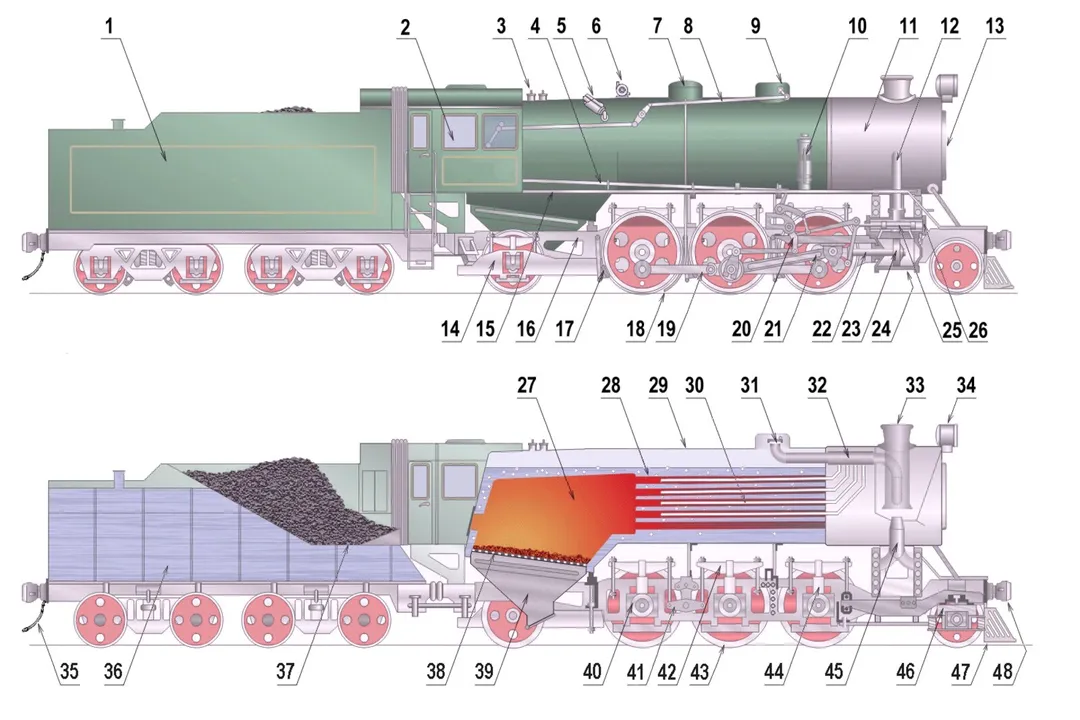
The steam itself did not appear magically; it had to be created, and this required a heat source and water. [3] The fuel used to heat the water in the boiler was coal. [5] The strategic placement of this invention in the iron country of South Wales was no accident. The region was rich in both the necessary raw materials—iron to build the engine and the rails, and coal to power it—as well as the immediate industrial need to move heavy materials like iron over short distances between furnaces and tramways. [5]
Thinking about the logistics of 1804, one can appreciate that while the high-pressure steam engine was the mechanism of power, the coal was the energy carrier that made the whole system feasible outside of a lab setting. Unlike earlier proposals that might have relied on wood or other less calorific fuels, the robust, high-temperature fire needed to quickly raise steam in a compact boiler demanded the high energy density found in high-quality coal. This dependency established the fundamental relationship between the railway industry and the mining industry that would define transportation for the next century. [3]
# Engineering Hurdles
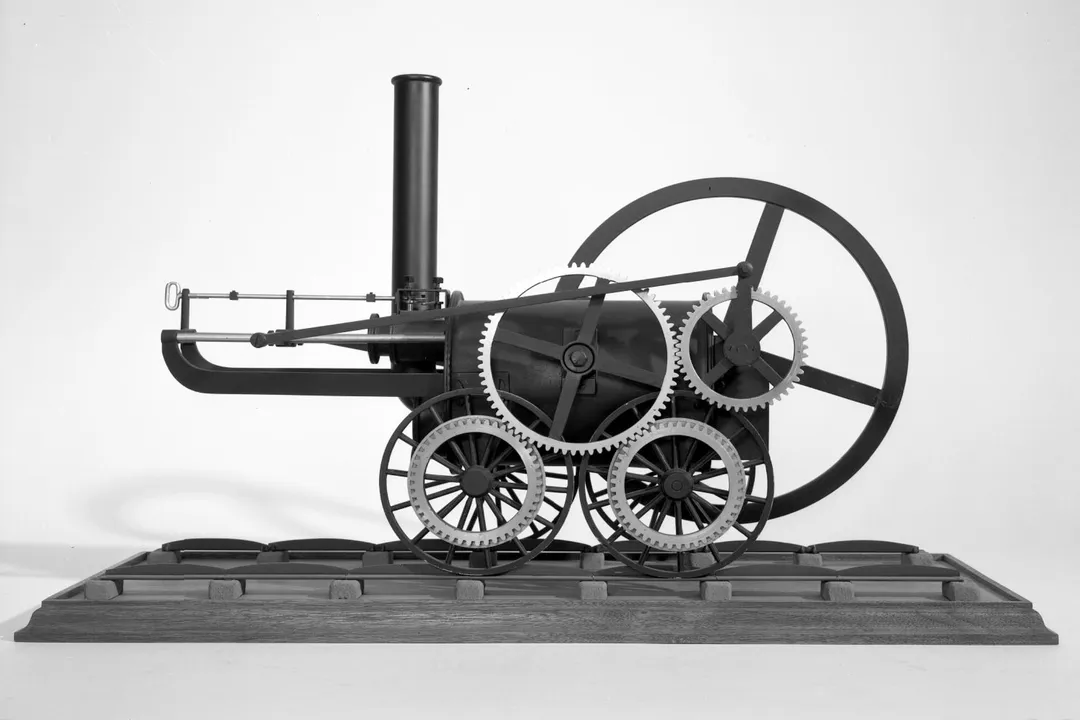
Despite its initial success in moving the load, Trevithick’s locomotive was not an immediate commercial success, which highlights the vast gap between a working prototype and a reliable industrial tool. [2] The primary issue encountered during the Penydarren trial was the very thing that made the engine powerful: its weight. [5] The rails of the time were often flimsy, designed only for the relatively light loads pulled by horses on existing tramways. [5] The locomotive proved too heavy, causing the tracks to buckle and break under its weight. [5]
This issue of weight distribution and adhesion would plague early locomotive design for years. While the early steam engine produced the necessary force, it struggled to translate that force into motion efficiently on the existing infrastructure. [1] The very nature of the high-pressure system, while powerful, also presented significant safety and engineering concerns regarding boiler integrity that needed constant monitoring and refinement. [1]
# Subsequent Power
The world’s first locomotive, powered by coal-fed, high-pressure steam, demonstrated the possibility of steam traction, but it was not the design that would usher in the railway age. [2] Trevithick eventually dismantled his machine, having proven his point but failing to establish a durable commercial application at that specific moment. [5]
It took several more decades and the work of engineers like George Stephenson to refine the concept into something truly practical and scalable. [2] Stephenson's engines, while still fundamentally steam-powered, focused heavily on improving adhesion—ensuring the wheels gripped the track firmly—and reducing the overall weight relative to the power produced. [1] This shift is fascinating; Trevithick proved that steam could move weight, but Stephenson and others proved how steam could move weight reliably and economically on mass-produced tracks. One might even argue that the initial power source—steam from coal—remained constant, but the application of that power evolved from a brute-force demonstration of weight hauling into an optimized system for sustained speed and commercial transport. [1][2] The early designs focused on raw cylinder power, whereas later designs cleverly managed that power through superior boiler design, better valve gear, and critically, ensuring the engine was light enough not to destroy the very tracks it ran upon.
#Videos
Trevithick - The World's First Locomotive - YouTube
Related Questions
#Citations
Steam locomotive - Wikipedia
George Stephenson's First Steam Locomotive - History Today
The Evolution & History of Steam Locomotives
The First Locomotives | History of Western Civilization II
1800-1849 - February 21, 1804 - World's First Steam Locomotive
04. Locomotives - Linda Hall Library
Trevithick - The World's First Locomotive - YouTube
This Year Marks the 200th Anniversary of America's First Locomotive ...