What did the U.S. government invent?
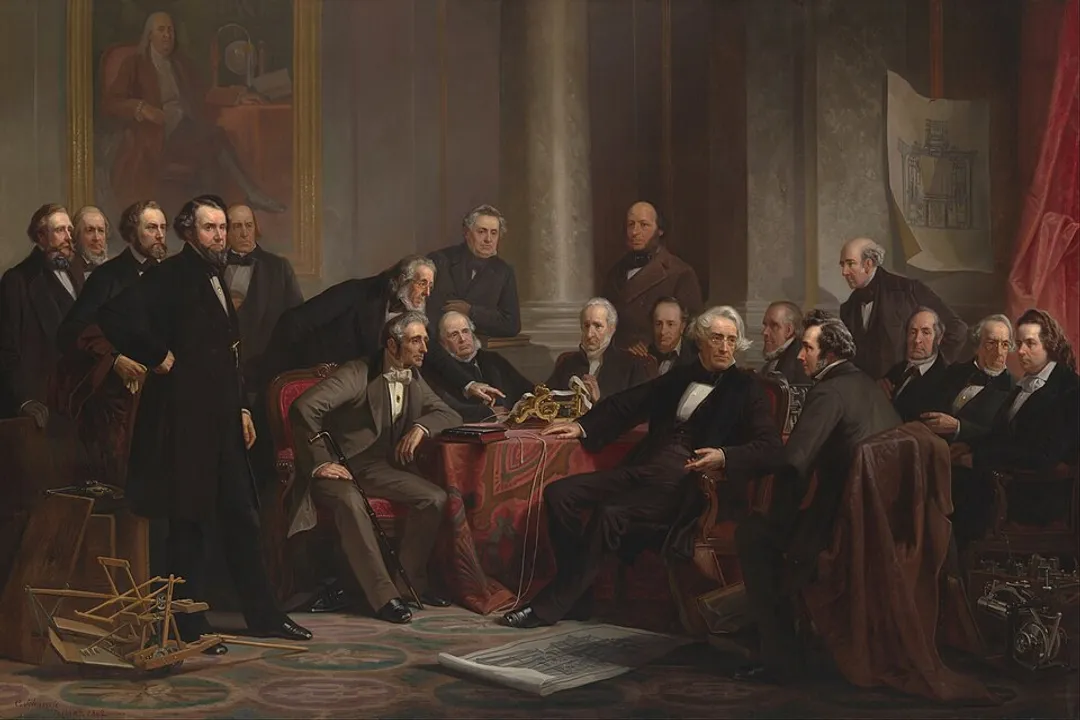
The reality of technological progress in the United States is deeply intertwined with federal investment, stretching far beyond just defense contracts and into the fabric of daily life. Many items considered standard consumer goods or essential medical tools owe their initial development or critical maturation phase to research funded or conducted by government agencies, national laboratories, or military branches. [1][2][5] This contribution isn't always about inventing a finished product from scratch; often, the government provided the foundational science, funded the expensive, risky early-stage research, or created the initial network that private industry later scaled for the mass market. [6]
# Defense Innovation
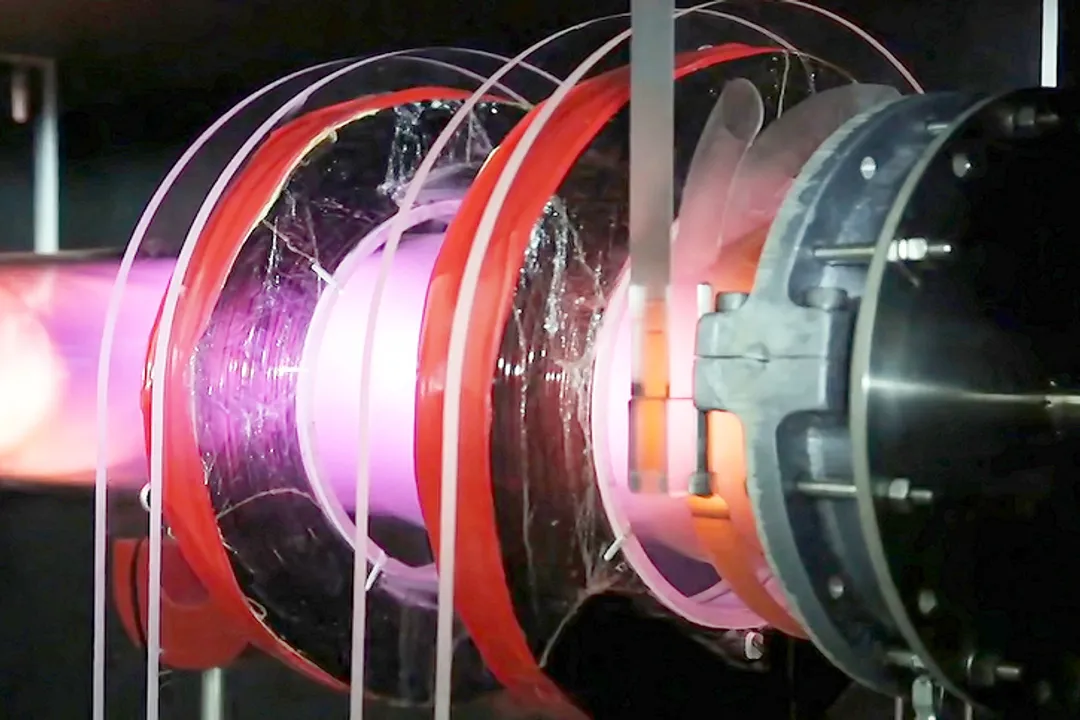
The United States military and defense agencies, perhaps most notably the Defense Advanced Research Projects Agency (DARPA), have historically been massive engines for generating technology that eventually trickles down to the public. [7][9] The motivation is clear: national security requires cutting-edge capabilities, and the initial investment burden for high-risk, high-reward projects is usually too great for the private sector alone. [6]
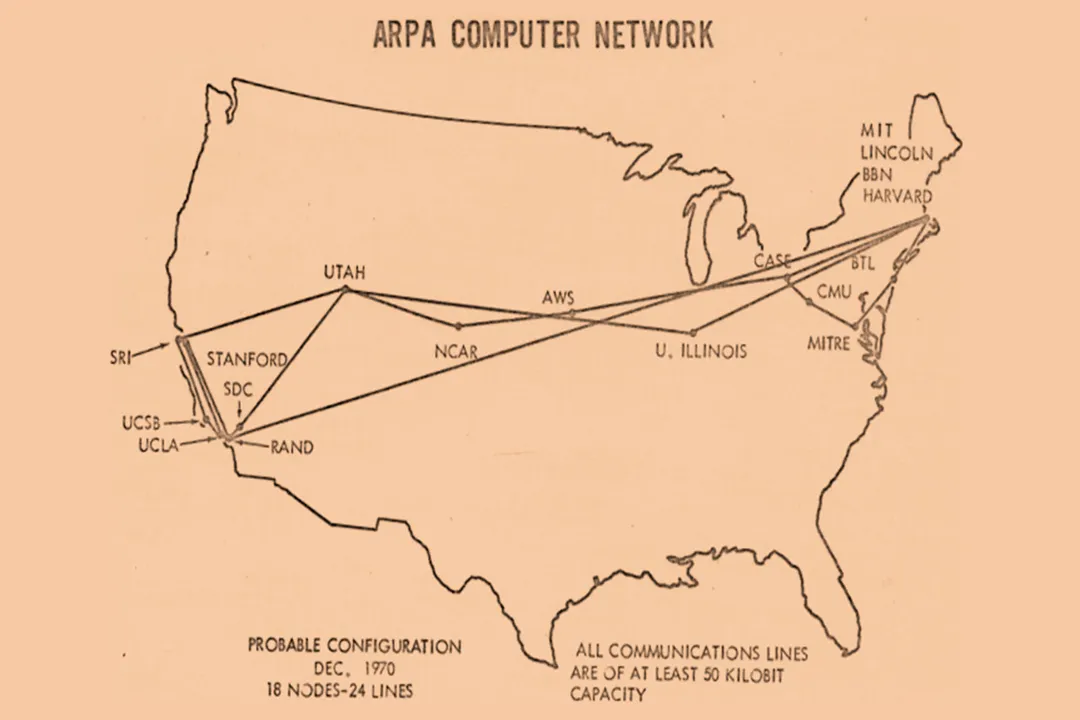
The Internet itself stands as a monument to this effort. Originating from the ARPANET, a project initiated by DARPA in the late 1960s, the technology evolved from a robust, decentralized communication system designed to withstand attack into the global information network we use today. [7][5] Similarly, technologies we rely on for navigation, like the Global Positioning System (GPS), began as a military endeavor to ensure accurate positioning for troops and guidance systems. [9] Even seemingly simple items, like the specialized fabrics used in the early development of the and protective materials, were driven by the need for better firefighter and military gear. [9]
Another major area where defense funding shaped our world is aviation. The development of the jet engine for military aircraft, supported heavily by government funding, fundamentally changed air travel. [9] Furthermore, radar technology, crucial for WWII defense, is another significant military contribution that transitioned into civilian uses, from weather forecasting to speed enforcement. [9]
It is fascinating to observe how the funding philosophy differs between pure military research and civilian application. DARPA funding tends to be mission-driven and targeted at solving very specific, difficult problems, often operating under short, intense development cycles. [7] This contrasts sharply with the patient, long-term fundamental science funding often channeled through agencies like the National Science Foundation or the Department of Energy, which is designed to expand the boundaries of knowledge itself, regardless of immediate commercial application. [6]
# National Labs
The network of National Laboratories, managed primarily by the Department of Energy (DoE), represents a unique American asset dedicated to fundamental scientific research and discovery. [4] These labs, such as Los Alamos or Lawrence Livermore, have been instrumental in breakthroughs that move beyond defense and into energy, physics, and materials science. [4]
One significant area of impact is energy production and management. The work on nuclear power originated from wartime efforts but evolved significantly through DoE-funded research, moving from weapons technology to civilian energy generation. [3] Beyond pure energy sources, the National Labs have been critical in advancing the understanding of materials. For instance, research conducted at these facilities led to the development of the LED (Light Emitting Diode), which began with solid-state physics investigations. [4] Similarly, foundational work in superconductivity has been a long-term focus of national laboratory research. [4]
Consider the humble laser. While often associated with manufacturing or medical procedures now, the underlying physics and initial devices were the result of sustained government investment in basic science. [4] The applications derived from these foundational discoveries—from fiber optics to barcode scanners—are vast. When reviewing the long list of accomplishments, one notices a pattern: the government funds the science (the 'how' and 'why' things work), and industry takes that scientific knowledge to create the product (the 'what' the consumer buys). [2]
# University Spinoffs

Federal money doesn't just go to government employees; a substantial portion funds academic institutions, allowing university researchers to pursue high-risk, high-reward projects that might otherwise be too speculative for private industry. [2][6] The University of California system, for example, lists several world-changing innovations stemming directly from federally funded research. [2]
Key developments in medicine have often followed this path. Vaccines, essential for public health, frequently trace their lineage back to federally supported research initiatives. [1] Furthermore, advanced medical imaging technologies, like MRI (Magnetic Resonance Imaging) and PET scans, rely on physics principles and detector technologies that were significantly advanced through government and defense-related funding streams. [1][4]
Even simple technologies we interact with daily have academic/government roots. The modern touchscreen, foundational to smartphones and tablets, emerged from research partially supported by federal funds. [5] Another example involves advances in speech recognition software, which benefited from early government investment in machine learning and signal processing techniques designed for tasks like cryptanalysis or communications monitoring. [5] This academic pipeline offers a slower but perhaps more reliable path to broad societal change than the rapid, targeted development seen in pure defense contracting. [6]
# Commonplace Tech
It is easy to overlook how pervasive these government-seeded technologies are. Beyond the large-scale items like GPS and the Internet, smaller, ubiquitous inventions populate our lives.
For example, the GPS system itself, though military in origin, is now a consumer staple. But let’s look at the materials that make modern electronics possible. The development of specialized memory chips and microprocessors was heavily subsidized and supported by government agencies seeking miniaturization and high-performance computing for defense and scientific modeling. [6]
Here is a brief look at some items where federal investment played a clear early role, showing the breadth of influence:
| Invention/Technology | Primary Government Link/Agency |
|---|---|
| The Internet (ARPANET) | DARPA [7] |
| GPS | U.S. Military [9] |
| Nuclear Energy | Department of Energy (and predecessors) [3] |
| Touchscreens | Federally funded academic research [5] |
| Vaccines | National Institutes of Health (NIH) and related agencies [1] |
| LED Lighting | National Laboratories/Solid State Physics Research [4] |
One interesting observation when comparing the lists from various sources—from military items to university spin-offs—is the temporal lag in public access. For instance, while the foundational concept for GPS was proven in the 1970s, widespread public access and reliance on commercialized GPS devices didn't truly take off until the late 1990s and early 2000s. [9] This gap—often a decade or more—is the time required for private industry to perfect manufacturing, reduce costs, miniaturize components, and address user interface concerns necessary for mass-market adoption.
Another subtle but impactful invention often cited is the basis for voice recognition software. [5] While commercial products are commonplace today, the initial algorithmic work, which required massive amounts of data processing and early machine learning models, was financed by government grants seeking better ways to analyze intercepted communications or automate complex scientific data reduction tasks. [5] This illustrates that government funding often targets capability gaps—things industry cannot yet do cost-effectively—rather than just market opportunities.

# Funding Mechanisms
The success of this public investment raises questions about how the government manages the transfer of technology from the lab bench to the marketplace. It is not a single process but a collection of pathways. One pathway involves direct military procurement, where the DoD orders a specific technology that is then refined by contractors. [9] Another, common in the National Labs, involves patenting and licensing discoveries to private companies who then handle commercialization. [4] The third, prevalent in academic settings, relies on university technology transfer offices that work to patent discoveries made under federal grants and license them out. [2]
If you look closely at the sheer breadth of patented inventions and breakthroughs stemming from agencies like the National Laboratories, it becomes clear that the return on investment is often not measured in immediate profit but in economic stimulus and public good down the line. [4] For instance, while the initial cost of developing high-energy physics tools at places like Fermilab was immense, the resulting advances in detector technology have informed everything from advanced medical scanners to new industrial inspection methods. Understanding this structure helps explain why seemingly disparate fields—like defense, medicine, and consumer electronics—share common technological ancestors. The U.S. approach has been to fund the frontier of knowledge, accepting that the commercial applications will emerge unpredictably from that foundation. [6]
Related Questions
#Citations
16 Innovations Fueled by the Federal Government
7 world-changing UC innovations that emerged from federal ...
Five Everyday Items Born In Government Labs | Performance.gov
75 Breakthroughs by America's National Laboratories
50 Inventions You Might Not Know Were Funded by the US ... - Stacker
[PDF] Federally Supported Innovations: 22 Examples of Major Technology ...
Innovation Timeline - DARPA
American Inventions - U.S. Embassy & Consulates in China
12 Military Innovations That Are Now Everyday Parts of Society
Science and technology in the United States - Wikipedia