What did Ashok Gadgil invent?
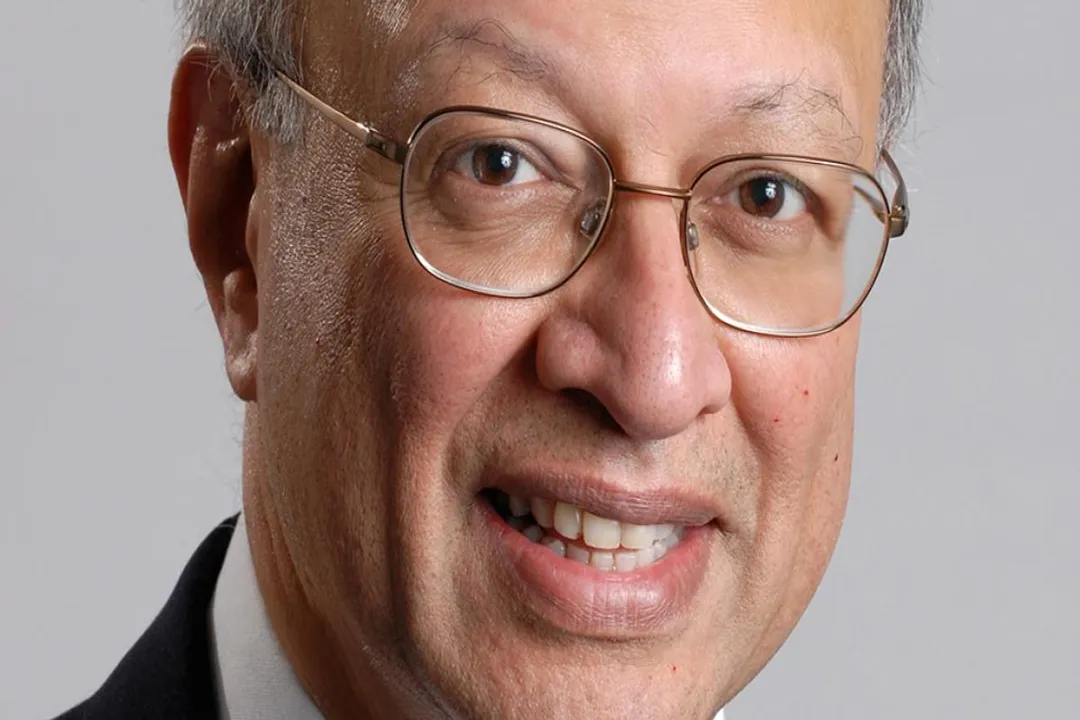
The work of Dr. Ashok Gadgil is marked by a distinct focus: applying sophisticated scientific understanding to solve the most fundamental and widespread problems afflicting the world’s poorest populations. [2][7] Born in Bombay in 1950, Gadgil, a physicist by training, has built a career not just in labs at the Lawrence Berkeley National Laboratory (LBNL) but in the field, developing technologies that improve human conditions across four continents. [2][3] While his academic path led him through degrees from the University of Bombay and the Indian Institute of Technology Kanpur to a Ph.D. in Physics from the University of California, Berkeley, his true calling emerged when he looked at immediate, life-threatening crises—namely, unsafe water and inefficient energy use. [1][4]
# Water Disinfection
Perhaps the most celebrated of his contributions is the UV Waterworks (UVW), a remarkably simple yet effective system designed to disinfect drinking water cheaply and reliably. [3][4] The impetus for this invention was a severe, deadly outbreak of “Bengal cholera” in 1993 that swept through India, claiming tens of thousands of lives within months. [1][3] Gadgil realized that the fundamental principle—that ultraviolet (UV) light can neutralize pathogens—had been known for nearly a century, but it needed a design tailored for low-resource settings. [1]
Previous attempts to use UV for water treatment often involved immersing the lamp directly in the water, which led to fouling, such as algae buildup on the lamp surface, diminishing effectiveness. [1][4] Gadgil’s ingenious solution involved suspending the UV lamp above the surface of the flowing water, using an aluminum reflector to direct light that would otherwise be lost back down onto the stream. [1] This technical refinement, combined with other design criteria, made the difference. [1] The design deliberately excluded moving parts to ensure robustness and ease of maintenance for communities far from technical support. [1] The resulting system processes roughly 15 liters of water per minute. [1][4] The UV light works by triggering the formation of peptide bonds between certain nucleic acids in the pathogens’ DNA, rendering bacteria, viruses, and molds unable to reproduce and effectively harmless. [5]
The economics of the UVW are compelling. Running on a mere 40 or 60 watts of electricity—which can be supplied by something as simple as a car battery or a solar panel—the cost of disinfection has been cited as low as 4 cents per metric ton. [1][2][4] When considering amortization, the system could provide safe water for a village of 2,000 people for under $2 per person annually. [1]
Initially, Gadgil considered simply placing the design online for free copying, but his employer, UC/LBNL’s Technology Transfer Office, persuaded him of the necessity of patenting. [1] This protection was intended to prevent the proliferation of poorly manufactured copies that would undermine the technology’s reliability. [1] This decision proved essential for its later scaling. After due process, the rights were exclusively licensed to a California startup, WaterHealth International (WHI), in November 1997. [1] This transfer was not just about legal protection; it was about finding the right partner to manage the complex process of commercialization and quality control, something that scientists are rarely trained for. [1] WHI established turnkey installations, trained local technicians, and managed the social contract of selling water at an affordable rate (around 0.2 cents per liter) to cover operating costs, maintenance, and employment for local staff. [2] By 2012, this model ensured that over five million people across India, Bangladesh, Ghana, Liberia, Nigeria, and the Philippines had access to this affordable, clean water, saving an estimated 1,000 lives annually. [2][7] The UV Waterworks unit itself is now part of the permanent collection at the National Museum of American History, recognizing its historical significance.
# Energy Needs Stoves
Another critical area where Gadgil applied his expertise in energy efficiency was in developing appropriate cooking solutions for vulnerable populations, most notably for women living in refugee camps. [2][7] In 2005, he was alerted to the immense hardship faced by women in camps in Darfur, Sudan, who spent up to seven hours every other day foraging for fuelwood, exposing themselves to severe risks of violence and assault. [2][7] Gadgil understood that the solution was not just energy; it was safety and time recovery. [7]
Working with LBNL researchers and nonprofit partners like Oxfam America, Gadgil’s team developed the Berkeley-Darfur stove. [3] This was a low-cost, portable cookstove made of sheet metal, assembled locally, which dramatically improved fuel efficiency. [2][7] It consumes less than half the wood of traditional cooking methods, which in turn reduces the burden and danger of fuel collection. [7] Over its five-year lifespan, one stove saves the household approximately $1,725 in fuelwood costs. [2] A further step in ensuring the system worked was creating a sustainable distribution chain. The stove parts are precision-cut in India and shipped as flat kits to Darfur, where local displaced persons are trained to assemble them, thus creating local manufacturing jobs and fostering a light industrial economy. [2] To manage this complex supply chain and proliferation effort, Gadgil co-founded the nonprofit organization Potential Energy in 2008. [2][3] This organization continues to adapt and distribute the efficient stove design to other fuel-stressed regions, such as Ethiopia and Haiti. [7]
It is fascinating to observe how Gadgil adapted his commercialization strategy based on the immediate crisis. For the UV Waterworks, establishing a private licensee like WHI allowed for a sustainable sales model to fund ongoing maintenance. [2] In contrast, the Darfur stove initially required significant fundraising from USAID to provide the units free of charge to those most at risk in the camps, leveraging the Potential Energy non-profit structure to manage the logistics of aid delivery while simultaneously building local capacity for assembly. [2] This duality shows an inventor not merely creating a product but architecting an entire ecosystem around the dissemination of that product, whether through market incentives or humanitarian logistics.
# Addressing Pollutants
Gadgil’s focus on clean resources extends beyond disease vectors and fuel efficiency into tackling insidious, long-term environmental contamination. One significant area of research involves the removal of naturally occurring arsenic from drinking water. [3][4] In regions like Bangladesh and parts of India, high levels of arsenic are leached from local geology into groundwater sources, poisoning tens of millions of people slowly, leading to cancer and other serious health issues. [2] This situation is often described as the largest mass poisoning in human history. [2]
To combat this, Gadgil’s team developed a technology called ECAR (ElectroChemical Arsenic Remediation). [2] This system is engineered to be simple, robust, and inexpensive, relying on a small amount of low-voltage electricity passing between iron electrodes to effectively pull arsenic out of the water. [2] Critically, the system purifies water to standards better than the World Health Organization (WHO) requires, produces minimal waste, and is low maintenance. [2] Field testing in West Bengal, India, proved successful, leading to a licensing agreement with an Indian water company in late 2013. [2] The goal mirrors the UVW success: developing a scalable business model, in partnership with local entities like Jadavpur University, to disseminate this affordable arsenic-safe water. [2]
While the UVW and the Darfur stove address acute, immediate threats to life and physical security, the work on arsenic and his earlier efforts in energy efficiency represent interventions against chronic, systemic depletion of human potential and environmental resources. [2] For instance, even before turning his full attention to cholera, Gadgil worked extensively on implementing energy efficiency in developing countries, which he pursued as a Pew Fellow in 1991. His work in this arena included accelerating the use of efficient lighting through policy measures and institutional linkages in places like India, Mexico, and Poland. The IlluMex project in Mexico, which saw 5,000 Compact Fluorescent Lamps (CFLs) sold weekly in Monterrey and Guadalajara, generated significant funding from international sources and served as a blueprint for larger projects by the International Finance Corporation. This experience provided him with the economic and policy analysis background necessary to understand how to turn an invention into a widely adopted, market-supported reality, a lesson he applied later to both water and cookstoves. [4]
# The Inventor's Context
Gadgil's dedication to solving large human problems stems from a desire to apply engineering science creatively to reduce suffering and alleviate poverty. [3] His multi-faceted expertise bridges physics, engineering, and policy analysis. [4][7] This background is essential because, as he notes, creating a device is only the first, albeit joyful, moment; getting it into the hands of the people who need it requires a different set of skills—navigating intellectual property, securing funding, and building distribution networks. [1]
He has received substantial recognition for this humanitarian approach to invention, which sets him apart from purely corporate or scientific recognition. [2] In 2014, Gadgil was inducted into the prestigious National Inventor's Hall of Fame (NIHF) Class of 2014, being recognized specifically for work that made water safe and increased stove energy efficiency for 100 million people across four continents. [2][3] His list of honors includes the Lemelson-MIT Award for Global Innovation (2012), the Heinz Award for the Environment (2009), and the Zayed Prize for Sustainability. [3][7]
Reflecting on the journey from lab concept to global deployment, Dr. Gadgil often stresses the importance of keeping the end-user in sharp focus. He advocates for creating solutions that accommodate local social norms and cultural preferences, ensuring that the technology does not just arrive but is accepted and maintained locally. [2] The common thread running through his patents—which also include concepts like a smokeless ashtray and energy-efficient exhaust hoods [1]—is the identification of a complex problem, followed by a determined search for a simple, scalable, and accessible answer. [1][7] His hope remains focused on finding ways to nurture the genius of countless individuals worldwide who possess good ideas but lack the path to turn them into beneficial products. [1]
Related Questions
#Citations
Ashok Gadgil | National Inventors Hall of Fame® Inductee
Ashok Gadgil - Lemelson-MIT Program
Ashok Gadgil Inducted into National Inventor's Hall of Fame
Ashok Gadgil: Humanitarian inventor - Berkeley Engineering
Inspirational Innovators: Dr. Ashok Gadgil - WIPO
Ashok Gadgil Innovative Lives Presentation and Interview
Ashok J. Gadgil, Ph.D. | The Pew Charitable Trusts
Ashok Gadgil's Inexpensive Inventions Address Big Problems of ...