Were microwaves invented by the military?
The genesis of the microwave oven is often shrouded in a mix of accidental genius and powerful wartime technology. It wasn't a planned culinary invention; rather, it was a direct, if serendipitous, byproduct of radar development during World War II. [1][5][9] The key player was Percy Spencer, an engineer working at Raytheon Manufacturing Company. [5][9] Raytheon, at the time, was deeply involved in defense contracts, making military research the engine driving this technological leap. [7][9] Spencer was not trying to heat leftovers; he was grappling with high-powered vacuum tubes called magnetrons, the essential components that generate the microwaves used in radar systems. [1][5]
# Radar Magnetrons
The connection to the military is unmistakable when examining the hardware Spencer was focused on. Radar requires a reliable source of microwave energy to detect airborne objects, and the magnetron was the device tasked with creating that energy. [5] Spencer was an expert in this field, known for his ability to rapidly troubleshoot complex electronics without needing schematics, an invaluable skill in high-stakes defense manufacturing. [5] His work involved handling these powerful tubes, which radiated focused beams of microwave energy. [1][5]
It is interesting to note how often groundbreaking domestic technologies emerge from highly specialized, resource-intensive defense projects. The precision and power required for military applications, like detecting enemy aircraft miles away, create engineering solutions far exceeding what typical consumer needs would ever justify funding. [1] Spencer’s accidental discovery simply revealed a thermal side effect of this immensely powerful, military-grade equipment that could be repurposed for heating food. [1][9] This transition, from saving lives by detecting threats to simply cooking dinner faster, represents one of the most significant technological spin-offs of the mid-20th century.
# Accidental Heat
The moment of inspiration struck in 1945. [1][5] While standing near an active magnetron, Spencer noticed something unusual: a candy bar in his pocket had softened considerably. [1][5][9] This was the first, albeit accidental, demonstration of microwave heating on organic material. Intrigued by this unexpected thermal effect, Spencer immediately began controlled experimentation. [5] He grabbed a handful of popcorn kernels and placed them near the tube; they quickly popped. [1][5][9] This small, visible result confirmed his hypothesis that the microwave energy was causing the rapid molecular agitation that results in heat. [1]
His next test was more ambitious and perhaps a bit messy. Spencer tried heating an egg while it was positioned near the magnetron. [1][5][9] The result was dramatic: the egg exploded. [1][5] While an undesirable outcome for breakfast, this forceful reaction underscored the immense power being generated by the device and its potential to cook food quickly and thoroughly, albeit unevenly at first. [9]

# Patent Filing
Following these compelling demonstrations, Spencer didn't waste time. He quickly documented his findings and filed a patent application for a process to cook food using microwave energy on October 8, 1945. [2] This filing marked the official beginning of the microwave oven as an intellectual property, stemming directly from the technology Spencer developed while working for Raytheon. [2][9]
While Spencer is credited with the invention and the concept, it was Raytheon that took the extraordinary step of commercializing the technology. [3] This rapid move from accidental discovery to patent and development is unusual. Many inventions languish for years waiting for a market or the right investor, but here, a defense contractor saw immediate potential in applying its high-power magnetron technology to the kitchen. [3]
# The Radarange Debut
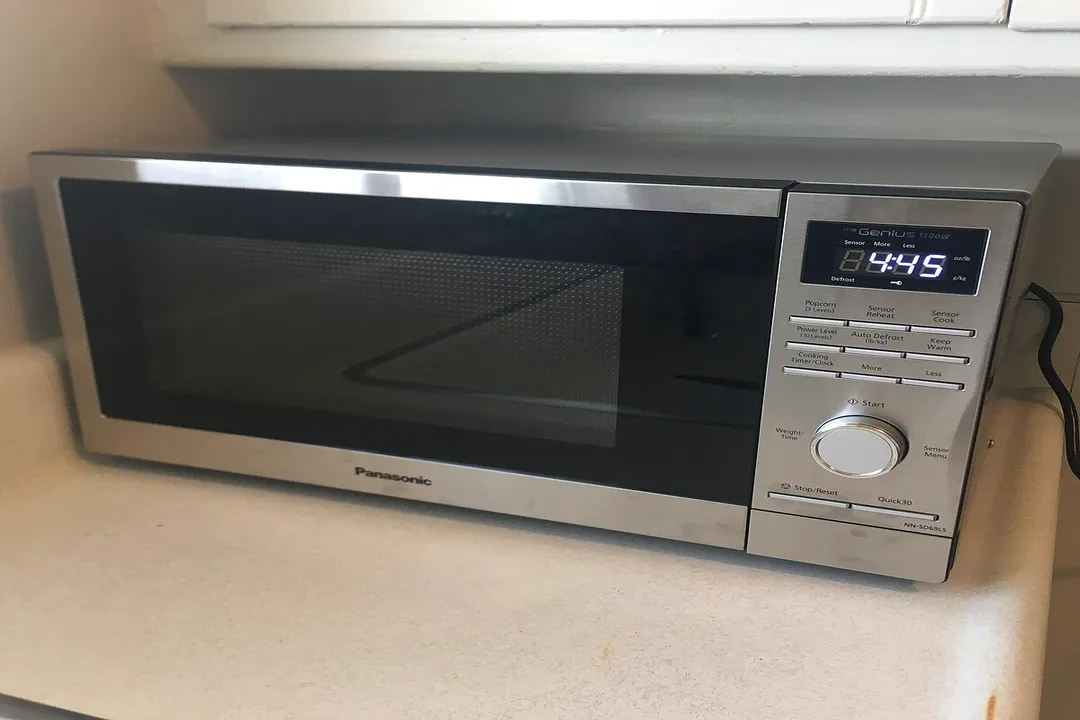
The first microwave oven produced was a far cry from the sleek, countertop appliance found in modern homes. [1][3] It was named the Radarange. [3] This initial machine, which began appearing in commercial settings like restaurants, soda fountains, and railway dining cars, was a behemoth. [1][3] It stood nearly five feet tall, weighed over 750 pounds, and was water-cooled, a necessity due to the heat generated by the powerful magnetron tube inside. [1][3] Furthermore, its initial cost was prohibitive, retailing for around $5,000, which translated to a massive sum in late 1940s dollars. [1][3]
Considering the original market, this high price point makes perfect sense. The machine was not intended for the average family; it was an industrial tool designed to rapidly heat large portions of food in high-volume environments where speed justified the massive initial investment. [3] To put this initial cost into perspective—if we adjust the initial price of $5,000 from 1947 for inflation to contemporary values, the barrier to entry was immense. This reality underscores a critical difference between the invention (Spencer's lab work) and the product (Raytheon's massive commercial unit), showing a distinct technological gap before the eventual miniaturization occurred. [1][3]
# Consumer Entry
For nearly two decades after the Radarange’s introduction in 1947, [1][3] the microwave remained largely confined to these specialized commercial and institutional kitchens. The technology was too bulky, too expensive, and too cumbersome for domestic integration. [3]
It wasn't until the 1960s that the focus shifted toward making the technology accessible to the home consumer. [3] By 1967, Raytheon introduced the first countertop microwave oven model designed specifically for home use. [3] This new version was significantly smaller and safer, finally bringing the principle discovered by Percy Spencer out of the restaurant and into the typical kitchen, albeit still at a premium price compared to conventional ovens. [3]
The adoption curve of the microwave oven illustrates a classic pattern in technological diffusion:
- Military/Industrial Origin: High-power, high-cost, large scale (Magnetron/Radarange). [1][3]
- Commercial Niche: High-volume, speed-dependent settings (Restaurants/Trains). [3]
- Domestic Adaptation: Miniaturization, safety improvements, and price reduction (Countertop models). [3]
The journey from a defensive radar component to a common kitchen appliance, facilitated by the accidental observation of a melting chocolate bar, firmly establishes that the foundational technology for the microwave oven was indeed a product of military-funded research. [1][5][9]
Related Questions
#Citations
Microwave oven - Wikipedia
First patent filed for the microwave | October 8, 1945 - History.com
History of the Microwave Oven: Invention & Timeline | Whirlpool
Percy Spencer - Lemelson-MIT Program
Who invented the first commercially available microwave oven in ...
What military contractor invented the first microwave oven? - Quora
Did you know that microwave oven technology was invented my a ...
how the military accidentally invented your microwave - YouTube
How a Raytheon Scientist Accidentally Invented the Microwave Oven