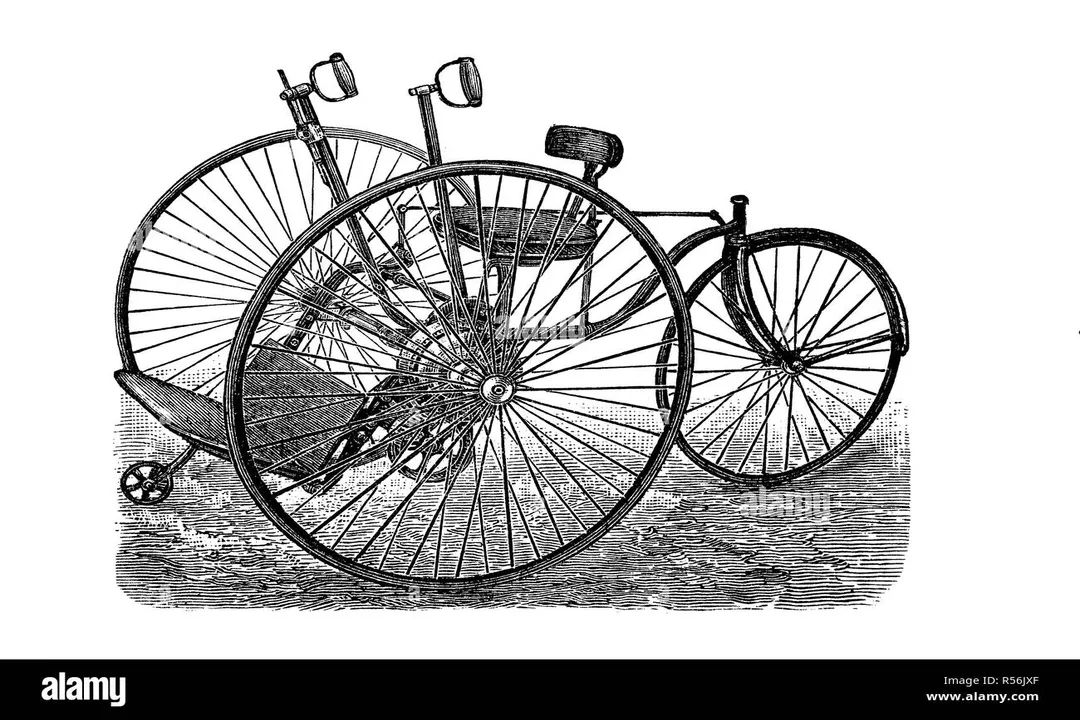
What societal shift in purpose did the safety bicycle represent compared to the high-wheeler?
A prioritization of utility and accessibility for everyday travel.
The evolution from the penny-farthing to the safety bicycle marked a profound societal shift regarding personal transport's function. The high-wheeler was often viewed as an object of athletic display, requiring specialized skill and daring prowess to master, catering to those who wanted to showcase bravery. Conversely, the safety bicycle was explicitly designed to be practical and functional. Its ease of balance, stopping, and mounting made it suitable for everyday commuting over substantial distances, transforming it from a novelty or sport machine into a true tool for general mobility. This emphasis on utility made it broadly accessible, opening up personal travel to demographics previously excluded by the difficulty of the high-wheeler.