Did John Logie Baird invent TV?

The moment John Logie Baird successfully transmitted moving silhouette images in 1925, and then recognizable human faces shortly after, was undeniably a watershed event in communications history. Yet, pinning down a definitive "yes" or "no" to the question of whether he invented television requires us to look closely at what he demonstrated versus what the world eventually adopted. Baird, a Scottish inventor, achieved something truly remarkable by developing a working television system decades before the medium became common household entertainment. His work established the foundational proof of concept that moved television from theoretical speculation into tangible reality.
# First Showing
The most commonly cited historical marker for Baird’s achievement is January 26, 1926. On this day, in his London laboratory, Baird gave a demonstration to members of the Royal Institution and a reporter from The Times. What they witnessed was the first public demonstration of a true television system capable of transmitting moving images, not just flickering shadows. This was not a polished broadcast; it was an early, experimental setup involving complex electromechanical machinery.
It is essential to recognize the context of this 1926 event. The images displayed were crude, consisting of a very low resolution, just 30 lines, which meant the picture was small and blocky—a far cry from the clarity we expect today. Nonetheless, it proved the principle of sequential image scanning and reconstruction in real-time. This initial success marked the genesis of the technology that would eventually shrink to fit in our pockets.
# Mechanical System
Baird’s initial breakthrough relied on mechanical television, often referred to as the Televisor. This system utilized a rapidly spinning disk, known as a Nipkow disk, which contained a spiral arrangement of small holes. As the disk spun, it scanned the scene in front of a photoelectric cell, breaking the image down into a series of light signals. These signals were then transmitted electrically to a receiver, where a corresponding spinning disk recreated the image point by point, creating the illusion of motion.
The resolution limitations of this electromechanical process were inherent to the physical constraints of the spinning disks. The 1926 demonstration showed images composed of 50 lines, an improvement on his earlier work. While this was groundbreaking for the time, achieving high-definition required advancements that mechanical means simply could not provide efficiently.
To better visualize the limitations of the early technology, consider this rough comparison between Baird's early mechanical efforts and the goal that would eventually take over:
| Feature | Baird's Initial Successful Demonstration (c. 1926) | Electronic Television Goal |
|---|---|---|
| Image Scanning | Mechanical (Nipkow Disk) | Electronic (Cathode Ray Tube) |
| Typical Resolution | 30 to 50 lines | Hundreds or thousands of lines |
| Image Persistence | Low, required fast spinning | Higher, inherent to CRT scanning |
| Practicality | Extremely bulky, laboratory-bound | Smaller, scalable, faster refresh rates |
Baird continued to refine his mechanical system, creating color television and stereo sound demonstrations within a few years of his initial success, illustrating his persistent dedication to this method.
# First Image
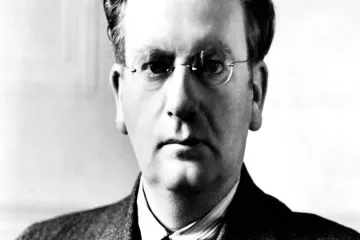
While the 1926 demonstration secured his place in history, the very first recognizable human image transmitted was captured slightly earlier, in October 1925. The subject of this historic transmission was William Taynton, a 16-year-old office boy working in Baird's laboratory premises in Soho. Taynton was reportedly asked to hold still for a considerable amount of time while the low-light-sensitive apparatus captured his features. The resulting image was crude—a recognizable silhouette of a face—but it was the definitive proof that moving pictures of people could be electronically sent through the air. It is a fascinating piece of trivia that the first person ever broadcast on television was an anonymous office worker simply present in the right place at the right time.
# Further Milestones
Baird's inventive drive did not cease after proving the initial concept. He rapidly expanded the capabilities of his television technology through a series of "firsts" throughout the late 1920s. These accomplishments show a persistent desire to push the boundaries of what electronic picture transmission could achieve:
- Transatlantic Transmission: In 1928, Baird successfully transmitted a television signal across the Atlantic Ocean, moving the technology from a local demonstration to an international possibility.
- Color Television: Also in 1928 or 1929, he demonstrated the world's first color television broadcast.
- Stereo Sound: The first stereo television broadcast also occurred around 1928.
These achievements underscore that Baird was not merely lucky with one invention; he was a prolific inventor deeply engaged in the practical development of the nascent medium.
# Electronic Rivalry
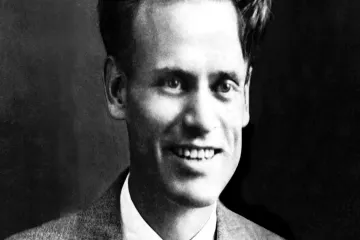
The critical turn in the television story—and the reason the simple question of "did he invent TV?" remains complex—is the shift from mechanical scanning to electronic scanning. While Baird perfected the mechanical approach, other inventors were simultaneously, and independently, developing purely electronic systems using cathode ray tubes (CRTs). Key figures in this development included Philo T. Farnsworth and Vladimir Zworykin.
Electronic television offered several insurmountable advantages over Baird’s spinning disks. It allowed for far greater picture detail, higher frame rates, and crucially, it was far more scalable for mass production and transmission. As the 1930s progressed, the technological superiority of the electronic system became undeniable.
In an interesting example of how technological adoption works, this transition mirrors the shift from early, clunky phonographs to the sleek vinyl records and eventually digital music files. Baird provided the initial, functional proof that sound could be captured and replayed, but the underlying mechanism—the spinning disk—was too physically constrained to handle the complexity needed for a high-fidelity experience. The electronic system, based on magnetic deflection within a vacuum tube, represented a fundamental re-engineering of the entire process, making the mechanical method obsolete almost as soon as it was proven viable.
By the late 1930s, the British Broadcasting Corporation (BBC) began regular high-definition electronic television transmissions, effectively sidelining Baird's mechanical system, although Baird himself continued to work on improved color mechanical systems.
# Legacy Debate
So, did John Logie Baird invent television? The most accurate answer is that he invented the first working television system. He was the first person to successfully demonstrate the transmission of moving images to an audience. His work laid the essential groundwork, proving the viability of the technology and forcing the world to recognize television as an impending reality. He was recognized in his time, receiving accolades and setting world firsts.
However, the television that defined the 20th century and became the standard broadcast medium was based on electronic principles, developed concurrently or shortly after Baird’s mechanical demonstration. In a historical sense, Baird invented the mechanical television, while others invented the electronic television that succeeded it.
His contribution remains vital. Without Baird’s pioneering demonstration in that small Soho laboratory, the timeline for television adoption might have been significantly delayed as proof of concept was established. He forced the world to pay attention, securing his place as a foundational figure, even if the underlying technology he championed was eventually superseded by a different, superior electronic method. He is celebrated as the man who brought moving pictures into the public eye for the first time.
#Videos
JOHN LOGIE BAIRD: The Forgotten Father of Television - YouTube
Related Questions
#Citations
John Logie Baird - Wikipedia
John Logie Baird demonstrates TV | January 26, 1926 - History.com
John Logie Baird's Televisor - Google Arts & Culture
TIL John Logie Baird built what was to become the world's ... - Reddit
JOHN LOGIE BAIRD: The Forgotten Father of Television - YouTube
Invention of Television by John Logie Baird - Facebook
Launching BBC television | National Science and Media Museum
'Mr Baird was so excited that words didn't come' - BBC
John Logie Baird | Overview, Biography & Influence - Study.com