Where is John Fitch buried?
The pursuit of the final resting place for an individual named John Fitch quickly reveals a fascinating historical curiosity: the name belonged to more than one notable, yet ultimately tragic, figure in early American history. When asking where John Fitch is buried, the answer depends entirely on whether one is seeking the final resting place of the revolutionary steamboat inventor or the Massachusetts frontier pioneer who shared the same name. In both instances, the closing chapters of their lives ended far from the acclaim their contributions warranted, with both men being interred initially in graves afforded little distinction by their contemporaries.
# Dual Legacies
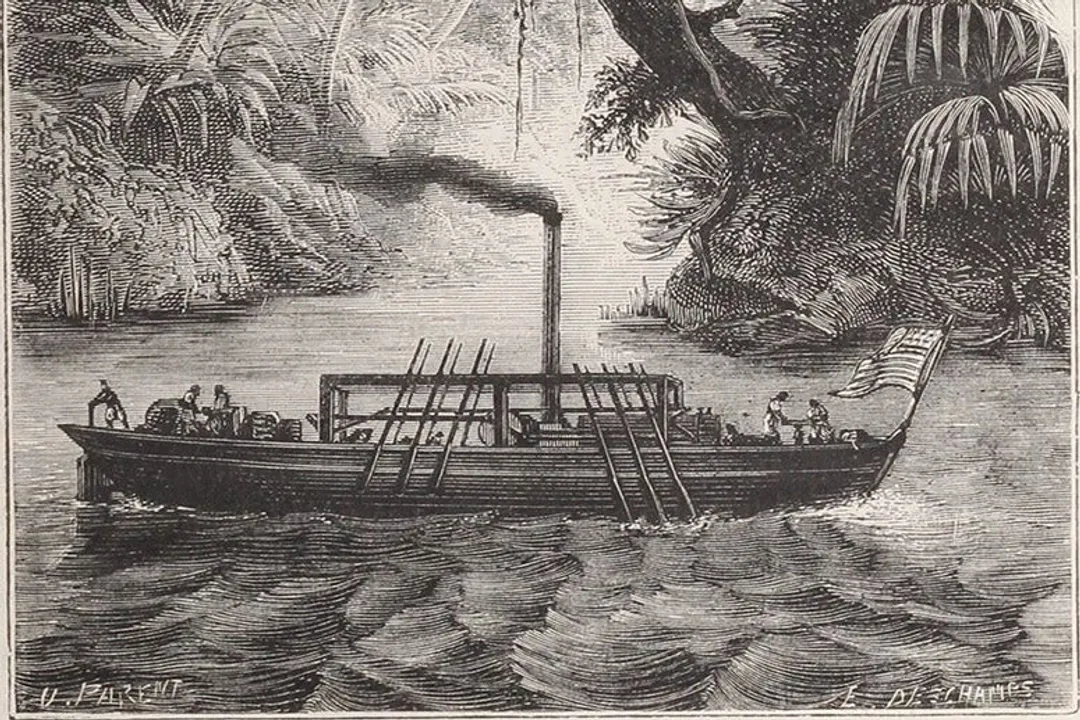
The most celebrated John Fitch, the temperamental clockmaker and engineer born in Connecticut in 1743, is renowned for operating the first steamboat service in the United States. This John Fitch pursued the harnessing of steam power, demonstrating his vessel on the Delaware River in 1787 and inaugurating a commercial passenger service between Philadelphia and Trenton in 1790. Despite his mechanical success, financial backing failed, and after fruitless ventures in France and England, he retreated to Kentucky to reclaim land he had surveyed years earlier. He arrived only to find squatters had occupied his 1,600 acres, leading to litigation that consumed his final years. He died in Bardstown, Kentucky, on July 2, 1798, at the age of 55.
A different John Fitch, a contemporary pioneer, established his life in Massachusetts, building a fortified house on the frontier of Lunenburg in 1739. This John Fitch was deeply connected to the founding of Fitchburg (named after him) and later Ashby, where he served as moderator and selectman. After facing hardships including capture by Native Americans during King George's War, he later lost his fortunes in land speculation and was sent back to Ashby as a ward of the Gates family in 1784. He died ten years later, on April 8, 1795, at the age of 87.
It is striking that despite the diverse, fundamental contributions of these two men—one charting water routes for the nation's commerce, the other helping to establish and defend the Massachusetts frontier—their lives concluded with a shared element of obscurity regarding their physical remembrance. Both the inventor and the pioneer were initially laid to rest in unmarked pauper’s graves. This parallel end highlights a sad pattern where innovative or foundational figures of the late 18th century could struggle mightily to secure financial stability even after achieving notable public or civic success.
# Inventor's Final Bed
For the steamboat inventor, John Fitch, the burial site is complicated by events following his death in Bardstown, Kentucky. His end came in 1798, reportedly from an overdose of opium pills, though whether this was intentional suicide remains debated by historians. He was interred in an unmarked pauper's grave in Bardstown. However, decades later, recognition of his importance began to shift the local narrative concerning his remains.
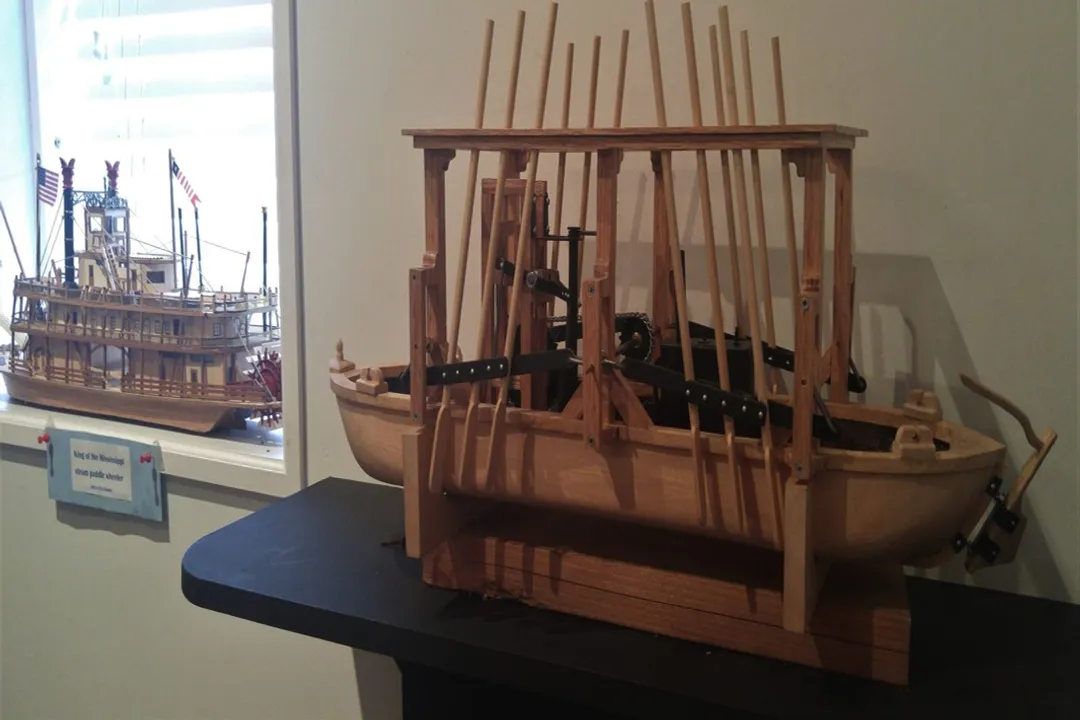
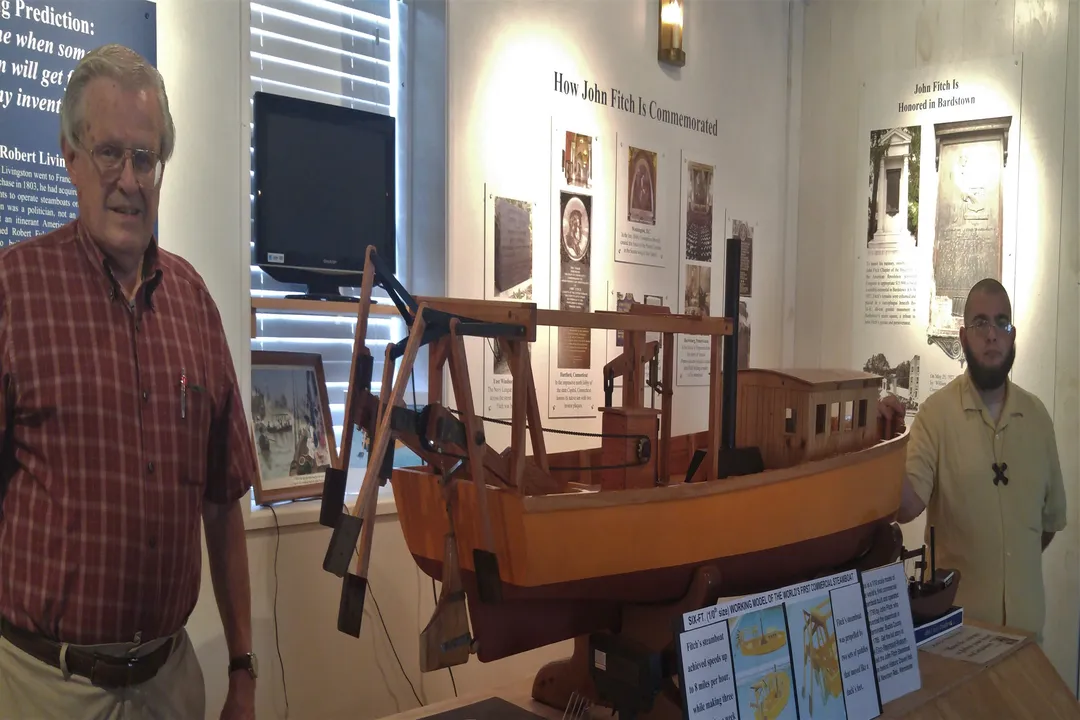
The Kentucky Historical Society marker, located at Old Town Cemetery in Bardstown, provides a crucial update to the initial pauper’s burial story. The marker states that the first burial place of John Fitch was there, but crucially notes that he was reinterred in 1927 in Court Square. This suggests that while he died destitute and was buried without ceremony, subsequent citizens or historical organizations ensured a more formal acknowledgment of his resting place by the early 20th century. In addition to this reinterment, a memorial to the inventor stands in Bardstown's Courthouse Square, complete with a replica of his first steamboat. While the Linda Hall Library notes that the present location of the inventor’s grave is unknown, the Kentucky marker’s assertion of a 1927 reinterment in Court Square provides the most specific detail for those seeking to connect with his memory in Nelson County.
| John Fitch (Inventor, d. 1798) Timeline | Location | Event/Status |
|---|---|---|
| 1782–1796 | Bardstown, Kentucky Area | Acquired and defended land claims |
| 1798 (July 2) | Bardstown, KY | Death and initial burial in an unmarked pauper's grave |
| Post-1908 | Bardstown, KY | DAR located the grave and placed a simple marker |
| 1927 | Bardstown, KY (Court Square) | Reported reinterment |
| Present Day | Bardstown, KY | Memorial with steamboat replica stands in Court Square |
The story of the inventor’s final years also involves his vision for land use in Kentucky, where he had intended to retire wealthy, only to find his investments swamped by squatters—a final disappointment that preceded his death. His body, buried in an unmarked grave, offers a stark contrast to the acclaim Robert Fulton would later receive for building upon Fitch's steam technology just nine years later.
# Pioneer's Last Rest
The other John Fitch, the man whose family survived capture by Native Americans and who was instrumental in the incorporation of towns in central Massachusetts, met his end far from Kentucky, in Ashby, Massachusetts, in 1795. As detailed by the Ashby Historical Society, this John Fitch was buried in an unmarked pauper’s grave in the northwest corner of the Old Burial Ground situated behind the First Parish Church.
Because he was buried as a pauper, his grave would have been unmarked, and records suggest it might even be mixed with the burial sites of others in similar circumstances. Unlike the situation in Kentucky, where a monument was erected in 1908 and a reinterment possibly occurred in 1927, the memory of this John Fitch in Ashby required more recent advocacy. The Ashby Historical Society has actively been raising funds to place a gravestone in the vicinity of where he was laid to rest, seeking to formally recognize his place in the region’s history as a defender, builder, and namesake of Fitchburg.
The existence of these two men, both dying in reduced circumstances despite their impact, invites reflection on how historical memory prioritizes immediate financial success over foundational innovation or community building. For the Kentucky inventor, a degree of physical commemoration, however delayed, was achieved in the public square of the town where he died. In contrast, the Ashby pioneer's recognition appears to be an ongoing, grassroots effort driven by a local historical society to restore a visible marker to a man whose land claims and civic efforts defined the geography of the area. To visit the site of the Massachusetts burial, one would be looking for the general area behind the First Parish Church in Ashby, where the exact spot of his interment remains uncertain without the planned marker.
# Beyond the Grave Markers
While the precise coordinates of the inventor's original 1798 resting spot in Bardstown may be lost to time, or at best marked by a 1927 marker in Court Square, the legacy of both men is preserved through other means. The inventor's genius is celebrated at the John Fitch Steamboat Museum at Craven Hall in Warminster, Pennsylvania, the site where his vision first took mechanical shape. His life story, documented in his autobiography, confirms his feeling that a "more powerful man will get fame and riches from my invention".
The pioneer, on the other hand, leaves his mark on the landscape of Massachusetts, having been a resident of Lunenburg, Fitchburg, and Ashby—sometimes while living in the same house—due to shifting town boundaries. His greatest physical memorial, in terms of location, is arguably the town of Fitchburg itself, named in his honor in 1764.
For anyone researching these men, it becomes clear that understanding their burial locations is an act of historical recovery rather than simple location-finding. For the steamboat inventor, a trip to Bardstown allows one to stand near the Court Square where his remains are said to now rest, acknowledging the man who predicted steam power for both ocean vessels and land vehicles. For the pioneer, a visit to Ashby, Massachusetts, requires seeking out the Old Burial Ground near the First Parish Church, where one stands in the general vicinity of his pauper's grave, awaiting the placement of a memorial stone that will finally settle the question of his precise final address.
Related Questions
#Citations
Steamboat Inventor - Kentucky Historical Society
John Fitch (inventor) - Wikipedia
The Story of John Fitch - Craven Hall
John W. Fitch - Corpus Christi - Old Bayview Cemetery - Libraries
'Crazy Fitch' deserved better - Bucks County Adventures
John Fitch - Ashby Historical Society
John Fitch - Linda Hall Library