Did Benjamin Banneker invent anything?

The contributions of Benjamin Banneker span mathematics, astronomy, and civic service, creating a legacy that often overshadows the simple question of whether he "invented" a single, famous device. His reputation rests not on one patented item, but on a breadth of demonstrable intellectual prowess achieved during a time when opportunity was severely limited for Black Americans. [1][5] He was a self-taught polymath whose creations, whether mechanical or calculated, showcased an extraordinary level of precision and understanding.
# Wooden Timepiece
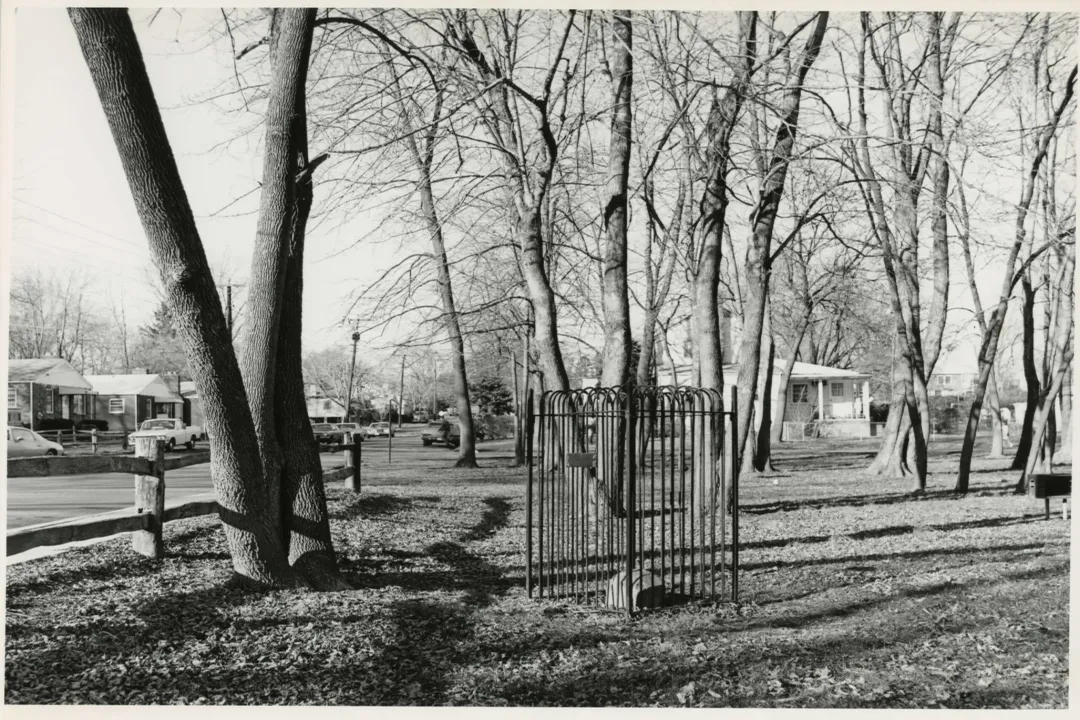
The most frequently cited mechanical achievement associated with Banneker is the construction of a completely wooden clock around the year 1753. [7][3] Banneker, born in 1731, reportedly built this device without any formal mechanical training or existing blueprints, using only his profound mathematical ability to design and execute the intricate gearing. [2] This feat is often highlighted as an example of his mechanical genius. [3]
While the popular narrative often frames this as a pure invention, historical context suggests a nuance: Banneker certainly conceived, designed, and built the object with astonishing accuracy, but he may not have invented the underlying principle of clockwork itself. [1] What remains undisputed is the craftsmanship. The clock kept accurate time for decades, long after Banneker’s death in 1806. [1][7] This longevity points toward a masterful execution of the design, perhaps even surpassing commercially available models of the era. Building such a complex mechanism entirely from wood, where precision in every cut and fitting is necessary to prevent friction and failure, demonstrates an inherent, practical understanding of mechanics that few possess—a kind of intuitive engineering that often gets overlooked when seeking a formal patent application or a single originating design.
This achievement appears in his list of top accomplishments, underscoring his ability to translate abstract mathematical principles into tangible, functional objects. [3] The successful operation of the timepiece for so long stands as powerful evidence of his engineering capability. [1]
# Celestial Records

Banneker’s most significant public contribution, the one that brought him widespread recognition during his lifetime, involved the publication of astronomical calculations. [6] Beginning in the early 1790s, Banneker compiled and published a series of almanacs that were highly sought after in the burgeoning United States. [1][2] These almanacs, published annually from 1792 through 1797, were not mere novelties; they were essential navigational and scheduling tools for farmers, sailors, and merchants. [3]
The complexity involved in creating these almanacs cannot be overstated. They required precise, long-term astronomical calculations, including predicting the movements of the sun and moon, tidal charts, and local weather patterns for the coming year. [2][6] Banneker had to calculate these ephemerides himself, relying on his deep knowledge of mathematics and celestial mechanics. [1] He used his skills to calculate the positions of the planets, the moon, and the sun for specific dates and locations, which formed the backbone of the almanac content. [6]
The publication of these almanacs positioned Banneker as a serious scientific mind in a nation looking to establish its own intellectual credibility. [1] These were not theoretical exercises confined to academia; they were practical documents used daily across the Eastern Seaboard. His ability to compile these records year after year solidifies his place as an accomplished astronomer, even if the term "invention" might not precisely fit the work of calculation and compilation. [6][9]
# District Survey
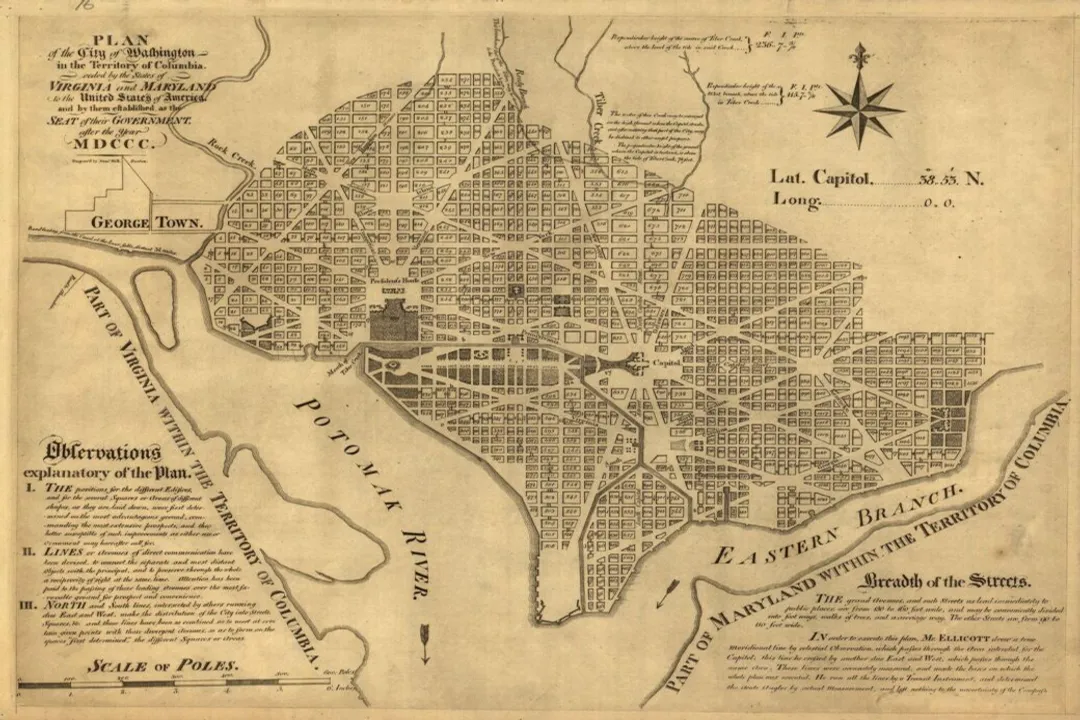
Beyond his calculations and mechanical skills, Benjamin Banneker played a direct, hands-on role in the physical creation of the nation’s capital city. [5] In 1791, President George Washington appointed Banneker as one of the three principal surveyors assisting Andrew Ellicott in mapping and laying out the boundaries of the new Federal Territory along the Potomac River. [4][5] Banneker was responsible for the initial astronomical observations needed to correctly position the territory's corners. [5]
His duties involved making precise measurements and confirming the location of the original boundary stones. [8] Working with Ellicott, Banneker helped establish the massive 10-mile square that would become Washington, D.C.. [4] There is a record indicating that Banneker made critical astronomical observations that helped ensure the survey’s accuracy. [5]
When later surveys sometimes showed discrepancies, it was Banneker’s original measurements and notations that were consulted to verify the correctness of the initial layout. [4][8] This civic contribution highlights his expertise in geodesy and observational astronomy, skills that were essential for national development at the time, placing him in a position of significant governmental trust. [5]
# Jefferson Letters
Banneker’s achievements naturally led to intellectual exchange, most famously with Thomas Jefferson. [3] Banneker corresponded with Jefferson, sending him a copy of his 1793 almanac and attaching a letter. [5] In this correspondence, Banneker politely but firmly challenged Jefferson’s publicly held beliefs about the supposed intellectual inferiority of Black people, using his own documented scientific achievements as irrefutable evidence to the contrary. [5][9]
Jefferson’s response acknowledged Banneker’s talents, yet it was famously guarded, stating that he believed the accomplishments of Black people were exceptions to the general rule. [5] Banneker’s letter stands as a powerful assertion of intellect and human rights, using the authority derived from his scientific work to confront prevailing prejudices. [9] This exchange is perhaps one of Banneker’s most potent contributions: using his demonstrated expertise—the very output that might be mistaken for inventions—as a political and moral weapon against systemic racism. [5]
When evaluating Banneker's output, it’s productive to view his "inventions" less as singular patented items and more as high-level proofs of concept achieved despite systemic educational barriers. While others might have spent years seeking patents for minor mechanical improvements on known devices, Banneker demonstrated mastery over complex theoretical fields like celestial ephemerides and practical geodesy using entirely self-taught methods. His clock, his almanacs, and his survey work all confirmed competence in fields dominated by European thinkers at the time, making his very existence an argument for equality. [1][5]
# Lasting Impact
Benjamin Banneker’s most enduring creation might not be measurable in wood or paper, but in the precedent he set. [3] He was not a recognized inventor in the modern sense, meaning he did not file official patent applications that became the standard in later U.S. history. [1] However, his life documented a sequence of innovations in timekeeping, mathematical prediction, and land demarcation. [6]
Consider the context of his life: growing up in rural Maryland, receiving limited formal schooling, yet rising to correspond with leading figures of the Enlightenment. [1][4] His primary tool for achievement was his mind, sharpened by relentless self-study, reading, and observation. [2] He effectively invented his own education and then proceeded to contribute meaningfully to the scientific and civic life of the new republic. [7] This self-creation is a form of invention that bypasses formal institutional validation, relying instead on undeniable, practical results. [3] His work on the D.C. survey, for instance, was crucial for the physical establishment of the seat of government, a contribution whose impact is still visible today in the city’s layout. [4][8]
He was recognized in his time, being appointed to the commission that surveyed the District of Columbia, [5] and his name became synonymous with astronomical accuracy through his almanacs. [6] The complexity of his accomplishments—moving from a precise wooden clock to predicting planetary motion—shows a consistent mastery over measurement and prediction. [1][7] Banneker’s true legacy is showing that genius does not require established pathways; it requires observation, dedication, and an unshakeable belief in one's own capacity to understand the natural world. [9]
Related Questions
#Citations
Benjamin Banneker - Wikipedia
Benjamin Banneker: Invented America's First Clock
Benjamin Banneker's Top 10 Achievements: A Legacy of Innovation ...
Today in History - November 9 | Library of Congress
Benjamin Banneker - White House Historical Association
BENJAMIN BANNEKER 1731-1806 - Mathematicians of the African ...
Benjamin Banneker - Lemelson-MIT Program
The Extraordinary Benjamin Banneker - Pieces of History
Who was Benjamin Banneker?