Did a woman invent a circular saw?
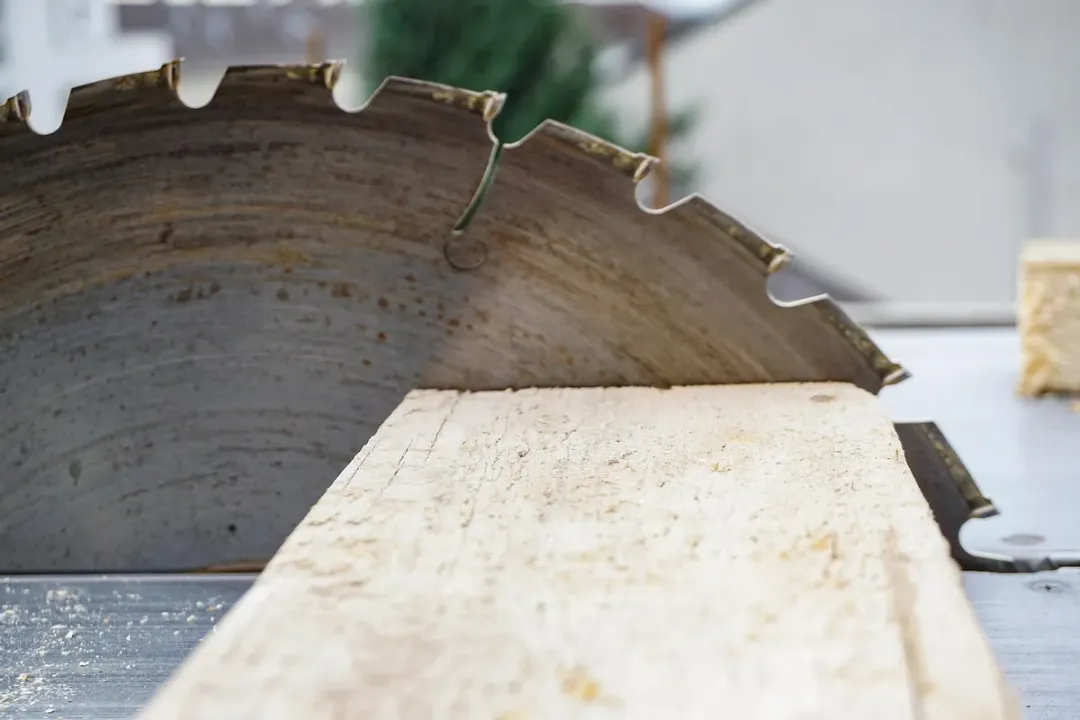
The story of the circular saw is often intertwined with the name Tabitha Babbitt, a fascinating figure whose contribution to woodworking technology remains a point of historical discussion. While the question of who first conceived of a rotating blade for cutting wood is complex, Babbitt is frequently credited within certain historical circles as the innovator who demonstrated a practical, working circular saw design in the early 19th century. [1][2][6] Her connection to this powerful tool is unique, rooted not in the pursuit of wealth or fame, but in the deeply held beliefs of her religious community. [2]
# Shaker Life
Tabitha Babbitt was a devout member of the Shaker community, officially known as the United Society of Believers in Christ's Second Appearing. [6] The Shakers, renowned for their craftsmanship, communal living, and dedication to simplicity and equality, also held strong convictions regarding property and intellectual rights. [2] Babbitt lived in the Harvard, Massachusetts, settlement during the period when her alleged breakthrough occurred. [6] For the Shakers, innovation was encouraged for the betterment of the community and humankind, but patenting an invention for personal financial gain went against their principles of common ownership and humility. [2][6] This doctrinal stance is perhaps the most significant footnote in her story.
# Tool Development

To appreciate Babbitt’s role, one must understand the state of sawing technology at the time. Before the widespread adoption of circular blades, wood was primarily processed using large, labor-intensive pit saws or the earlier designs of reciprocating saws. [1] While the concept of using a circular disc for cutting wood had appeared in European patents as early as the late 18th century—some sources credit Sir Samuel Bentham or even a French patent by Bramah [1]—these earlier iterations were often theoretical, rudimentary, or applied strictly to large-scale mill operations rather than practical, portable woodworking. [7] The challenge was creating a blade that could rotate efficiently without warping or shattering, something that required metallurgical advancements alongside mechanical design. [1] Babbitt's reported contribution was providing a working demonstration that effectively solved some of these practical application issues for smaller-scale work. [2][6]

# The Disc Demonstrator

The key moment in the Babbitt narrative involves an observation she made while watching men struggle with a two-person pit saw. [2][6] In 1813, she allegedly conceived of a round, revolving disc with teeth around the edge, which would cut wood much faster than the traditional back-and-forth sawing method. [2][6] Accounts suggest she created a model, possibly using a circular piece of tin, and demonstrated its superior cutting capability to fellow Shakers. [2][6] This demonstration supposedly took place in the Harvard community around the time of the War of 1812. [6] Her design was seen as highly efficient, proving the concept in a tangible way. [1] This event is often cited as the first practical application or demonstration of a true circular saw mechanism, even if the industrial scale-up happened later. [7]
It is interesting to consider the tooling available in 1813. If Babbitt was using metal stock and fabricating teeth onto a disc, that represents a significant feat of metalworking skill for the era, especially within a community that often prioritized agriculture and manual dexterity over heavy industry. [2] Her success points toward a high level of applied engineering knowledge, even if the invention was intended solely for communal use.
# Patent Avoidance

The refusal of the Shaker community to secure a patent for Babbitt's design sealed its fate in terms of individual recognition and commercial profit. [2][6] The Shaker philosophy dictated that any useful invention belonged to everyone, preventing members from claiming exclusive rights to a beneficial technology. [2] Therefore, while Babbitt possessed the knowledge of a potentially revolutionary tool, she could not legally protect it or profit from it. [6] This stands in stark contrast to nearly every other significant invention of the 19th century, which became inextricably linked to the name of the patent holder. The industrial saw that eventually dominated sawmills in the mid-1800s often bypassed any direct credit to Babbitt due to this lack of formal registration. [1][7]
# Industrial Acceptance
Even if Babbitt demonstrated the concept first, the translation of that concept into mass-produced, dependable industrial machinery took time. [1] The story often picks up later with others taking credit or developing superior versions. For instance, some histories point to the development of large, commercially viable circular saws in the 1820s and 1830s, with various mechanics adapting the basic principle. [1] The true industrial adoption is often linked to figures like Didymus Kinne in the 1840s, who helped popularize and improve the manufacturing process for these powerful mill saws. [1]
When comparing the Shaker demonstration to later industrial versions, one critical difference likely lay in scale and metallurgy. Babbitt’s model was perhaps a proof of concept for a smaller tool, whereas the large-scale saws needed specific hardening processes and precise tooth configurations to handle the demands of commercial lumber operations without quickly dulling or breaking apart at high rotational speeds. [1] The early concept might have been there, but the refinement necessary for heavy industry came from others who were seeking commercial success.
Here is a comparison of the key aspects surrounding the circular saw's early history:
| Figure/Concept | Approx. Timeframe | Key Attribute | Commercialization Status |
|---|---|---|---|
| Early European Concepts | Late 1700s | Theoretical/Mill Applications [1] | Limited/Unproven [7] |
| Tabitha Babbitt | c. 1813 | Practical Working Demonstration [2][6] | No Patent/Communal Use |
| Industrial Refinement | Post-1820s | Manufacturing & Scalability [1] | High Commercial Adoption |
The enduring argument hinges on semantics: Did Babbitt invent the saw (the idea), or did she perfect the first practical, demonstrated working model of the type that eventually transformed woodworking? Most accounts conclude that while others conceived of the rotational cutting mechanism, Babbitt is strongly associated with the first concrete, working iteration that proved the principle viable outside of abstract theory. [2][7]
# Unclaimed Influence
Babbitt’s legacy is one of powerful, quiet influence—a common theme among overlooked inventors, particularly women and members of marginalized groups in the 19th century. [4] Her contribution serves as a tangible example of how valuable knowledge can exist outside of formal, patent-driven economic systems. [2] While she did not personally benefit financially, her concept ultimately provided a massive efficiency gain to the entire industry, reducing manual labor requirements significantly. [1]
Considering the enormous time savings she might have created—a typical pit saw required two men working strenuously for hours to cut what a good circular saw could manage in a fraction of the time—her invention represents an almost incalculable gift to the productivity of the era. [1] Had she lived outside the Shaker community and patented the device, the financial return would have been staggering, placing her among the wealthiest innovators of the century. Her choice, driven by faith, relegated her contribution to a footnote, often requiring diligent historical recovery to bring her story back to light. [6] The fact that we can still trace the lineage of the modern power tool back to a demonstration in a Shaker meetinghouse speaks to the pure utility of her insight, regardless of the documentation or lack thereof. [4]
#Videos
Tabitha Babbot: The Woman Behind the Circular Saw
Related Questions
#Citations
Tabitha Babbitt
Tabitha Babbitt: Heroine of the Circular Saw
The History of the Circular Saw | York Saw & Knife Co, Inc.
Four Innovative Construction Tools Invented by Women
Hey did you know the circular saw was invented by a ...
Sarah "Tabitha" Babbitt
Story about Tabitha Babbitt inventing 'first practical' circular ...
Tabitha Babbot: The Woman Behind the Circular Saw