Who made the robot first time?
The search for the originator of the robot is less about finding a single inventor and more about charting an evolution across three distinct categories: the concept, the word, and the first functioning automated machine. The narrative begins not in a laboratory, but on the stage, where the concept of artificial workers entered the public consciousness with tremendous force.
# Word Invention
The actual designation we use today, robot, entered the lexicon in the early 1920s, thanks to a Czech playwright named Karel Čapek. His science fiction play, R.U.R. (Rossum's Universal Robots), which premiered around 1921, introduced artificial beings manufactured to serve humanity. The word itself derived from the Czech term robota, meaning forced labor, drudgery, or servitude. Interestingly, Karel Čapek credited his brother, Josef Čapek, a painter and writer, with actually suggesting the term to him when Karel was struggling to name his artificial workers. While Karel presented the idea to the world, the etymological credit for the specific word often rests with Josef. This linguistic leap was remarkably effective; the word robot quickly became an international term for artificial laborers.
It is important to note the time difference between this literary invention and the realization of complex machinery. When the word was coined in 1920, the technology to create a genuinely autonomous, programmable machine was still decades away. The initial concept was theatrical, a commentary on industrialization and the dehumanizing nature of repetitive work, rather than an engineering blueprint.
# Mechanical Ancestors
Long before the word robot existed, the dream of artificial servants and self-operating machines propelled inventors for centuries. These early devices, often termed automata, demonstrated complex, pre-programmed actions, setting the stage for modern robotics. Some of the earliest recorded mechanical figures date back to antiquity, though documentation is sparse. Leonardo da Vinci is credited with designing a mechanical knight around the year 1495, capable of sitting up, waving its arms, and moving its jaw. While these were ingenious clockwork mechanisms, they lacked the flexibility, feedback loops, or programmability we associate with contemporary robots. They were marvelous demonstrations of mechanics, not systems capable of adapting to changing environments or performing diverse tasks.

# Electric Pioneers
The transition from purely mechanical devices to electrical or electromechanical ones marks a significant step toward what we recognize as a robot today. One strong contender for the title of the "first real robot," based on a more modern interpretation of autonomy and humanoid form, is Elektro. Built by the Westinghouse Electric Corporation, Elektro was unveiled at the 1939 New York World's Fair. This sophisticated machine stood about seven feet tall, weighed nearly 300 pounds, and was capable of walking ten steps, sitting down, speaking about 78 words thanks to a record player mechanism, and even smoking cigarettes. Elektro was essentially a mobile, interactive display, operating on vacuum tubes and electrical relays. While impressive for its era, it was not truly programmable in the modern sense; its actions were dictated by pre-set sequences.
Another significant early electromechanical invention was Televox, created around 1927. Televox was a device that allowed a user to control a speaker system remotely using sound frequencies—essentially a voice-controlled switchboard. It demonstrated early remote control capabilities, but it existed more as a specialized telecommunication device than a general-purpose automaton.
The ambiguity in defining the "first robot" stems directly from this period: Do we credit the first word (Čapek), the first complex automaton (Da Vinci), the first humanoid electronic machine (Elektro), or the first programmable device?
For clarity, it helps to map these achievements chronologically based on their primary contribution:
| Landmark Event | Approximate Year | Key Figure/Creator | Significance |
|---|---|---|---|
| Word Coined (Robot) | 1920/1921 | Josef and Karel Čapek | Introduced the term for artificial workers. |
| First Humanoid Electronic | 1939 | Westinghouse (Elektro) | Demonstrated complex electromechanical movement and rudimentary voice interaction. |
| First Programmable Machine | 1954 | George Devol | Patented the concept for automated material transfer. |
| First Industrial Robot | 1961 | Devol & Engelberger (Unimate) | The first robot deployed for manufacturing tasks. |
This comparison highlights a curious historical divergence. The public imagined robots based on the literary concept of laborers (Čapek), but engineers had to first solve the puzzle of electrical control (Westinghouse) before they could even begin work on the software architecture that would truly define a modern robot (Devol).
# Factory Automation
The true advent of the industrial robot—the machine designed to replace or assist human labor in a defined, repeatable sequence—is attributed to George Devol and Joseph Engelberger. Devol developed the concept of the first digitally operated, programmable machine intended for industrial use, receiving a patent for the Programmed Article Transfer device in 1954. This invention was the theoretical and patent foundation for automated manufacturing.
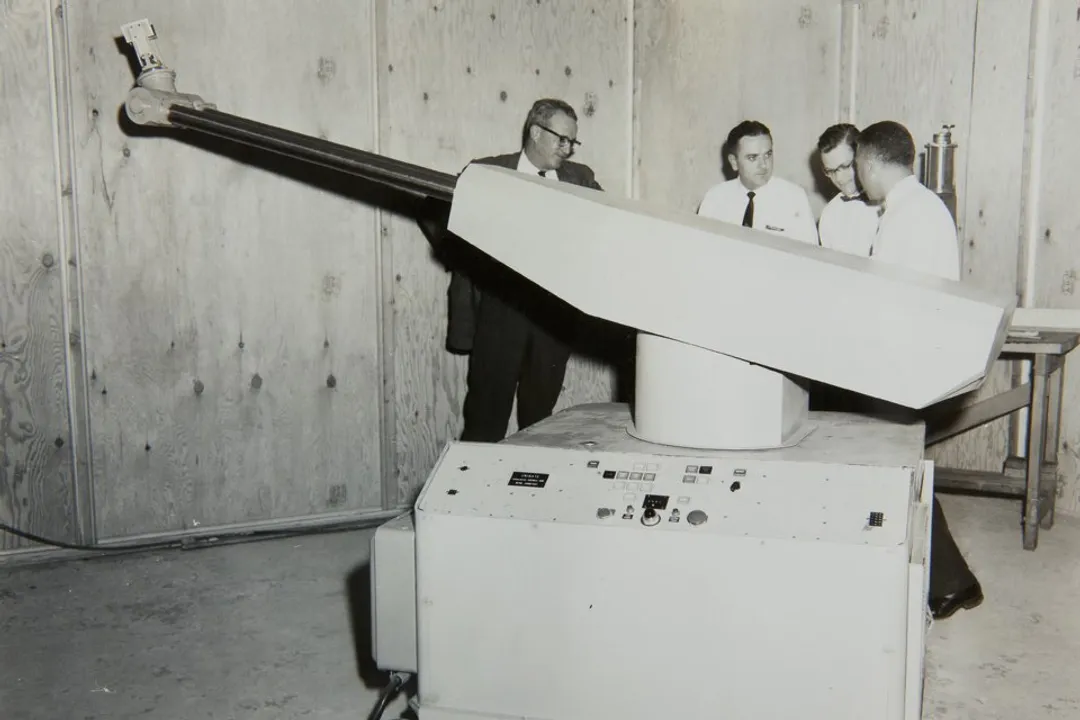
Engelberger, often celebrated as the "father of robotics," partnered with Devol to bring this concept to life. Together, they founded the company Unimation. The fruition of their work arrived in 1961 when the first industrial robot, called the Unimate, was installed on an assembly line at a General Motors die-casting plant in Ewing, New Jersey. The Unimate was a large, hydraulically operated arm designed to handle hot pieces of die-cast metal—a task that was dangerous and difficult for human workers.
The success of the Unimate marked the beginning of the widespread application of robotics in manufacturing, officially ushering in the modern age of robotics. While Devol provided the foundational patent and Engelberger drove the commercial application, the Unimate stands as the first machine to fully embody the functional definition of an industrial robot: a reprogrammable, multi-functional manipulator designed to move material, parts, tools, or specialized devices.

# Concept Shift
The definition of what constitutes a "robot" continues to shift, which makes pinpointing a single "first" inherently challenging. By the late 1960s and 1970s, the field began to segment, moving beyond simple manipulation to systems incorporating more complex sensory input and programming. The development timeline is often broken into generations. The first generation, characterized by the early Unimates, relied on simple positional control. Subsequent generations introduced tactile sensing, vision systems, and eventually, greater autonomy and adaptability.
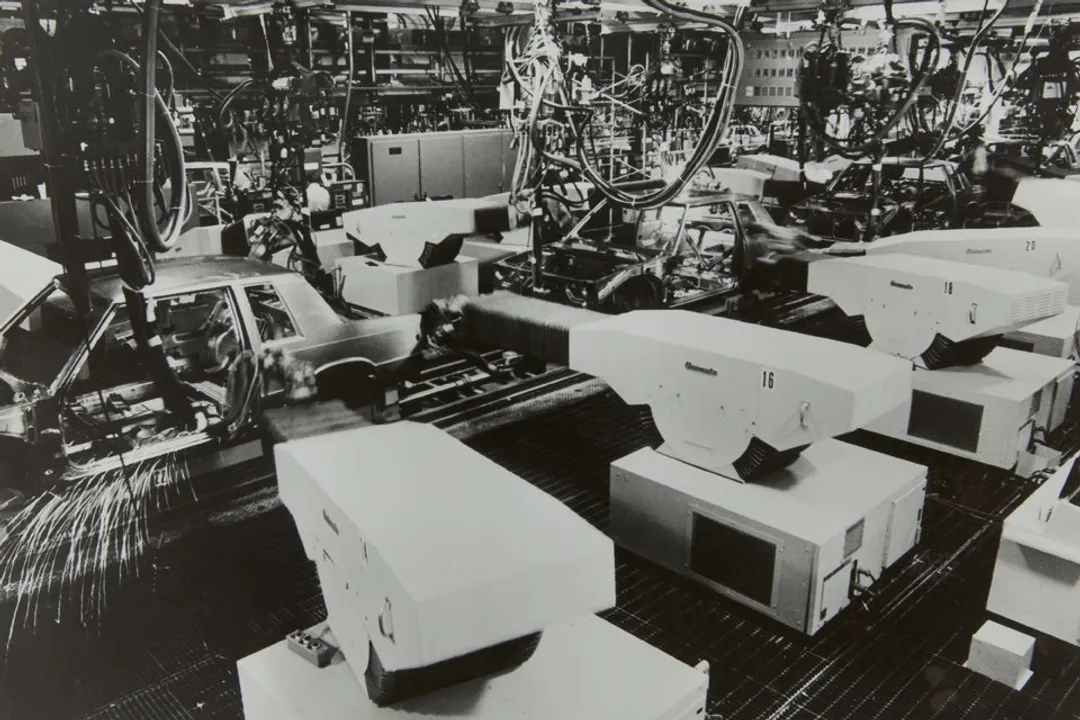
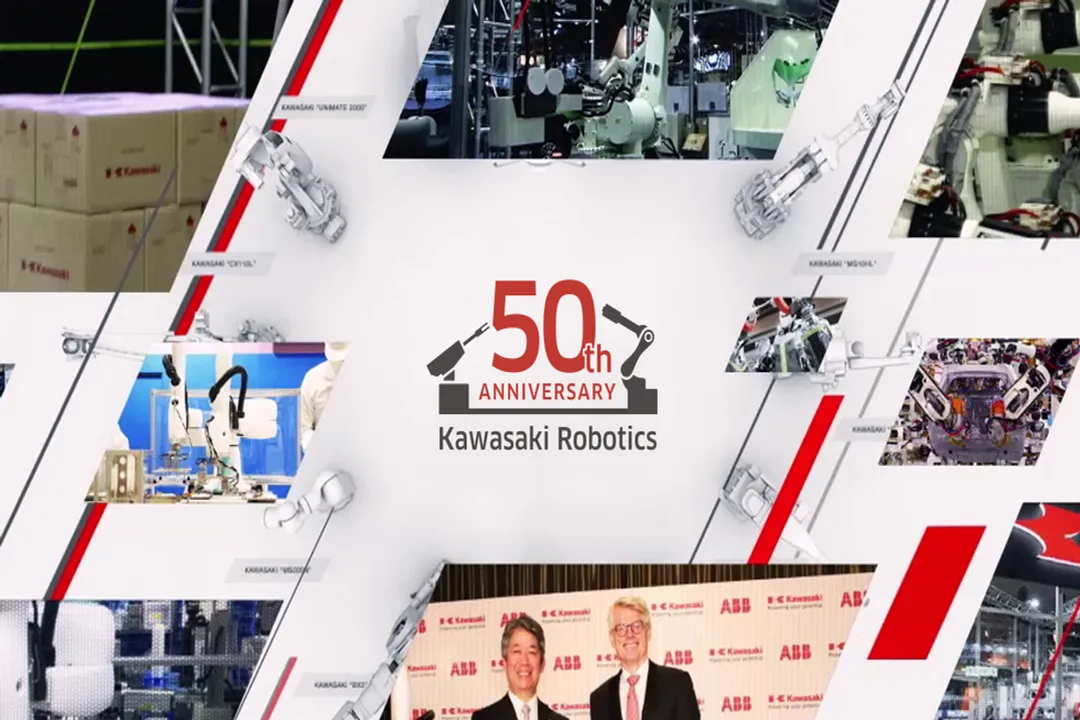
For example, in Japan, major industrial players adopted the technology rapidly. Kawasaki Heavy Industries began manufacturing Unimate-type robots under license in 1969, marking a significant milestone in global robotics adoption. These early models, while revolutionary for their time, were far removed from the mechanical performers of the 1930s or the conceptual creations of the 1920s.
To summarize the creators of the idea versus the creators of the machine: Karel Čapek and his brother gave the world the name that captured the imagination, establishing the cultural archetype of the artificial worker. However, it was George Devol who created the technical blueprint, and Joseph Engelberger who manufactured and sold the machine—the Unimate—that first fulfilled that blueprint in a practical industrial setting in 1961. Thus, while the word originated with the Čapek brothers, the first industrially functional robot was the result of the partnership between Devol and Engelberger.
#Videos
Invention of Robots - History of Robots - Learning Junction - YouTube
The History of the Robot - Part I - YouTube
Related Questions
#Citations
History of robots - Wikipedia
History of Robots - Adelaide Robotics and Computer Science ...
Invention of Robots - History of Robots - Learning Junction - YouTube
History of Robotics: Robotic Generations, Coding, and More
The Man Who Coined the Word “Robot” Defends Himself
1954- Birth of an Industrial Robot in the US | History
What was the first real robot in history? - Endesa