Who is the father of power station?
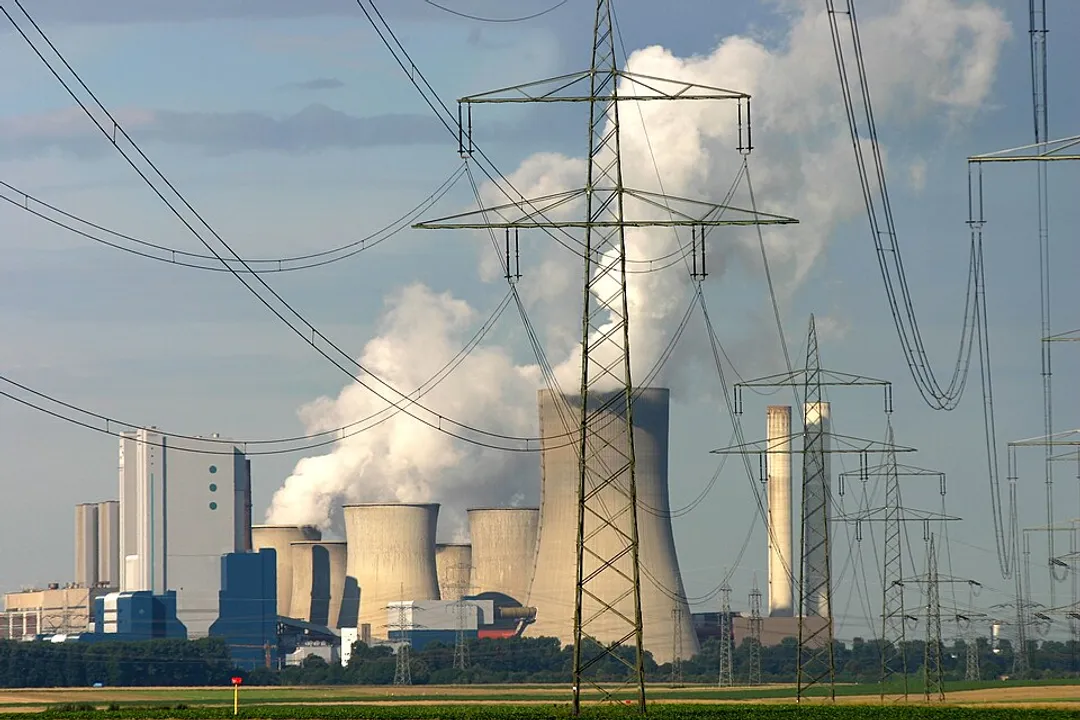
The quest to name a singular "father of the power station" is a study in historical credit division, as the modern electrical grid was not the product of one eureka moment but a series of crucial, often competing, technological leaps spanning decades. Pinpointing one individual ignores the foundational work in generation, distribution, and commercial application that defined the industry's birth in the late 19th century. [1]
# Generator Genesis
The true starting point for a commercially viable power station must lie with the invention of a generator capable of sustained, large-scale output. In this mechanical foundation, the Belgian inventor Zénobe Gramme plays an undeniable role. Gramme invented a generator powerful enough to produce electrical power for industrial use on a commercial scale around 1871. [1] This device provided the essential component—the machine to convert mechanical energy into electrical current—that all subsequent power stations would rely upon. [1]
However, the concept of harnessing mechanical power for electricity predates the commercial grid. For instance, well before centralized stations became the norm, William, Lord Armstrong designed and constructed a dedicated hydroelectric power station at Cragside, England, in 1878. [1] This early installation was ambitious; it used water from estate lakes to power Siemens dynamos, supplying lights, heating, an elevator, and farm buildings. [1] While this was a private, localized application, it demonstrated the potential of using water power in a dedicated generating facility. [1]
# Early Commercialization
The shift from laboratory experiments and private estates to public utility service marks the true beginning of the "power station" as we understand it—a central point feeding a community grid. This transition is most closely associated with Thomas Edison and his associates. [1]
In January 1882, the world saw its first public, coal-fired power station open in London, organized by Edison and managed by Edward Johnson. [1] This station, the Edison Electric Light Station, used a Babcock & Wilcox boiler to run a steam engine connected to a massive, 27-tonne generator, providing electricity to local premises accessible via existing utility culverts. [1] This demonstrated the viability of central generation for lighting service, circumventing the monopoly held by the gas companies at the time. [1]
Barely eight months later, in September 1882, Edison established the Pearl Street Station in lower Manhattan, New York. [1] This station, which ran until a fire destroyed it in 1890, was the first in the United States built specifically to power an electric lighting service. The Pearl Street Station ran on direct current (DC), using reciprocating steam engines to drive its generators. [1]
It is perhaps here, with the launch of Pearl Street, that Thomas Edison earns the title of "father" of the modern utility power station, as he successfully packaged generation, distribution (via DC feeders), and consumption into a commercial reality. [1]
# Hydroelectric Precedent
A compelling counterpoint to Edison’s steam-powered, DC-centric approach emerged almost simultaneously in Appleton, Wisconsin. Just weeks after Pearl Street opened, the Vulcan Street Plant began operating using the power of the Fox River. This was the first hydroelectric power plant to start operation in the US.
The force of the river turned a water wheel, which was mechanically linked via belts and gears to an Edison "K" type dynamo. The impetus for this pioneering renewable station was local businessman H.J. Rogers, who pitched the idea to power his paper mills and home, leading to the founding of the Appleton Edison Light Company.
This early hydro station immediately highlighted the challenges inherent in nascent electrical technology. The voltage output fluctuated wildly depending on the river's flow, burning out lamps when too high, and the lack of adequate metering meant customers paid a flat monthly fee regardless of consumption. This situation—where technology dictated commercial practice rather than the other way around—is a rare snapshot of early utility economics. Today, customers are accustomed to granular, real-time pricing derived from complex load forecasting, but in 1882, the engineering limitation simply forced a universal subscription model.

# The Great Current War
The early success of centralized generation, whether steam or hydro, was immediately hampered by its dependence on DC power. Edison's DC system suffered from significant voltage drop over distance, severely limiting the service area of any central station to roughly a mile radius. [1] This restriction meant that massive population centers required dozens of small, expensive, and labor-intensive generating plants to cover the entire area. [1]
The solution arrived with Alternating Current (AC), championed by Nikola Tesla and George Westinghouse. [1][3] AC systems utilized transformers to easily step voltages up for efficient, long-distance transmission and then step them back down for safe use in homes and businesses—a system remarkably similar to modern electrical grids. [1]
Edison resisted AC fiercely, fearing the loss of royalties from his DC patents, even resorting to public demonstrations where he electrocuted animals with AC to brand it as dangerous. [3] However, the efficiency and scalability of AC were too significant to ignore.
Key figures like George Westinghouse and Samuel Insull became recognized pioneers of the central station generation model by embracing AC transmission in the United States. [1] The definitive victory for AC occurred in the mid-1890s:
- Westinghouse won the bid to electrify the 1893 Chicago World’s Fair using Tesla’s AC polyphase induction motor patents, undercutting Edison’s DC bid significantly. [3]
- Later that same year, the Niagara Falls Power Company awarded the contract to Westinghouse to harness the massive power potential of the falls using AC technology. [3]
- On November 16, 1896, Buffalo, New York, was successfully lit by alternating current generated miles away at Niagara Falls, effectively ending the "War of the Currents" in favor of the AC standard. [3]
The development of the AC system, which enabled long-distance, high-voltage transmission, fundamentally changed what a power station could be. It allowed generating plants to move away from dense city centers to areas near fuel sources or water, and it allowed for the economic consolidation of many small generating facilities into fewer, much larger, and more efficient base load power plants. [1]
# Evolving Prime Movers
The evolution of the power station's "father" must also acknowledge the transformation of the machine that physically turns the generator—the prime mover. [1]
While early stations used reciprocating steam engines, the efficiency ceiling for these was relatively low, as their operational speed was mechanically constrained. [1] The next major leap in capacity and efficiency came with the introduction of the steam turbine around 1906. [1] The turbine allowed for far greater rotational speeds and much larger generator sizes, enabling central stations to grow from generating hundreds of megawatts to multiple gigawatts. [1] For instance, Sebastian Ziani de Ferranti had planned an engine to surpass any built before, but scrapped the design upon realizing the scale offered by turbines. [1] Today, about 90 percent of all electric power globally is generated using steam turbines. [1]
Even within thermal generation, the prime mover continues to evolve. Modern plants often utilize combined cycle designs, which pair a gas turbine with a steam turbine that uses the exhaust heat from the gas turbine to generate additional power, significantly boosting overall efficiency beyond what a single cycle can achieve. [1]

# Who Truly Holds the Title?
The complex lineage means the title of "father of the power station" is better distributed:
| Figure/Group | Contribution | Date/Era | Primary Legacy |
|---|---|---|---|
| Zénobe Gramme | Invented the first commercial-scale dynamo (generator). [1] | 1871 | The core conversion technology. |
| William Armstrong | Built an early, self-contained hydroelectric facility. [1] | 1878 | Early application of renewable power generation. |
| Thomas Edison / Edward Johnson | Established the first public, commercial steam-powered DC utility stations in London and New York. [1] | 1882 | The concept of a centralized, commercially sold electrical utility. |
| H.J. Rogers | Championed and executed the first successful commercial hydroelectric station using Edison technology. | 1882 | Applying centralized power to a renewable source. |
| Tesla / Westinghouse / Insull | Developed and implemented the high-voltage AC transmission system. [1][3] | Post-1886 | The scalable infrastructure that supports all modern stations. |
The title is less about a person and more about a system integration phase. If the "power station" is defined as a commercial entity delivering electricity for public use, Edison and Johnson share the initial credit for demonstrating the concept in 1882. [1] If the "power station" is defined by the technology that made it geographically and economically dominant, the credit must shift to Tesla and Westinghouse for establishing the necessary AC distribution infrastructure. [3]
The true lineage of the power station, therefore, is a multi-stage process: Gramme provided the engine; Edison packaged the engine into a marketable DC system; and Tesla/Westinghouse provided the transmission medium that allowed the system to scale into the massive base-load facilities we see today. [1][2] The father of the power station is arguably the entire pioneering generation that transitioned from localized mechanical power to centralized electrical utility services. [1]
# Modern Stations and Efficiency
The engineering principles established in those early days—conversion, transmission, and load management—remain central, though the scale is vastly different. Modern thermal stations, which still account for the largest share of global generation, operate at efficiencies limited by the laws of thermodynamics, meaning substantial waste heat must be managed. [1]
The need to deal with this waste heat drives design choices today just as much as the need for transmission dictated choices in the 1880s. While early DC systems struggled with voltage drops, modern thermal plants struggle with thermal discharge. Techniques like using natural draft wet cooling towers (the iconic chimney-like structures) or air-cooled condensers (ACC) are employed to manage heat rejection, with ACCs sometimes being favored in water-restricted areas despite potentially increasing the carbon footprint due to higher auxiliary power consumption. [1]
The early financial struggles of the Vulcan Street Plant, where flat-rate fees were charged because voltage fluctuation made accurate measurement impossible, serve as a historical footnote to the massive metering and control systems in place now. Today, operators must balance gross generation (total output) against net generation (delivered to the grid) after accounting for in-house loads used to run pumps and pollution controls. [1] This precise metering and accounting is essential for economic viability and grid stability, a level of sophistication unimaginable when H.J. Rogers’ lamps flickered on via a water wheel.
The ongoing development is the integration of non-dispatchable renewables like wind and solar. [1] This modern challenge mirrors the original DC limitations—intermittency—but now the solution is managed through storage, like pumped storage hydroelectricity, which consumes off-peak power to save energy for peak demand, essentially creating a time-shifting asset out of a generator. [1]
Ultimately, while Thomas Edison is the most commonly cited figure due to his public commercial efforts, a complete history demands recognizing the mechanical genius of Gramme, the renewable foresight of Armstrong, and the transmission revolution brought by Tesla and Westinghouse. [1] The power station has many progenitors, each essential to building the electrified world we inhabit. [3]
Related Questions
#Citations
Power station - Wikipedia
Hydroelectric Power Station – 1882 - Magnet Academy
The War of the Currents: AC vs. DC Power - Department of Energy