Was the Allegheny more powerful than the Big Boy?
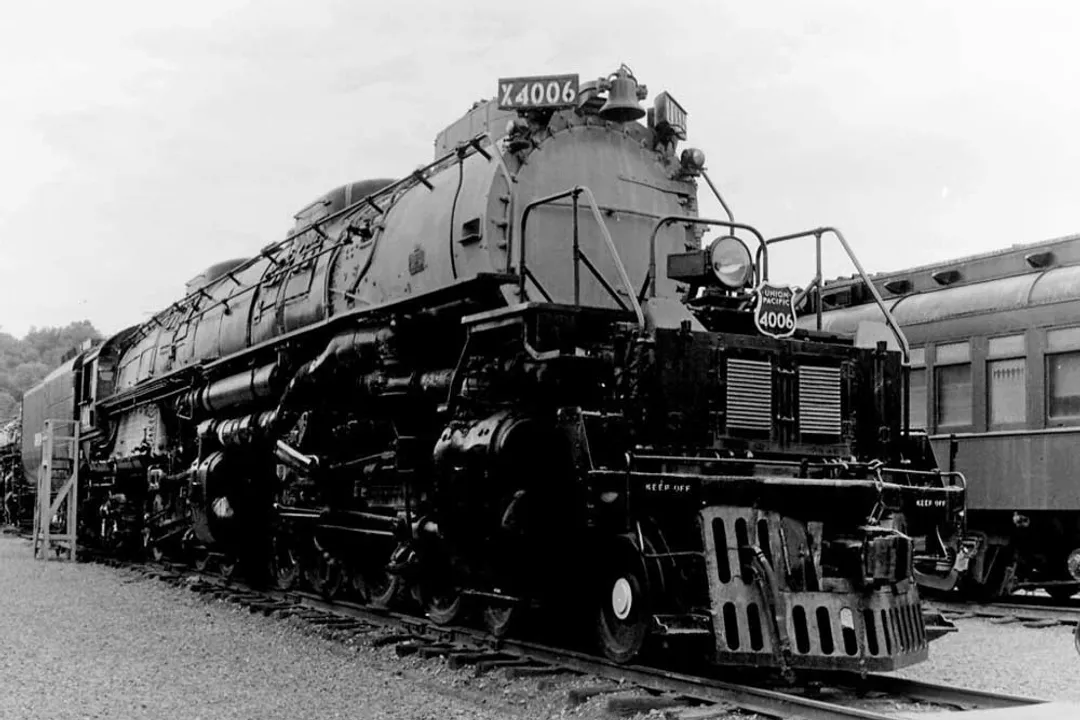
The ongoing debate between the Union Pacific Big Boy (4-8-8-4) and the Chesapeake & Ohio Allegheny (2-6-6-6) is perhaps the most passionate comparison in the history of American steam railroading. These two mechanical behemoths, both introduced in the same pivotal year of 1941, [2] represent the apex of steam locomotive engineering, yet they were optimized for fundamentally different challenges. To ask which was more powerful is to instantly step into a definitional trap, as the answer changes entirely based on whether you value raw pulling force or sustained output. Both machines were magnificent achievements, designed by their respective owners and builders—ALCO for the UP and Lima for the C&O—to conquer the steepest, most grueling grades on their home railroads. [2]
# Purpose Built
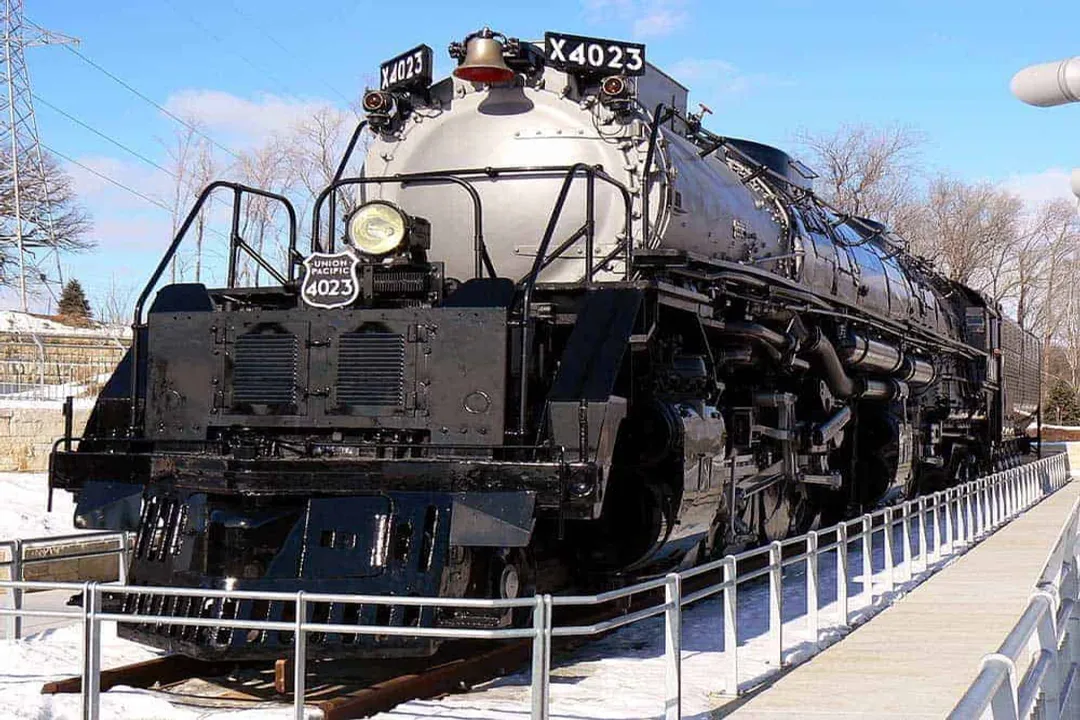
The story of these giants is inseparable from the geography they were meant to tame. They were highly specialized tools, not general-purpose designs, which dictated their ultimate performance profile. [6]
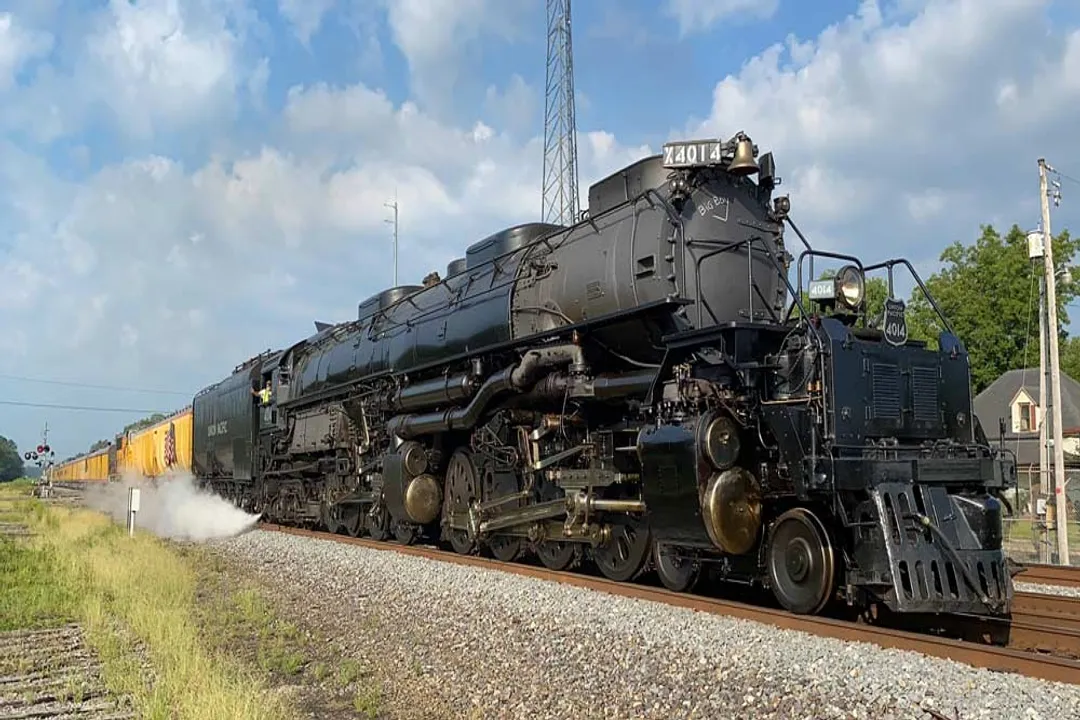
The Union Pacific Big Boy, with its massive 4-8-8-4 wheel arrangement, was conceived specifically to conquer the formidable Wasatch Mountains between Ogden, Utah, and Green River, Wyoming. [2] The ruling grade there was 1.14%, and UP intended for this locomotive to clear those grades unassisted, eliminating the need for helper engines that plagued previous operations. [2] To accommodate this new king of the rails, Union Pacific made substantial infrastructure investments, installing new 135-foot turntables and rebuilding track and bridges to handle the engine’s immense size and weight. [2]
The C&O Allegheny, designated the H-8 class, was born out of the need to efficiently manage the heavy coal drags over the Appalachian barrier—specifically the route between Hinton, West Virginia, and Clifton Forge, Virginia. [2] This territory was defined by a 13-mile stretch climbing a 0.577% grade to a summit, followed by a descent down a 1.14% grade. [2] Built by Lima Locomotive Works, the Allegheny was designed to be the ultimate expression of Lima’s "Super-Power Concept," featuring a firebox and boiler size previously unseen on articulated locomotives. [2] The Virginian Railway also adopted this design, designating their units as the AG class. [6]
# Defining Power
The core of the argument boils down to the difference between tractive effort and horsepower. Tractive effort is the force exerted at the driving wheels, vital for starting a heavy train or climbing a very steep grade at low speed. Horsepower, on the other hand, measures the rate at which work is done, which is speed-dependent and crucial for moving tonnage quickly over distance. [4][6]
When examining raw numbers gleaned from dynamometer tests, the Allegheny appears to claim the title of the most powerful in terms of sustained output. [5] Verified tests showed the C&O H-8 generating an astonishing 7,498 horsepower. [5] This figure is frequently cited as being significantly higher—sometimes quoted as 1,200 HP more—than the Big Boy’s published rating of approximately 6,290 HP. [5] The Allegheny achieved this massive steaming capability thanks to its exceptionally large firebox and boiler, which provided the necessary heating surface area. [2]
Conversely, the Big Boy clearly dominated in raw pulling muscle, or tractive effort. [2][5] UP engineers prioritized the ability to keep trains moving steadily up the grade, leading to a design that boasted a tractive effort that eclipsed that of the Allegheny. [4][5] While some forum discussions suggest the Allegheny could reach higher TE figures in specific configurations, the general consensus points to the Big Boy achieving a higher maximum tractive effort, with figures often cited around 135,375 pounds. [4] The Big Boy’s design focused on this static pulling capability, an essential requirement for the long, sustained climb in the Rockies. [4]
| Metric | C&O Allegheny (2-6-6-6) | UP Big Boy (4-8-8-4) | Winner by Metric |
|---|---|---|---|
| Wheel Arrangement | 2-6-6-6 | 4-8-8-4 | N/A |
| Max Horsepower (HP) | ~7,500 HP (Verified) | ~6,290 HP | Allegheny [5] |
| Max Tractive Effort (TE) | ~110,200 lbs (Cited) | ~135,375 lbs (Cited) | Big Boy [4][5] |
| Boiler Pressure | 265 lbs | 300 lbs | Big Boy [6] |
| Boiler/Firebox Size | Larger Firebox/Boiler | Smaller/Lower Pressure | Allegheny (Firebox) [2] |
# Size and Stature
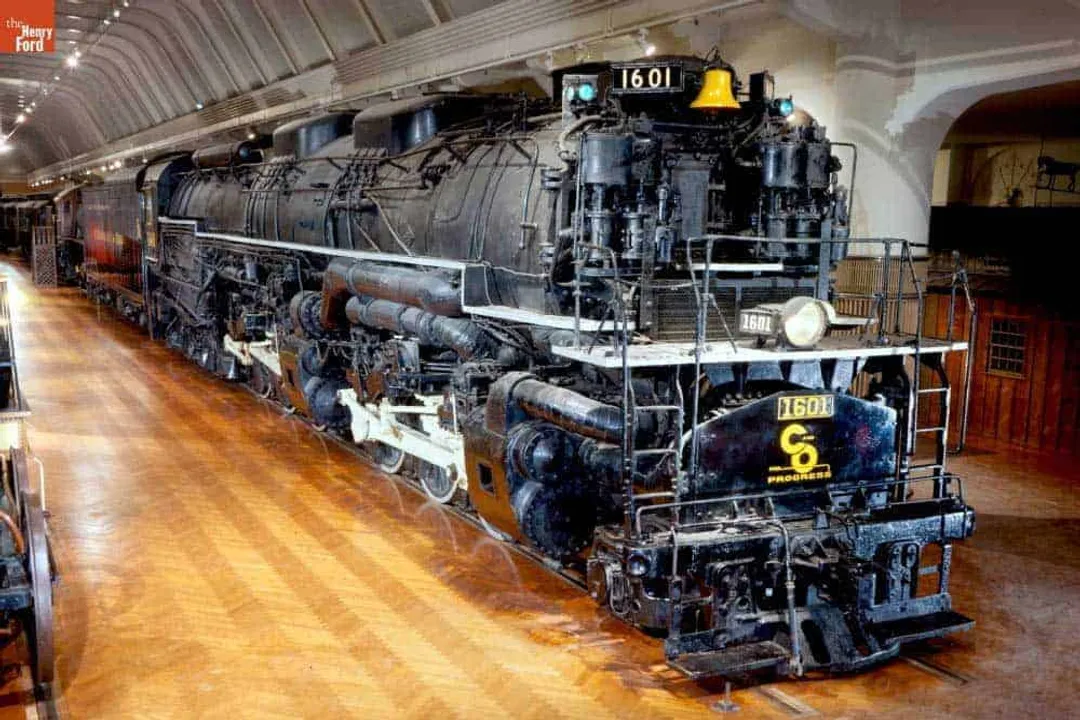
When the argument shifts from functional power to sheer physical presence, the perception of which locomotive "won" often leans toward the Big Boy, though the figures are remarkably close and context-dependent. [2]
The Big Boy is generally recognized as the longest steam locomotive ever built in the United States, measuring approximately 133 feet with its tender. [1][2] It was also the heaviest, especially when considering the locomotive and its attached tender together, often cited around 1.2 million pounds under steam. [1] Union Pacific had the scale in mind when they designed it, installing larger turntables to accommodate its length. [2]
The Allegheny was shorter, around 125 feet in total length. [2] However, there is some internal debate regarding weight. While the Big Boy is usually cited as the heavier overall combination, some historical analysis suggests that the Allegheny, in working order, might have actually outweighed the Big Boy engine-only, with one account suggesting that Lima may have understated the weight initially to clear existing bridge limitations, a figure that would have shocked the C&O track department upon closer inspection. [2][4] Furthermore, the Allegheny featured a 2-6-6-6 configuration, while the Big Boy was a 4-8-8-4. [2] An often-overlooked detail is that the Big Boy’s design gave it a greater adhesive weight—the weight resting on the driving wheels—which improves traction grip. [4]
# Operational Mismatch
A critical factor preventing a definitive "who was better" answer is that the two engines were rarely, if ever, used in head-to-head competition or even the same duty cycle. [2][4] This difference in application leads to an important original insight: the Allegheny’s supposed technical superiority in horsepower was masked by its operational environment.
While designed to haul 5,000 tons at 45 mph across the steep grades, [2] the Chesapeake & Ohio primarily relegated the H-8s to "coal drag" service, hauling trains of 10,000 tons or more at only 15 mph. [2][4] This meant that the engine’s massive boiler and huge firebox—designed to generate vast amounts of steam for high-speed work—were constantly underutilized, churning out more steam volume than the cylinders could efficiently use at those reduced speeds. [2] The Allegheny never truly got a chance to demonstrate its horsepower supremacy in the way it was engineered to perform. [2]
In contrast, the Big Boy was utilized exactly as intended on the Wasatch, moving heavy blocks of freight, sometimes at speeds up to 60 mph. [4] Even with a lower peak horsepower rating than the Allegheny, the Big Boy performed reliably at the upper limit of its design capabilities day in and day out. [4] The fact that the C&O had to slow their ultimate machine down to drag service, while the UP ran theirs at relative speed, skews the historical narrative toward the Big Boy's perceived success, even if the Allegheny was technically the superior steaming engine. [4]
This operational constraint leads to another point worth considering: maximizing return on investment versus setting records. The N&W, for example, whose locomotives are often mentioned in these debates, optimized its designs for efficiency and availability, enabling them to keep steam running long after others had converted to diesel. [6] Both the UP and C&O commissioned external builders (ALCO and Lima, respectively) for their behemoths, and some historical commentary suggests that the in-house designs of roads like the N&W might have been more efficient at burning available coal than the custom-ordered giants. [6] The Big Boy and Allegheny were monuments to capability, but the N&W engines were monuments to pragmatic, high-availability, economical service. [6]

# Verdict on Power
So, was the Allegheny more powerful than the Big Boy? The engineering data suggests a split decision based on the performance definition:
If power is defined by the maximum rate of work, the Allegheny was the champion, boasting nearly 7,500 verified horsepower. [5] Its boiler was a furnace of unprecedented size for a reciprocating engine. [2]
If power is defined by the raw force available to start and push tonnage up the toughest grades, the Big Boy prevailed, possessing a superior tractive effort and greater adhesive weight. [4][5]
Neither locomotive was the "wrong" machine; they were just the right machines for different, uncompromising railroad territories. [2][6] To dismiss the Allegheny for being constrained by the C&O’s coal empire, or to dismiss the Big Boy for having a lower peak HP output, is to miss the engineering elegance of both. They were each the ultimate expression of what their respective owners needed to tame the mountains of the Eastern US and the high desert of the West. [2]
#Videos
This Locomotive Had MORE POWER Than Big Boy! - YouTube
Related Questions
#Citations
Allegheny Or Big Boy, Which Is The Largest Locomotive?
"Big Boy vs. Allegheny"; Those are fighting words! - Trains.com Forums
World's Largest Locomotive is... - Trainorders.com
This Locomotive Had MORE POWER Than Big Boy! - YouTube
Big Boy verses Allegheny - the MRH Forum
r/trains - 600-ton Big Boy 4014 is still the largest operational steam ...
[email protected] | Big Boy versus the Allegheny