Who invented water pipes?
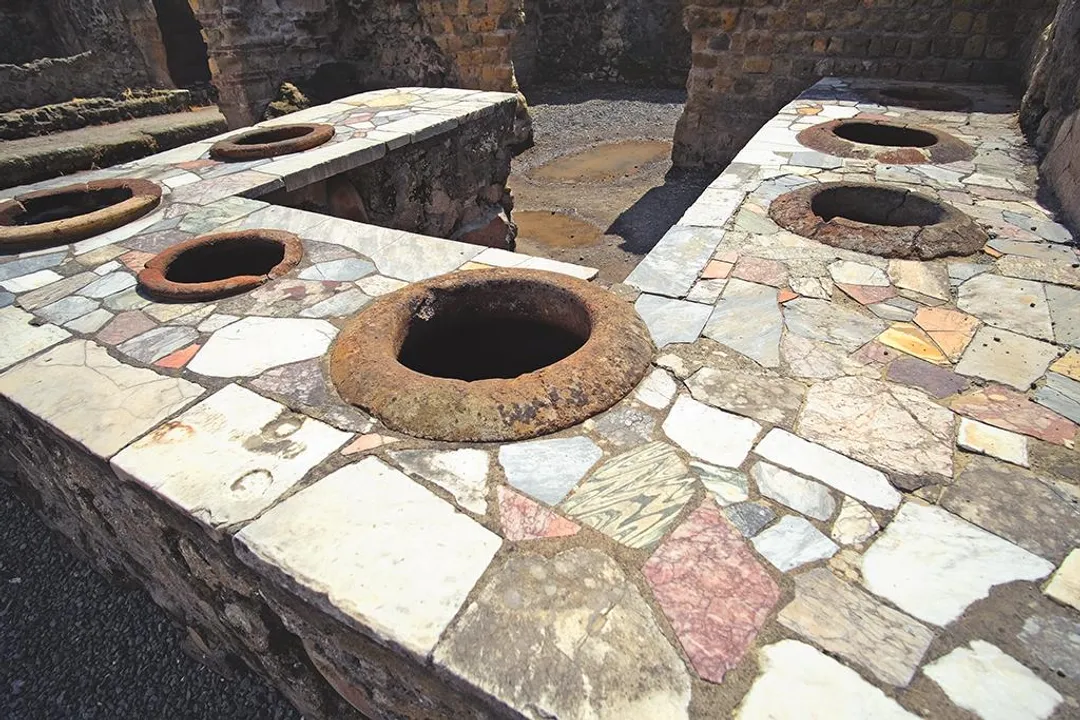
The quest to trace the invention of the water pipe does not lead to a single name, date, or workshop. Instead, it reveals a gradual, millennia-long evolution spanning multiple advanced ancient civilizations, each contributing foundational elements to what we now call plumbing. The necessity of moving clean water in and waste out of dense living areas prompted innovation long before the modern industrial era, meaning the "inventor" is a collective of ancient engineers and city planners.
# First Systems
The earliest sophisticated systems that utilized piped networks for water management emerged in the Indus Valley Civilization, around 2500 BCE, in cities like Mohenjo-Daro and Harappa. [2][5] These people were remarkably advanced in urban planning, featuring detailed drainage networks and covered sewers designed to manage waste effectively. [1] Their pipes were often constructed from baked bricks, indicating a mastery of material science for durability and water resistance. [5] This contrasts significantly with contemporary or slightly later developments elsewhere, which often relied on less permanent materials.
Almost concurrently, or slightly later in the Bronze Age, the Minoans on the island of Crete established complex water delivery and sanitation systems. [2][5] The Minoans are credited with using terracotta piping to carry water throughout their palaces, and historical evidence suggests they even incorporated flushing mechanisms for latrines. [5] While the Indus Valley systems emphasized civic drainage and standardized city grids, the Minoan approach seems more focused on palace-scale convenience and water conveyance to specific facilities. [5] This difference highlights varying priorities in early infrastructure development.
# Roman Engineering
While many cultures developed water channels, the Roman Empire stands out for its scale and the specific material it heavily relied upon for localized distribution: lead. The Romans perfected the delivery of water via massive aqueducts, bringing supplies from distant sources into urban centers. [5] However, the internal distribution within the cities and homes is where the pipe history heavily features lead, known to them as plumbum. [1][5][9] In fact, the very word "plumbing" is derived from this Latin term. [5][9] Roman pipes, cast from lead, were crucial for supplying public fountains, baths, and the homes of the wealthy. [2][5] They engineered complex systems that managed flow and pressure, demonstrating a true understanding of hydraulics for distribution, even if the choice of material carried long-term health consequences. [1]

# Material Progression
The journey of the water pipe is fundamentally a history of materials science, moving from earthen products to metals, and eventually to synthetic polymers.
| Material | Common Ancient User | Approximate Era | Key Advantage/Disadvantage |
|---|---|---|---|
| Pottery/Clay | Indus Valley, Early Civilizations | Pre-2500 BCE onward | Relatively cheap, non-metallic, but prone to cracking. [6] |
| Terracotta | Minoans | Bronze Age | Durable when fired, allowed for complex fittings. [5] |
| Lead (Plumbum) | Romans | Circa 300 BCE onward | Easily cast, malleable for joining sections. [2][5] Known toxicity. [1] |
| Ceramic | Ancient China (Han Dynasty) | Post 200 BCE | Durable, non-corrosive to water itself. [2][5] |
| Copper | Egyptians (later use), Post-Medieval | Varied | Excellent resistance to corrosion, but expensive. [2] |
One interesting comparison arises when looking at the longevity versus the immediate usability of these early pipes. Terracotta and fired ceramic pipes offered a degree of chemical inertness, meaning they were unlikely to contaminate the water they carried, provided they remained intact. [6] In contrast, the Roman reliance on lead, while providing the necessary malleability to join complex runs of pipe easily, introduced systemic, slow-acting public health issues across their major urban centers. [1] This trade-off—ease of construction versus material safety—is a recurring theme in infrastructure development throughout history.
# Intervening Periods
Following the collapse of the Western Roman Empire, centralized maintenance and advancement in water systems largely vanished across much of Europe, leading to what historians often refer to as a stagnation or regression in plumbing technology. [5] While sophisticated infrastructure crumbled, localized, often rudimentary, systems persisted. During the Medieval period, water often relied on open channels, wells, and rudimentary wooden pipes, especially outside monasteries or noble estates. [5] It wasn't until the Renaissance and the increasing demands of burgeoning European cities that serious investment in water management returned, often mimicking or re-rediscovering Roman principles, albeit utilizing materials like lead or wooden pipes bound with metal strips. [2]
In places like ancient China, the sophisticated ceramic and even bronze piping systems of the Han Dynasty demonstrated a continued mastery of fluid conveyance, though the global diffusion of these advancements was limited. [2][5] The knowledge required for large-scale, pressurized distribution seems to have been lost in the West until renewed engineering focus centuries later.
# Modern Pipes
The true revolution that brought pipe technology into the modern age involved a series of material replacements driven by industrial capacity. The 18th and 19th centuries saw the widespread adoption of cast iron pipes for municipal water mains, offering unprecedented strength and durability for underground service that clay and lead could not consistently match. [5]
When we discuss indoor plumbing, names like Thomas Crapper often come up, yet it is vital to clarify that Crapper, an English plumber in the Victorian era, was not the original inventor of the concept of indoor plumbing, nor the pipe itself. [5][9] Instead, figures like him were instrumental in improving the design, marketing, and implementation of waste traps, valves, and sanitary fixtures, making indoor plumbing more reliable and accessible to a broader segment of the population. [5][9] His contributions were refinement and standardization, not origination.
The final major leap occurred in the 20th century with the introduction of synthetic materials. Materials like PVC (Polyvinyl Chloride) and PEX (Cross-linked Polyethylene) fundamentally changed how pipes are installed and maintained. [5] Unlike the heavy, rigid, and often joint-intensive systems of metal or clay, modern plastics are lightweight, flexible, and can be joined using solvent cements or crimp fittings, drastically reducing labor time and complexity. For instance, a modern homeowner tackling a simple repair can now manage PEX connections with minimal specialized equipment, a process unimaginable when dealing with the weight and joining requirements of an equivalent cast iron or copper run. This flexibility has profoundly affected residential construction standards globally, offering high resistance to corrosion and freezing expansion compared to their historical metal counterparts.
The history of water pipes is therefore a story of human ingenuity responding to urban density, moving from the baked brick of the Indus Valley to the lead of Rome, and finally resting on the polymer science of today. There is no single inventor, but rather a sequence of brilliant, geographically distinct adaptations.
Related Questions
#Citations
Plumbing
The Oldest Plumbing and Water Systems
The History of Plumbing Around the World
A brief history of pipes - from the Romans to today's oil and ...
Who Were the First People to Invent Indoor Plumbing?
The History of Plumbing: It's Older Than You Think
The Origin of Plumbing Pipes- Some Nifty Facts
When was Indoor Plumbing Invented? The History of ...
History of Plumbing