Who invented the Volvo bus?
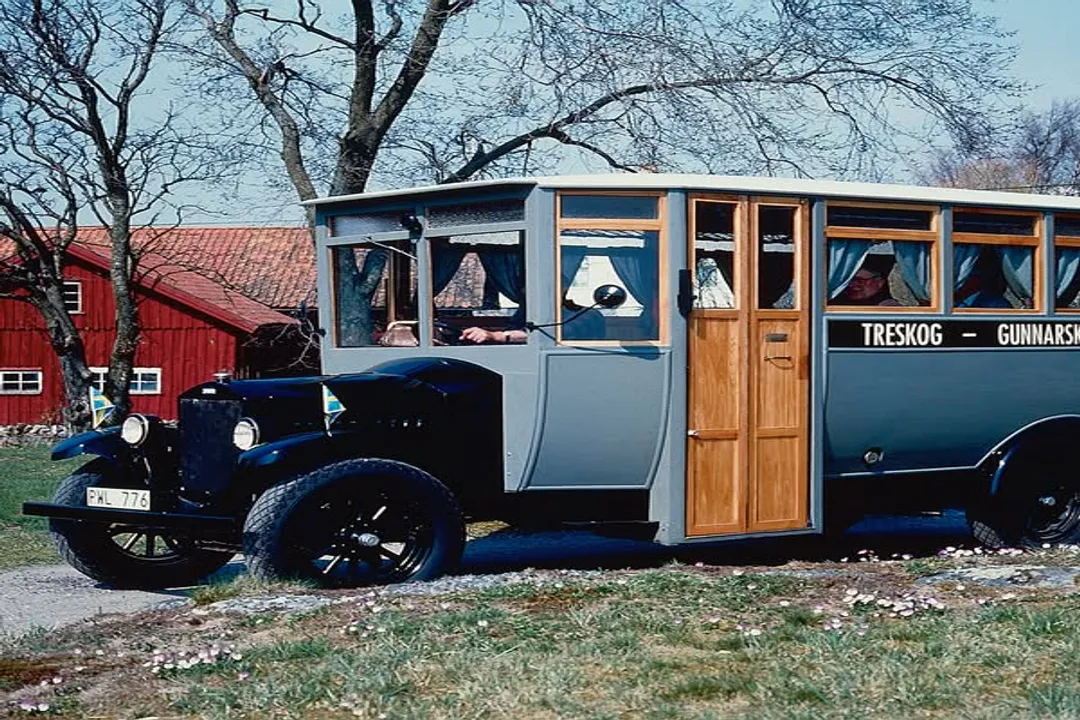
The reputation of Volvo is deeply intertwined with safety, engineering excellence, and durable machinery, spanning from passenger cars to heavy-duty commercial vehicles. [2][4] When asking who invented the Volvo bus, the answer isn't a single person or a singular moment, but rather a gradual evolution within a larger manufacturing corporation dedicated to road transport solutions. [2] The genesis of the Volvo bus line must be understood within the context of the founding of the parent company, Volvo Aktiebolaget. [9]
# Corporate Foundations
The story begins not with a bus, but with an automobile. Volvo's official entry into vehicle production occurred in 1927 when they rolled out their first series-produced car, the ÖV4. [5][7] This venture was driven by Gustaf Larson and Assar Gabrielsson, who aimed to create a Swedish vehicle designed to handle the challenging road conditions prevalent in the country. [4] The initial focus on creating a sturdy passenger car provided the core mechanical expertise—the frame building, engine development, and axle design—that would prove invaluable for heavier vehicles later on. [3]
# Early Transport Development
Following the initial success with passenger cars, the corporation quickly recognized the need for commercial transport solutions for goods and passengers. [4] Volvo's development curve moved rapidly into the truck sector shortly after the cars started rolling off the assembly line. [2] These early trucks, often sharing foundational components with their passenger car relatives, established Volvo’s credentials in building robust chassis capable of bearing substantial loads. [3]
This early truck production provided the necessary technical foundation for what would eventually become the bus division. It is important to note that in the early 20th century, vehicle manufacturing was often collaborative. A manufacturer like Volvo would supply a reliable chassis and engine—the running gear—while a specialized coachbuilder would design and mount the passenger body on top. [2] Considering this industry standard, the invention of a specific early Volvo bus model might be attributed as much to the external coachbuilder who designed the actual passenger compartment as it was to the engineers who designed the frame beneath it. [2] This partnership model allowed for rapid expansion into diverse passenger transport segments without requiring Volvo to develop expertise in all aspects of body construction simultaneously.

# First Bus Models
The transition from building truck chassis that could potentially carry a bus body to manufacturing dedicated bus platforms marked a significant step. While sources indicate Volvo’s involvement in building bus bodies began in the 1930s, this process matured as the company refined its chassis offerings specifically for public transport applications. [2]
The commitment solidified as specialized chassis lines were introduced, tailored for the higher demands of constant passenger movement versus goods hauling. A major technical marker in this evolution was the shift towards more optimized designs. For instance, the introduction of chassis designs where the engine was relocated, often to the rear, fundamentally changed the vehicle’s profile and passenger capacity. [1] This engineering choice allowed for lower floor heights and better weight distribution, critical improvements for urban transit.
The formal establishment of a dedicated business unit, Volvo Buses, solidified this focus later on, though the manufacturing and design principles were established decades prior through the commercial vehicle sector. [1] By focusing engineering resources specifically on bus platforms, Volvo could differentiate its offering from standard truck derivatives, signaling a serious, long-term commitment to the passenger transport market. [1]
# Milestones and Geographic Differences
The history of Volvo Buses is marked by continuous iteration and adaptation to varied global requirements, rather than a single foundational design. [1] A key part of their success has been the willingness to innovate mechanically. The shift to rear-engine designs was one such area where Volvo invested heavily to improve access, maintenance, and passenger comfort. [1]
However, the term "bus" covers a wide range of vehicles, from short city shuttles to long-distance touring coaches. Tracking the adoption of Volvo vehicles across different continents shows this adaptation vividly. For example, the type of heavy-duty coach favored in the mountainous regions of Europe often differs significantly from the high-capacity, low-floor transit buses required for North American city routes. [1][2] An interesting analytical point arises when comparing the development speeds: while Volvo established deep authority quickly in Scandinavia, their introduction and subsequent design refinements for markets like the Americas required significant localized adaptation of suspension systems and powertrain specifications to meet different regulatory and operational standards. This suggests the "invention" of the successful Volvo bus in any given region is more accurately described as a localized engineering translation of a core platform. [1]
# Modern Bus Operations
Today, the operation that designs and produces these vehicles is known as Volvo Buses and functions as a business area within the larger Volvo Group. [2] It is crucial to differentiate this entity from Volvo Cars, which is now owned by a different corporation. [2][9] The modern Volvo Group encompasses trucks, construction equipment, and buses, creating synergies in areas like powertrain development and safety systems across the divisions. [2]
The current focus of Volvo Buses has moved significantly toward sustainability and connectivity. Innovations now center around alternative propulsion systems, such as electric and hybrid powertrains, alongside advanced driver assistance systems. [1] This current chapter is less about who built the first metal box on wheels and more about how they are reinventing the entire concept of public mobility through cleaner technology and smarter integration. [1] The company continues to build upon that initial foundation of safety and durability established when the first truck chassis rolled out decades ago. [4]
Related Questions
#Citations
A history of forward thinking | Volvo Buses
Volvo Buses - Wikipedia
History of Volvo - Cole's Collision Center
Volvo History 1927 to 2006.
The VOLVO Origin Story - YouTube
The Journey of Volvo Buses: Innovation and Design| TrucksBuses.com
On this day, 95 years ago, Volvo produced it's very first car - Facebook
Volvo AB | History, Growth, Transformation, & Split | Britannica Money