Who invented the portable generator?
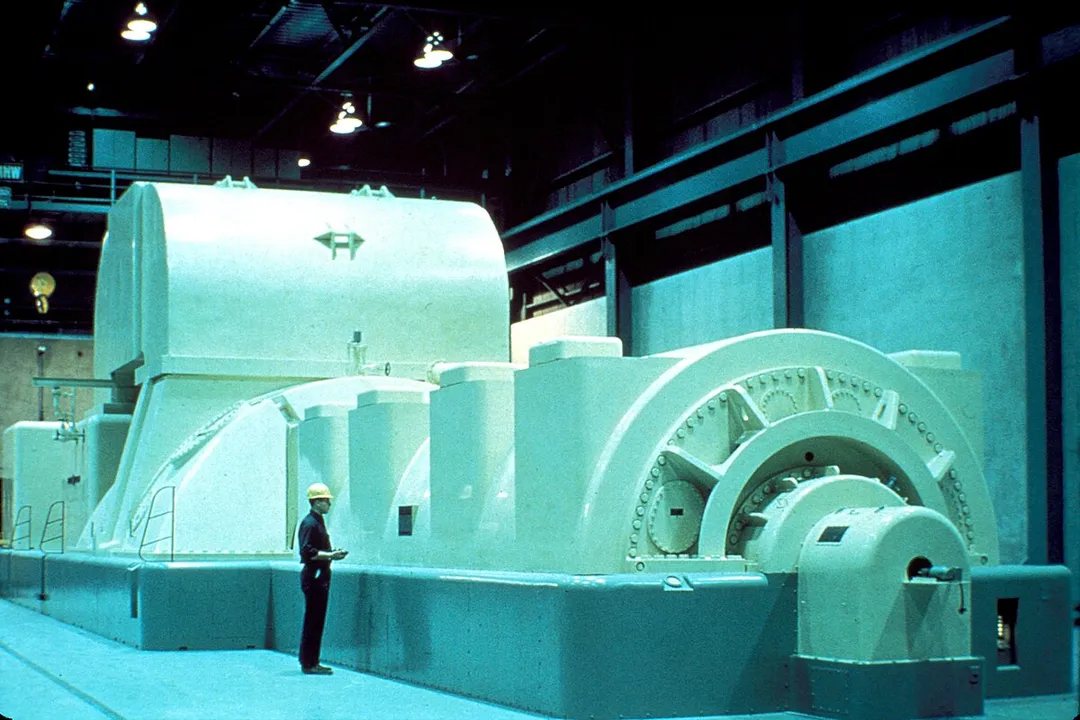
The genesis of portable power doesn't trace back to a single eureka moment or one named inventor; rather, it represents a convergence of fundamental physics principles, mechanical engineering breakthroughs, and a growing societal need for decentralized electricity. To understand who invented the portable generator, one must first acknowledge the monumental groundwork laid for the electric generator itself, a device that, in its earliest forms, weighed hundreds of pounds and required dedicated stationary installation. [2][9]
# Early Principles

The foundation for all electrical power generation rests on the discovery of electromagnetic induction. In 1831, Michael Faraday conducted crucial experiments demonstrating that moving a magnet near a coil of wire could induce an electric current. [2][9] This discovery revealed the mechanism by which mechanical energy could be converted into electrical energy. While Faraday proved the concept, he did not immediately create a usable, continuous generator in the modern sense. [2]
The first device often credited as a true dynamo—a direct current (DC) generator—was built shortly thereafter. Hippolyte Pixii, in 1832, created a machine based on Faraday’s findings, using a rotating permanent magnet near a coil of wire. [2][9] This machine produced pulsating DC electricity, and while groundbreaking, it was a laboratory curiosity, not a practical power source. [2]
# Scaling Up Power
The path from a small laboratory demonstration to a machine capable of powering anything required significant scaling and refinement. Early DC generators were inefficient and required constant manual attention. The breakthrough that moved generators toward practical application came with the realization that the stationary magnetic field needed to be created by an electromagnet rather than a permanent magnet, allowing the machine to excite itself. [2]
Several figures contributed to this self-exciting principle. Samuel Alfred Varley is often mentioned in connection with this development, followed by Charles Wheatstone and Werner von Siemens, who independently developed the self-exciting dynamo concept around the 1860s. [2] This innovation was critical because it meant the generator could produce power without an external source to start its magnetic field, making it much more self-sufficient for continuous operation. [2][3]
The commercial viability exploded with inventors like Zénobe Gramme, whose Gramme machine, introduced in 1871, used a ring armature and made DC generation commercially practical. [2][3] These machines were substantial pieces of equipment, used to power arc lights and early industrial machinery—they were the definition of stationary power. [7]
Thomas Edison’s contributions were focused on making the system work, requiring massive, high-capacity dynamos to power his centralized lighting stations in New York City. [6] These generators were enormous, built for central power plants serving entire city blocks; portability was not a consideration when the power source had to be tethered to the user by thick copper wires. [4][7]

# The Need for Mobility
The move from centralized power stations to decentralized, or portable, power was driven by necessity in specialized fields. Imagine railway construction, remote mining operations, or even early military applications where large steam-driven dynamos were impractical to move or set up repeatedly. [8] The challenge was taking the established concept of the large dynamo and shrinking it down while maintaining reliable output.
The evolution of the engine played as significant a role as the evolution of the generator coil itself. Early generators were driven by massive steam engines or water wheels. [3] True portability became feasible only when a compact, reliable power source became available to spin the rotor. This required the advent of the internal combustion engine. [8]
When reliable, small gasoline or diesel engines became available in the early 20th century, the mechanical link was established: an engine small enough to move could now drive a generator head small enough to move with it. [3][8]
It is at this junction—the marriage of the compact internal combustion engine to a scaled-down, self-exciting dynamo—that the portable generator truly comes into being. Unlike the centralized dynamos developed by Edison or the AC systems championed by Tesla, the portable unit was an integrated system designed for self-sufficiency and mobility, rather than grid contribution. [4][8]
It is difficult to pinpoint a single inventor who first combined these two elements into the first marketable portable unit, as the technology evolved through various small manufacturers meeting specific industrial needs before it became a consumer product. [8] However, many sources point toward the mid-20th century, particularly following World War II, as the era when these integrated power units became more standardized and accessible for non-industrial use, often as engine-driven power supplies for tools or construction sites. [3]
# Technological Components
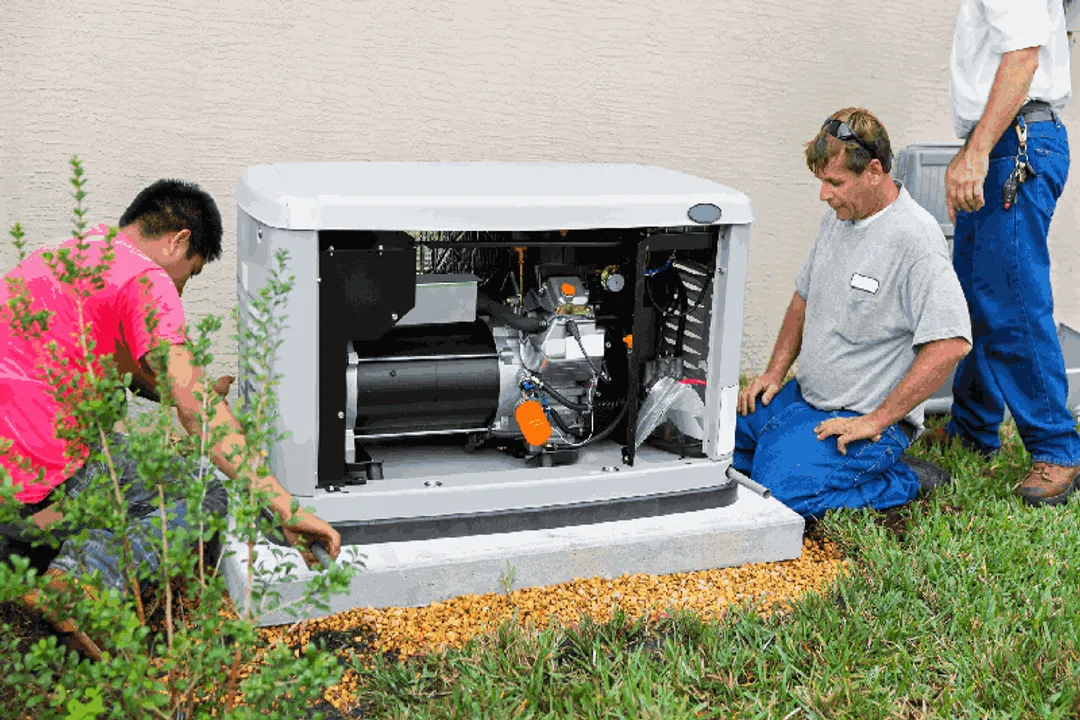
A modern portable generator is essentially two main components permanently coupled: the prime mover and the alternator (the generator head). [8]
| Component | Primary Function | Historical Precedent | Key Innovation for Portability |
|---|---|---|---|
| Prime Mover | Converts fuel (gasoline/diesel) into mechanical rotation. | Steam Engines, Water Wheels | Development of the compact Internal Combustion Engine (ICE). [8] |
| Alternator/Dynamo | Converts mechanical rotation into electrical energy. | Faraday's Disk, Gramme Dynamo [2] | Miniaturization and refinement of the DC/AC winding assembly. |
| Control System | Regulates output voltage and frequency. | Early manual field coil adjustments | Automatic Voltage Regulators (AVR) for stable output. [8] |
The development of the Automatic Voltage Regulator (AVR) was another critical step toward modern usability. Early portable generators, if they used electro-mechanical regulation, were prone to voltage spikes or drops if the load changed suddenly, which could damage sensitive electronics. [8] The AVR ensures that as the engine speed fluctuates slightly under changing loads, the output voltage remains relatively constant, making the power usable for modern tools and appliances. [8]
This distinction between the engine and the generator is important. Many people credit the inventor of the engine (like Karl Benz or Rudolf Diesel) or the inventor of the electrical principle (Faraday) as the inventor of the portable generator. In reality, the portable unit is a product of integration—it is the realization that the stationary power plant could be shrunk down using advancements in engine technology. [3]

# Modern Context and Consumer Adoption
While the technology existed earlier for industrial or military use, the widespread adoption of the portable generator by homeowners and small businesses for emergency backup or remote work is a more recent phenomenon. [3] As home appliances became more reliant on consistent AC power—and as weather events became more disruptive to infrastructure—the demand shifted from niche industrial use to general consumer preparedness. [3]
The evolution has moved toward quieter, more fuel-efficient designs. Modern inverter generators, for example, represent a significant leap from the traditional open-frame models. These newer units first generate DC power, clean it up electronically using advanced circuitry, and then create a pure sine wave AC output. [8] This process allows the engine to run at variable speeds based on the load, leading to massive gains in fuel economy and dramatically reduced noise pollution—a key concern for residential users. [8]
When evaluating the concept of "invention," it’s useful to think about what makes a generator "portable." Is it simply being movable (like a large, wheeled industrial unit)? Or does it imply being light enough for one person to carry? The early, engine-driven units were certainly transportable but often required a truck or trailer. [3] The true, handheld or easily moved units that one might take camping or use during a brief local outage are a direct descendant of the later refinement in engine materials and alternator winding techniques that shaved significant weight off the combined unit.
Thinking about the practical application, one might observe that the first portable generator wasn't invented in a lab, but likely assembled by an engineer or mechanic in the field who needed to power a temporary worksite light before a formal, standardized product line existed. This creation would have been a crude coupling of a small engine (perhaps from a motorcycle or early lawnmower) to a small dynamo, demonstrating an immediate, practical need that preceded commercial mass production. [8] This kind of field engineering is what pushes technology from the theoretical realm of the university laboratory into the messy reality of everyday application.
The historical narrative around power generation often focuses on the massive infrastructure—the dam or the central power station—but the portable generator represents the democratization of that power. It brings the capability of independent energy generation directly into the hands of the individual consumer, a feat made possible by the incremental improvements made by countless engineers over more than a century, rather than a single flash of genius credited to one person for the final portable design. [3][8]
Related Questions
#Citations
Electric generator - Wikipedia
The History of Generators: From Faraday to Modern Day
The Evolution of Home Generators: A Historical Perspective
Generator History Before and After | Assurance Power Systems
Who Invented Generators? - True Gear
Electric Generator - Thomas A. Edison Papers
The History of Generators - Strategic Public Affairs
Inverter Generators: Evolution of Portable Power - BN Products
Electric Generator Facts For Kids | AstroSafe Search - DIY.ORG