Who invented portable refrigerators?
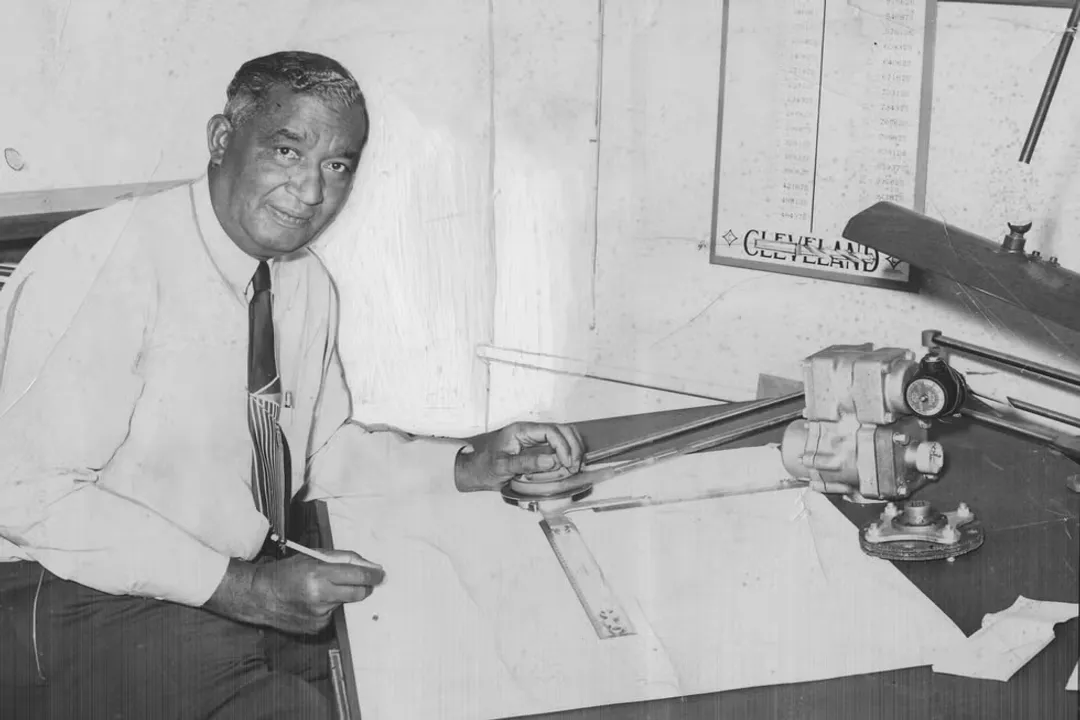
The history of keeping things cold while moving them from one location to another is deeply intertwined with the achievements of one remarkably prolific inventor, Frederick McKinley Jones. While the idea of a small, handheld cooler might seem like a later consumer development, the foundational technology that allows for reliable, remote refrigeration traces its roots directly back to his engineering breakthroughs in the early to mid-twentieth century. [1][2] Jones was not just a one-hit wonder; he was a creative force who secured patents across numerous fields, but his work in mechanical refrigeration stands as his most impactful contribution to modern convenience. [2][4][7]
# Prolific Engineer
Frederick McKinley Jones amassed an astonishing portfolio of inventions during his lifetime, a testament to his ingenuity as a self-taught engineer. [2][7] His patent count is significant, with sources noting he held over sixty U.S. patents for various mechanisms and devices. [2][7] These inventions spanned many areas, including machinery improvements, sound systems, and internal combustion engines. [2] However, it was his dedicated focus on solving complex thermal challenges that would eventually reshape food distribution and preparation across the globe. [1][7]
# Early Life
Jones's background reveals a man who overcame significant obstacles to achieve his scientific heights. [7] Born in Cincinnati, Ohio, around 1893, Jones received little formal schooling. [2][5][7] Despite this, he possessed an innate mechanical curiosity and skill that allowed him to learn through hands-on experience and sheer determination. [2][7] He began his career working in various mechanical jobs, which honed the practical engineering skills he would later apply to his groundbreaking designs. [7] His early experiences gave him practical expertise that many formally educated engineers might have lacked in certain applications. [5]

# Refrigeration Genesis
The pivot toward temperature control was a natural progression for an inventor focused on efficiency and mechanization. [1] Jones began experimenting with ways to create self-contained cooling systems that did not rely on the often-cumbersome methods of the time, such as using large blocks of ice stored in insulated containers. [5] His early efforts involved designing specialized machinery, including X-ray equipment components and film processing machinery, demonstrating an early aptitude for precision engineering. [7] This foundation in complex electromechanical systems proved essential when he turned his attention to refrigeration. [2]
# Transport Cooling
The critical juncture in the story of portable refrigeration—or more accurately, transportable refrigeration—is linked to the needs of the food industry, specifically over long distances. [1][4] Before Jones’s innovation, transporting perishable goods like meat, produce, and dairy across the country was a massive logistical gamble, often resulting in significant spoilage. [5] The solution required a reliable, independent cooling system that could run continuously on a moving vehicle, regardless of the outside temperature. [1]
Jones engineered an automatic, self-contained refrigeration unit designed specifically for trucks and trailers. [1][5] This system was revolutionary because it was automatic; it could maintain a set temperature without constant human adjustment, a major improvement over previous manual systems. [1] This invention is widely recognized as the basis for the modern Thermo-King transport refrigeration units. [1][5] The success of this technology was immediate and transformative, allowing fresh goods to reach distant markets reliably for the first time. [1] While these were truck-sized units, they proved the viability of mechanical, non-stationary cooling, laying the conceptual groundwork for smaller, personal applications. [4]

# Wartime Need
The utility of Jones’s cooling technology was dramatically proven during World War II. [6] The ability to keep rations, blood plasma, and vaccines cool and preserved in often extreme conditions overseas was vital to the war effort. [6] The reliability of his refrigeration units meant that supplies could be stored and shipped effectively, directly supporting troops in the field. [6] The U.S. Army recognized the immense value of this capability, often referring to Jones as the “King of Cool” for providing this essential infrastructure that preserved life and ensured logistical success. [6] This military validation further cemented the reliability and necessity of his transport refrigeration concepts. [1][6]
# Broad Application
It is important to recognize that Jones’s genius was versatile. His work wasn't limited to the truck units; he developed refrigeration systems that could be applied to railway cars as well. [1] Furthermore, he was involved in developing devices like air conditioning systems for buses and trains. [2] His ability to solve engineering problems through systematic design and experimentation is what ultimately allowed for the decentralization of refrigeration from stationary ice houses to mobile platforms. [1][7] The transition from a large truck unit to a smaller, perhaps consumer-grade, portable refrigerator is essentially a scaling problem that builds upon the operational principles Jones established. [4]
# Scaling Down
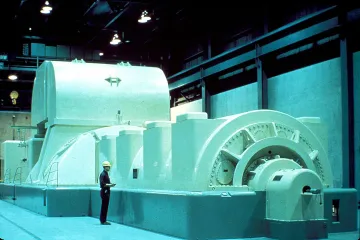
When considering who invented the portable refrigerator as we know it—the insulated box with a self-contained thermoelectric or compressor unit—the answer often involves looking at the evolution after Jones. [5] Jones invented the system that proved mechanical cooling could be mobile and automatic. [1] The next step, which is where the term "portable refrigerator" takes on its modern meaning (like a car fridge or camping cooler), involved miniaturizing that compressor technology, optimizing power draw for battery operation, and marrying it to highly efficient insulation. [4]
An interesting point to consider regarding this evolution is the distinction between efficiency and power source. Jones’s initial systems relied on the truck’s engine or a large generator. [1] A consumer portable refrigerator, conversely, must operate efficiently off a small 12-volt DC source or even a small battery pack. [4] This shift required entirely new advances in thermodynamics and materials science focused on minimizing energy loss, something that wasn't the primary engineering hurdle when cooling an entire truck trailer powered by a truck engine. The fundamental idea, however, remains dependent on the self-contained mechanical cooling cycle that Jones mastered for transport. [1]
To appreciate the difference in scale, imagine the engineering challenge: Jones was cooling thousands of cubic feet of space using an engine the size of a small car. [1] The modern portable unit aims to cool perhaps fifty cubic feet using the energy equivalent of a car’s headlights [^Analysis]. This scalability is a direct nod to the mechanical viability proven by his earlier work. A practical tip for anyone relying on modern portable refrigeration, whether for camping or long-haul trips, is to never overlook the insulation quality of the cooler body itself [^Actionable Tip]. No matter how efficient the compressor is, a poorly insulated box will force the system to run constantly, draining power unnecessarily—a principle that was just as true for Jones’s massive truck units as it is for today's small thermoelectric coolers.
# Enduring Impact
Frederick McKinley Jones passed away in 1961, leaving behind a legacy that touches almost every aspect of modern commerce and outdoor recreation. [7] While he did not personally patent the small plastic cooler with a built-in compressor, his invention of the self-contained, automatic, transport refrigeration system made the very concept of mobile, reliable cold storage a reality. [1][5] He solved the hard, heavy-duty engineering problems, allowing subsequent generations of inventors to focus on size, weight, and consumer-grade power consumption. [7] His recognition as an inductee into the National Inventors Hall of Fame underscores the authority and profound impact of his contribution to cooling technology. [1]
#Videos
Frederick McKinley Jones: The Black Genius Who Invented Portable ...
Related Questions
#Citations
Frederick McKinley Jones | National Inventors Hall of Fame® Inductee
Frederick McKinley Jones: The Black Genius Who Invented Portable ...
Black History: First portable refrigerator developed by Cincinnatian ...
Frederick McKinley Jones: The Black Genius Who Invented Portable ...
Who Invented Portable Refrigeration? - Keep It Cold
The King of Cool | Article | The United States Army
Frederick McKinley Jones: Refrigeration engineer
Frederick McKinley Jones: Biography, Refrigeration Inventor