Who invented QR-based tracking?
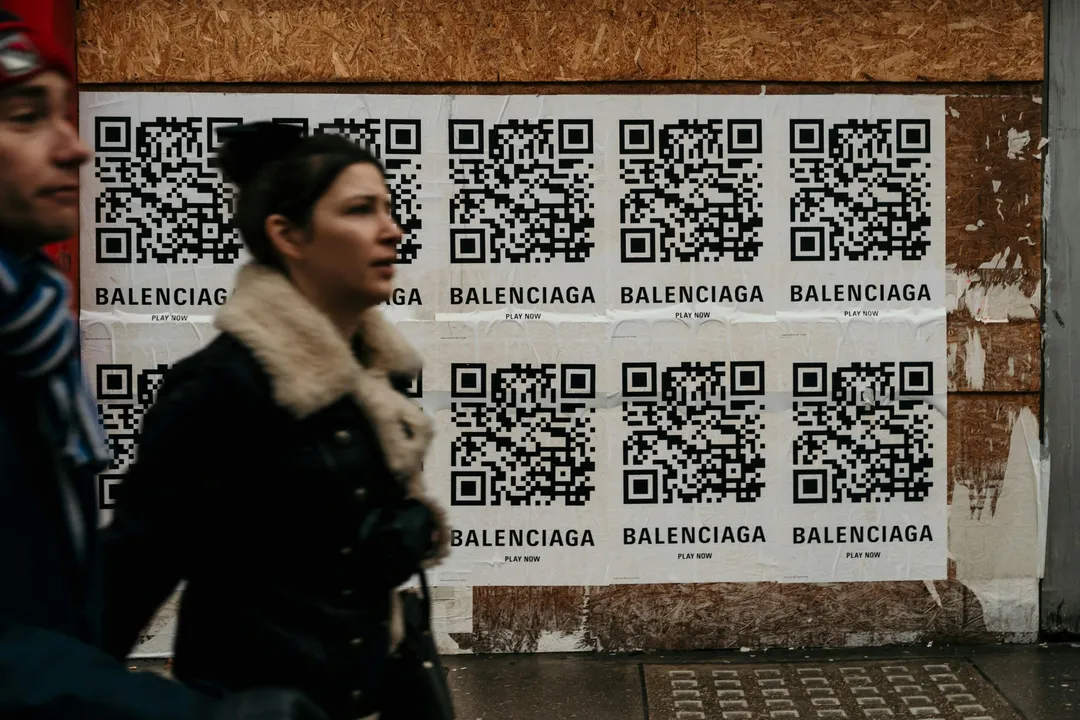
The story of QR-based tracking—or the Quick Response code—is not one of a single, sudden consumer breakthrough, but rather the patient development by a Japanese engineer to solve a very specific, frustrating problem on a factory floor in the early 1990s. The inventor is Masahiro Hara, who was working at Denso Wave, an automotive products subsidiary of Toyota, when he tackled the inefficiencies of existing inventory management systems.
Before the QR code, the world relied on the one-dimensional barcode, the familiar series of thick and thin lines that standardized retail checkout after its success in the 1970s. While a massive improvement over manual keying, the standard barcode had significant limitations, especially for high-volume manufacturing like auto parts production. A single UPC barcode could only hold about 20 alphanumeric characters. For tracking complex assemblies or components requiring Japanese character sets like Kanji, manufacturers like Denso often had to place six or seven individual barcodes on one box, requiring a technician to scan each one sequentially. This process was slow and inherently inefficient.
# Birth of A Code

Hara, in his early thirties, recognized that the solution lay not in refining the linear scan, but in moving to two dimensions. The idea for a two-dimensional code struck him during a lunch break in early 1993 while he was playing the ancient board game Go. The strategic arrangement of black and white stones on the Go board provided the visual model for a grid-based system where data could be stored both horizontally and vertically.
Hara proposed developing a new code capable of holding significantly more information—enough to store Kanji characters—and being readable much faster than the traditional system. He reportedly promised his superiors he could achieve this in two years, and, through concerted effort, he delivered exactly on that timeline.
# Engineering Speed and Resilience
The leap from a one-dimensional line to a two-dimensional square solved the capacity issue, but it introduced new hurdles, primarily related to speed and orientation. A scanner needed to know immediately that it was looking at a QR code and understand its orientation, regardless of the angle or if the code was partially obscured.
Hara and his small development team focused intensely on how to allow for high-speed reading—the "Quick Response" aspect of the name. The breakthrough came when Hara realized the code needed explicit positional markers to help the scanner lock on and orient itself. He needed a unique visual signature that would not be mistaken for text, logos, or other standard markings on a factory floor or printed material.
After investigating countless printed flyers, magazines, and boxes globally—a survey process that took about three months—the team discovered a pattern that appeared least frequently in real-world documents: a sequence of alternating black and white areas in a ratio of 1:1:3:1:1. This pattern was deployed as the three large squares—the position detection patterns—in the corners of the QR code. Since a square is defined by three non-collinear points, only three markers were necessary; the fourth corner could be mathematically inferred. While triangles or circles were considered for these markers, the square design proved superior in working with imaging sensors and differentiating itself from existing material.
Another crucial element inherited by the QR code was a sophisticated mechanism for handling imperfections: error correction. Using Reed–Solomon error correction algorithms, the code can maintain its integrity even if up to 30% of the data matrix is dirty, smudged, or damaged. This level of durability was not just a feature; it was a prerequisite for industrial reliability where labels on parts boxes might be scratched or smeared as they moved along a conveyor belt.
This robust engineering, designed for the unforgiving nature of the production line, turned out to be the secret sauce for its later consumer success. While early 2D codes existed, they often required more complex hardware or specific alignment. Hara’s design, intended for fast, angled reading on a busy line, made the leap to consumer smartphones nearly frictionless decades later. The QR code could store over 7,000 numerical digits or roughly 3,000 characters, a monumental step up from the 1D standard.
# A Strategic Decision on Ownership
When Hara presented the working QR code, management at Denso Wave was reportedly unimpressed initially, focused only on immediate monetization possibilities. However, after demonstrating its effectiveness at industry trade shows and receiving positive responses from potential clients, the attitude shifted.
This is where the story moves beyond mere engineering and into corporate philosophy, which is arguably as important as the code's structure itself. Denso Wave made a defining choice: they decided to keep the patent rights but waive them for any standardized use, making the specifications public and royalty-free.
This act of open sharing, done to ensure the standard was adopted quickly by as many customers as possible, prevented the technology from being locked behind licensing fees that might have stifled its growth. The business model Denso pursued was analogous to the "razor and blades" approach: they expected to profit by manufacturing and selling the specialized QR code reading hardware to industrial clients, while encouraging the adoption of the code itself across the market.
It is a fascinating, though perhaps rare, instance where the long-term value of market saturation and standardization was prioritized over immediate, restrictive licensing revenue. Had Denso aggressively patented and charged royalties for every scan, it is highly likely that a competing, simpler, or free standard would have eventually emerged to take its place in the consumer space. By giving the basic specification away, Hara and Denso ensured the QR code became a public good in digital communication, building an ecosystem where others could innovate on top of it without fear of legal barriers.
# The Long Ascent to Public View
Initially, the QR code’s success was confined almost entirely to the automotive industry in Japan, where it streamlined tasks like production management using electronic Kanban systems. By the early 2000s, consumer demand for supply chain transparency, particularly following food safety scares like the BSE problem (mad cow disease), pushed the technology into food and pharmaceutical traceability in Japan. The ability to store detailed origin information made the code the ideal answer to public demands for process transparency.
Despite its utility, the code remained largely invisible to the average consumer for over a decade. Its growth in the general public was slow, requiring users to download a third-party application onto their mobile phones to scan it—a minor hurdle that kept it niche.
However, this was about to change through a series of "seismic cultural events".

# Tipping Points to Ubiquity
The journey from industrial tracking tool to everyday utility was marked by several major technological and societal shifts:
- The Smartphone Era: The introduction of capable mobile phones allowed for software-based scanning via dedicated apps.
- Native Camera Integration: The single biggest accelerant in the West occurred in 2017 when both Apple (with iOS 11) and Google integrated native QR code scanning directly into the default Camera applications. This removed the need for any extra download, making scanning as simple as pointing the phone, leading to an immediate surge in usage across North America and Europe.
- Global Digital Payments: In Asia, particularly China, QR codes were already being integrated into massive mobile payment platforms like Alipay and WeChat Pay, facilitating cashlessness years before the West caught up.
- The Pandemic Response: The COVID-19 pandemic created an immediate, global need for contactless interaction. Restaurants replaced physical menus with scannable codes to reduce physical contact, governments used them for contact tracing check-ins, and businesses adopted them for digital ticketing and entry forms. This crisis turned the QR code from a convenience into a necessity, achieving mainstream public acceptance almost overnight.
It's interesting to note that Hara was unaware of the native camera integration happening in 2017, but he expressed great happiness when he learned of it, interpreting it as proof that the technology had finally achieved widespread global recognition.
# Evolving Beyond Black and White
The initial 1994 invention, while a success, was just the start of the evolution. Denso Wave has continued to refine the technology to meet new needs.
For industrial applications that require heightened security or privacy, Hara's team developed the Secure QR Code (SQRC), which embeds an encrypted data segment readable only by a dedicated, authorized scanner. This is used for things like high-security access control where an employee's photograph can be embedded and cross-referenced against a live camera feed offline.
Other variants address physical constraints. The Micro QR Code is designed for smaller spaces, while the iQR Code can be rectangular, allowing it to wrap more efficiently around cylindrical objects or fit into narrow spaces, often while storing the same capacity in a smaller physical footprint than the standard square code. The development of these specialized forms underscores that the technology was always designed as an adaptable tracking solution, not just a marketing link.
If you are looking to use QR codes today, understanding this lineage is key. While a basic QR code is perfect for directing a user to a website, for enterprise tracking or high-security functions, you must look toward these proprietary, evolved standards like SQRC or iQR code, as the original ISO-standardized version has inherent security limitations simply because it is openly known and easily replicated. The original simplicity that allowed for massive adoption is the same feature that makes a basic QR code vulnerable to attagging—placing a malicious code sticker over a legitimate one.
The man who invented QR-based tracking, Masahiro Hara, remains humble about his achievement, even as his invention has connected billions of people to digital information, facilitated trillions in global payments, and streamlined complex manufacturing processes for decades. He reportedly intends to move on to developing better, more delicious varieties of fruit in retirement, proving that the most impactful ideas often come from fixing the mundane problems in front of us. The QR code is a lasting testament to the power of engineering foresight coupled with a deliberate choice for open access over proprietary control.
Related Questions
#Citations
QR code - Wikipedia
The Man Who Invented QR Codes - Unsung Science
The Story of the QR Code: From Factory Floors to Global Connectivity
Masahiro Hara, a Japanese engineer invented the QR code in 1994 ...
History of QR Code | QRcode.com | DENSO WAVE
The History of QR Codes—From 1994 to 2024—at a Glance - Uniqode