Who invented emotion recognition?
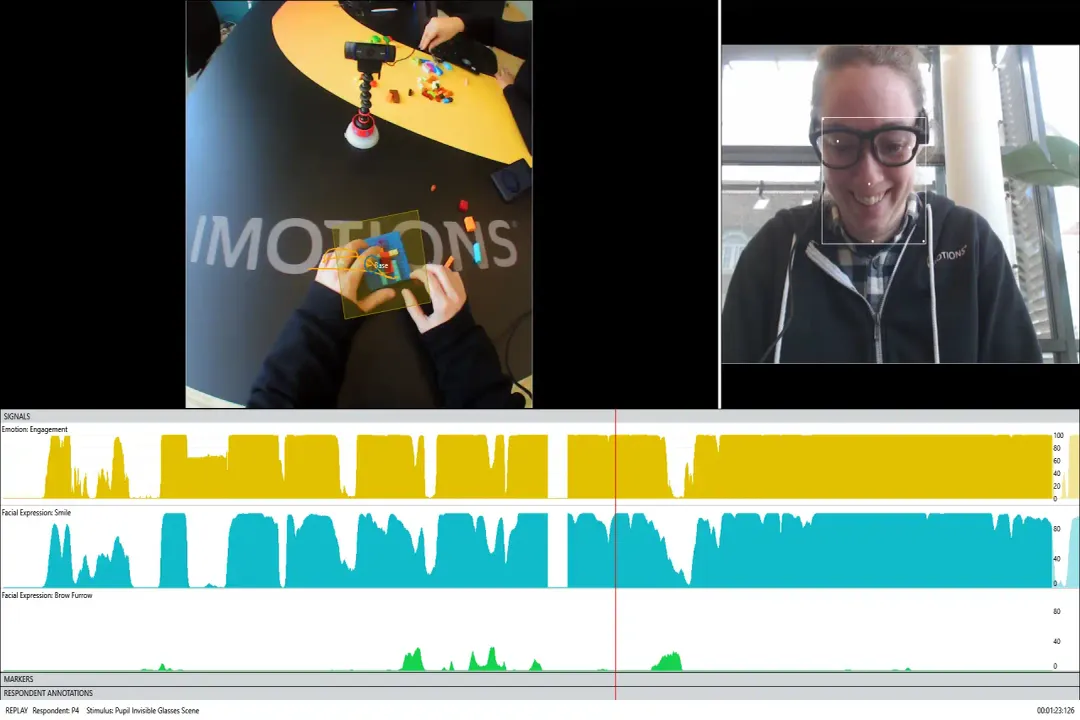
The genesis of emotion recognition—the scientific discipline of identifying human feelings through outward signs—is not a single "Eureka!" moment, but rather a progression built upon deep evolutionary observation and rigorous psychological measurement. While humans have intuitively read facial expressions for millennia, the systematic mapping that underpins modern artificial intelligence analysis has a very specific set of intellectual architects. The foundation for this entire field rests heavily on the work of Charles Darwin, who first proposed that emotional expressions are evolutionarily rooted and shared across species and cultures.
# Darwin's View
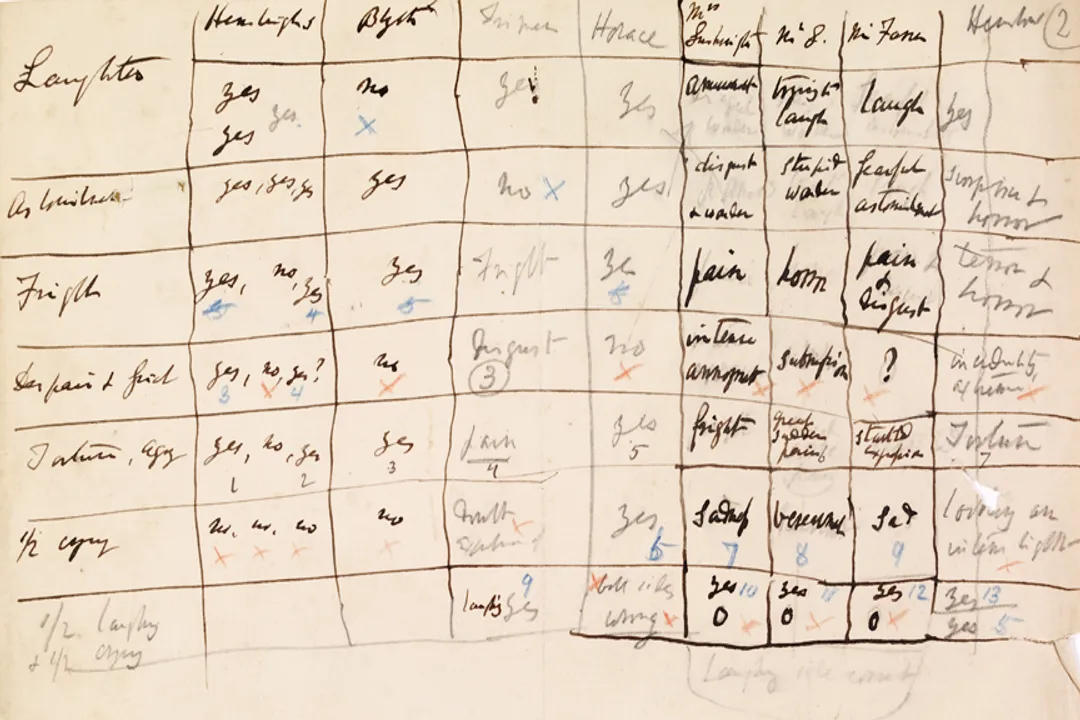
Long before computers could analyze pixels for signs of distress or joy, Charles Darwin laid the conceptual groundwork in his 1872 publication, The Expression of the Emotions in Man and Animals. Darwin argued that many human emotional expressions were vestiges of behaviors that once had direct survival functions, suggesting a biological basis for these displays. This idea directly challenged the notion that all emotional expression was purely learned or culturally specific. Darwin observed that expressions like the baring of teeth in anger or the widening of eyes in fear seemed consistent across different populations, establishing the critical hypothesis that some emotional displays might be universal.
# Ekman's Measurement
The person most frequently credited with turning Darwin’s observations into a measurable science is the psychologist Paul Ekman. Ekman dedicated much of his career to empirically testing the universality hypothesis, a significant departure from the prevailing academic opinion of the time which favored cultural relativism in emotional expression. He conducted extensive research, notably by studying remote, isolated populations, such as the Fore people of Papua New Guinea, whose exposure to Western media was minimal. His research confirmed that certain fundamental emotions were expressed through similar facial muscle movements regardless of culture or language.
Ekman’s team identified several core emotions whose expressions were cross-culturally recognizable. These typically included happiness, sadness, anger, fear, disgust, and surprise. This research provided the first concrete, scientifically validated list of basic human emotional states tied directly to physical manifestation. He is often considered the primary inventor of the scientific methodology used to quantify emotion recognition.

# The Coding System
A key contribution that transformed recognition from subjective observation into objective data was the development of the Facial Action Coding System (FACS). FACS is not an emotion-reading tool itself, but rather a detailed anatomical map that describes every possible facial movement by cataloging the individual muscle movements, known as Action Units (AUs), that create them. For example, a genuine smile involves a specific set of AUs (like the contraction of the zygomatic major muscle), whereas a polite or "social" smile might involve different or fewer units.
FACS provided the necessary standardized dictionary. If Darwin provided the what (universal expressions) and Ekman provided the proof, FACS provided the how—a neutral, objective language to describe what the face is doing without interpreting why it is doing it. This system allowed researchers to move away from simply labeling faces as "happy" or "sad" and instead catalogue the precise physical evidence of those feelings, which is essential for building automated systems. It’s a fascinating distinction: while many researchers may have noted facial differences, the creation of FACS established the authoritative, repeatable metric for describing those differences in a way that could be taught to humans or programmed into machines.
When considering the impact of FACS, one can appreciate the sheer complexity it abstracts. A simple label like "sadness" might be triggered by the combination of AU 1 (inner brow raiser) and AU 15 (lip corner depressor). The system’s rigor ensures that any two trained observers, regardless of their native language or cultural background, should arrive at the same Action Unit count for a given expression, lending immense authority to the data generated.
# Machine Translation
The true "invention" of automated emotion recognition systems owes its existence to the detailed standardization achieved by Ekman and FACS. Modern computer vision and machine learning models do not interpret human intuition; they are trained on massive datasets labeled according to Ekman’s principles—often using the Action Units defined in FACS—to correlate visual patterns with emotional states.
For instance, software modules dedicated to Facial Expression Analysis (FEA) use these deep learning techniques to detect and measure facial expressions in real-time. These systems essentially look for the digital signature of those specific Action Units identified decades earlier. The evolution here is from manual, frame-by-frame human coding to algorithms that can process thousands of frames per second in live video feeds.
One analytical hurdle that emerged during this transition from human coders to algorithms involves the speed and subtlety of expression. Ekman’s work identified not only full, sustained expressions but also micro-expressions—very brief, involuntary facial displays that last less than half a second. While a human coder trained on FACS can be taught to spot these fleeting moments, building an AI capable of reliably detecting these rapid muscle shifts in uncontrolled, everyday video remains a substantial engineering challenge. The original foundational research provided the target, but translating that target into reliable, high-speed digital measurement represents the current frontier of the technology.

# Contextual Concepts
It is important to differentiate the work that founded recognition from related concepts that deal with application and management of emotion. The field of Emotional Intelligence (EI), for example, shares a common starting point—the acknowledgment that emotions are vital for human interaction—but focuses on a different skill set. EI, often associated with researchers like Salovey and Mayer, is about perceiving, using, understanding, and managing emotions—both one's own and others'—to guide thinking and action. While recognizing a genuine smile (Ekman’s domain) is a component of EI, EI goes further, asking how an individual uses that recognition to navigate a social situation effectively.
The reliance on Ekman’s framework for universal expressions also brings a necessary layer of scrutiny to modern implementations. When applying these models globally, there is an inherent analytical step required that goes beyond the original pure scientific finding. While the basic muscle movements for the six core emotions are considered universal, the rules for when and how intensely these expressions are shown—the display rules—are indeed culturally modulated. Early studies, while groundbreaking, often featured a narrow demographic focus. Therefore, a contemporary analyst building an emotion AI must account for the fact that a high degree of recognition accuracy achieved in a lab setting using standardized stimuli may drop when deployed in a complex, real-world environment where cultural norms dictate subtle variations in expression intensity or frequency. This gap between identifying the biological potential for an expression and observing the practiced reality of that expression is a major area of current academic refinement.
# Summary of Lineage
To pinpoint the single "inventor" of emotion recognition is impossible, as it involves multiple disciplines over time. However, we can trace a clear lineage:
- Charles Darwin (Conceptual Origin): Established the evolutionary, cross-cultural basis for observable emotion.
- Paul Ekman (Scientific Origin): Provided the empirical proof of universality for core emotions and developed the primary measurement language.
- Ekman & Friesen (Technical Origin): Created the FACS system, the objective, anatomically based metric that transformed subjective observation into quantifiable data necessary for automation.
- Computer Scientists (Technological Realization): Translated FACS metrics into machine learning algorithms, creating automated emotion recognition systems.
The core methodology that allows computers to recognize emotion—the move from simple categorical labels to codified, measurable muscular patterns—is firmly rooted in the decades of painstaking work by Paul Ekman and his development of FACS. Without that standardized, objective language, the development of today’s sophisticated facial analysis software would have remained strictly anecdotal. The field owes its structure to these foundational scientists who dared to prove that our deepest feelings are written, quite visibly, on our faces.
Related Questions
#Citations
Paul Ekman - Wikipedia
About Paul Ekman | Emotion Psychologist
Darwin's contributions to our understanding of emotional expressions
Emotion Experiment | Darwin Correspondence Project
The Evolution of Emotion AI | Blog MorphCast
Facial Expression Analysis - Emotion Detection Software - iMotions