Who invented digital twins for cities?
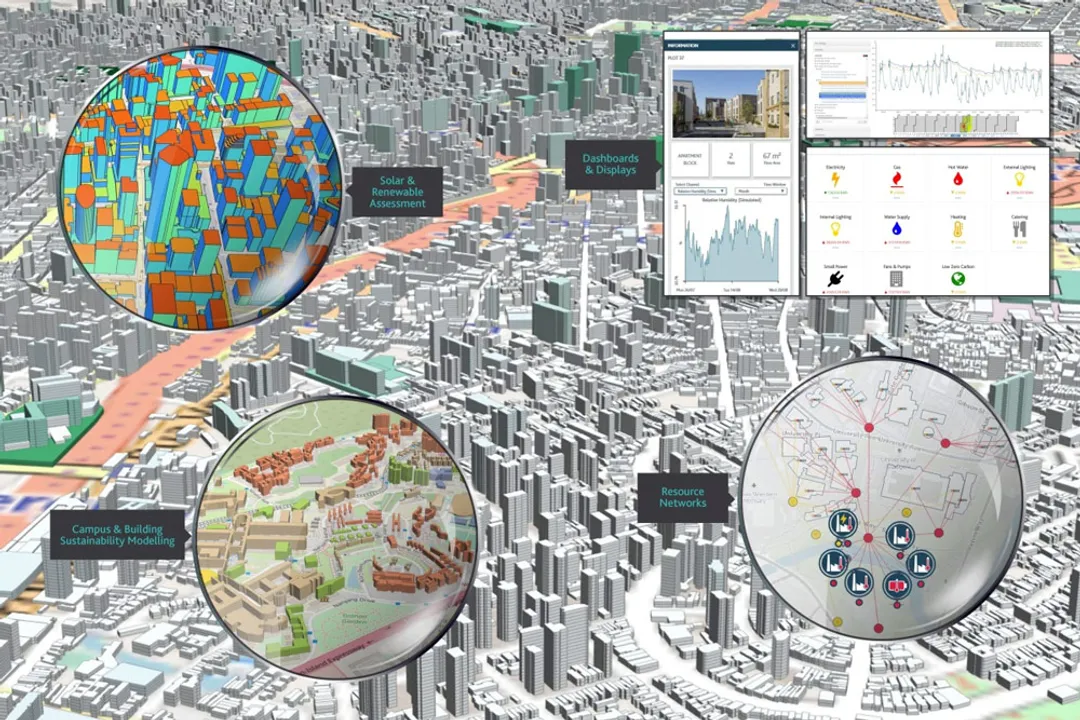
The genesis of the digital twin concept is a story that spans theoretical introduction, government agency pioneering, and eventual application across various complex systems, eventually leading to its adoption in managing entire metropolitan areas. While the exact moment of conception for the city digital twin is less a single event and more an evolutionary convergence of technologies, the foundation for the digital twin, in general, is often traced back to the early 2000s.
# Concept Naming

The widely accepted starting point for defining the digital twin as a named concept occurred in 2002. It was at a Product Lifecycle Management (PLM) conference that Michael Grieves formally introduced and described the theoretical model. Grieves, a professor at the University of Michigan, articulated the need for a near real-time virtual counterpart to a physical product or system, which evolves alongside its physical twin throughout its lifecycle. This initial concept was purely theoretical at the time, lacking the necessary data infrastructure to become a reality.
# NASA Precursors

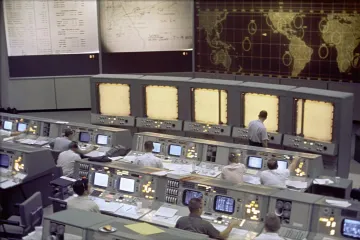
Long before Grieves gave the concept its name, the necessary groundwork—and perhaps the spirit of the digital twin—was being established by NASA. The agency’s need to manage the complex systems of spacecraft during long missions provided the foundational need for mirroring a physical asset digitally. NASA engineers utilized early forms of simulation and modeling to track the condition of their assets remotely. John Vickers, an official at NASA, later played a significant role in championing the adoption of the digital twin concept within the agency to manage these complex assets. This early space-faring work established the precedent that a virtual representation could be vital for maintaining operational integrity of high-value, remote physical systems.

# Industrial Evolution

The journey from a theoretical PLM concept and NASA's early models to widespread industrial use required significant technological maturation. The concept languished somewhat until advancements in sensors, connectivity, and data processing caught up. The subsequent rise of the Industrial Internet of Things (IIoT) provided the crucial bridge between the virtual model and the physical world. With IIoT came the ability to stream vast amounts of real-time data from physical assets—like factory machines, wind turbines, or vehicles—into their digital counterparts. This transition marked the shift from a static model to a living twin, capable of simulating current conditions, predicting failures, and optimizing performance based on live feedback.
# Urban Shift

As the industrial sector began realizing the efficiencies of digital twins, attention naturally turned toward larger, more complex systems: cities. Applying the digital twin concept to an urban environment involves modeling everything from infrastructure and traffic flow to energy consumption and citizen movement.
The transition to city-scale modeling represents a massive jump in complexity compared to twinning a single product or even a factory floor. A product twin might deal with mechanical failure or material stress; a city twin must account for interconnectedness across physics, biology, and human behavior.
While Michael Grieves provided the foundational definition for a digital twin, the specific inventor credited with advancing the methodology for City Digital Twins points toward a later development within the urban planning space. A key figure in this area is Dr. John M. Ballantyne, who, working with Dassault Systèmes, has been influential in advancing the concept of City Science and the City Digital Twin. His work focuses on integrating existing urban modeling tools like Building Information Modeling (BIM) and Geographic Information Systems (GIS) into a unified, dynamic simulation environment. This merging of existing data sources into a single, interrogatable virtual city environment is what separates a modern City Digital Twin from earlier static city models. The practical application in urban planning, therefore, is less about a singular invention date and more about the successful integration of these mature data practices around the early 2010s and onward.
One way to appreciate the scale difference is to compare data governance. A manufacturing digital twin might track the operational parameters of a machine with tens of thousands of data points. A city twin, however, must integrate layers of data—water lines, power grids, air quality sensors, zoning maps, traffic patterns, and historical climate data—where the sheer number of interacting variables causes exponential complexity growth.

# Modeling Complexity
The relevance of digital twins for future cities stems directly from their ability to model these intricate interactions. For instance, a city twin allows planners to test policy changes—such as adjusting traffic light timings or implementing a new zoning regulation—in a safe, virtual environment before deploying them in the real world. This allows for predicting second- and third-order effects that would be impossible to calculate with traditional static models.
The scope of what is being modeled in urban settings is vast:
- Infrastructure Management: Tracking the age, material, and stress points of subterranean utilities like water and sewer lines.
- Environmental Modeling: Simulating air flow, heat island effects, and the impact of new construction on microclimates.
- Emergency Response: Rehearsing evacuation routes or the deployment of first responders during a crisis.
It is important to recognize that the digital twin for a city isn't just a 3D model; it must be alive with data. A static 3D model built from architectural plans is simply a digital representation. The twin status is earned only when it is constantly fed live or near-live operational data from the physical city, allowing it to accurately mirror the current state, not just the designed state.
# Experts Guiding Urban Application
While the foundational work by Grieves and the urban systems advocacy by figures like Dr. Ballantyne provide the theoretical and methodological backbone, the current landscape involves many experts driving specific applications and ethical considerations. These contemporary experts often focus on specific domains within the urban twin, such as sustainability, smart mobility, or citizen engagement.
For example, in the realm of urban planning, some experts concentrate on how these models can visualize the impact of parametric design—the use of algorithms to generate complex building forms—on the urban fabric, ensuring that aesthetically interesting new developments also perform optimally regarding sunlight, wind shear, and pedestrian flow.
Another area where application expertise shines is in ensuring the twin serves the public good, which requires careful data governance. Cities that successfully deploy twins often have established protocols for data collection, anonymization, and sharing across municipal departments, which is a significant organizational challenge separate from the technical modeling itself.
A practical consideration for any city contemplating a twin is the concept of "data debt." Just as a company accrues financial debt, a city can accrue data debt by delaying the standardization and digitization of legacy records (paper maps, old maintenance logs). Building a digital twin requires paying down this debt first; otherwise, the simulation will be built on an unreliable foundation, leading to flawed operational decisions. This organizational readiness is often a greater hurdle than selecting the modeling software itself.
# Digital Twin Categories
To better understand the city twin's place, it helps to distinguish it from its industrial cousins. The evolution shows a clear path from product to system scale.
| Twin Type | Primary Focus | Key Data Source | Inventor Context |
|---|---|---|---|
| Product Twin | Individual machine/asset lifecycle, performance | IoT sensors on the machine | Industrial/Manufacturing |
| System/Process Twin | Interconnected production line or supply chain | Enterprise Resource Planning (ERP), Manufacturing Execution Systems (MES) | Industrial Optimization |
| City Twin | Entire metropolitan area, including built and human systems | GIS, BIM, real-time sensor networks, municipal records | Urban Science/City Planning |
The city twin is arguably the most aspirational because it incorporates the unpredictable element of human activity into a model that otherwise deals with fixed physical assets.
# The Unifying Element
In summary, the invention of the digital twin as a core concept belongs to Michael Grieves in 2002, building upon the modeling experiences of entities like NASA. However, the invention of the Digital Twin for Cities is not attributable to one single person but rather to a technological and methodological convergence: the merging of the Grieves concept with mature GIS/BIM technologies, advanced by key advocates and practitioners in urban science, such as Dr. John M. Ballantyne and organizations like Dassault Systèmes, to manage the vast complexity of the urban ecosystem. The real "invention" for cities was finding a way to make these disparate data streams talk to each other in a unified, predictive virtual space. This ongoing process means that while the foundational idea is two decades old, the maturity of the city twin as a functional tool is still rapidly evolving today.
Related Questions
#Citations
The Mysterious History of Digital Twin Technology and Who Created It
Digital Twin Evolution: A 30-Year Journey That Changed Industry
Digital twin - Wikipedia
Digital twins explained - Makersite GmbH
5 Real World Examples of Digital Twins - PALAMIR
The relevance of digital twins for building future cities
Top 10 Digital Twins in Urban Planning experts to follow - Ian Khan
From Concept to Practice: Digital Twins to City Twins
Why cities are creating digital twins - DXC Technology