Who invented appointment scheduling systems?
The concept of managing a future commitment—an appointment—is as old as commerce itself, but tracing the lineage of the system designed to automate this process leads us through several distinct technological eras rather than to a single named inventor. The initial methods were inherently analog: paper diaries, physical appointment books, and reliance on phone calls or in-person confirmations. [3] These manual approaches were notoriously prone to errors, time-consuming, and difficult to scale or coordinate across even small organizations. [3]
# Early Electronic Steps
The move toward automation began when computer systems became accessible enough for administrative tasks, dating back to the 1960s and 1970s. [3] During this period, organizations began experimenting with ways to digitize records, marking the very first steps away from physical ledgers. It wasn't until the 1980s that computer-based solutions gained traction, often taking the form of simple electronic databases or early spreadsheet programs. [3] These systems were rudimentary; their primary function was electronic storage and retrieval of appointment data, lacking the dynamic features we now associate with scheduling tools.
# Contested Digital Birth

Pinpointing the moment appointment scheduling software was genuinely "invented" depends heavily on the definition—specifically, whether "online" implies customer self-service over the emerging World Wide Web or simply electronic record-keeping.
A significant claim points to an earlier milestone in online functionality: the world's first online appointment scheduling system was reportedly developed in 1987 by a dentist. [2] This event, predating the commercial internet boom, established the foundational idea that availability could be managed digitally and made accessible remotely, setting the stage for future systems. [2]
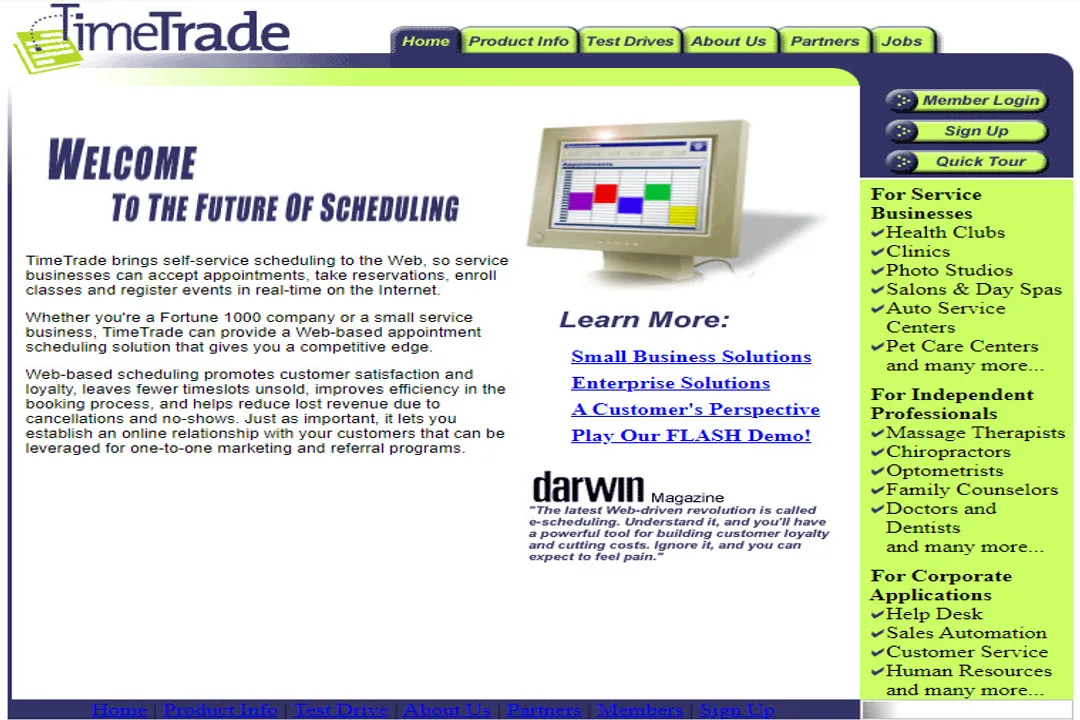
However, the widespread commercialization and feature development of customer-facing online scheduling tools is often associated with the late 1990s. In 1999, the team behind what would become Engageware (then known as TimeTrade) began work on an industry-leading solution, originally conceived to help a local hair salon allow clients to book appointments online. [2] This marked a key transition point, as it coincided with the increasing use of the internet by consumers, though making appointments online was still a novel concept compared to booking purchases. [2] The focus in this era was often on providing this capability to small to medium-sized businesses (SMBs) across sectors like health and wellness, spas, and fitness centers. [2]
This period of the late 1990s also forced a look at the underlying business model. The pioneers discovered that many purchasers—larger companies—were initially using the software internally to manage staff scheduling on behalf of customers, rather than opening the direct booking portal to the end-user. [2] Furthermore, the Software as a Service (SaaS) model, which underpins most modern online scheduling, was still considered a "fairly nascent concept" at the time. [2]
An interesting friction point in the evolution of this technology was the consumer readiness gap. While the technical capacity for online booking existed around 1999, the accepted consumer behavior was still centered on making appointments either in person or via telephone. The system was ready before the public habit caught up, requiring early adopters to bridge that gap, often by having staff input bookings on the customer’s behalf. [2]

# Maturing Features and Enterprise Pressure

The late 1990s and early 2000s saw the software itself become more sophisticated. As dedicated applications emerged, they began incorporating features necessary to manage complexity and prevent operational failures, such as automated reminders and conflict detection. [3] This development was significantly shaped not just by SMB needs, but by the demands of larger enterprises.
When companies with high volume and distributed operations—such as Sears portrait studios handling bookings across multiple locations and time zones—adopted the software, it drove necessary innovation. These early large-scale deals necessitated features for managing varied resources like specific rooms, equipment availability, and staff across different geographical constraints. [2]
This enterprise requirement introduced a second defining evolutionary pressure: handling resource complexity. For instance, dealing with a company leasing temporary office space worldwide required the system to track not just who was available, but what physical assets—projectors, conference equipment, room size—were needed for the appointment. [2] These requirements helped develop the feature set to handle complexity in a way that later competitors found difficult to match. [2]
# The Shift to Web and Cloud
The next major leap occurred as web technologies matured in the 2000s, pushing scheduling from local desktop installations to easily accessible web-based solutions. [3] This transition democratized scheduling, allowing users to access their schedules from any internet-connected device without needing local software installs or manual data synchronization. [3]
This evolution was further accelerated by the rise of smartphones in the late 2000s and early 2010s, leading directly to the development of mobile scheduling applications that allowed on-the-go management. [3] Simultaneously, the cloud-based solution model became mainstream, providing secure, centralized data storage and access from multiple devices. [3]
Modern systems focus on deeper integration, linking the booking process with other business functions, such as Customer Relationship Management (CRM) systems, payment gateways, and email marketing platforms. [2][3]
A crucial factor distinguishing the successful scaling of scheduling systems was their ability to handle dynamic resource pools, which changed fundamentally in the last decade. Early systems were built around physical resources—a specific room at a specific location available at a finite time. Today, the system must seamlessly account for virtual resources—a specialist who can service an appointment from anywhere via Zoom or WebEx, capable of serving a client anywhere in the world across time zones. This architectural pivot, integrating physical and virtual service delivery within the same logic, represents one of the most significant, though less celebrated, evolutionary achievements in scheduling technology. [2]

# Modern Capabilities and Industry Application
Today, appointment scheduling software is defined by its automation, accessibility, and intelligence. Essential features span 24/7 online availability, integration with CRMs, the capacity to monitor booking statistics, and the use of automated reminders via email or SMS to mitigate revenue loss from no-shows. [2][3] Some advanced systems even combine appointment booking with queue management to handle both scheduled and walk-in traffic on a single platform. [2]
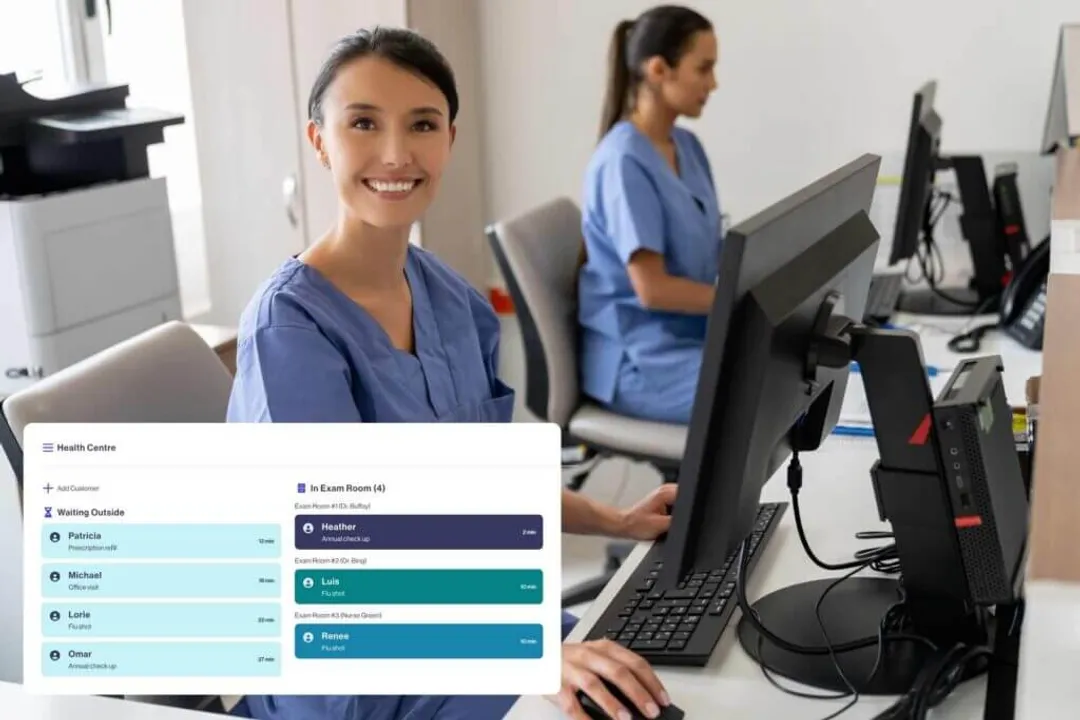
The need for these sophisticated tools is evident across numerous sectors. In healthcare, for example, efficient scheduling is not merely about convenience but is tied to operational efficiency and patient safety. [4] The ability of modern systems to handle specialized requirements—like managing patient intake forms, ensuring adherence to privacy laws, or integrating telehealth capabilities—shows how far the technology has moved from the simple 1987 or 1999 concepts. [3][2] Contemporary applications can even use Artificial Intelligence (AI) and machine learning to optimize scheduling paths, minimize conflicts, and manage complex routing decisions in real time. [3]
In summary, the invention of the appointment scheduling system cannot be credited to a single moment or person. It evolved from early electronic record-keeping in the 70s and 80s, [3] gained its online viability in the late 1980s with early adopters like dentists, [2] achieved commercial maturity and feature density around 1999 with pioneers like TimeTrade/Engageware, [2] and finally transformed into the interconnected, cloud-based, and often AI-enhanced tools of today. [3]
Related Questions
#Citations
Then, now, and next: The history of ...
Selecting the best appointment scheduling software for ...
Appointment scheduling software
"Appointment Scheduling System" by Guzaloi Noori