Who developed an automated traffic signal?
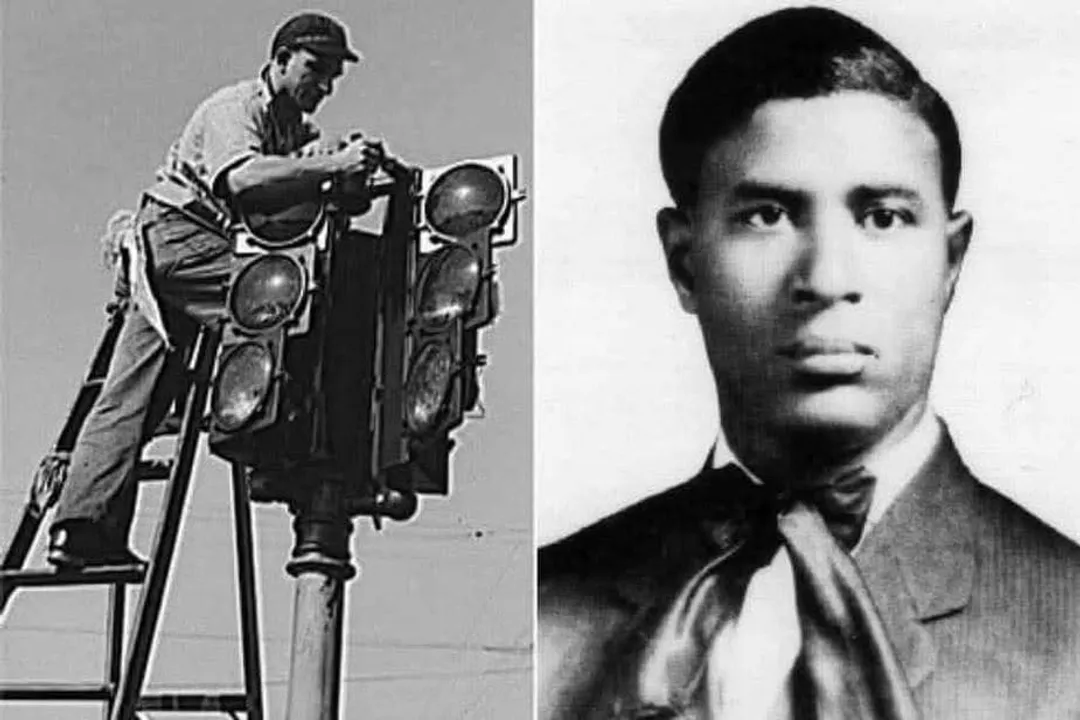
The history of stopping and starting traffic is surprisingly complex, involving numerous inventors tinkering with everything from gas lamps to simple electrical switches before a truly automated system emerged. It is not a story with a single protagonist, but rather a progression of crucial improvements, each innovator adding a necessary layer to the final product we recognize today. The earliest recognized attempt to manage road traffic using signals occurred not with electricity, but with gas.
# Gas Control
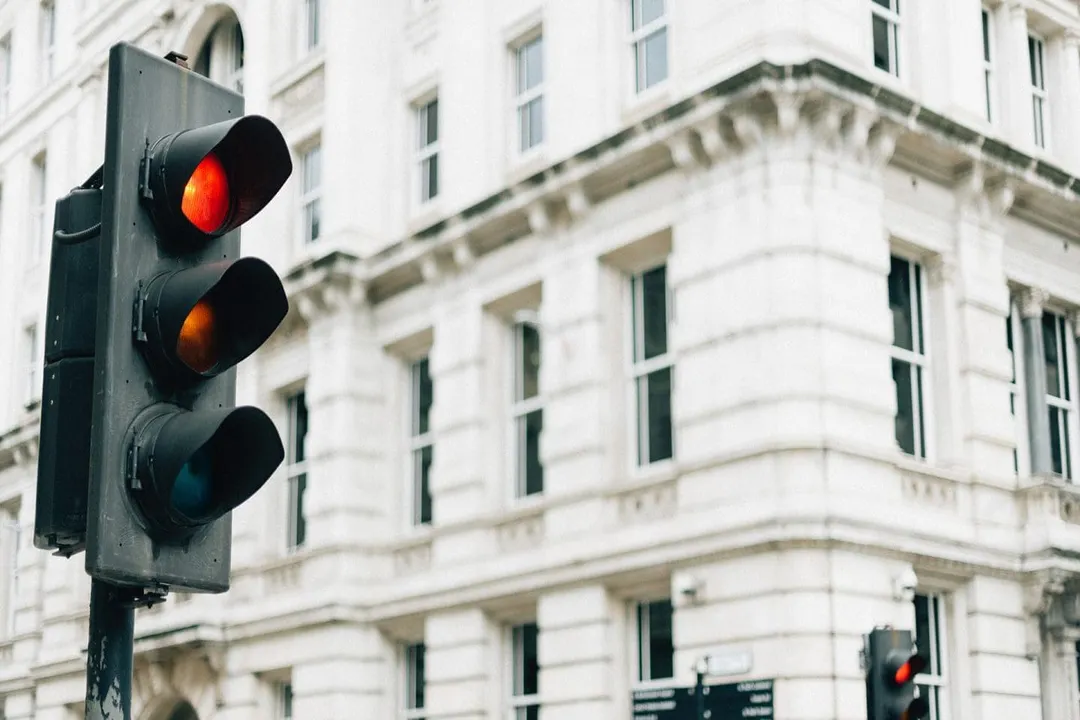
In the mid-19th century, as horse-drawn traffic and early automobiles began to clog city centers, the need for mechanical direction became apparent. This problem was first seriously addressed in London. In 1868, J.P. Knight developed a manually operated, gas-lit signal system. [6][4] This device, placed near the Houses of Parliament, used semaphore arms during the day—a horizontal arm indicating "Stop" and an angled one meaning "Caution"—and colored gas lights (red for stop, green for caution) at night. [2][4] Regrettably, this groundbreaking attempt at traffic management proved too dangerous for its environment. In early 1869, the gas line supplying the signal malfunctioned, causing an explosion that injured the police officer operating it. [2] This tragic failure temporarily set back the widespread adoption of mechanical traffic control devices.
# Electric Beginnings
Decades later, the advent of electricity provided the safe, reliable power source needed to revolutionize traffic direction. The transition from manual levers and volatile gas to electric bulbs marked the true beginning of the modern signal era, though this development also happened in stages. [9]
One of the earliest claims for an electric traffic signal belongs to Lester Wire of Salt Lake City, Utah. [6] Around 1912, Wire, a policeman, developed a wooden box containing red and green lights mounted on a pole. [2][6] While often credited as the first electric signal, Wire never patented his design, meaning it remained a local solution rather than a standardized invention. [2]
Shortly after Wire’s local application, the first electrically operated, manually controlled traffic signal system appeared in Cleveland, Ohio, in 1914. [4] This system was created by James Hoge. [4] Hoge's contribution was significant because it was the first electrically powered system to be installed, even if it required an operator to switch the lights between directions. [4]
# Warning Hue
The systems developed by Wire and Hoge utilized only two colors, typically red and green, mirroring the basic stop/go function of a railway signal. [2] However, as traffic volumes increased, engineers realized that abruptly switching from "Go" to "Stop" created dangerous situations—a sudden transition offered no warning to drivers approaching the intersection. [2]
Enter William Potts, who is credited with inventing the first electric traffic light that included a third, transitional color. [2][4] In 1920, Potts installed his improved system in Detroit, Michigan. [2] By adding the yellow light between red and green, Potts solved the critical timing issue, providing the necessary warning phase. [2][4] This red-yellow-green sequence established the color standard that remains nearly universal for traffic control today. [2] Potts' concept allowed for a smoother, safer transition of traffic flow through intersections.
# Morgan's Patent
While Potts added the essential caution light, the development of a truly automated, multi-position system is often credited to the prolific African American inventor, Garrett Morgan. [3][7] Morgan was already known for earlier inventions, including a safety hood/smoke protector used by firefighters. [5] Inspired by witnessing a serious traffic accident at a busy intersection, Morgan set out to create a device that could safely control traffic without constant human intervention. [5]
On November 20, 1923, Morgan received U.S. Patent No. 1,475,022 for his three-position traffic signal. [1] His design was not just about the colors but the mechanism and positioning. Morgan's device was housed in a T-shaped signal standard. [5] It featured three arms: one horizontal for "Stop," one vertical for "Go," and a fourth, diagonal arm for an "All Stop" or warning position that effectively halted traffic from all directions briefly, allowing cross-traffic to clear before resuming flow. [1][5] Some sources indicate that Morgan's initial electric design, preceding the formal patent, used a simple red and green arrangement similar to Wire's, but his patented mechanism focused on a superior, controlled sequence. [7]
The brilliance of Morgan's design lay in its automation and comprehensive approach to intersection safety, which was a step beyond the manually switched system Potts had implemented. [1] Recognizing the immense commercial potential, Morgan sold the rights to his traffic signal patent to the General Electric Company for an estimated $40,000. [1][5] This significant sum established Morgan financially, paving the way for him to focus on other ventures. [5]
# Inventors Compared
When examining this history, it becomes clear that the "inventor" depends entirely on the metric used. If the metric is the first gas-lit, manually switched system, the answer is J.P. Knight. [4] If it is the first electric light system, it is arguably Lester Wire or James Hoge. [2][4] If the key innovation is the warning light, it is William Potts. [2] However, for the patented, three-position, automated signaling mechanism that standardized the process, Garrett Morgan holds the strongest claim. [1][5]
It’s fascinating to consider the valuation of these incremental advancements. While Potts solved the immediate safety issue of the transition phase, it was Morgan who wrapped the entire concept—the specific timing sequence and housing—into a clean, patentable product that General Electric immediately recognized as scalable for national use. [1][5] This difference suggests that securing intellectual property on a complete system (Morgan) often garners more immediate financial reward than solving a single, critical component (Potts), even if the component is conceptually just as vital to the system's success. [1][5] The evolution shows a clear path from simple electrical indicator to controlled intersection management.
# Automation Shift
The evolution from manually operated lights (Hoge's system) to automated sequences was essential for managing urban sprawl and increasing vehicle density. [4][9] Morgan's patent was crucial because it solidified the idea that signals could operate independently, leading directly to the wired, timed systems that became standard across American cities. [1]
The first fully automatic, electric traffic signal in the U.S. was installed in 1928 in Cleveland, marking the beginning of the end for human flaggers at major intersections. [9] This transition didn't happen overnight, but Morgan's patented concept of structured phases provided the blueprint for this automation. Even today, as intersections deploy sophisticated radar, video detection, and adaptive timing software that can react to real-time traffic volume, the underlying logic remains rooted in those early innovations. The conceptual structure of Stop, Caution, Go, and the brief All-Stop clearance interval, which Morgan formalized, is the fundamental language spoken by every traffic light controller chip in operation, regardless of how many sensors it is connected to. [1][5] The engineers today are merely refining the speed and responsiveness of the rules established a century ago.
#Videos
How was the Stoplight invented? - YouTube
Related Questions
#Citations
Garrett Morgan patents three-position traffic signal - History.com
Traffic signals invented | Research Starters - EBSCO
Who Invented Traffic Lights? The Story of John Peake Knight - LYT
A 105-Year History of the Electric Traffic Signal
Garrett Morgan: Inventor of the Three-Position Traffic Signal
Traffic signals: A brief history - Washington State Magazine
The Inventor of the automatic traffic light was an African American ...
How was the Stoplight invented? - YouTube
History of traffic lights - Wikipedia