Where was the first glider made?
The history of human attempts to fly without mechanical power is long and filled with fascinating, often tragic, experiments, but when people ask about the first successful or practical glider, the narrative almost invariably points toward Germany and the relentless work of Otto Lilienthal. [2][3] While rudimentary concepts of unpowered flight existed for centuries—from kites to simple launching contraptions—Lilienthal was the first to systematically design, build, and repeatedly fly heavier-than-air craft, documenting his results well enough to inform the next generation of aviators. [2][9] The creation of these foundational machines took place primarily in and around Berlin, Germany, during the late 19th century. [2]
# Early Concepts
To properly contextualize Lilienthal's achievement, one must first acknowledge that a glider, fundamentally, is an unpowered fixed-wing aircraft. [7] The concept of fixed-wing flight predates modern engineering by millennia; early attempts often involved strapping wings to oneself or launching from high points, sometimes with disastrous results. [7] However, a machine is not defined merely by its wing shape but by its proven, repeatable performance and the engineering principles applied to its construction. [2] Before the 1890s, most attempts lacked the necessary understanding of aerodynamics—specifically, how to generate sufficient lift and maintain stability. [2] The breakthrough wasn't just building a wing; it was building one that worked reliably enough to allow the pilot to learn to control it. [3]
# Pioneer in Berlin
Otto Lilienthal was born in 1848 in Anklam, Prussia, but his significant aviation work was centered in Berlin. [2] He was an established engineer and inventor, known for his work with steam engines and patents, which provided him with both the technical skill and the financial means to pursue his aerial fascination. [2] His approach was characterized by rigorous scientific inquiry, differing greatly from earlier, less systematic attempts. [2] He published his findings in the 1889 book Birdflight as the Basis of Aviation (Der Vogelflug als Grundlage der Fliegkunst), which laid out the theoretical basis for his practical experiments. [2] This publication itself marks a moment of authority, establishing his expertise long before his most famous flights. [2]
The actual physical construction of his early successful models happened in his workshops in Berlin. [2] These initial machines were not necessarily the ones that achieved the most famous records, but they were the necessary stepping stones. The environment of late 19th-century industrial Germany, with its focus on precision manufacturing and emerging scientific study, provided the right backdrop for this kind of detailed engineering work. [2]

# First Tested Glider
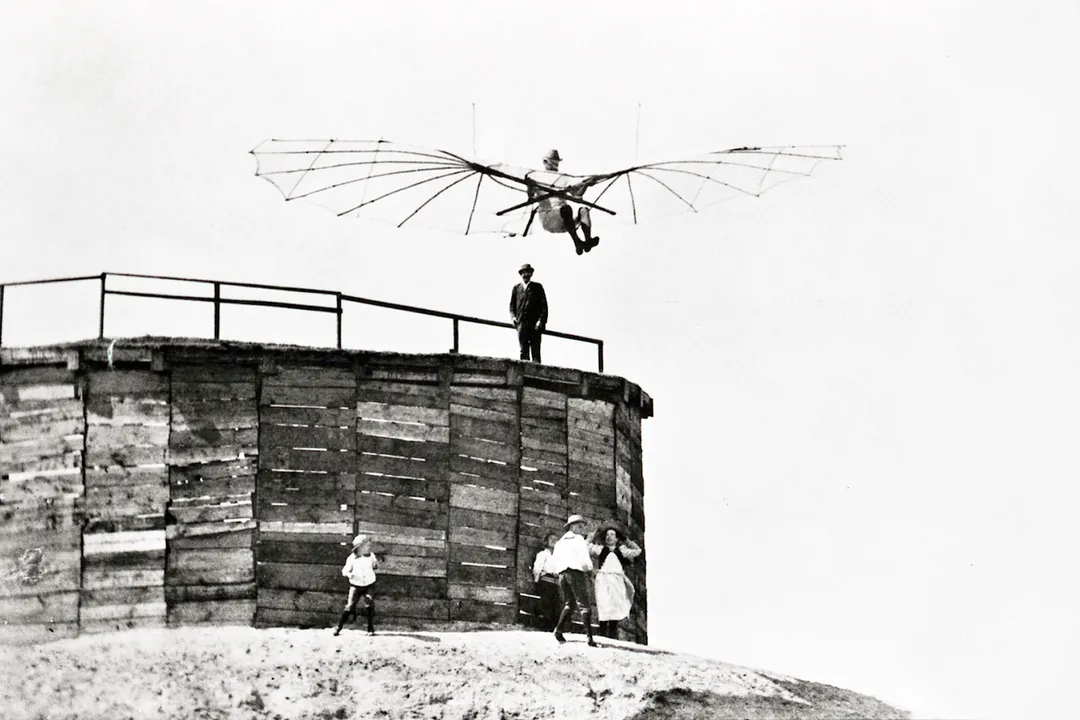
Pinpointing the absolute first glider built by Lilienthal is challenging, as his process involved numerous prototypes and modifications. [2] However, his most recognized and historically significant series of successful flights began around 1891. [2] This early craft was a monoplane design, meaning it had a single set of wings. [2] Unlike later, more sophisticated gliders, this initial machine was heavily focused on testing the fundamental principle of controlled, unpowered descent based on his birdflight studies. [2]
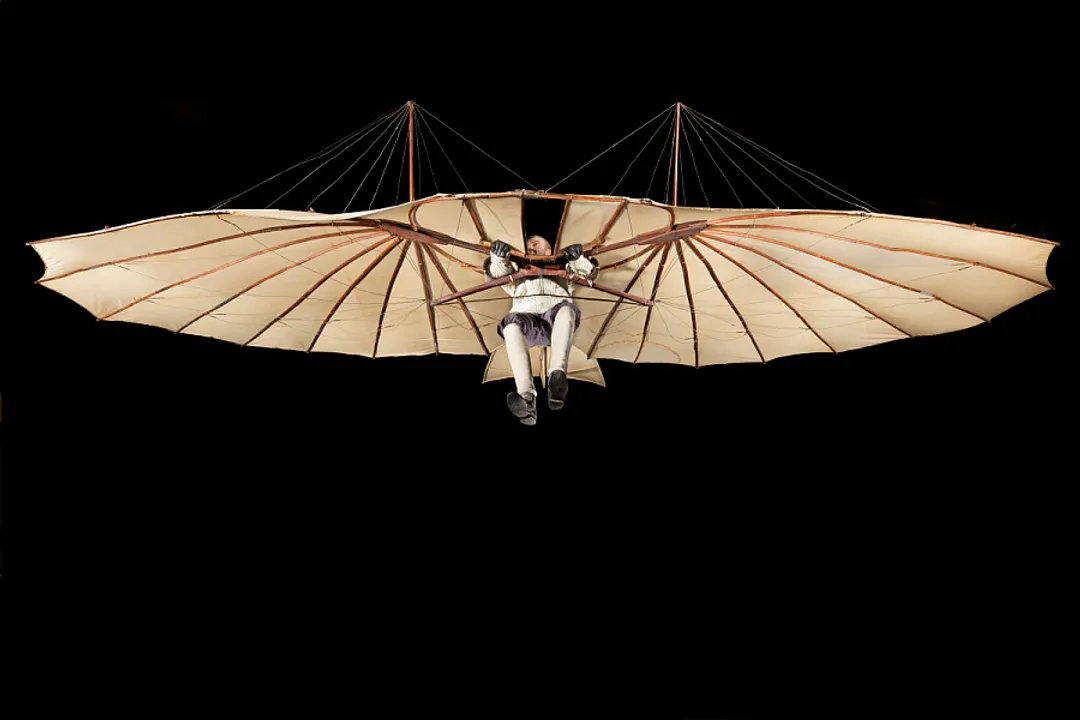
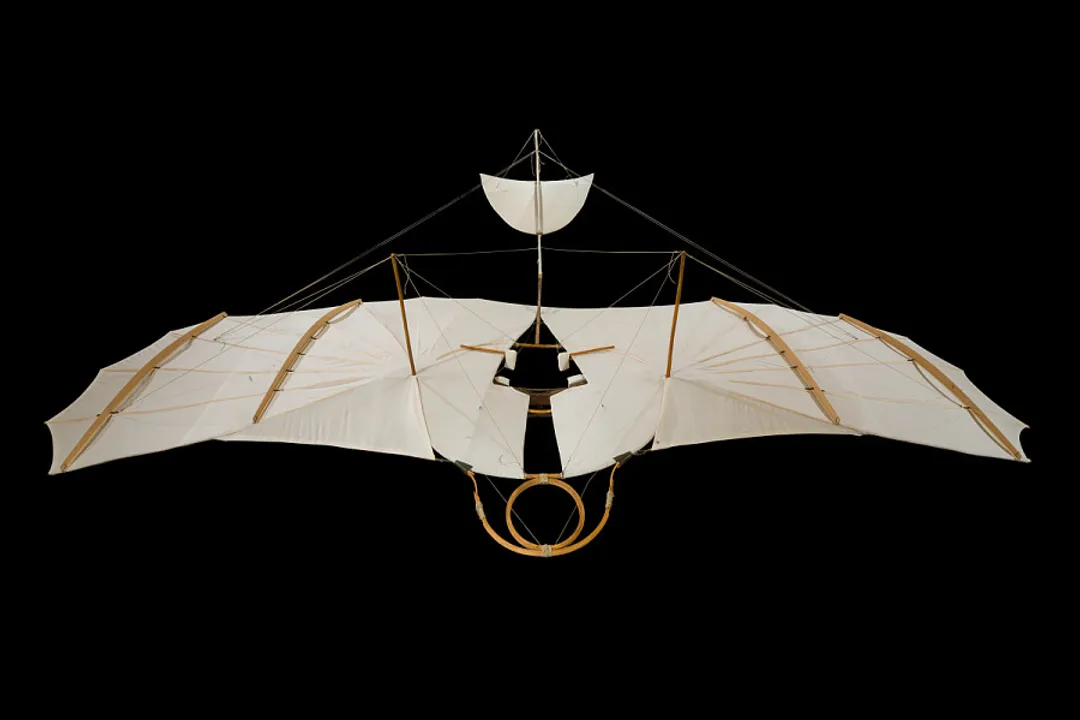
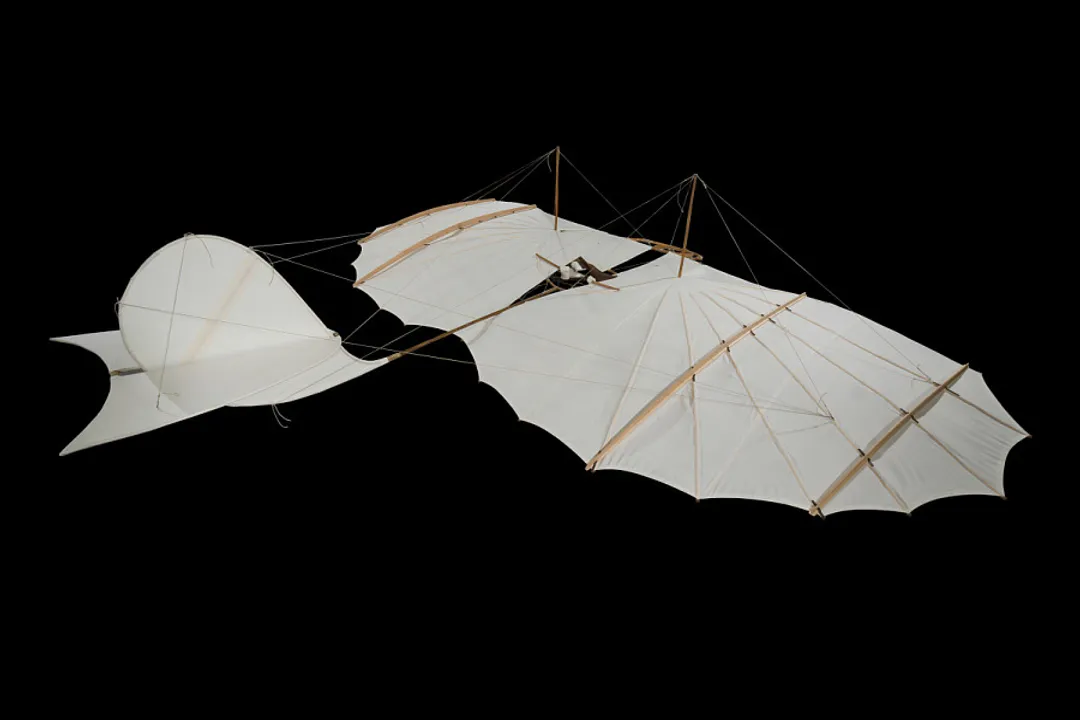
One notable craft, sometimes referred to as the "Standard Glider," was a monoplane that featured a wingspan of about 16 feet. [1][4] A surviving example, or a very close reproduction such as the one held by the Museum of Flight, illustrates the construction: a simple structure of willow wood and cotton fabric, using a curved airfoil design that was crucial for generating lift. [1][4] The pilot essentially hung prone or semi-prone beneath the wing structure, controlling the craft primarily through shifts in body weight. [1]
If we consider the first proven design that allowed the pilot to achieve actual gliding rather than simply falling with style, the success in 1891 in Berlin is the conventional answer. [2] Lilienthal claimed to have made over 25 gliding flights that first year alone. [2] While many early aviation pioneers focused on launching from elevated structures, Lilienthal's innovation included constructing an artificial hill in the suburbs of Berlin to ensure consistent, safe launch conditions for repeatable testing. [2]
It is important to distinguish between the making location and the flying location. While the workshops where the willow frames were bent and the cloth sewn were likely within the city of Berlin, the most iconic and repeatable flights occurred at specific testing sites near the city, such as Tegel or his artificial hill. [2] This need for controlled, repeatable testing environments is something modern aviation engineers still recognize as essential for development.
# Evolving Wing Design
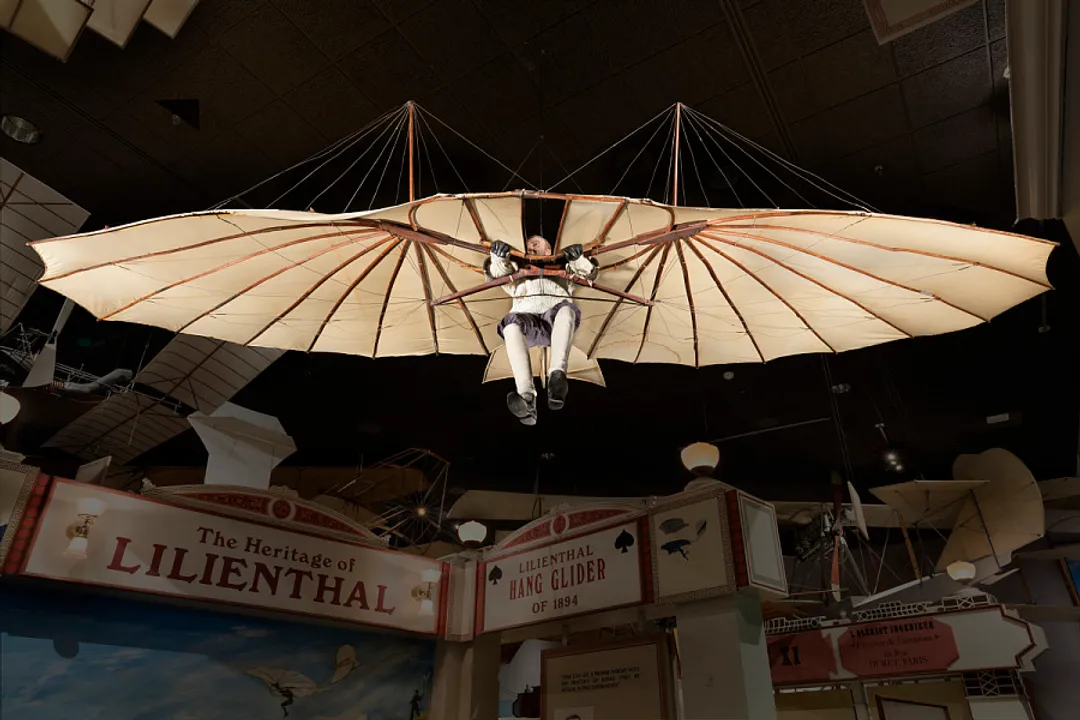
Lilienthal’s work was iterative; he didn't perfect the design on the first try, which adds great depth to the story of where his glider development happened—it happened across several iterations in the same geographical area. [2]
He quickly recognized the limitations of the monoplane. His body weight provided control, but it was rudimentary. Around 1894, he moved toward biplane configurations. [2] A comparative look at his main designs reveals a significant shift in engineering philosophy:
| Configuration | Approx. Year | Key Feature | Control Method |
|---|---|---|---|
| Monoplane | ~1891 | Single set of wings, high aspect ratio | Weight shift only |
| Biplane | ~1894 | Two main wings stacked | Weight shift, improved stability |
| Ornithopter/Variations | Later | Experiments with wing articulation | Increased complexity |
The biplane design, with its shorter span for a given area, often offered greater structural rigidity, which was necessary as the forces encountered during maneuvers increased. [2] This transition showcases that the "first glider" quickly evolved into a series of better gliders, all stemming from the initial Berlin workshops. [2] The museum reproductions often focus on the 1894-1895 models because they represent the peak of his success and documented reliability. [4]

# The Nature of Control
A critical insight into the development of the glider is understanding how control was achieved, which directly influenced the machine's structure. Lilienthal's gliders were instinctive machines, demanding that the pilot act as a living counterbalance. [1] To turn, the pilot would shift their weight laterally; to climb or dive, they would move forward or backward on the control bar. [1] This contrasts sharply with later aircraft where control surfaces like ailerons, rudders, and elevators provided mechanical translation of the pilot's input. [2]
The physical requirement of this control system meant the structure had to be strong enough to support the pilot’s full weight plus the dynamic loads of flight, yet light enough to glide effectively. [1] The materials—light woods, meticulously tensioned wire bracing, and treated fabrics—were the technological limits of the time. Considering the resources available, building a machine that could withstand these dynamic loads and achieve controlled flight for hundreds of feet was a remarkable feat of applied physics in the late 19th century. [2]
# Global Impact and Success Metrics
While the creation and testing ground was firmly rooted in Germany, the impact of Lilienthal’s glider spread globally, reaching the notice of aspiring aviators in America, including the Wright brothers. [9] The Wrights, based in Dayton, Ohio, specifically cited Lilienthal's published work as foundational to their own early design research. [9] They sought to improve upon his methods, particularly concerning the control problem that Lilienthal, through his death, never fully solved. [2][9]
The scale of Lilienthal’s achievement is impressive when quantified. By the time of his death in 1896, he had made over 2,000 documented flights. [3] These flights, performed on machines designed and built in his local area, covered distances and durations that proved sustained, controlled, heavier-than-air human flight was possible. [2][3] It is a common, yet slightly misleading, simplification to focus solely on the very first hop. The true value lies in the hundreds of successful flights that followed, which provided the empirical data needed to advance the science. [2]

# An Analytical View of Location
When analyzing where the first glider was made, we must apply a modern lens to historical context. The concept of a massive, centralized aerospace manufacturing hub simply did not exist. Lilienthal's work was essentially a single-person industrial effort. [2] The "making" was done by a skilled engineer in his workshop, using local materials sourced from the surrounding German industrial and agricultural base (e.g., willow for framing). [2] This contrasts sharply with the subsequent development of powered flight in Dayton, Ohio, where the Wright Brothers operated their bicycle shop—a different kind of local industry feeding into aviation. [5][9] Lilienthal's immediate environment in Berlin provided the intellectual capital, while his immediate physical surroundings provided the material means for construction and testing. [2]
Another angle to consider is the "success metric" dictated by location. In an era before true powered aircraft, a successful glider flight was defined not by distance traveled, but by the duration of controlled flight achieved relative to the launch height, and the pilot's ability to negotiate wind and make minor course corrections. [1][3] The flat terrain around Berlin necessitated the use of an artificial launch hill for many tests, a location-specific solution that arguably constrained the development of long-distance gliding capabilities but maximized learning opportunities for stability control. [2] Had Lilienthal tested in a mountainous region, his early focus might have shifted entirely toward slope soaring rather than mastering the fundamentals of aerodynamic control inherent in his flat-ground launches from the man-made slope. [2]
# The Legacy of the First Flight Sites
The sites where Lilienthal perfected his craft—the workshops and the nearby testing fields—became the conceptual birthplace of practical aerodynamics. Even though he tragically died in 1896 after a crash near his launch site at Glienicke, [2] the data remained. The National Air and Space Museum holds one of these early gliders, a testament to the physical reality of this work. [1]
The glider itself was a simple apparatus by today's standards—a flexible wing supported by a framework, with the pilot suspended below. [1] Yet, its existence proved that controlled, unpowered flight was an engineering problem solvable with contemporary materials and applied physics principles derived from studying avian flight. [2] The success story begins not with an invention in isolation, but with a dedicated engineer building and testing his theories repeatedly in a specific European location during the 1890s. [2][3] The location where the first glider was made was, therefore, a confluence of scientific study, engineering skill, and repeatable testing ground centered in the Berlin area of Germany. [2] The heritage of that initial construction continues to be honored, with surviving examples and reproductions standing in major aviation museums worldwide. [1][4]
# Beyond the First Machine
The narrative shouldn't stop at the very first successful flight, as that success was immediately built upon. Lilienthal continued to experiment, moving into bat-winged designs and testing tandem wings, though his main focus remained on the stable biplane configuration. [2] His dedication to manned flight—insisting the pilot be physically integrated with the machine—set a standard that the Wright Brothers would later adapt, albeit by shifting control to mechanical surfaces rather than pure body movement. [9]
The very existence of gliders after Lilienthal's time, such as the 1900 glider built by the Wrights, owes a debt to the groundwork laid in Germany. [9] The Wrights’ first successful glider in 1900, tested at Kitty Hawk, North Carolina, was structurally different and featured a more advanced control system, but it was tackling the same fundamental problems Lilienthal had addressed years earlier. [9] For the Wrights, the making of their glider was in their Dayton, Ohio, bicycle shop, but the theory guiding its structure often referenced Lilienthal's published data. [9]
Ultimately, the question of "where" the first glider was made resolves to the workshop and testing grounds of Otto Lilienthal in Germany in the early 1890s, as this is where the first documented, repeatable, and scientifically informed manned gliders were constructed and successfully flown. [2][3] This foundation allowed subsequent pioneers to transition from theory to powered success. [9]
#Videos
World's First Aircraft - Lilienthal's Glider Flight - YouTube
Related Questions
#Citations
Lilienthal Glider | National Air and Space Museum
Otto Lilienthal - Wikipedia
Gliding Pioneer: Otto Lilienthal - Air Force Museum
Lilienthal (Otto) 1893 Glider Reproduction | The Museum of Fl...
Before powered flight, there was the glider. On this day in 1903 ...
World's First Aircraft - Lilienthal's Glider Flight - YouTube
1896 glider restored for new exhibition - The History Blog
1900 Wright Glider